Inside the Hercules Cluster, stars are so crowded they occasionally collide and create new ones.
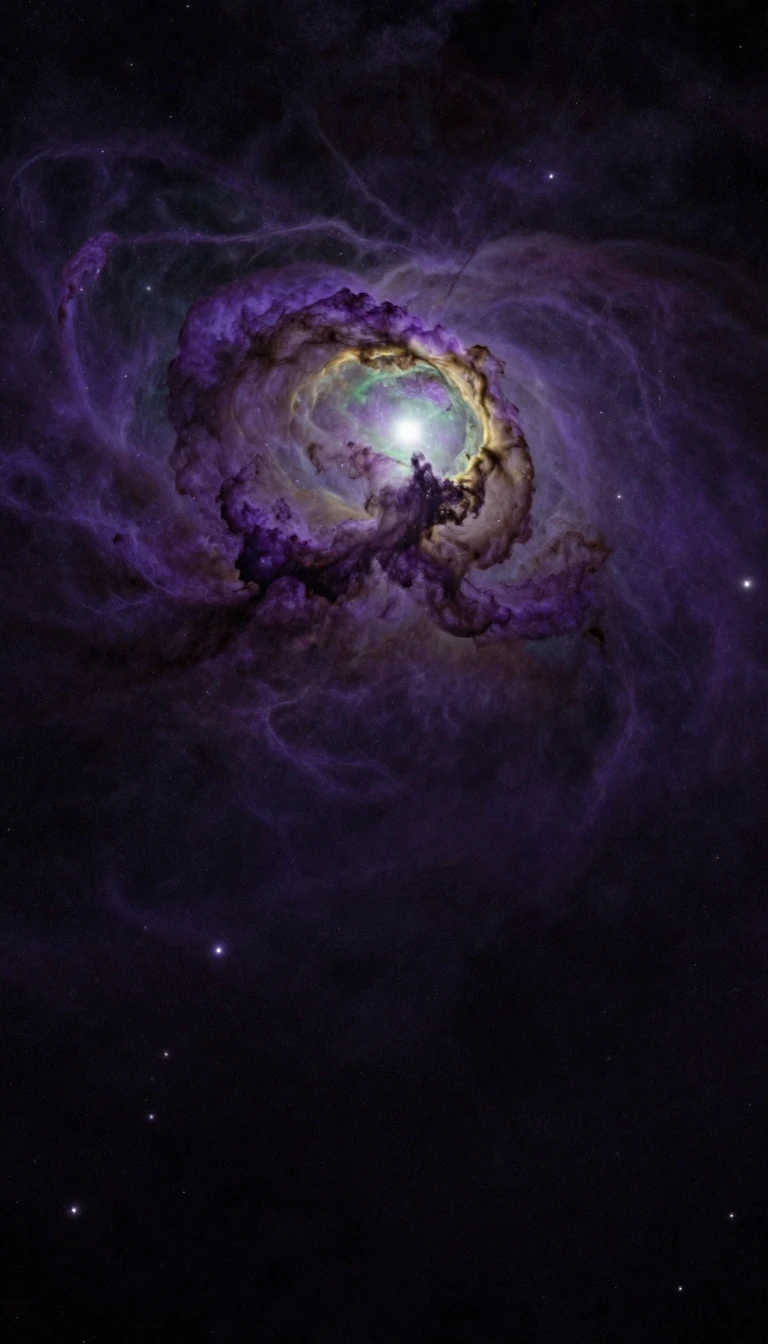
In short: Messier 13 is a glittering metropolis of over 100,000 stars packed into a space 25,000 light-years away. In this dense stellar environment, stars are forced into such close proximity that they sometimes crash into each other, birthing rare, youthful stars known as blue stragglers that defy their aging neighbors.
Discovered by Edmond Halley in 1714, Messier 13—or the Hercules Cluster—remains one of the most magnificent globular clusters visible from the Northern Hemisphere. When Charles Messier added it to his catalog in 1764, he famously mistook it for a featureless, nebulous object. It was not until 1779 that astronomers were finally able to resolve the cluster into individual stars, revealing the immense density of its core, which is roughly a hundred times greater than the stellar population surrounding our own Sun.
The cluster is a massive, ancient structure containing several hundred thousand stars, with estimates ranging from 300,000 to over half a million. These stars are classified as Population II, meaning they are significantly metal-poor compared to the Sun. Because they are so tightly packed, the frequency of stellar interactions is high. These collisions can result in the formation of blue stragglers, stars that appear surprisingly young despite being surrounded by much older stellar populations. While some researchers once proposed that a massive black hole might reside at the center of the cluster, this theory remains heavily contested.
Beyond its scientific intrigue, Messier 13 has captured the human imagination as a symbol of cosmic scale. In 1974, the Arecibo Observatory beamed a message toward the cluster containing encoded information about human DNA and atomic numbers. While intended as a demonstration of technological achievement, the message will take approximately 25,000 years to arrive, and experts remain divided on whether the cluster will even be in the correct position to receive it by the time the signal reaches its destination.
Opens the Intellect+ feed with this card first. Swipe up for the next one.
Sources
- Summary by Intellect · source: Messier 13 (The Hercules Cluster) - NASA Science
- Also: Messier 13
To cite this card, link to https://intellectplus.co.uk/app/space-messier-13.
How we source, check and correct cards: Editorial standards.
General information, not professional advice. Spotted an error? Flag the card or see corrections and complaints.
Intellect Plus is a visual educational discovery platform for exploring fascinating facts and ideas. Brain Food, Not Brain Rot. What is Intellect Plus?
Related
More in Astronomical objects · More in Space · Latest · A–Z · All topics
