Messier 22 is a cosmic time capsule hiding black holes and rogue planetary drifters.
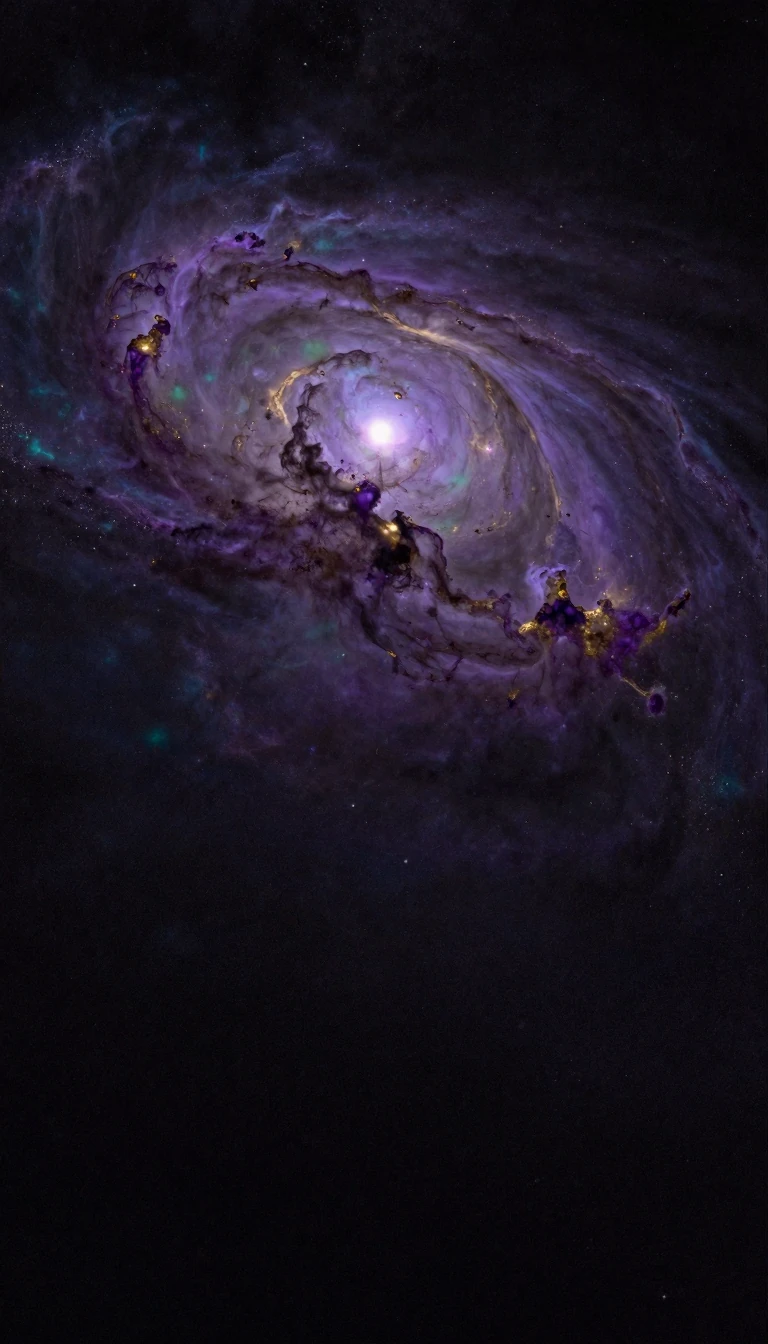
In short: Discovered in 1665, Messier 22 remains one of the most intriguing globular clusters in our galaxy. Located 10,000 light-years away, this dense stellar collection defies expectations by harboring two stellar-mass black holes and six mysterious, planet-sized objects that wander through the cluster without orbiting any parent star.
Globular clusters are ancient relics from the early Universe, serving as dense, spherical homes for some of the oldest stars in existence. Messier 22, situated in the constellation Sagittarius near the Galactic Bulge, was one of the first of these objects ever detected. While it appears as a bright patch in the night sky—roughly the size of the full Moon—its true brilliance is partially obscured by intervening dust and gas between Earth and the cluster.
Modern observations, particularly those from the Hubble Space Telescope, have revealed that M22 is far more than a simple collection of aging stars. It is one of only four known globular clusters in our galaxy to host a planetary nebula, a short-lived, glowing shell of gas ejected by a massive star during its final stages. Even more surprising are the six planet-sized objects identified by Hubble that appear to drift freely, unattached to any star, challenging our understanding of how such bodies form and persist within dense stellar environments.
The cluster’s internal dynamics are equally complex. Research using the Very Large Array and the Chandra X-ray telescope has confirmed the presence of two stellar-mass black holes within the cluster. Their existence suggests that the process of gravitational ejection—whereby black holes are typically flung out of clusters—is less efficient than previously theorized. This discovery has led astronomers to estimate that M22 could potentially contain between 5 and 100 black holes, whose interactions with surrounding stars may explain the cluster’s unusually large and dense core.
Opens the Intellect+ feed with this card first. Swipe up for the next one.
Sources
- Summary by Intellect · source: Messier 22 - NASA Science
- Also: Messier 22
To cite this card, link to https://intellectplus.co.uk/app/space-messier-22.
How we source, check and correct cards: Editorial standards.
General information, not professional advice. Spotted an error? Flag the card or see corrections and complaints.
Intellect Plus is a visual educational discovery platform for exploring fascinating facts and ideas. Brain Food, Not Brain Rot. What is Intellect Plus?
Related
More in Astronomical objects · More in Space · Latest · A–Z · All topics
