How a theoretical physicist built the tools to find our first alien world
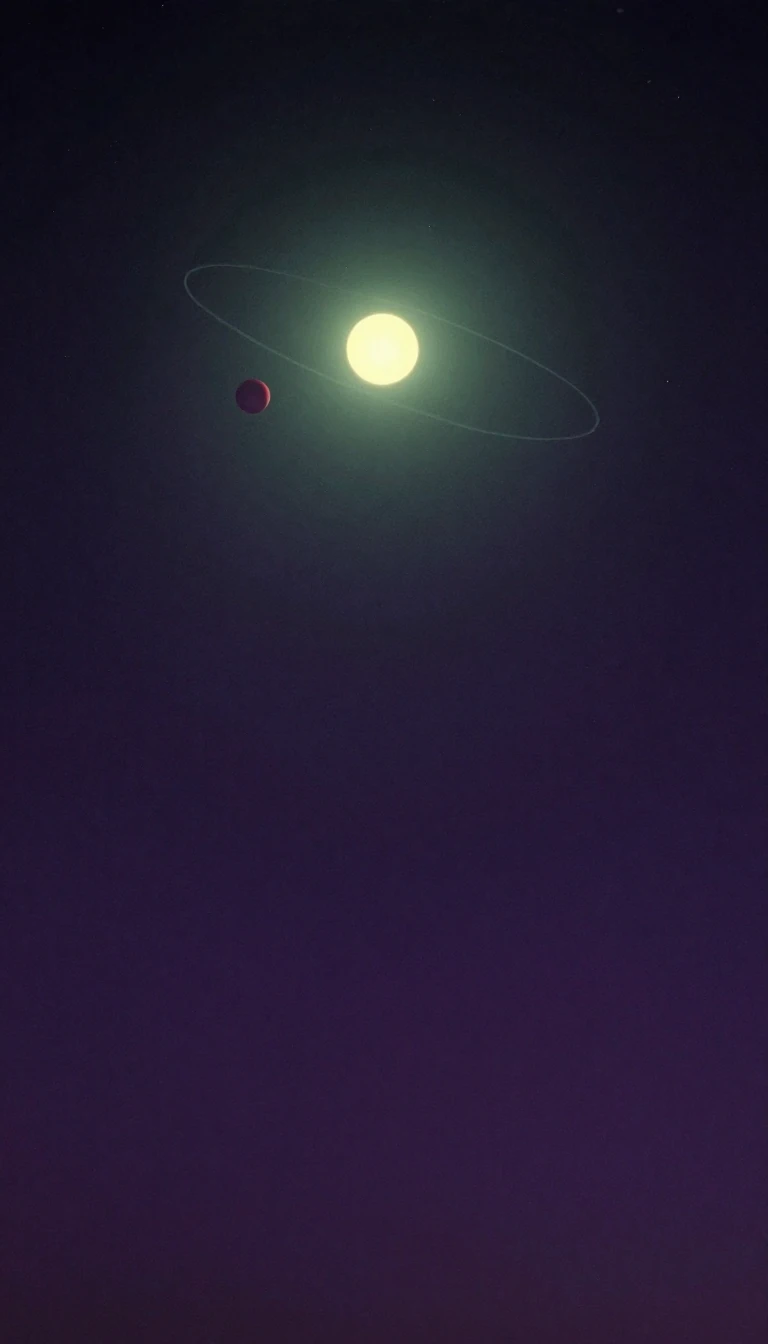
In short: Michel Mayor did not dream of being an astronomer, yet he reshaped our view of the cosmos. By pivoting from theoretical physics to instrument design, he created the precision technology required to detect the subtle gravitational tugs of distant planets, ultimately discovering the first exoplanet orbiting a sun-like star.
Born in 1942 in Lausanne, Switzerland, Michel Mayor initially studied physics and mathematics, eventually focusing on galactic dynamics. His early research into the spiral structure of galaxies led him to realize that existing stellar velocity data were insufficient for his needs. This frustration became the catalyst for his transition from pure theory to instrumentation. Collaborating with André Baranne, Mayor developed the CORAVEL spectrograph, which utilized cross-correlation techniques to measure stellar velocities with unprecedented efficiency. This breakthrough allowed him to explore diverse fields, from globular cluster dynamics to the statistical properties of binary stars.
By the early 1990s, Mayor’s team sought to distinguish between brown dwarfs and giant planets. They developed ELODIE, a more advanced spectrograph capable of significantly higher precision than its predecessor. In 1995, using ELODIE to monitor 142 G and K stars, Mayor and his graduate student Didier Queloz identified 51 Pegasi b. This discovery of an exoplanet orbiting a main-sequence star fundamentally shifted the scientific landscape, proving that planets exist beyond our solar system and launching a new era of exoplanetary research.
The radial velocity method, which Mayor pioneered for this purpose, remains a cornerstone of modern astronomy. It detects planets by measuring the motion of a host star as it wobbles in response to a planet's gravity. While this technique provides only lower limits on planetary mass, it has been instrumental in identifying thousands of worlds. Mayor later led the development of HARPS, which pushed measurement accuracy to 1 meter per second, enabling the discovery of smaller, more Earth-like planets. Despite these monumental achievements, Mayor remains pragmatic about the future, noting that the immense distances to these worlds make human migration impossible with current technology.
Opens the Intellect+ feed with this card first. Swipe up for the next one.
Sources
- Summary by Intellect · source: Nobel Prize in Physics 2019
- Also: Michel Mayor | Biography, Discoveries, & Facts | Britannica
- Also: Michel Mayor
To cite this card, link to https://intellectplus.co.uk/app/space-michel-mayor.
How we source, check and correct cards: Editorial standards.
General information, not professional advice. Spotted an error? Flag the card or see corrections and complaints.
Intellect Plus is a visual educational discovery platform for exploring fascinating facts and ideas. Brain Food, Not Brain Rot. What is Intellect Plus?
Related
More in Astronomy and geodesy · More in Space · Latest · A–Z · All topics
