When a celestial body vanishes, astronomers gain a rare window into the deep cosmos.
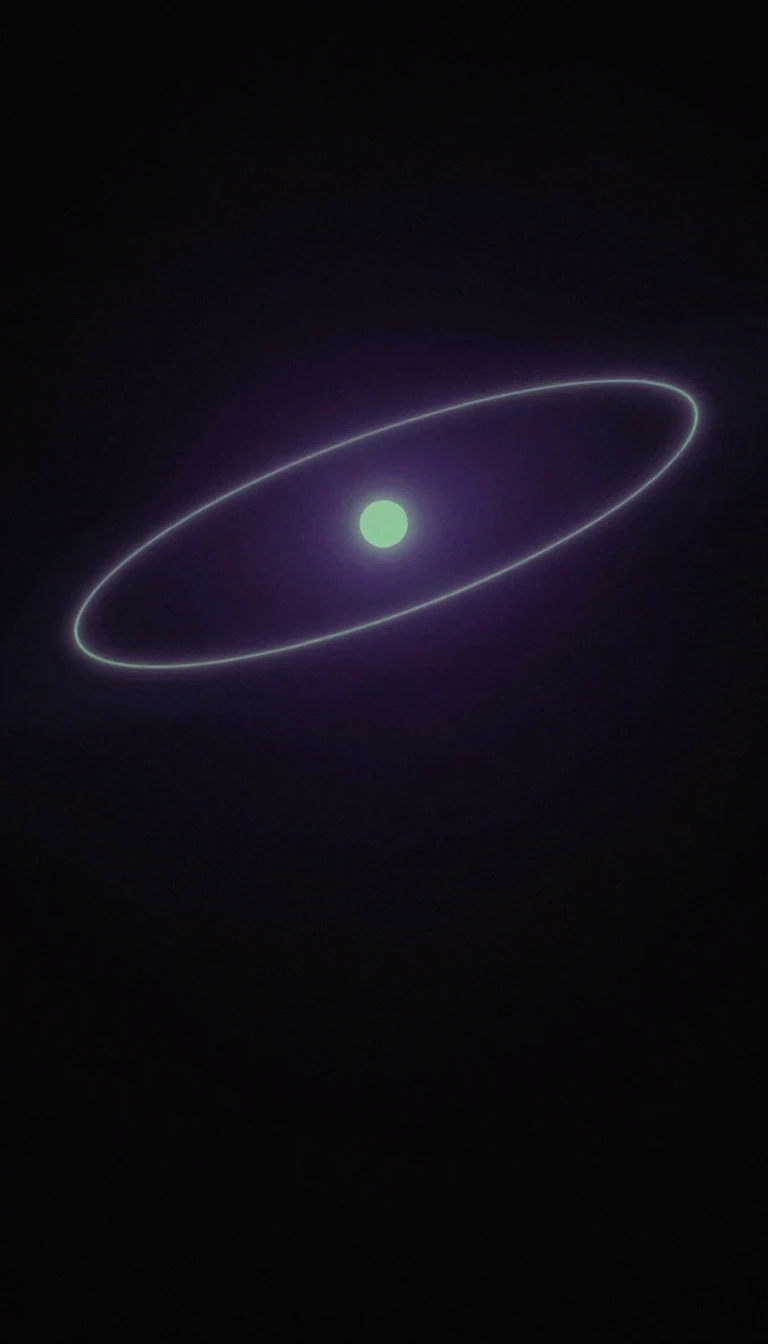
In short: An occultation occurs when one space object hides another from our view. While often seen as a simple shadow, these events are powerful scientific tools. By timing exactly when a star blinks out behind a moon or asteroid, researchers map distant shapes, discover planetary rings, and measure stellar diameters.
At its simplest, an occultation is a cosmic alignment where a foreground object blocks a background one. If the closer body is smaller and does not fully conceal the target, it is called a transit. These events are not merely visual curiosities; they are precise instruments for measurement. Because the Moon has a thin atmosphere, stars disappear behind its limb in a fraction of a second, allowing amateur and professional astronomers to time these events with extreme accuracy. Such data has been used to refine lunar topography and even identify binary star systems that are otherwise too close to resolve.
The utility of occultations extends far beyond the Moon. When a planet or asteroid passes in front of a star, the way the starlight dims can reveal the presence of rings or the composition of an atmosphere. For instance, the rings of Uranus were first identified during a 1977 stellar occultation. Similarly, observing occultations by distant trans-Neptunian objects allows scientists to calculate their diameters and shapes with a precision difficult to achieve through other methods. By coordinating observations from multiple locations on Earth, researchers can reconstruct the cross-sectional profile of an asteroid, as was famously done for 2 Pallas in 1983.
Looking forward, the concept of occultation is being adapted into artificial technology. Proposals like the Big Occulting Steerable Satellite, or BOSS, envision a massive, lightweight sheet maneuvered into the line of sight between a telescope and a star. By blocking the overwhelming glare of the star, such a device would allow astronomers to directly image orbiting planets. Whether natural or engineered, the act of obscuring light remains one of our most effective ways to bring the hidden details of the universe into focus.
Opens the Intellect+ feed with this card first. Swipe up for the next one.
Sources
- Summary by Intellect · source: Occultation
- Also: Occultation | Lunar, Solar & Planetary | Britannica
To cite this card, link to https://intellectplus.co.uk/app/space-occultation.
How we source, check and correct cards: Editorial standards.
General information, not professional advice. Spotted an error? Flag the card or see corrections and complaints.
Intellect Plus is a visual educational discovery platform for exploring fascinating facts and ideas. Brain Food, Not Brain Rot. What is Intellect Plus?
Related
More in Observational astronomy · More in Space · Latest · A–Z · All topics
