Stars do not sit still; they wobble in response to their orbiting planetary companions.
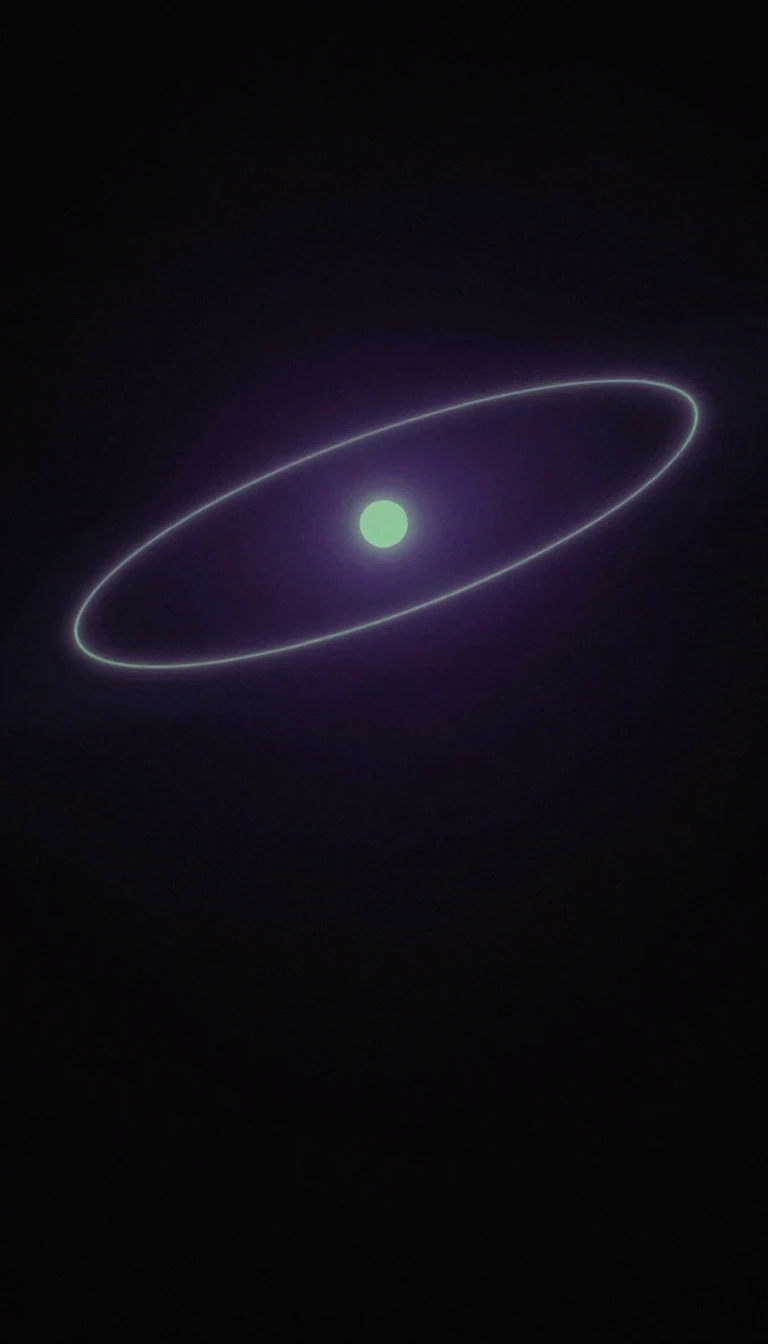
In short: We often imagine the Sun as a stationary anchor for our planets, but in reality, both orbit a shared center of mass. This gravitational dance causes stars to move in small, periodic paths. By tracking the resulting Doppler shifts in starlight, astronomers can detect hidden planets orbiting distant stars.
The core principle of radial velocity is that a star and its planets orbit a common center of mass. Because a star is significantly more massive than its planets, this center of mass typically lies within the star itself, though displaced from its exact geometric center. As a planet orbits, the star follows a smaller, slower path around this shared point. This movement is not merely theoretical; it is a physical necessity dictated by the gravitational pull of the planetary companion.
To detect this motion, astronomers look for the Doppler effect. As a star moves toward or away from Earth, its light spectrum shifts—blueshifted when approaching and redshifted when receding. By measuring these periodic variations in a star's spectrum, researchers can infer the presence of an unseen planet. This method is highly effective for identifying exoplanets, as the star's wobble provides a measurable signature of the planet's orbital period and mass.
However, the technique faces significant challenges. The radial velocity induced by a planet like Earth on our Sun is incredibly subtle, resulting in a speed of only about 0.09 meters per second. This is far slower than a human walking pace, making it nearly impossible to detect with current technology. Consequently, astronomers find it much easier to identify massive planets that force their host stars to move at higher speeds. Furthermore, radial velocity measurements often provide only a lower bound for a planet's mass, as the orbital inclination relative to our line of sight remains a critical variable.
Opens the Intellect+ feed with this card first. Swipe up for the next one.
Sources
- Summary by Intellect · source: Radial velocity
- Also: Radial velocity
- Also: NASA Science — Radial Velocity - NASA Science
To cite this card, link to https://intellectplus.co.uk/app/space-radial-velocity.
How we source, check and correct cards: Editorial standards.
General information, not professional advice. Spotted an error? Flag the card or see corrections and complaints.
Intellect Plus is a visual educational discovery platform for exploring fascinating facts and ideas. Brain Food, Not Brain Rot. What is Intellect Plus?
Related
More in Observational astronomy · More in Space · Latest · A–Z · All topics
