 Intellect Plus
Observational astronomy
53 cards. Each one is a 40-second story with a five-minute read behind it.
 Why an undergraduate degree is rarely enough for a career in space researchAspiring astronomers often face a common misconception about the path to professional research. This video breaks down the academic trajectory required to enter the field and expl…
 Seeing the universe through more than just human eyesObservational astronomy is the study of celestial bodies using different regions of the electromagnetic spectrum. This video explains how scientists capture information from space…
 How we see the universe without touching a single starObservational astronomy is the primary method by which we map the cosmos. This video introduces the fundamental principles of how scientists gather and interpret data from celesti…
 Why our planet isn't a perfect sphereUnderstanding the Earth is the first step for any astronomer. This video breaks down the physical dimensions, internal structures, and atmospheric effects that shape how we observ…
 The world's largest steerable dish listens to the universe's whispersMost telescopes see light, but the Green Bank Telescope hears the cosmos. By capturing faint radio waves instead of visible photons, it probes the chemical building blocks of life…
- The Solar System is our laboratory for decoding the universeHow can humans on a single planet understand the mechanics of a vast, inaccessible cosmos? The answer lies in our own backyard. By studying the motions and compositions of our nei…
 How mega-telescopes are rewriting our map of the early universeThis video breaks down the mechanics of observational astronomy and previews how next-generation telescopes will redefine our understanding of deep space. It explains how we captu…
 How a school generates over 300 astrophotography images every yearBrisbane Girls Grammar School is moving astronomy from textbooks to the telescope. This presentation explores how integrating observatory work into the secondary science curriculu…
 Even a perfect lens cannot produce a perfectly sharp point of lightImagine a telescope capable of capturing every detail of a distant star. Even with flawless glass, physics imposes a hard limit on clarity. Because light behaves like a wave, it b…
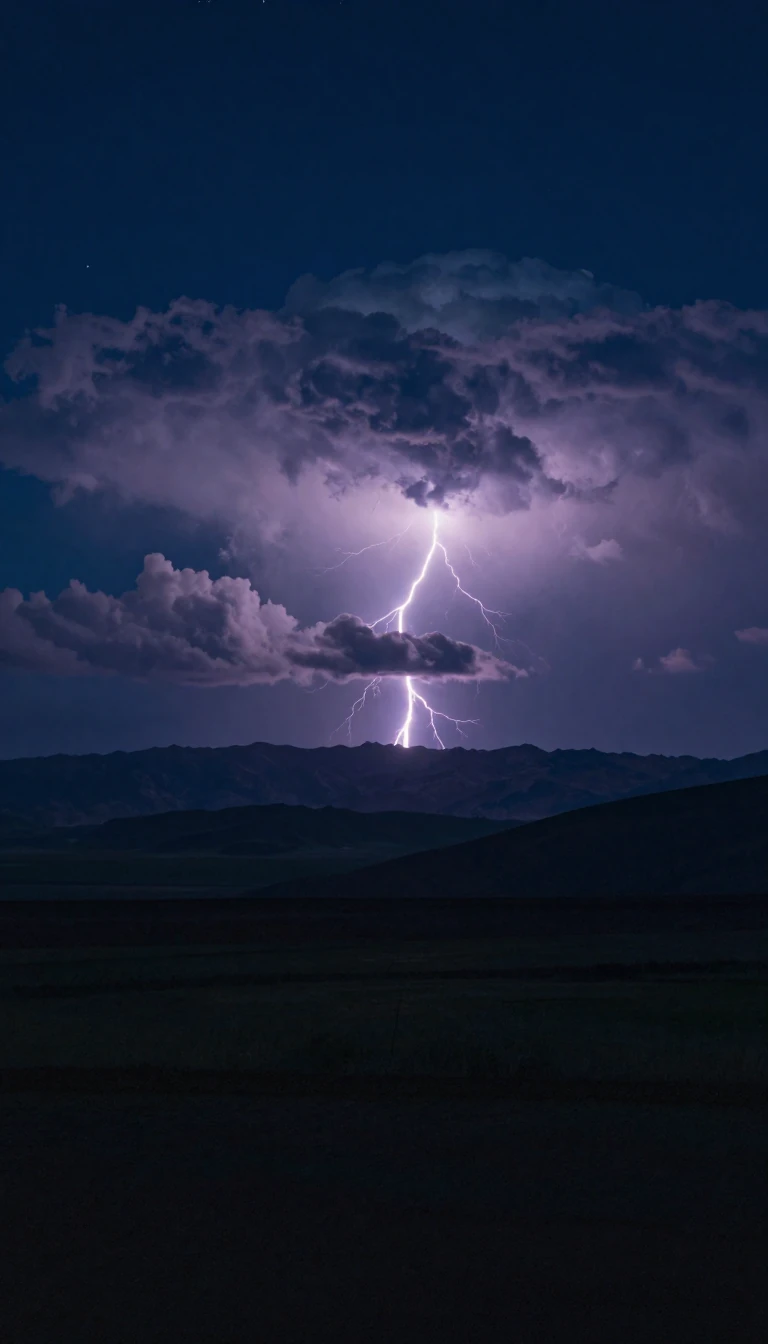 Can you see the Milky Way? The Bortle scale measures your night sky quality.Light pollution is erasing the stars, but how do you quantify the darkness of your backyard? In 2001, astronomer John E. Bortle introduced a nine-level scale to help observers eva…
 Why brightness temperature is not actually a measure of heatIn astronomy and physics, brightness temperature is a powerful tool for describing radiation intensity, yet it is rarely the literal temperature of an object. While it provides a …
 Why stars look dimmer near the horizon than they do directly overheadWhen you gaze at a star, you are looking through a column of air. As that star moves toward the horizon, the light must travel through a much thicker layer of atmosphere. This phe…
 Earth is perpetually glowing, but you need a sensitive camera to see it.High above our planet, the upper atmosphere emits a constant, faint light known as airglow. Unlike the fleeting, polar-bound aurora, this multi-colored luminescence encases the en…
 Why the Moon and Sun look the same size despite their massive physical differenceIn the night sky, our eyes deceive us. We perceive celestial objects not by their true physical scale, but by their angular diameter—the tiny slice of our field of vision they occ…
- Why your telescope cannot see everything: the physical limits of capturing the cosmosAngular resolution defines a telescope's ability to distinguish fine details in the night sky. While we often blame atmospheric blur, the true constraint is the wave nature of lig…
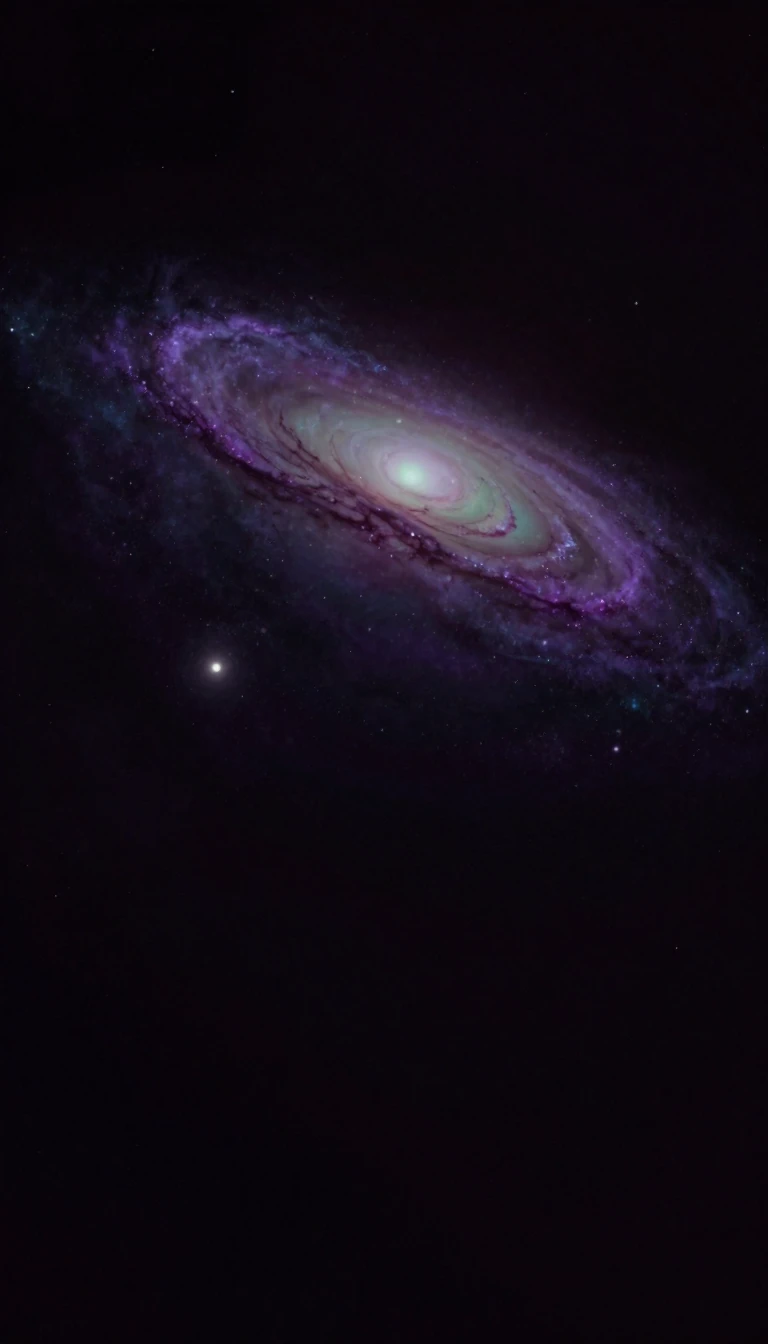 From the Milky Way to the edge of time, the universe hums in radioIn 1931, a radio engineer discovered static coming from the center of our galaxy, revealing that space is not silent. Today, we know the cosmos is filled with radio waves emitted …
 Why the Earth's atmosphere is the ultimate enemy of the world's largest telescopesAstronomical seeing is the atmospheric turbulence that blurs starlight into a distorted mess. By shifting the refractive index of air, our own sky limits the resolution of ground-…
 How a simple prism unlocked the chemical secrets of the distant, expanding UniverseBy splitting starlight into its constituent colors, astronomers can determine the composition, temperature, and motion of celestial bodies. This technique, known as spectroscopy, …
- Space is filled with natural masers that amplify light across the cosmosAstrophysical masers are naturally occurring sources of stimulated microwave emission found in molecular clouds, comets, and near black holes. Unlike laboratory lasers, these cosm…
- Why must astronomers launch telescopes into space to study the high-energy universe?Earth's atmosphere is a protective shield, but it is also an opaque barrier to the most energetic phenomena in the cosmos. Because our air absorbs X-rays with extreme efficiency, …
 Why the most common light in space is technically forbidden by physicsIn the vast, near-vacuum of space, atoms often emit light that should be impossible. These forbidden transitions occur when particles linger in meta-stable states, unable to decay…
- Why the Sun's light contains a hidden map of the chemical elements within itIn 1814, Joseph von Fraunhofer mapped hundreds of dark lines crossing the Sun's spectrum. These spectral fingerprints, caused by atoms absorbing light in the solar atmosphere, tra…
- Gamma rays reveal the most violent and energetic events in our vast universeGamma rays are the most energetic waves in the electromagnetic spectrum, produced by cataclysmic events like supernova explosions and black hole births. Because they pass through …
 We have finally learned to listen to the universe instead of just watching itFor a century, we relied on light to map the cosmos, leaving vast regions of space hidden from view. Now, by detecting ripples in the fabric of spacetime itself, we are capturing …
 How do we study the most violent and extreme phenomena in the universe?High-energy astrophysics investigates the universe at its most extreme, focusing on black holes, neutron stars, and supernovae. By measuring high-energy radiation like X-rays and …
 Why infrared telescopes must be kept colder than the objects they observe in spaceInfrared astronomy reveals the hidden universe, from forming stars to distant, redshifted quasars. Because objects at room temperature emit thermal energy in infrared wavelengths,…
 How astronomers map distant worlds by watching stars flicker in the darkWhen a star dims or an asteroid rotates, it leaves a signature in the light it emits. By plotting these changes over time, astronomers create light curves—graphs that reveal the h…
 Why measuring the distance to a star is not as simple as it seemsLuminosity distance links an object's intrinsic brightness to how dim it appears from Earth. While this works perfectly for nearby stars within our own galaxy, the math becomes si…
- How massive galactic discs use water to reveal the secrets of black hole growthDeep within the nuclei of active galaxies, water molecules are doing something extraordinary. They are acting as natural amplifiers, creating intense microwave beams known as mega…
 Ghost particles from a dusty galaxy are finally revealing the universe's most powerful accelerators.Neutrinos are the universe's most abundant particles, yet they are so elusive that trillions pass through you every second without a trace. By tracking these ghost particles to a …
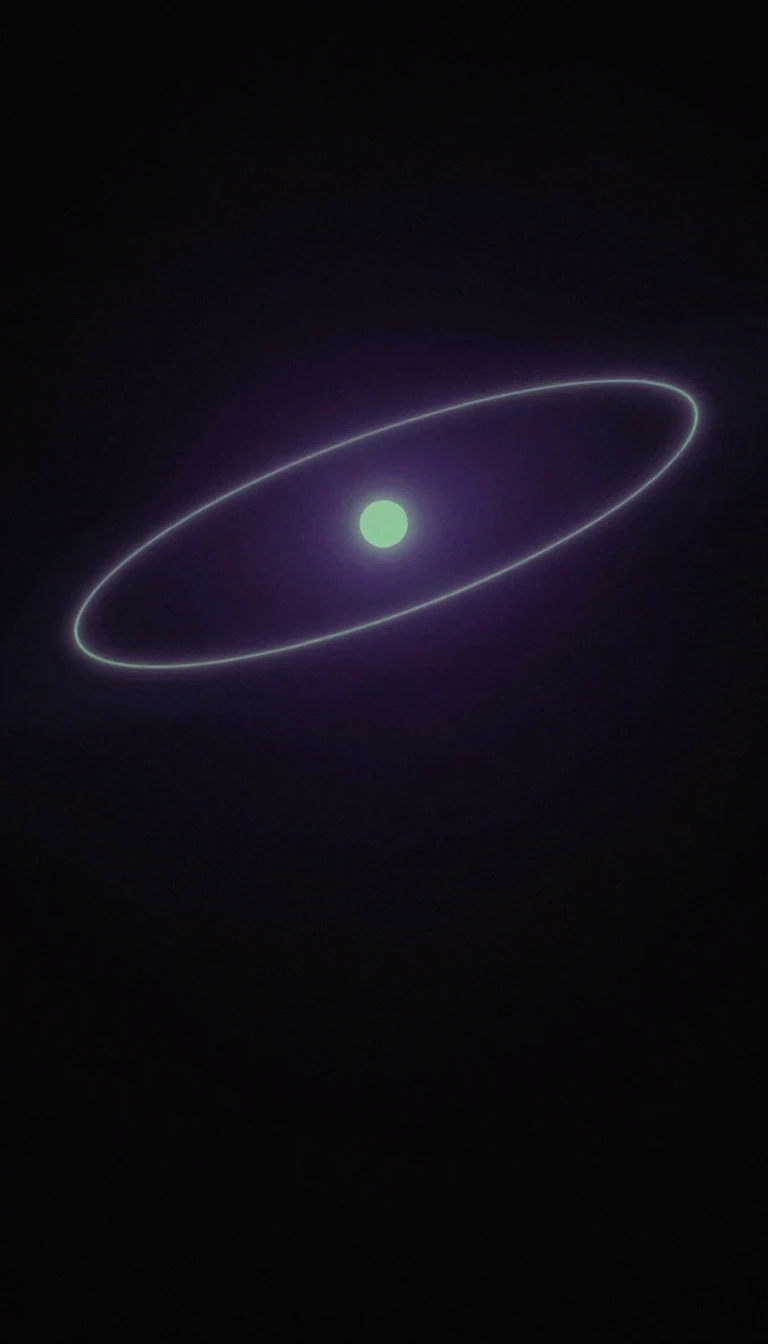 When a celestial body vanishes, astronomers gain a rare window into the deep cosmos.An occultation occurs when one space object hides another from our view. While often seen as a simple shadow, these events are powerful scientific tools. By timing exactly when a …
- Why Astronomers Use a Jumbled Alphabet to Measure the Light of Distant StarsTo map the cosmos, astronomers rely on photometric systems—sets of specialized filters that capture specific slices of light. While these systems use letters to label different wa…
- How astronomers use the glowing remnants of dead stars to measure the cosmic distanceThe planetary nebula luminosity function is a powerful tool for calculating distances to galaxies across the universe. By tracking the specific light emitted by dying stars, astro…
 Why astronomers study the orientation of light to map the invisible universeLight carries more than just brightness and color; it carries a directional signature called polarization. By analyzing how electromagnetic waves vibrate, astronomers can map hidd…
- Stars are not fixed in the sky, but drift across it over centuriesConstellations like Ursa Major look identical to how they appeared centuries ago, but this is an illusion of scale. Every star possesses an independent, measurable proper motion. …
- Stars do not sit still; they wobble in response to their orbiting planetary companions.We often imagine the Sun as a stationary anchor for our planets, but in reality, both orbit a shared center of mass. This gravitational dance causes stars to move in small, period…
- Radio astronomy allows us to observe the universe through invisible, high-energy cosmic signals.Radio astronomy reveals celestial phenomena invisible to optical telescopes, from the cosmic microwave background to supermassive black holes. By capturing radio waves rather than…
- The invisible smog filling our skies is drowning out the whispers of the universeWe live in a world saturated with electromagnetic noise, from lightning strikes to leaking light fixtures and satellite constellations. This radio spectrum pollution is not just a…
- Why the universe is running away from us at an ever-increasing speedThe further away a galaxy is, the faster it appears to be moving away from Earth. This phenomenon, known as recessional velocity, is the cornerstone of our understanding of an exp…
 The night sky is never truly black, even far from city lights.Beyond the glare of urban light pollution, the night sky glows with a faint, natural luminescence. Driven by solar radiation, chemical reactions in the upper atmosphere, and scatt…
- Why astronomers map the energy of light to decode the secrets of the universeA spectral energy distribution is more than just a picture of light. By plotting energy against frequency or wavelength, astronomers transform raw radiation into a diagnostic tool…
 Spectral indices are the secret language used to decode our planet from spaceBy combining specific bands of light, scientists create mathematical shortcuts called spectral indices. These tools filter out noise to reveal hidden details about Earth, from the…
 Why the stars appear to shift as Earth orbits the Sun each yearThe night sky looks static, but it is a dynamic, three-dimensional map. By using Earth's orbit as a massive baseline, astronomers measure the tiny, annual shifts of nearby stars a…
- Why astronomers search for the coldest, dustiest corners of the universeSubmillimetre astronomy captures the invisible glow of cold gas and dust, revealing the hidden mechanics of star birth and galaxy evolution. By peering through the electromagnetic…
- Why a galaxy with the same magnitude as a star is harder to seeIn astronomy, total magnitude measures an object's brightness as if it were a single point. However, extended objects like galaxies spread their light across a wide area. Surface …
- Why Earth's own atmosphere acts as a persistent filter for deep space observationsWhen astronomers peer into the cosmos, they are not just looking through a window; they are looking through a veil. Earth's atmosphere constantly absorbs and emits its own light, …
- How astronomers use the death of small stars to measure the vast cosmic distanceTo map the universe, astronomers need reliable yardsticks. They have found one in the predictable death throes of aging stars. By identifying the exact moment a star exhausts its …
- Why do stars twinkle while planets remain steady in the night sky?The shimmering dance of starlight is not a property of the stars themselves, but a consequence of our turbulent atmosphere. While distant stars flicker as point sources of light, …
 The UBV system turned starlight into a precise language for measuring stellar secrets.Before the 1950s, measuring star brightness was subjective and prone to error. By introducing the UBV system, astronomers Harold L. Johnson and William Wilson Morgan created a sta…
 Why the ultraviolet universe reveals the life and death of starsUltraviolet light is invisible to human eyes, but it is the primary language of the cosmos's most energetic events. By peering into this high-energy spectrum from space, astronome…
- Why the stars you see at night are only a fraction of the universeVisible light reveals the cosmos, but it is merely one slice of the electromagnetic spectrum. From the glowing hydrogen of emission nebulae to the temperature-driven colors of dis…
- Why we must leave Earth to see the most violent events in the universeEarth's atmosphere acts as a shield, absorbing the high-energy X-rays that reveal the cosmos's most extreme phenomena. To study these, astronomers must launch detectors into space…
- A massive, uncharted region of the universe hides behind our own galaxy's dense center.Astronomers call it the Zone of Avoidance: a vast, mysterious patch of the night sky that optical telescopes cannot penetrate. Obscured by the Milky Way's thick dust and crowded s…