Are these ancient space rocks the secret to how our entire solar system began?
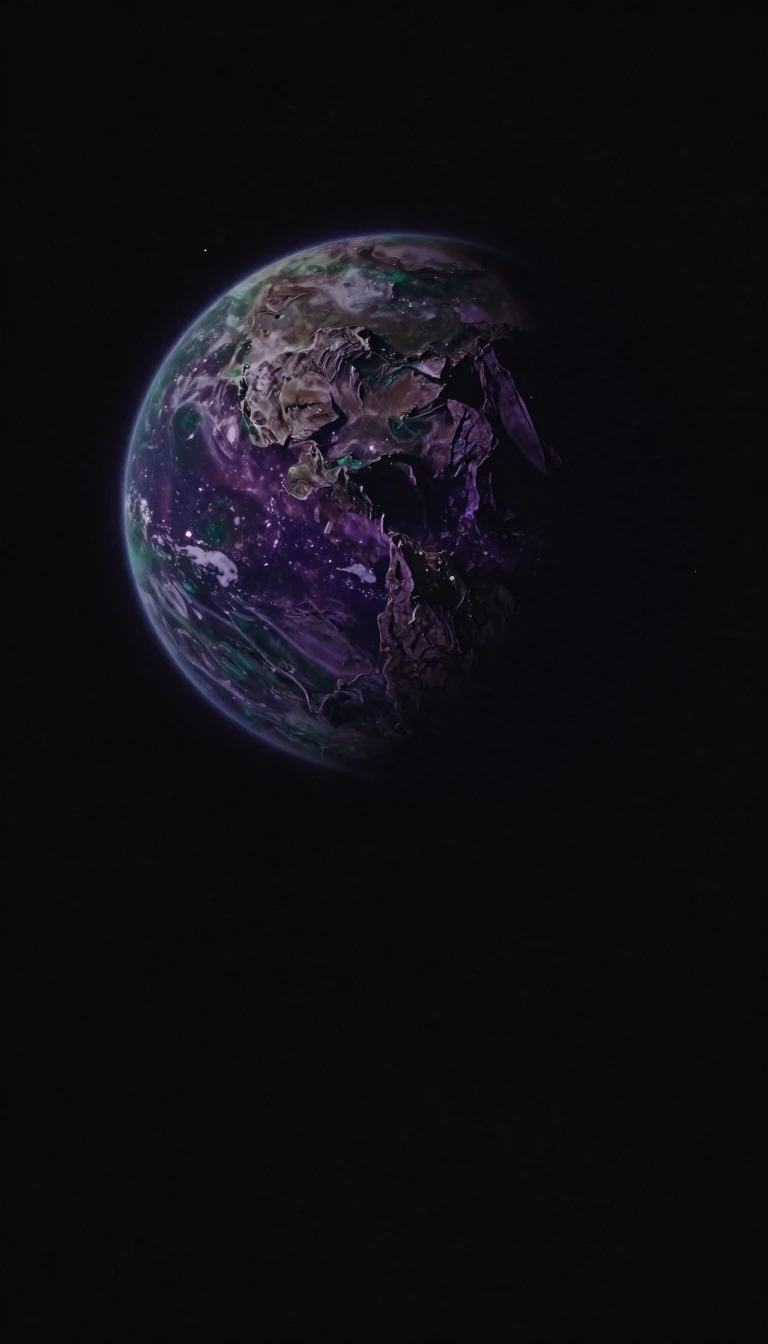
In short: Planetesimals are the building blocks of planets, solid objects formed 4.6 billion years ago. Acting as cosmic time capsules, these remnants of the early solar system offer a pristine look at the conditions of the presolar nebula, helping scientists reconstruct the violent, intricate process of how our world came to be.
The planetesimal hypothesis, championed by Viktor Safronov, posits that planets emerge from the gradual accumulation of cosmic dust. Initially, tiny grains rely on turbulence or Brownian motion to collide and stick together. Once these bodies reach a size of approximately one kilometer, their own gravity begins to dominate, allowing them to attract other material and accelerate their growth into moon-sized protoplanets. Alternative theories suggest that these bodies might also form through collective gravitational instability in dense dust layers or via the collapse of particle swarms in streaming instabilities.
The transition from a planetesimal to a protoplanet is marked by size and gravitational influence. While planetesimals are defined as objects larger than one kilometer where self-gravity overcomes gas drag, bodies exceeding 100 to 1000 kilometers are classified as embryos or protoplanets. These larger entities possess enough gravitational pull to alter the paths of nearby rocks, enabling them to grow at significantly faster rates. This distinction remains a subject of scientific discussion, as the International Astronomical Union has not officially endorsed a single definition for these stages of development.
By 3.8 billion years ago, following the Late Heavy Bombardment, most original planetesimals had been ejected from the solar system or collided with larger bodies due to the gravitational influence of giants like Jupiter and Neptune. However, some survivors remain, such as the contact binary Arrokoth. Because their interiors contain material untouched since the dawn of the solar system, these objects serve as invaluable records. Whether they are classified as asteroids, comets, or Kuiper belt objects today, these remnants provide the essential data needed to understand the architecture of our planetary neighborhood.
Opens the Intellect+ feed with this card first. Swipe up for the next one.
Sources
- Summary by Intellect · source: Planetesimal
To cite this card, link to https://intellectplus.co.uk/app/space-planetesimal.
How we source, check and correct cards: Editorial standards.
General information, not professional advice. Spotted an error? Flag the card or see corrections and complaints.
Intellect Plus is a visual educational discovery platform for exploring fascinating facts and ideas. Brain Food, Not Brain Rot. What is Intellect Plus?
Related
More in Planetary science · More in Space · Latest · A–Z · All topics
