Supernovae are the cosmic furnaces that forge the elements essential for life and matter
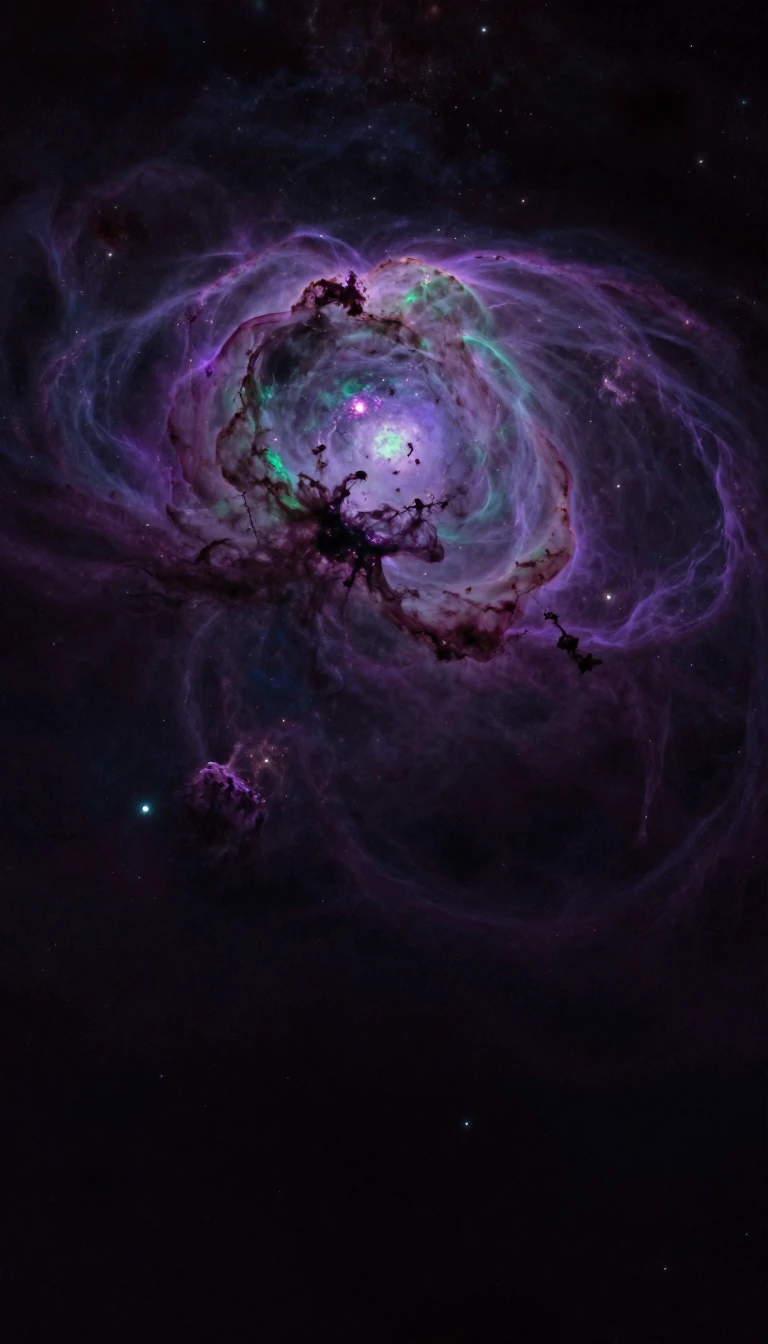
In short: When massive stars exhaust their fuel, they do not simply fade away. Instead, they collapse and explode, acting as violent, high-energy factories. These cataclysmic events synthesize the chemical elements that make up our universe, scattering them into space to eventually form new stars, planets, and even life itself.
In the final stages of a massive star's life, it undergoes sequential burning processes, fusing lighter elements into heavier ones. This hydrostatic burning creates alpha nuclides like carbon, oxygen, and neon. However, the process reaches a limit at nickel-56, which has one of the highest binding energies per nucleon. Beyond this point, fusion no longer releases energy, causing the star's core to lose pressure support and collapse under its own gravity.
The resulting core-collapse supernova triggers a shock wave that rebounds through the star's mantle. This shock wave provides the sudden, intense heating necessary for explosive nucleosynthesis, which is far more efficient at creating certain isotopes than hydrostatic burning alone. As the star explodes, it ejects these newly synthesized elements into the interstellar medium, enriching the gas from which future generations of stars are born.
While supernovae are responsible for most elements between neon and nickel, the origin of heavier elements remains a subject of active research. Historically, the r-process—a rapid neutron-capture mechanism—was thought to occur within supernova cores. However, recent observations of neutron star mergers, such as the 2017 event detected by LIGO and Virgo, suggest these collisions may be the primary source of the universe's heaviest elements, including uranium and thorium.
The study of these processes has evolved significantly since Fred Hoyle first proposed in 1946 that heavy elements are produced in massive stars. From hand-calculated theories in the 1950s to modern computer simulations and gamma-ray-line astronomy, our understanding of how stars die and create the building blocks of the cosmos continues to refine, revealing a complex, interconnected cycle of stellar life and death.
Opens the Intellect+ feed with this card first. Swipe up for the next one.
Sources
- Summary by Intellect · source: Supernova nucleosynthesis
To cite this card, link to https://intellectplus.co.uk/app/space-supernova-nucleosynthesis.
How we source, check and correct cards: Editorial standards.
General information, not professional advice. Spotted an error? Flag the card or see corrections and complaints.
Intellect Plus is a visual educational discovery platform for exploring fascinating facts and ideas. Brain Food, Not Brain Rot. What is Intellect Plus?
Related
More in Stellar astronomy · More in Space · Latest · A–Z · All topics
