Why these rare stellar explosions are the universe's most reliable cosmic yardsticks
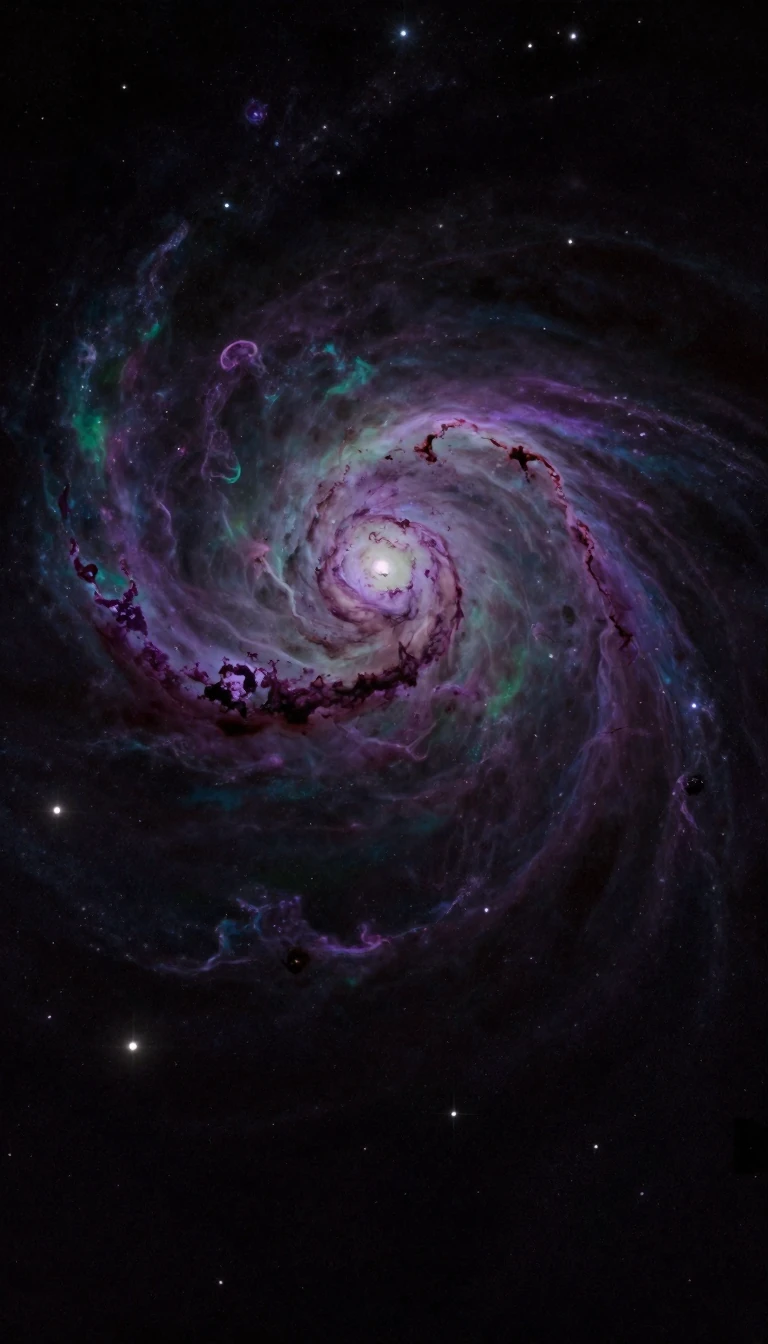
In short: Type Ia supernovae are not just violent cosmic fireworks; they are precise standard candles. Because these explosions consistently reach a specific peak brightness, astronomers use them to measure vast distances across the universe, revealing the mysterious pressure of dark energy that accelerates the expansion of our cosmos.
A Type Ia supernova occurs within binary star systems, typically involving a white dwarf—the dense, hot core remnant of a Sun-like star. These events are triggered when the white dwarf reaches a critical mass, often cited as the Chandrasekhar limit of about 1.4 solar masses. As the dwarf accretes material from a companion star or merges with another white dwarf, it becomes unstable. This instability initiates a runaway thermonuclear reaction, completely destroying the star in a matter of seconds.
The reason these explosions serve as standard candles is their uniform peak luminosity. Because the progenitor white dwarf consistently explodes at a specific mass threshold, the resulting blast releases a predictable amount of light. By measuring how bright these supernovae appear from Earth, astronomers can calculate their distance with remarkable accuracy. This method was instrumental in the 1998 discovery of dark energy, an unexplained cosmic pressure driving the universe's expansion, by teams including Adam Riess, Saul Perlmutter, and Brian Schmidt.
While Type Ia supernovae are rare—occurring roughly once every 500 years in the Milky Way—the upcoming Nancy Grace Roman Space Telescope aims to observe thousands of them. By studying these explosions across different distances and cosmic ages, researchers hope to trace the history of expansion and determine how dark energy has influenced the universe over the last 12 billion years. This data will help resolve clashing measurements regarding the current expansion rate and provide deeper insights into the distribution of dark matter.
The exact mechanism of the ignition remains a subject of scientific debate. While it is generally accepted that the star is consumed by fusion, researchers are still investigating whether the process begins as a subsonic deflagration that transitions into a supersonic detonation. Regardless of these internal details, the reliability of these events as distance indicators remains a cornerstone of modern observational cosmology.
Opens the Intellect+ feed with this card first. Swipe up for the next one.
Sources
- Summary by Intellect · source: Type Ia Supernovae - NASA Science
- Also: Type Ia supernova | astronomy | Britannica
- Also: Type Ia supernova
To cite this card, link to https://intellectplus.co.uk/app/space-type-ia-supernova.
How we source, check and correct cards: Editorial standards.
General information, not professional advice. Spotted an error? Flag the card or see corrections and complaints.
Intellect Plus is a visual educational discovery platform for exploring fascinating facts and ideas. Brain Food, Not Brain Rot. What is Intellect Plus?
Related
More in Stellar astronomy · More in Space · Latest · A–Z · All topics
