Tucana: A Southern Constellation Named for a Bird and Home to Ancient Stars
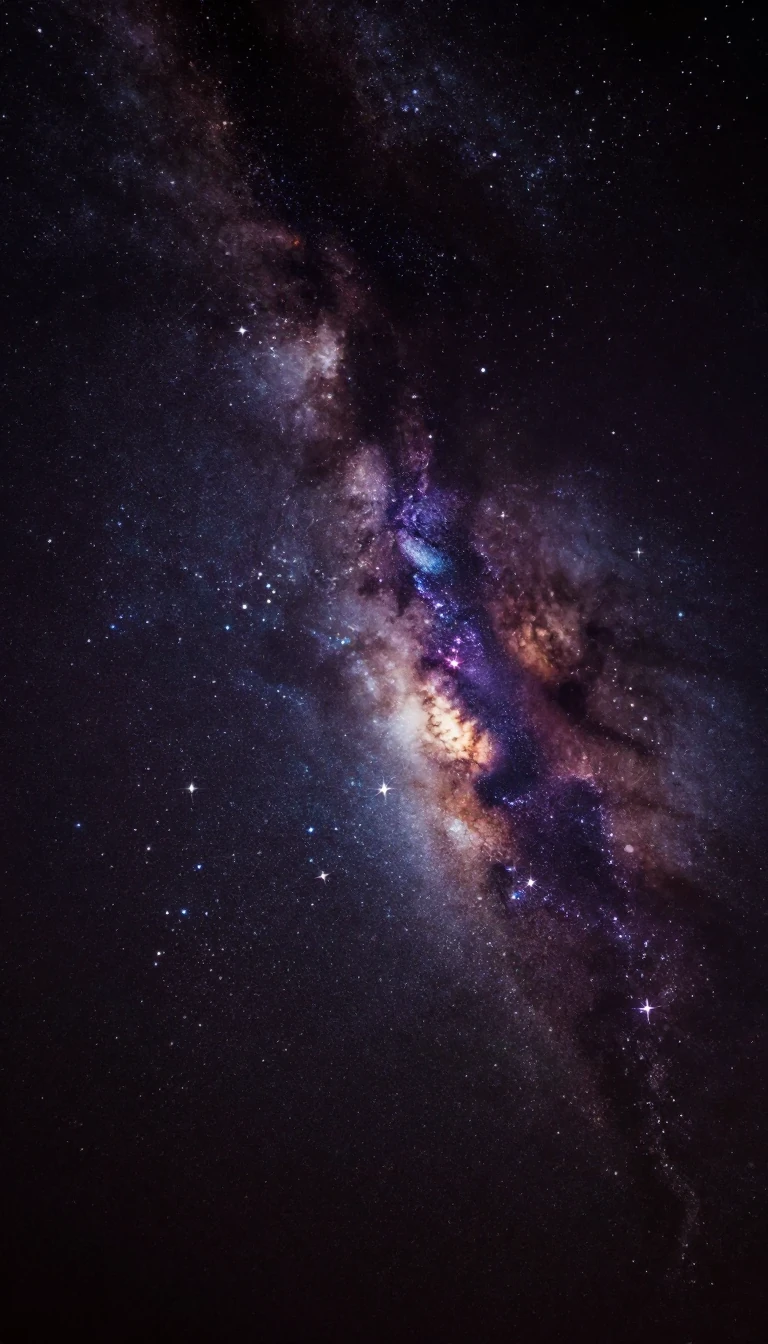
In short: Conceived in the late sixteenth century, the constellation Tucana represents a South American toucan in the southern sky. While it contains no exceptionally bright stars, it serves as a gateway to the cosmos, hosting the Small Magellanic Cloud, massive globular clusters, and distant galaxies that reveal deep secrets of our universe.
Tucana was established by Petrus Plancius in 1598, based on navigational data from Dutch explorers Pieter Dirkszoon Keyser and Frederick de Houtman. Originally depicted as a toucan, the constellation has been interpreted variously across history, including as an American goose by Johannes Kepler and a hornbill by de Houtman. Today, it is recognized as one of the 'Southern Birds' alongside Phoenix, Grus, and Pavo. Spanning 295 square degrees, it is the 48th largest constellation, defined by boundaries set in 1930 by Eugène Delporte.
The constellation is a treasure trove for astronomers. It houses 47 Tucanae, a dense globular cluster roughly 12 billion years old that ranks among the most luminous of its kind. Nearby lies the Small Magellanic Cloud, a dwarf galaxy distorted by the Milky Way's gravity, and the isolated Tucana Dwarf galaxy, situated 2.8 million light-years from our solar system. In 1998, the Hubble Space Telescope focused on a region within Tucana to create the Hubble Deep Field South, choosing the site because a quasar, QSO J2233-606, allowed for uninterrupted observation.
Tucana also provides a laboratory for stellar evolution. Its stars, such as the orange subgiant Alpha Tucanae, offer insights into binary systems and spectral types. Zeta Tucanae, a solar-like star, is a primary candidate for searching for life-bearing planets, while other systems like HD 4308 and HD 215497 have already yielded discoveries of super-Earths and gas giants. From the pulsating Delta Scuti variables in Theta Tucanae to the star-forming regions within the Small Magellanic Cloud, Tucana remains a vital subject for modern astrophysical research.
Opens the Intellect+ feed with this card first. Swipe up for the next one.
Sources
- Summary by Intellect · source: Tucana
To cite this card, link to https://intellectplus.co.uk/app/space-tucana.
How we source, check and correct cards: Editorial standards.
General information, not professional advice. Spotted an error? Flag the card or see corrections and complaints.
Intellect Plus is a visual educational discovery platform for exploring fascinating facts and ideas. Brain Food, Not Brain Rot. What is Intellect Plus?
Related
More in Celestial sphere · More in Space · Latest · A–Z · All topics
