How wartime blackouts in Los Angeles helped an astronomer double the size of the universe
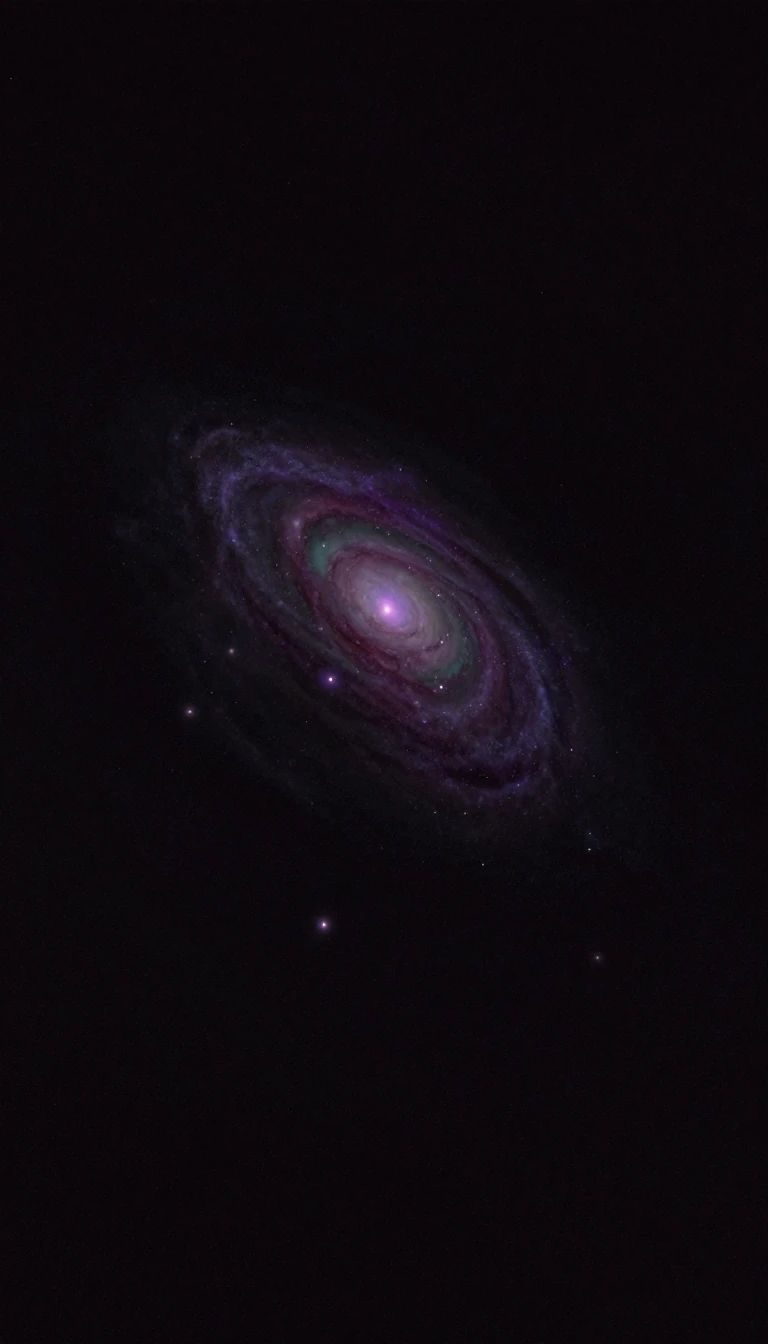
In short: During the darkness of World War II, Walter Baade utilized the reduced light pollution over Los Angeles to peer deeper into space than ever before. By resolving individual stars within the Andromeda Galaxy, he uncovered fundamental truths about stellar evolution that forced scientists to rethink the scale of the entire cosmos.
Born in Germany in 1893, Walter Baade spent much of his career at the Mount Wilson Observatory in California, where he worked from 1931 until 1958. His most transformative work occurred during the Second World War. As blackout conditions dimmed the city lights of Los Angeles, Baade used the 100-inch Hooker telescope to achieve a breakthrough: he successfully distinguished individual stars in the core of the Andromeda Galaxy. This feat had previously been impossible due to the overwhelming glare of urban light pollution.
These observations led to a profound shift in astrophysics. Baade identified two distinct categories of stars, which he classified as Population I and Population II. This classification revealed that there were two different types of Cepheid variable stars, a discovery that shattered existing assumptions about how distances were measured in space. By recalibrating these distance markers, Baade effectively doubled the accepted scale of the known universe, a revelation he presented to the International Astronomical Union in 1952.
Baade’s contributions extended far beyond galactic scales. In 1934, he and Fritz Zwicky proposed that supernovae were the source of cosmic rays and the origin of neutron stars. He also conducted extensive studies on the Crab Nebula and its central star. His observational prowess led to the identification of optical counterparts for radio sources like Cygnus A and Cassiopeia A, alongside the discovery of asteroids such as Hidalgo and Icarus. His legacy remains etched in the sky, from the lunar feature known as Vallis Baade to the clear patch of space toward the Galactic Center now called Baade’s Window.
Opens the Intellect+ feed with this card first. Swipe up for the next one.
Sources
- Summary by Intellect · source: Wilhelm Heinrich Walter Baade
- Also: Walter Baade
To cite this card, link to https://intellectplus.co.uk/app/space-walter-baade.
How we source, check and correct cards: Editorial standards.
General information, not professional advice. Spotted an error? Flag the card or see corrections and complaints.
Intellect Plus is a visual educational discovery platform for exploring fascinating facts and ideas. Brain Food, Not Brain Rot. What is Intellect Plus?
Related
More in Astronomy and geodesy · More in Space · Latest · A–Z · All topics
