Allan Sandage spent decades measuring the universe, only to find a century-old secret.
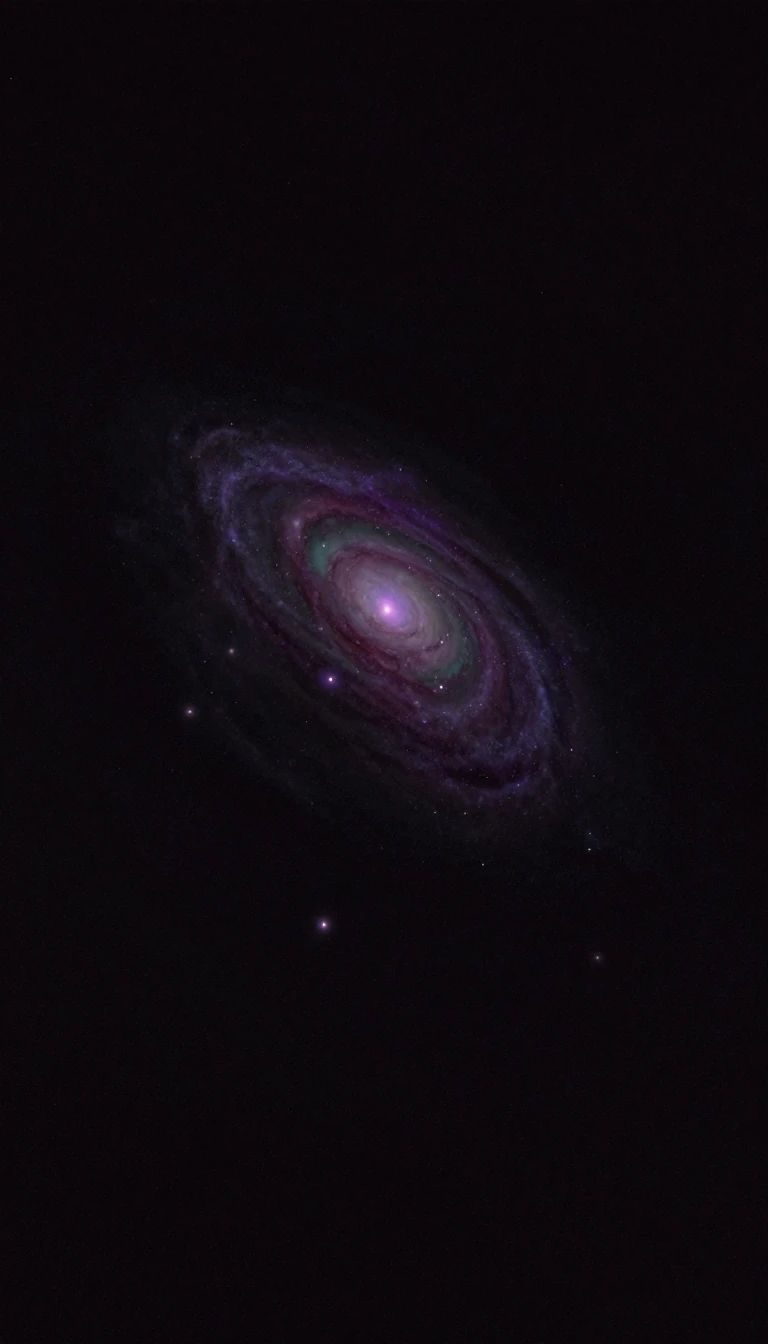
In short: Allan Sandage was the preeminent observational cosmologist of the 20th century, spending half a century at the Palomar and Mount Wilson observatories. Yet, even in his final days, he was still uncovering hidden history, proving that a forgotten 1935 catalog had anticipated his own breakthrough in stellar evolution by a decade.
Born in 1926, Allan Sandage became a central figure in modern astronomy after earning his doctorate under Walter Baade in 1953. As a protege of Edwin Hubble, Sandage dedicated his career to refining the Hubble constant—the rate of cosmic expansion—and calibrating the standard candles used to measure the vast distances between galaxies. His work was foundational, establishing the methods that allowed astronomers to map the scale and age of the universe.
Beyond his cosmological pursuits, Sandage was a pioneer in understanding how stars age. By studying globular clusters, he and his collaborators demonstrated that the color and brightness of stars reveal their evolutionary stage. This research relied on the color-magnitude diagram, which plots stars as they transition from the main sequence into subgiants and eventually red giants. Sandage’s ability to interpret these stellar patterns provided a critical framework for modern stellar evolutionary theory.
In a remarkable final act, Sandage investigated a 1944 letter between George Gamow and Walter Adams that contained a hand-drawn diagram predating his own work. He discovered that a 1935 Mount Wilson catalog had already identified 90 subgiant stars, though the scientific community had dismissed the data as biased or fictitious at the time. Working with Steven Majewski and Rachael Beaton, Sandage meticulously verified these 1930s measurements against modern data. Their posthumously published paper revealed that if the original 1935 findings had been accepted, our understanding of stellar evolution could have advanced years earlier.
Sandage’s legacy is defined by this blend of rigorous observation and historical detective work. Whether he was identifying the first optical counterparts to quasars or debating the value of the Hubble constant against peers like Gerard de Vaucouleurs, he remained committed to the precision of the observational record. His career, spanning from the post-war era to the Hubble Space Telescope, serves as a testament to the enduring power of empirical evidence in unlocking the secrets of the cosmos.
Opens the Intellect+ feed with this card first. Swipe up for the next one.
Sources
- Summary by Intellect · source: Allan Rex Sandage
- Also: Allan Sandage’s last paper unravels 100-year-old astronomical mystery
- Also: Allan Sandage | American Astronomer & Pioneer of Cosmology | Britannica
- Also: Allan Sandage
To cite this card, link to https://intellectplus.co.uk/app/space-allan-sandage.
How we source, check and correct cards: Editorial standards.
General information, not professional advice. Spotted an error? Flag the card or see corrections and complaints.
Intellect Plus is a visual educational discovery platform for exploring fascinating facts and ideas. Brain Food, Not Brain Rot. What is Intellect Plus?
Related
More in Astronomy and geodesy · More in Space · Latest · A–Z · All topics
