Clay courts began as a fix for a garden court that baked in the sun
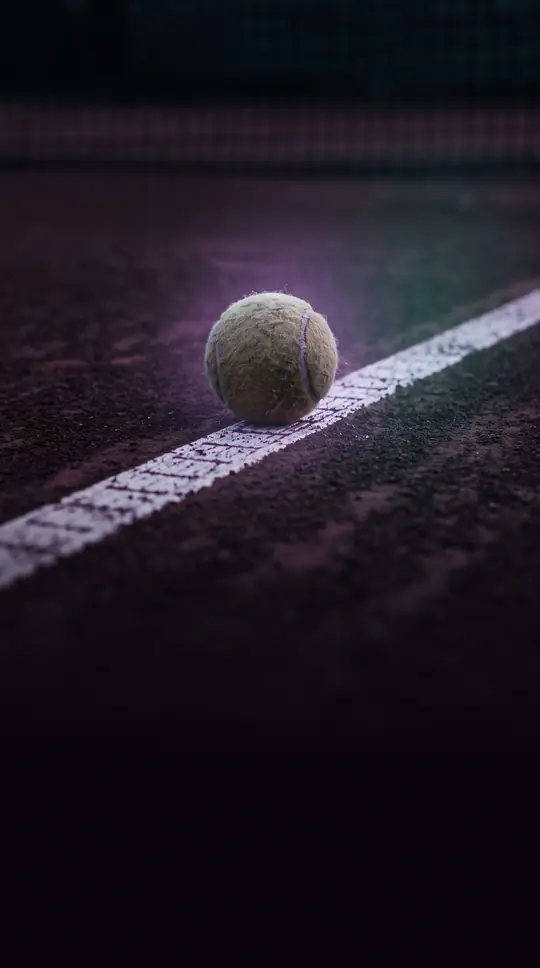
In short: Clay courts were not designed for competition at all. In 1890, the English twins William and Ernest Renshaw wanted a tennis court at their holiday home on the Mediterranean coast that could survive heat and sunlight. Their solution, covering the surface with powder from broken pottery, grew into one of tennis's most distinctive playing surfaces.
Clay courts rest on a base of crushed stone, especially limestone or shale, topped with a thin film of fine particles. The best-known version is red clay, whose colour comes from a surface of crushed brick. Green clay, sold under names such as Har-Tru, is made from crushed metabasalt instead and plays slightly harder and faster. Clay is a little cheaper to build than many other court types, but it demands constant upkeep: it must be watered and rolled to stay flat, and brushed before and during matches.
The origin story is specific. William Renshaw, a seven-time Wimbledon champion, found that the grass court at the family's home on the French Riviera could not cope with prolonged heat. In 1890 he covered it with powder from discarded terracotta pots bought from a small ceramics works in Vallauris, a town near Cannes. The surface spread quickly, and one report counted 104 clay courts in Cannes alone within a year or two. Brick dust soon replaced the terracotta, because the workshop could not meet demand.
Clay courts were refined over the following decades. Early versions drained slowly and bounced unevenly, so they could not be used in winter. In 1909 the English firm En-Tout-Cas developed a crushed brick and burnt shale surface that drained faster. In the 1930s the American engineer H. A. Robinson added crushed metabasalt to give a more consistent bounce, and the result, Har-Tru, first appeared in Hagerstown, Maryland, in 1932. Clay is also one of the slowest surfaces. The ball bounces high and loses speed on contact, so points tend to be longer and favour consistent players with strong defence. The surface is unusual in other ways too: a ball leaves a visible mark that helps judge whether it was in or out, and play can continue in light rain. Among the Grand Slams, only the French Open is held on clay, and its champions include the most celebrated clay specialists of the modern game.
Opens the Intellect+ feed with this card first. Swipe up for the next one.
Sources
- Summary by Intellect · source: Clay court
To cite this card, link to https://intellectplus.co.uk/app/sport-clay-court.
How we source, check and correct cards: Editorial standards.
General information, not professional advice. Spotted an error? Flag the card or see corrections and complaints.
Intellect Plus is a visual educational discovery platform for exploring fascinating facts and ideas. Brain Food, Not Brain Rot. What is Intellect Plus?
Related
More in Tennis · More in Sport & Games · Latest · A–Z · All topics
