Why the classic painting of a galloping horse is anatomically incorrect
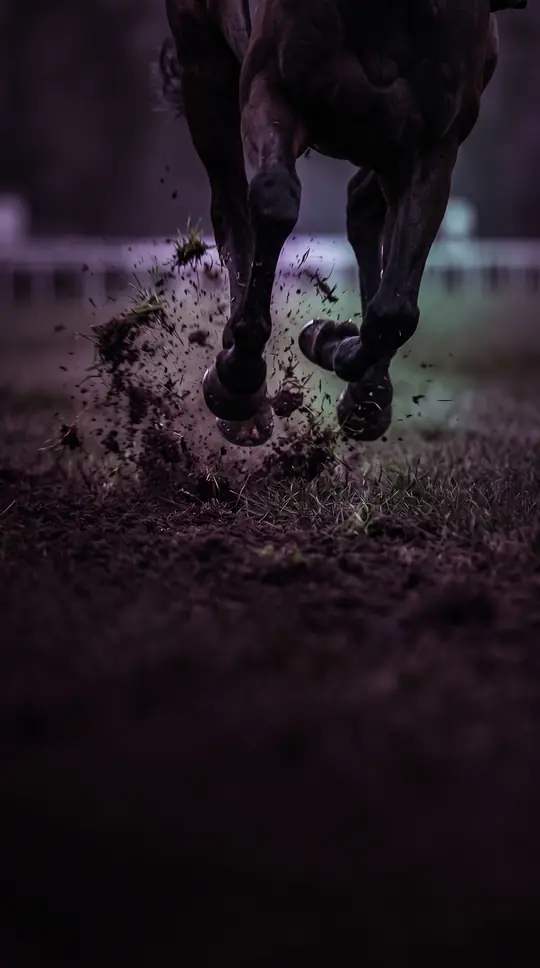
In short: For centuries, artists depicted galloping horses with all four legs stretched out in mid-air. High-speed photography finally debunked this myth in 1877, revealing that horses actually tuck their legs while airborne. This discovery changed our understanding of equine movement, proving that at full extension, at least one hoof remains grounded.
The movement of a horse is defined by its gait, a specific pattern of leg movement across solid ground. While horses possess natural gaits—the walk, trot, canter, and gallop—they can also be trained to perform specialized 'ambling' gaits. These four-beat patterns are prized for their smoothness, making them ideal for long-distance riding. Unlike the trot, which involves a jarring diagonal two-beat rhythm that often requires the rider to 'post' to avoid being jolted, ambling gaits offer a more comfortable experience by ensuring one foot is always bearing weight.
The gallop is the fastest of all equine gaits, reaching speeds of 40 to 48 kilometers per hour. While it resembles the canter, it is distinctively faster and, at high speeds, transitions into a four-beat sequence. The American Quarter Horse holds the record for extreme speed, clocking nearly 55 miles per hour in short sprints. However, this intensity is unsustainable; horses typically require rest after galloping just 1.5 to 3 kilometers. The mechanics of this gait were famously clarified in 1877 when Leland Stanford commissioned Eadweard Muybridge to photograph a horse in motion, settling a long-standing debate about whether horses were ever fully airborne.
Beyond natural movement, genetics play a significant role in how horses travel. Research, including a 2012 study on Icelandic horses, suggests that lateral ambling gaits are linked to a mutation on the DMRT3 gene. This discovery highlights how selective breeding and natural biology converge to create specialized movement patterns. Whether it is the rhythmic walk of a Tennessee Walking Horse or the high-speed 'flying pace' of an Icelandic horse, these gaits represent a sophisticated interplay of anatomy, training, and evolutionary adaptation that continues to fascinate equestrians and scientists alike.
Opens the Intellect+ feed with this card first. Swipe up for the next one.
Sources
- Summary by Intellect · source: Horse gait
- Also: Wikidata — horse gait · CC0
- Also: Wikidata — Horse Gait Terms in Turkic Languages of Siberia (Compared to Mongolic Languages) · CC0
To cite this card, link to https://intellectplus.co.uk/app/sport-horse-gait.
How we source, check and correct cards: Editorial standards.
General information, not professional advice. Spotted an error? Flag the card or see corrections and complaints.
Intellect Plus is a visual educational discovery platform for exploring fascinating facts and ideas. Brain Food, Not Brain Rot. What is Intellect Plus?
Related
More in Sports and recreation · More in Sport & Games · Latest · A–Z · All topics
