Why the world's fastest, most efficient chips might soon ditch the global clock
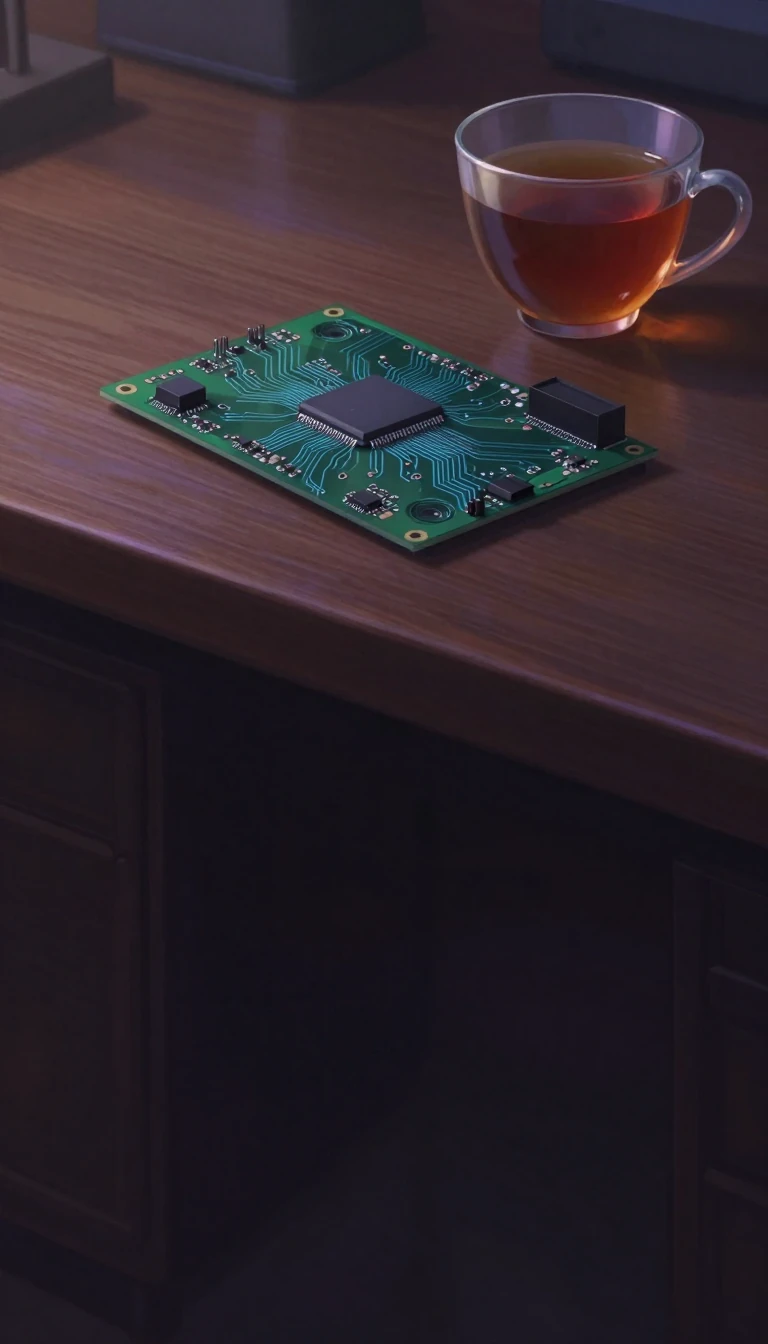
In short: Modern electronics rely on a global clock to synchronize every operation, but this rigid pulse creates massive power waste and design bottlenecks. Asynchronous circuits abandon this heartbeat entirely, allowing components to communicate through local handshaking. This shift promises faster, cooler, and more resilient chips that adapt to their own environment.
Most digital devices today operate on synchronous logic, where a central oscillator dictates the pace of every component. This design requires a global clock signal to trigger state changes simultaneously across the entire integrated circuit. While this approach is standard, it forces designers to account for the 'critical path'—the slowest logic gate in the system—which dictates the maximum speed for the entire chip. Consequently, faster paths remain idle, and the clock distribution network consumes significant power even when the device is not processing data.
Asynchronous circuits, or clockless circuits, eliminate this global signal. Instead, they use handshaking protocols to signal the completion of tasks, allowing components to operate at their own natural speed. This architecture offers several advantages: circuits can adapt to temperature and voltage fluctuations, avoid the 'clock skew' problems that plague large synchronous chips, and significantly reduce electromagnetic interference. Because they only switch when necessary, they can achieve zero standby power consumption. In 2005, Epson reported a 70% reduction in power usage compared to a synchronous equivalent.
Despite these benefits, asynchronous design remains a niche field. These circuits are notoriously difficult to test and debug because they are susceptible to 'race conditions,' where the output depends on the relative arrival times of signals. Furthermore, the industry lacks the mature, dedicated design automation tools available for synchronous systems. While researchers like David E. Muller, who pioneered the theory in the 1950s, and later figures like Karl M. Fant have advanced the field, the added area overhead required for handshaking logic often keeps these designs limited to critical, high-performance subsystems.
The transition toward asynchronous logic is driven by the need to overcome the physical limits of shrinking transistors. As manufacturing variations increase, the robustness of clockless designs becomes increasingly attractive. By moving away from rigid, pulse-driven architectures, engineers are exploring a future where circuits are 'correct by design,' modular, and inherently more efficient.
Opens the Intellect+ feed with this card first. Swipe up for the next one.
Sources
- Summary by Intellect · source: Asynchronous circuit
To cite this card, link to https://intellectplus.co.uk/app/technology-asynchronous-circuit.
How we source, check and correct cards: Editorial standards.
General information, not professional advice. Spotted an error? Flag the card or see corrections and complaints.
Intellect Plus is a visual educational discovery platform for exploring fascinating facts and ideas. Brain Food, Not Brain Rot. What is Intellect Plus?
Related
More in Electronics · More in Technology · Latest · A–Z · All topics
