Why the humble ball joint is the silent hero of modern automotive steering
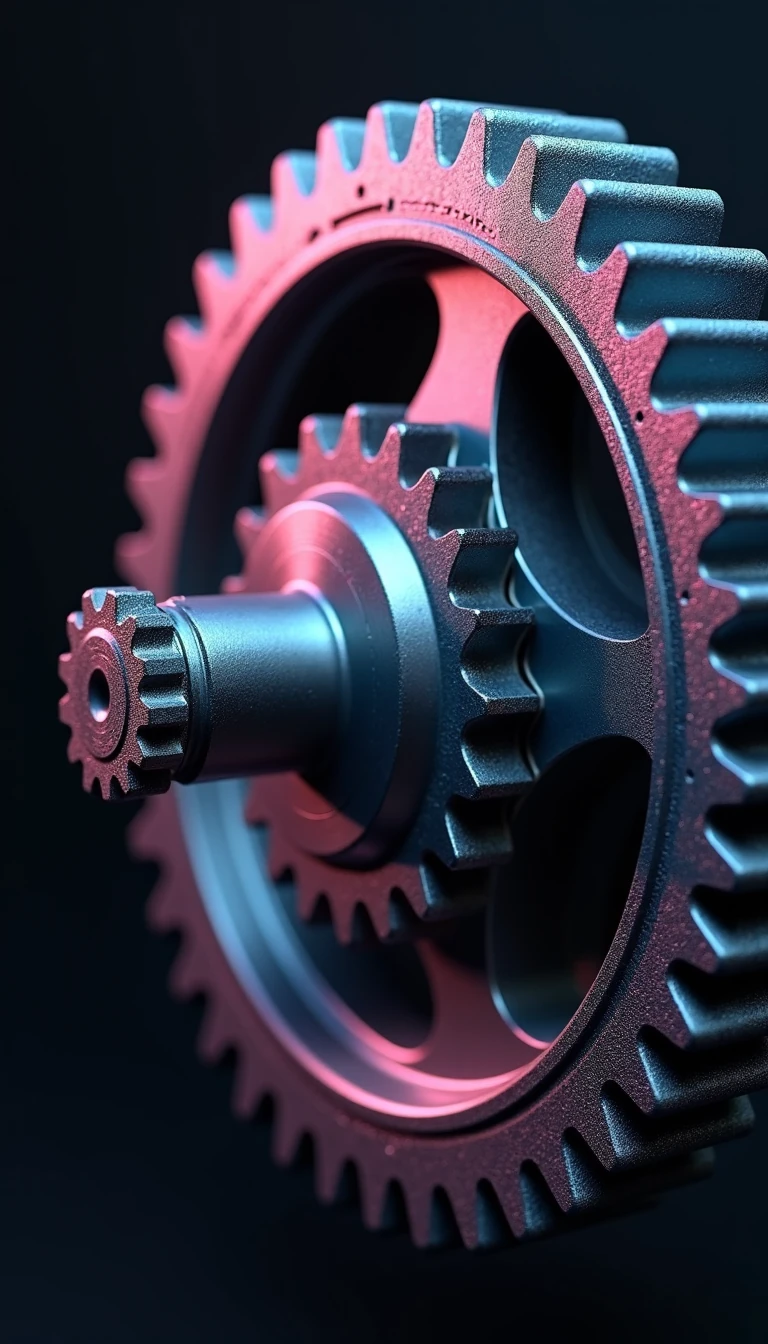
In short: Before ball joints, cars relied on rigid kingpins that restricted design and handling. By mimicking the ball-and-socket anatomy of tetrapods, these steel bearings unlocked three-axis articulation. This shift allowed for smoother rides, precise steering geometry, and the compact front-wheel-drive layouts that define almost every vehicle on the road today.
The transition from kingpin suspension to ball joints represented a fundamental leap in automotive engineering. Older kingpin designs required parallel control arm axes, severely limiting a designer's ability to adjust caster or camber without inducing mechanical stress. Because kingpins occupied the center of the wheel, they were incompatible with front-wheel-drive configurations. Ball joints, by contrast, connect the control arms to the steering knuckle at the top and bottom, leaving the center open for drive shafts.
Mechanically, a ball joint consists of a steel bearing stud inside a socket, protected by a rubber boot. By allowing free rotation in two planes simultaneously while preventing unwanted translation, these joints enable the suspension to absorb bumps while maintaining precise tire-to-road contact. This flexibility allows manufacturers to fine-tune suspension geometry, resulting in better stability and tire longevity. In modern vehicles, these joints are almost universally used in front suspensions, with some high-performance models incorporating them in the rear as well.
Maintenance has evolved alongside the technology. While older joints required periodic greasing via a zerk fitting every 1,000 to 2,000 miles, modern cars almost exclusively use sealed-for-life units. This shift was necessitated by longer service intervals and the reality that owners rarely performed manual lubrication. New designs, utilizing sintered metal bearings and improved seals, allow these components to last significantly longer, though they can still fail after roughly 80,000 miles. Failure is a critical safety event, as the loss of constraint on the wheel angle can lead to a sudden loss of control.
Beyond the automobile, the principle of the spherical joint appears in diverse applications, from doll joints to complex robotics. In parallel robotics, such as the Stewart platform, high-precision spherical rolling joints (SRJs) are used to achieve low friction and minimal backlash. Whether in a family sedan or a precision robotic arm, these joints remain essential for any system requiring multi-axis rotation within a compact, rigid assembly.
Opens the Intellect+ feed with this card first. Swipe up for the next one.
Sources
- Summary by Intellect · source: Ball joint
To cite this card, link to https://intellectplus.co.uk/app/technology-ball-joint.
How we source, check and correct cards: Editorial standards.
General information, not professional advice. Spotted an error? Flag the card or see corrections and complaints.
Intellect Plus is a visual educational discovery platform for exploring fascinating facts and ideas. Brain Food, Not Brain Rot. What is Intellect Plus?
Related
More in Machinery and tools · More in Technology · Latest · A–Z · All topics
