The trillion-unit component powering your electronics is a masterpiece of ceramic engineering
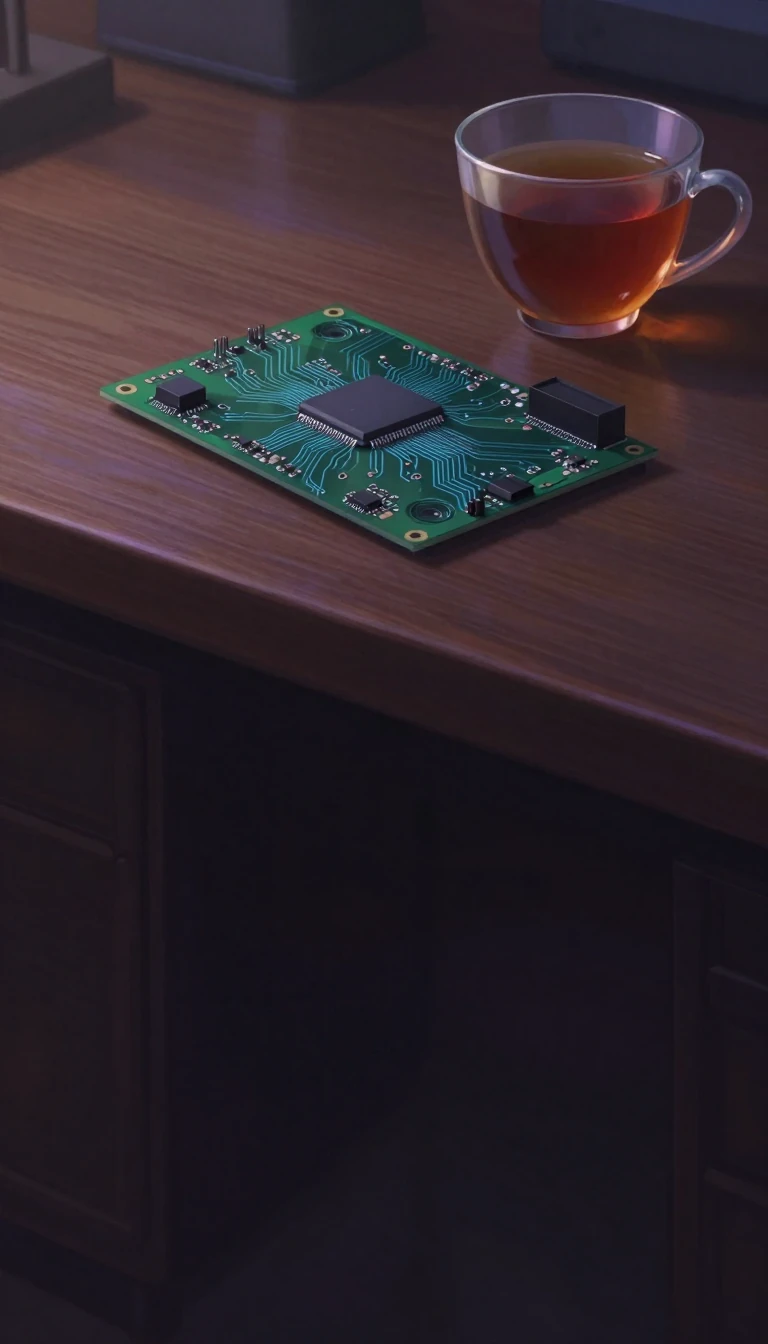
In short: Ceramic capacitors are the silent workhorses of modern technology, with over one trillion produced annually. From the early days of porcelain insulators to today's compact multilayer chips, these components have evolved through complex material science to become the most widely used capacitors in electronic devices across the globe.
The story of the ceramic capacitor began in the 1920s, born from a necessity to replace scarce mica. German engineers pioneered the use of titanium dioxide, a paraelectric material, to create stable capacitors for radio equipment. These early devices were simple discs, but they laid the groundwork for a massive industry that would eventually support everything from vacuum-tube radios to the sophisticated circuitry of the Apollo program.
The true revolution arrived with the discovery of barium titanate in 1921. This ferroelectric ceramic offered a permittivity roughly ten times higher than previous materials, allowing for much greater capacitance in smaller packages. This breakthrough enabled the development of multilayer ceramic capacitors (MLCCs), which stack thin layers of ceramic and metal. By the 1980s, these compact chips became the catalyst for shifting electronics manufacturing away from through-hole components toward surface-mount assembly, fundamentally changing how devices are built.
Today, ceramic capacitors are categorized into classes based on their electrical behavior. Class 1 capacitors, using paraelectric materials, prioritize stability and precision, making them ideal for resonant circuits. In contrast, Class 2 capacitors leverage ferroelectric materials to achieve high volumetric efficiency, perfect for buffering and signal coupling where absolute precision is secondary to size. The industry also saw a major shift in 1993, when TDK Corporation replaced expensive palladium electrodes with nickel, a move that slashed production costs and secured the mass-market dominance of MLCCs.
Standardization has been a long-running challenge, with the International Electrotechnical Commission (IEC) and the Electronic Industries Alliance (EIA) historically using different classification systems. While the EIA ceased operations in 2011, its legacy codes remain common in datasheets, often causing confusion for engineers. Since 2010, a global push toward IEC harmonization has sought to unify these definitions, ensuring that the components driving our digital world are as reliable as they are ubiquitous.
Opens the Intellect+ feed with this card first. Swipe up for the next one.
Sources
- Summary by Intellect · source: Ceramic capacitor
To cite this card, link to https://intellectplus.co.uk/app/technology-ceramic-capacitor.
How we source, check and correct cards: Editorial standards.
General information, not professional advice. Spotted an error? Flag the card or see corrections and complaints.
Intellect Plus is a visual educational discovery platform for exploring fascinating facts and ideas. Brain Food, Not Brain Rot. What is Intellect Plus?
Related
More in Electronics · More in Technology · Latest · A–Z · All topics
