A communication channel is more than just a wire; it is a mathematical concept.
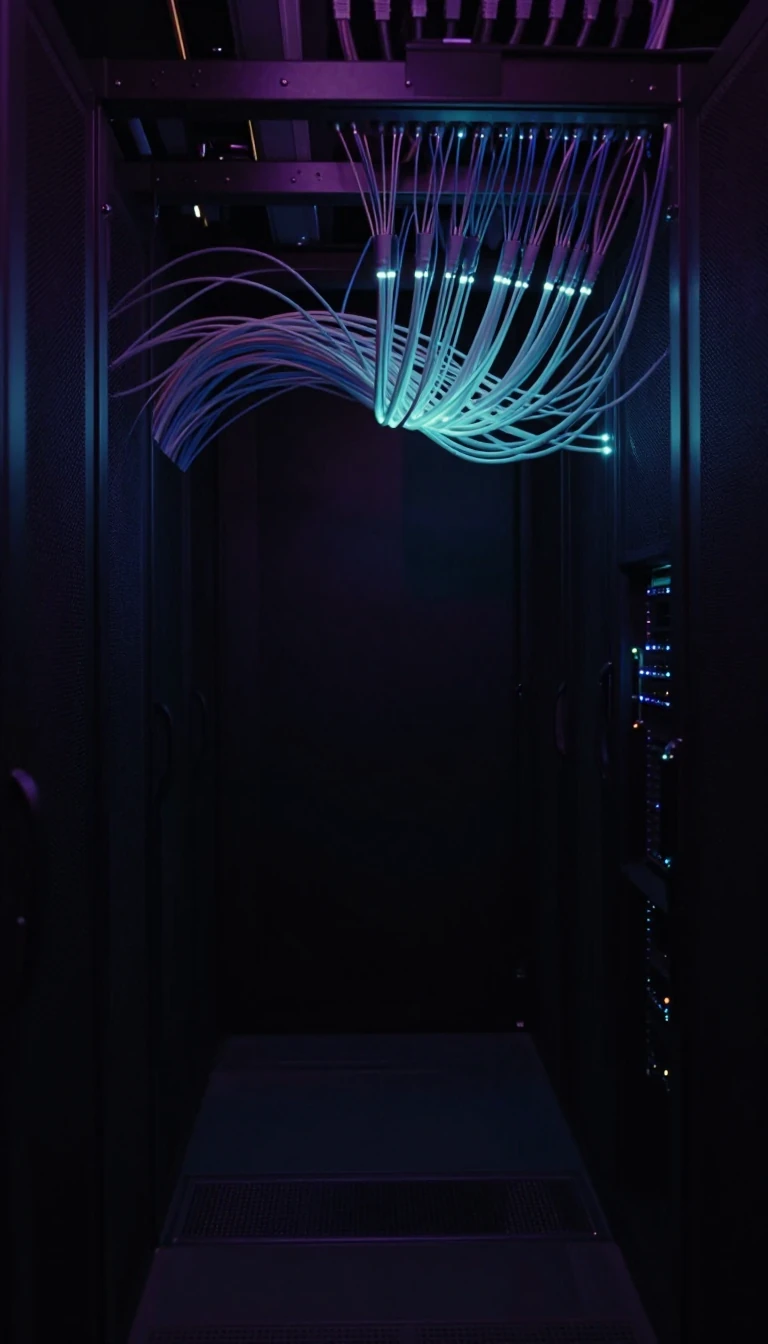
In short: We often think of communication channels as physical cables or radio waves. Yet, in information theory, a channel is a theoretical model that can even include storage devices. Whether moving data across space or time, these channels are defined by how they transform and potentially corrupt the signals they carry.
At its core, a communication channel is any medium that facilitates the transfer of information from a sender to a receiver. While we typically visualize this as a physical pathway—such as twisted-pair, coaxial, or fiber-optic cables—the concept extends to broadcast media like microwave, satellite, and infrared signals. Crucially, information theory expands this definition to include storage devices. By writing data to a disk and reading it later, you are effectively communicating an information signal across time, treating the storage medium as a channel.
To understand how these channels behave, engineers use mathematical models that describe how input signals map to output signals. These models are essential for predicting performance, accounting for factors like signal attenuation, electronic noise, and external interference. Statistically, a channel is often represented as a tuple consisting of input and output alphabets, alongside transition probabilities that define the likelihood of a specific symbol being received given a specific symbol was transmitted. This allows for the analysis of complex phenomena like fading, where signal power fluctuates due to environmental interactions.
Models are categorized based on their specific characteristics. Digital models, for instance, focus on metrics like bit error rates and packet loss, utilizing frameworks such as the Binary Symmetric Channel or the Binary Erasure Channel. Conversely, analog models address continuous impairments like additive white Gaussian noise, intersymbol interference, and frequency-dependent distortion. By isolating these variables, researchers can simulate the physical processes of transmission, from the reflection of radio waves off objects to the non-linear distortions inherent in complex hardware, ensuring that data remains intelligible despite the inherent imperfections of the medium.
Opens the Intellect+ feed with this card first. Swipe up for the next one.
Sources
- Summary by Intellect · source: Communication channel
To cite this card, link to https://intellectplus.co.uk/app/technology-communication-channel.
How we source, check and correct cards: Editorial standards.
General information, not professional advice. Spotted an error? Flag the card or see corrections and complaints.
Intellect Plus is a visual educational discovery platform for exploring fascinating facts and ideas. Brain Food, Not Brain Rot. What is Intellect Plus?
Related
More in Electronics · More in Technology · Latest · A–Z · All topics
