Do androids mirror our own humanity, or are we simply becoming mechanical ourselves?
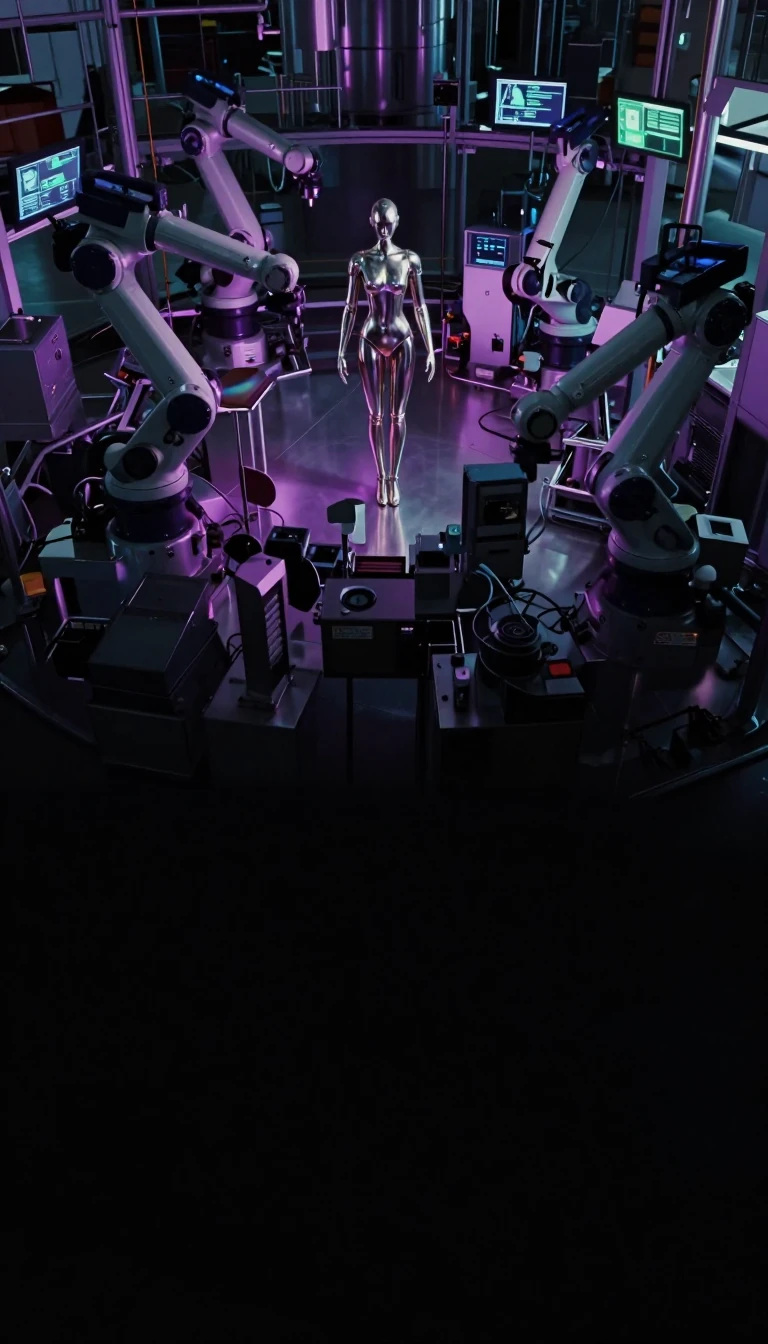
In short: In Philip K. Dick’s 1968 novel, Earth is a radioactive wasteland where owning a real animal is a luxury and androids are indistinguishable from humans. As bounty hunter Rick Deckard tracks down escaped Nexus-6 models, he discovers that the line between artificial constructs and human empathy is dangerously thin.
Set in a post-apocalyptic San Francisco, the novel presents a world where nuclear war has rendered most animal life extinct. This scarcity transforms living creatures into status symbols, forcing the less fortunate to settle for electric imitations. Meanwhile, humans are incentivized to migrate to off-world colonies, often receiving biologically engineered androids as servants. These Nexus-6 models are so sophisticated that they can only be identified through specialized empathy tests or bone marrow analysis.
The protagonist, Rick Deckard, is tasked with 'retiring' six escaped androids. His journey is not merely a hunt but a psychological confrontation. As he encounters these beings, he finds they often display more humanity than the people around him. Dick uses these androids as a mirror, challenging the reader to consider whether our own environment—filled with interlinking systems and artificial constructs—is becoming 'quasi-alive' and fundamentally analogous to our own existence.
Critics have long debated the novel's deeper implications. Some, like Klaus Benesch, suggest the androids function as a social 'mirror stage,' where human anxiety about machines reflects a deeper uncertainty about our own identity. Others, like Sherryl Vint, argue that the obsession with animals highlights our alienation from nature. Ultimately, the story serves as a bildungsroman of the cybernetic age, forcing Deckard—and the reader—to confront the encroaching reality of a world where the distinction between the organic and the mechanical is rapidly dissolving.
Opens the Intellect+ feed with this card first. Swipe up for the next one.
Sources
- Summary by Intellect · source: Do Androids Dream of Electric Sheep?
To cite this card, link to https://intellectplus.co.uk/app/technology-do-androids-dream-of-electric-sheep.
How we source, check and correct cards: Editorial standards.
General information, not professional advice. Spotted an error? Flag the card or see corrections and complaints.
Intellect Plus is a visual educational discovery platform for exploring fascinating facts and ideas. Brain Food, Not Brain Rot. What is Intellect Plus?
Related
More in Technology today · More in Technology · Latest · A–Z · All topics
