Can we replicate the power of the stars to solve our energy crisis?
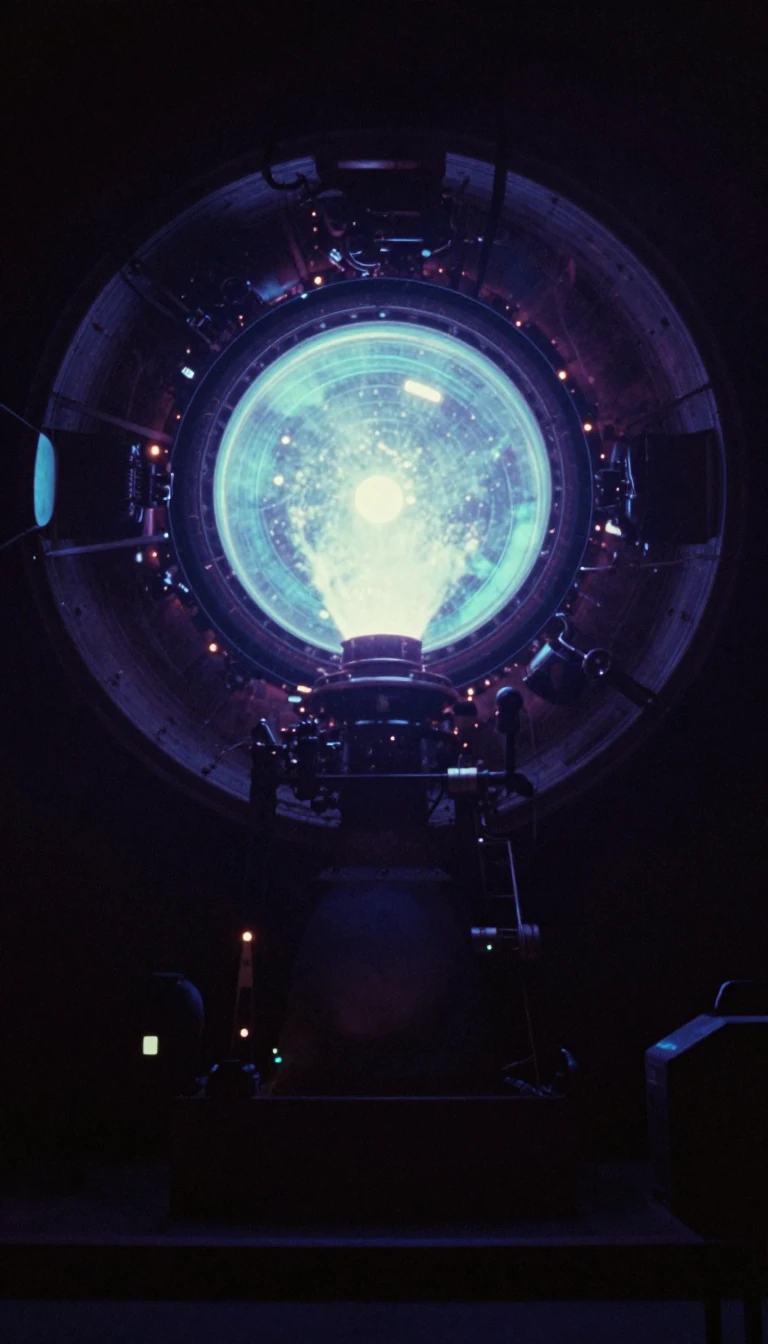
In short: Nuclear fusion promises near-limitless energy by mimicking the process that powers stars. By fusing light atomic nuclei into heavier ones, we can release immense energy. While researchers have chased this goal since the 1940s, achieving a sustained, net-positive energy output remains one of humanity's most daunting technical challenges.
At its core, fusion requires overcoming the Coulomb barrier—the electrostatic repulsion between positively charged nuclei. To force them together, fuel must reach a plasma state, a superheated cloud of ions and electrons. The Lawson criterion dictates that to generate usable energy, a system must balance the triple product of plasma density, temperature, and confinement time, ensuring energy production exceeds losses from conduction and radiation.
Two primary methods dominate current research. Magnetic confinement fusion, exemplified by the tokamak design, uses powerful magnetic fields to trap plasma in a vacuum. The ITER project in France represents the largest effort in this field, relying on massive scale to suppress plasma instabilities. Conversely, inertial confinement fusion, such as that at the National Ignition Facility in the United States, uses high-energy lasers to compress fuel pellets to extreme densities, triggering fusion in mere microseconds.
The most common experimental approach uses deuterium and tritium, isotopes of hydrogen. Because tritium is scarce and decays rapidly, future commercial reactors will likely incorporate lithium breeding blankets to generate fuel on-site. Once fusion occurs, the energy is typically captured by heating a fluid to drive turbines. While fusion offers significant safety advantages over fission and produces minimal radioactive waste, the intense neutron radiation poses a long-term engineering hurdle, as it gradually degrades the reactor's structural integrity.
Beyond the standard deuterium-tritium cycle, researchers are exploring aneutronic reactions, such as proton-boron fusion, which release energy primarily through charged particles. This could theoretically allow for direct energy conversion, bypassing the need for traditional heat engines. Despite the complexity, the pursuit continues because the energy density of fusion fuel is unparalleled, offering a potential path toward a sustainable, high-output energy future.
Opens the Intellect+ feed with this card first. Swipe up for the next one.
Sources
- Summary by Intellect · source: Fusion power
To cite this card, link to https://intellectplus.co.uk/app/technology-fusion-power.
How we source, check and correct cards: Editorial standards.
General information, not professional advice. Spotted an error? Flag the card or see corrections and complaints.
Intellect Plus is a visual educational discovery platform for exploring fascinating facts and ideas. Brain Food, Not Brain Rot. What is Intellect Plus?
Related
More in Technology today · More in Technology · Latest · A–Z · All topics
