The silent, invisible computers that run your life from inside your appliances
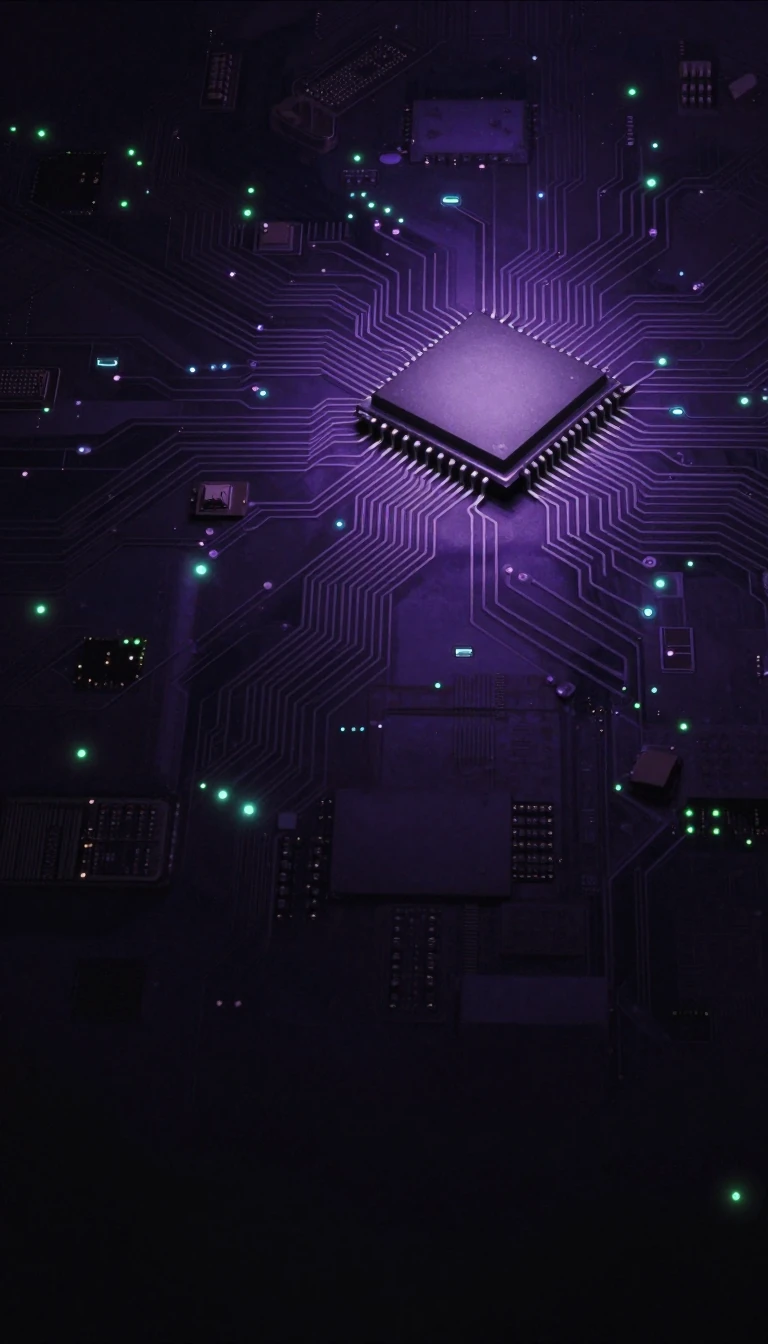
In short: You likely own dozens of microcontrollers, yet you never see them. These tiny, self-contained computers power everything from your car's engine to your microwave. Unlike the general-purpose processors in your laptop, these specialized chips are designed to perform specific tasks efficiently, reliably, and at an incredibly low cost.
A microcontroller is a compact computer integrated onto a single circuit, housing one or more processor cores alongside memory and programmable peripherals. While a microprocessor in a personal computer relies on external chips for memory and input, a microcontroller integrates these components, making it an ideal, economical choice for embedded systems. These devices are ubiquitous; a typical home in a developed country contains about three dozen microcontrollers, while a mid-range automobile uses around 30 to manage functions like engine control and entertainment.
The evolution of these chips began in the early 1970s. TI engineers Gary Boone and Michael Cochran are credited with creating the first microcontroller, the TMS 1000, which became commercially available in 1974. Intel followed in 1977 with the 8048, a chip that eventually powered over one billion PC keyboards. Early versions required expensive ceramic packages with quartz windows for ultraviolet erasure during prototyping. By 1993, the introduction of electrically erasable memory—and later Flash memory—revolutionized development, allowing for rapid, low-cost prototyping and in-system programming.
Modern microcontrollers are marvels of miniaturization and efficiency. Some operate at frequencies as low as 4 kHz, consuming mere microwatts, while others handle performance-critical tasks. They are designed to respond to real-time events through interrupt systems, which allow the processor to pause its current task to handle external signals like a button press or sensor input. This capability is essential for the Internet of Things, where microcontrollers act as edge devices for sensing and actuating the physical world.
The industry continues to push boundaries. In 2018, the University of Michigan announced a 0.04 mm³ device, described as the world's smallest computer, which uses light for power and communication. As 32-bit architectures increasingly dominate the market, these chips are becoming more powerful and precise, yet remain remarkably affordable. With manufacturing costs sometimes falling under US$0.10 per unit, microcontrollers remain the fundamental building blocks of our digital infrastructure, quietly controlling the machinery of modern life.
Opens the Intellect+ feed with this card first. Swipe up for the next one.
Sources
- Summary by Intellect · source: Microcontroller
To cite this card, link to https://intellectplus.co.uk/app/technology-microcontroller.
How we source, check and correct cards: Editorial standards.
General information, not professional advice. Spotted an error? Flag the card or see corrections and complaints.
Intellect Plus is a visual educational discovery platform for exploring fascinating facts and ideas. Brain Food, Not Brain Rot. What is Intellect Plus?
Related
More in Computing and information technology · More in Technology · Latest · A–Z · All topics
