The relentless drive to shrink technology is reshaping everything from microchips to spacecraft
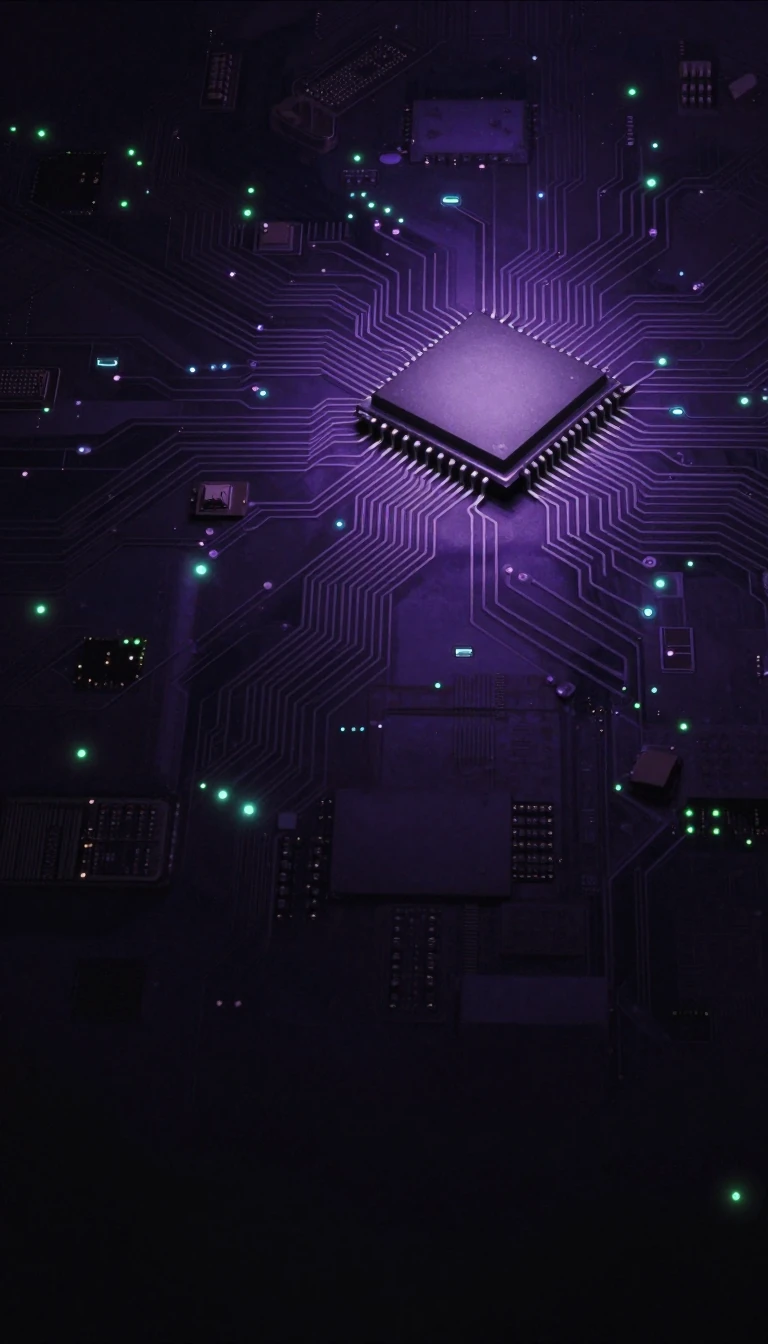
In short: Miniaturization is more than just making gadgets smaller. It is a fundamental engineering shift that has defined the last fifty years, transforming bulky vacuum-tube computers into high-density silicon chips. By shrinking components to the nanometer scale, we achieve faster performance, lower power consumption, and entirely new medical and mechanical possibilities.
The history of modern miniaturization is inextricably linked to the evolution of information technology. During the Second Industrial Revolution, between 1870 and 1914, the focus was limited to two-dimensional electronic circuits. The transition from vacuum tubes to transistors in the 1950s marked a pivotal shift, but the true catalyst for mass-produced, compact electronics was the invention of the MOSFET at Bell Labs between 1955 and 1960. Its high scalability and low power requirements allowed for unprecedented transistor density on integrated circuits.
This progress was famously captured by Gordon Moore, who in 1965 predicted that the number of transistors on a chip would double every 18 months for minimum cost. By 1974, Robert H. Dennard of IBM formulated the scaling rules that governed this rapid development. By 2004, manufacturers were producing chips with features as small as 130 nanometers. Reaching these dimensions required critical innovations, including larger wafer sizes, sophisticated metal interconnects, and advanced photoresist polymers used in photolithography.
While electronics led the way, the so-called Third Industrial Revolution, spanning roughly 1969 to 2015, expanded these principles to three-dimensional mechanical objects. This is significantly more complex because structural properties change as physical parts are reduced in scale. Today, the field is pushing into the nanometer range, impacting everything from medical devices—which become less invasive and more portable—to aerospace engineering, where researchers are developing small spacecraft that replace larger, traditional systems through modular architecture and microelectromechanical systems (MEMS).
Opens the Intellect+ feed with this card first. Swipe up for the next one.
Sources
- Summary by Intellect · source: Miniaturization
- Also: www.britannica.com — Miniaturization | engineering | Britannica
To cite this card, link to https://intellectplus.co.uk/app/technology-miniaturization.
How we source, check and correct cards: Editorial standards.
General information, not professional advice. Spotted an error? Flag the card or see corrections and complaints.
Intellect Plus is a visual educational discovery platform for exploring fascinating facts and ideas. Brain Food, Not Brain Rot. What is Intellect Plus?
Related
More in Technology: General · More in Technology · Latest · A–Z · All topics
