From room-sized vacuum tubes to 5nm transistors: the shrinking giants of logic
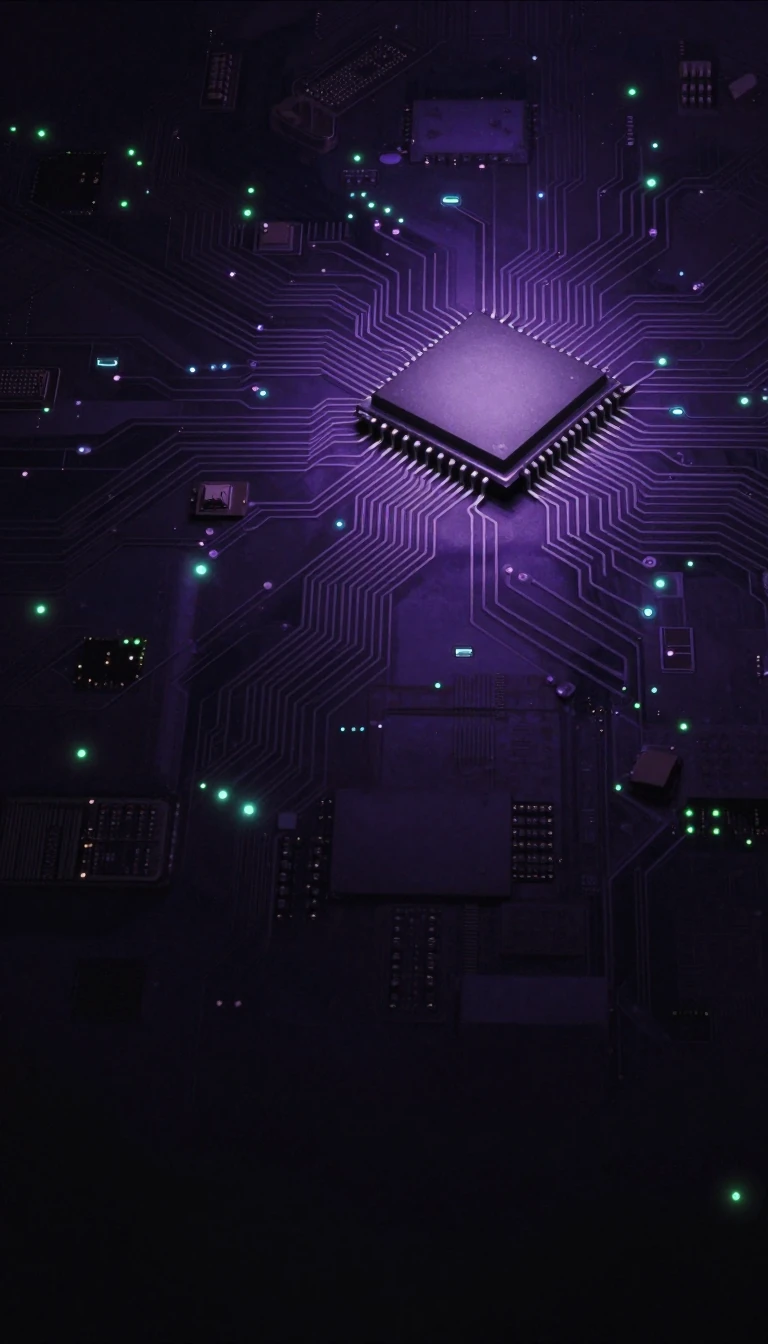
In short: Modern processors are marvels of density, packing billions of transistors into tiny chips. But the journey from the first general-purpose computers to today's AI accelerators involves a complex dance between functional requirements—what a chip does—and non-functional constraints, like the physical limits of silicon and power consumption.
The evolution of the processor began in the early 1950s with massive, power-intensive arrays of vacuum tubes. A landmark in this era was the Manchester Mark 1, recognized as one of the first processors capable of storing programs. The landscape shifted dramatically with the invention of the transistor, which allowed for denser, more power-efficient designs. This enabled computers to shrink from entire rooms down to desktop sizes, eventually leading to Moore's law, where processing power roughly doubled every year as transistors became smaller.
The transition to microprocessors occurred when transistors shrank enough to fit all necessary logic circuits onto a single monolithic integrated circuit. The Intel 4004 was the first generally-available single-chip microprocessor, bringing computing to calculators and pinball machines, while the Intel 8008 became the first for general-purpose use. Today, transistors have shrunk from original sizes of millimeters to less than 5nm, allowing for diverse specialized architectures like GPUs for parallel tasks like machine learning, DSPs for real-time signal processing, and QPUs for quantum computing.
Designing these units is an intricate process of balancing functional requirements, such as instruction sets and algorithms, against non-functional requirements like silicon area, pin count, and energy consumption. Developers must also navigate organizational architecture—the specific order of instructions to achieve a goal. While CPUs typically follow the von Neumann architecture, executing a fetch-decode-execute cycle, modern systems also utilize DPUs to integrate networking and NPUs to accelerate artificial intelligence, reflecting a move toward specialized hardware for specific computational demands.
Opens the Intellect+ feed with this card first. Swipe up for the next one.
Sources
- Summary by Intellect · source: Processor (computing)
To cite this card, link to https://intellectplus.co.uk/app/technology-processor-computing.
How we source, check and correct cards: Editorial standards.
General information, not professional advice. Spotted an error? Flag the card or see corrections and complaints.
Intellect Plus is a visual educational discovery platform for exploring fascinating facts and ideas. Brain Food, Not Brain Rot. What is Intellect Plus?
Related
More in Computing and information technology · More in Technology · Latest · A–Z · All topics
