Radio-frequency engineering masters the invisible waves powering our global, hyper-connected modern digital world.
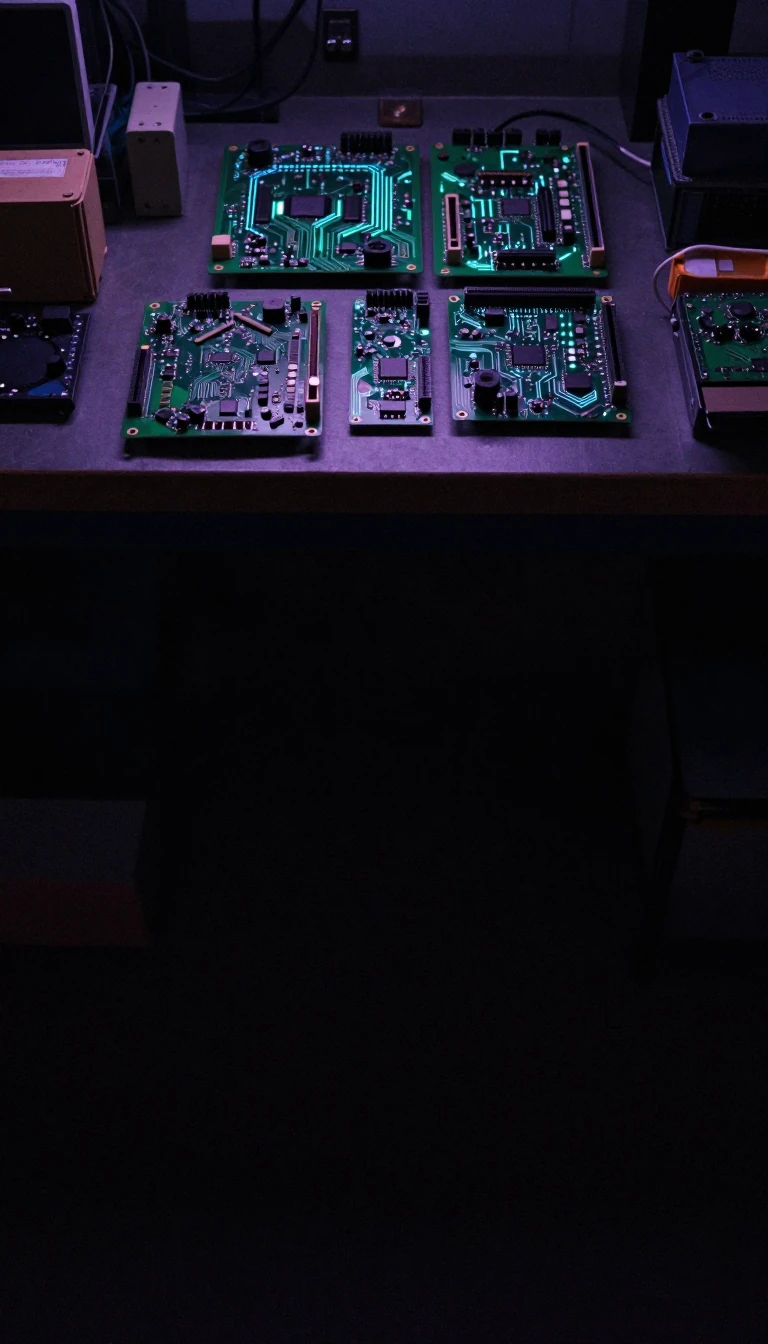
In short: Radio-frequency engineering governs the generation and transmission of electromagnetic waves from 1 MHz to hundreds of gigahertz. It is the silent force behind everything from mobile networks and radar to satellite links. Today, engineers are pushing boundaries with metasurfaces and machine learning to meet demands for faster, smaller connectivity.
At its core, radio-frequency (RF) engineering is the discipline of managing electromagnetic waves. It requires a delicate balance between theoretical electromagnetic physics and practical circuit-level analysis. Engineers must navigate complex constraints, including signal loss, noise, linearity, and power handling, while ensuring signal integrity across long or dispersive paths. They employ tools like antennas, waveguides, resonant cavities, and amplifiers to manipulate these waves, often working to mitigate interference through sophisticated filtering and duplexing techniques.
The field is currently undergoing a transformation driven by digital signal processing and machine-learning-assisted calibration. A major area of innovation is the development of metasurfaces—two-dimensional arrangements of subwavelength resonators that can precisely control the phase, amplitude, or polarization of incident waves. Recent research has yielded compact beam-steering devices that use semi-numerical approaches to reduce the computational burden of design. For instance, a 30 GHz prototype demonstrated sub-0.7° steering error, showcasing the potential for high-precision, passive surfaces in future systems.
Beyond traditional hardware, researchers are exploring novel materials to enhance performance in the terahertz band. By using organic mixed-ion–electron conductors, scientists have created flexible, low-voltage tunable metasurfaces that match the modulation capabilities of inorganic semiconductors. These developments are critical for creating mass-manufacturable, reconfigurable optics. As wireless data rates continue to climb, these advancements in reconfigurable architectures and miniaturization are essential for maintaining the global connectivity that defines modern life, from simple Wi-Fi to complex high-gain backhaul arrays.
Opens the Intellect+ feed with this card first. Swipe up for the next one.
Sources
- Summary by Intellect · source: Radio Frequency Engineering | Electronics, Sensors and Digital Hardware | Applied sciences | Topics | Nature Index
- Also: Radio-frequency engineering
To cite this card, link to https://intellectplus.co.uk/app/technology-radio-frequency-engineering.
How we source, check and correct cards: Editorial standards.
General information, not professional advice. Spotted an error? Flag the card or see corrections and complaints.
Intellect Plus is a visual educational discovery platform for exploring fascinating facts and ideas. Brain Food, Not Brain Rot. What is Intellect Plus?
Related
More in Technology: General · More in Technology · Latest · A–Z · All topics
