Scientific instruments are more than just tools; they are the social glue of discovery.
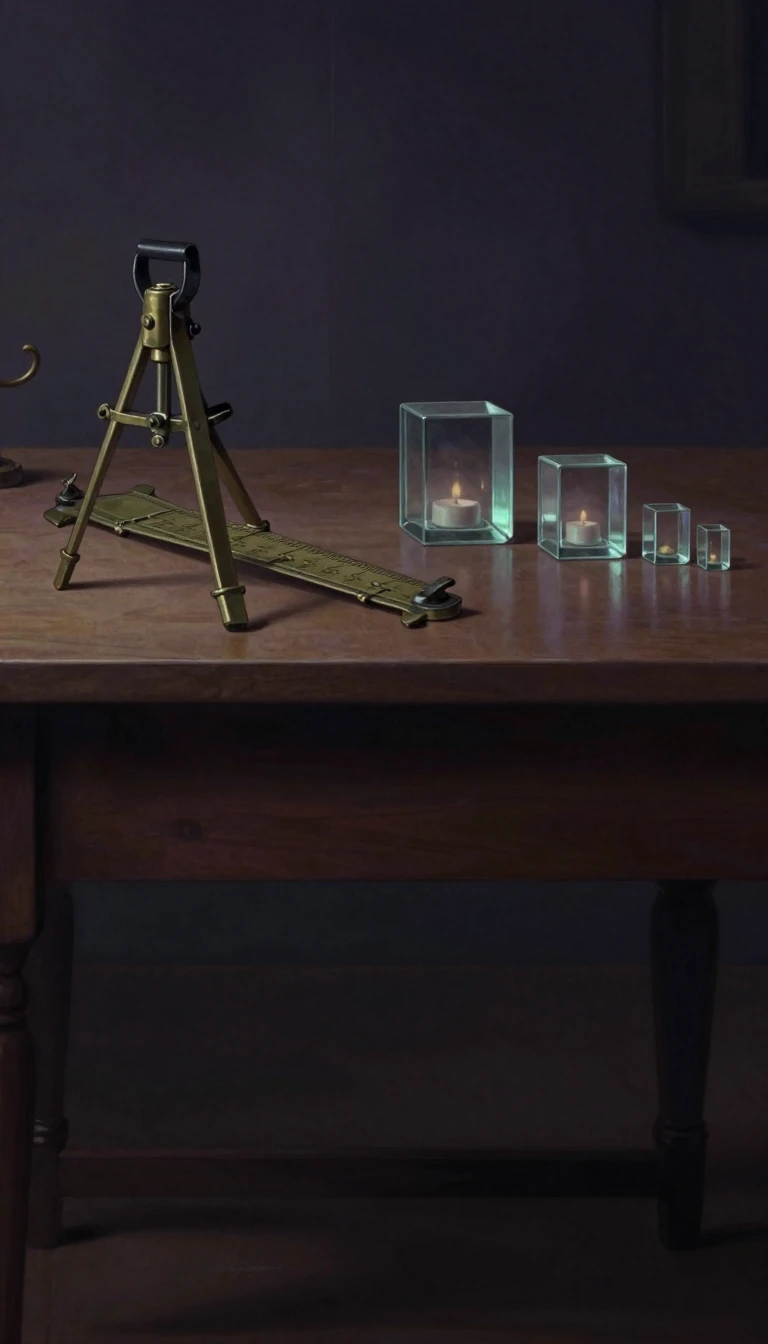
In short: We often view scientific instruments as cold, objective devices for measuring nature. Yet, history reveals they are deeply social artifacts. From the astrolabes of antiquity to modern particle colliders, these tools define research communities, shape scientific debates, and evolve through a complex interplay of technology, commerce, and human collaboration.
Before the mid-nineteenth century, the term 'scientific instrument' was rarely used. Instead, researchers relied on 'natural philosophical' apparatus. These early tools, including the astrolabe and pendulum clock, often defy our modern, narrow definition of instruments as devices designed strictly for quantitative or qualitative investigation. Historically, these objects were crafted by specialized makers who clustered around universities or research centers, refining designs until they were robust enough for commercial production.
The true power of an instrument lies in its ability to anchor a community. Consider the eudiometer used by Jan Ingenhousz to demonstrate photosynthesis. It was not merely a piece of hardware; it served as a focal point that held a disparate group of researchers together, even when they fundamentally disagreed on how to interpret its data or its proper application. This highlights that science is an activity grounded in an instrumental basis—a cocktail of techniques and social interactions that transcend pure theory.
The trajectory of instrumentation shifted dramatically during World War II, as the urgent need for analyzing fuels, medicines, and weaponized agents accelerated development. Today, the field is undergoing another transformation driven by digital integration. Modern analytical instruments are increasingly tethered to computers, laboratory information management systems, and the internet of things. This connectivity allows researchers to monitor experiments across vast distances, turning isolated laboratories into interconnected networks.
While we still rely on simple tools like rulers and thermometers, the frontier of instrumentation is moving toward extremes. We are seeing the rise of massive, complex structures like radio-telescope antennas and particle colliders, alongside the emergence of nanoscale technologies. From the MasSpec Pen, which can detect cancer, to biological nanobots, the scale of our tools is shrinking even as their complexity and capacity for data management continue to expand rapidly.
Opens the Intellect+ feed with this card first. Swipe up for the next one.
Sources
- Summary by Intellect · source: Scientific instrument
To cite this card, link to https://intellectplus.co.uk/app/technology-scientific-instrument.
How we source, check and correct cards: Editorial standards.
General information, not professional advice. Spotted an error? Flag the card or see corrections and complaints.
Intellect Plus is a visual educational discovery platform for exploring fascinating facts and ideas. Brain Food, Not Brain Rot. What is Intellect Plus?
Related
More in Technology: General · More in Technology · Latest · A–Z · All topics
