VHDL is the language that allows engineers to build hardware before it exists.
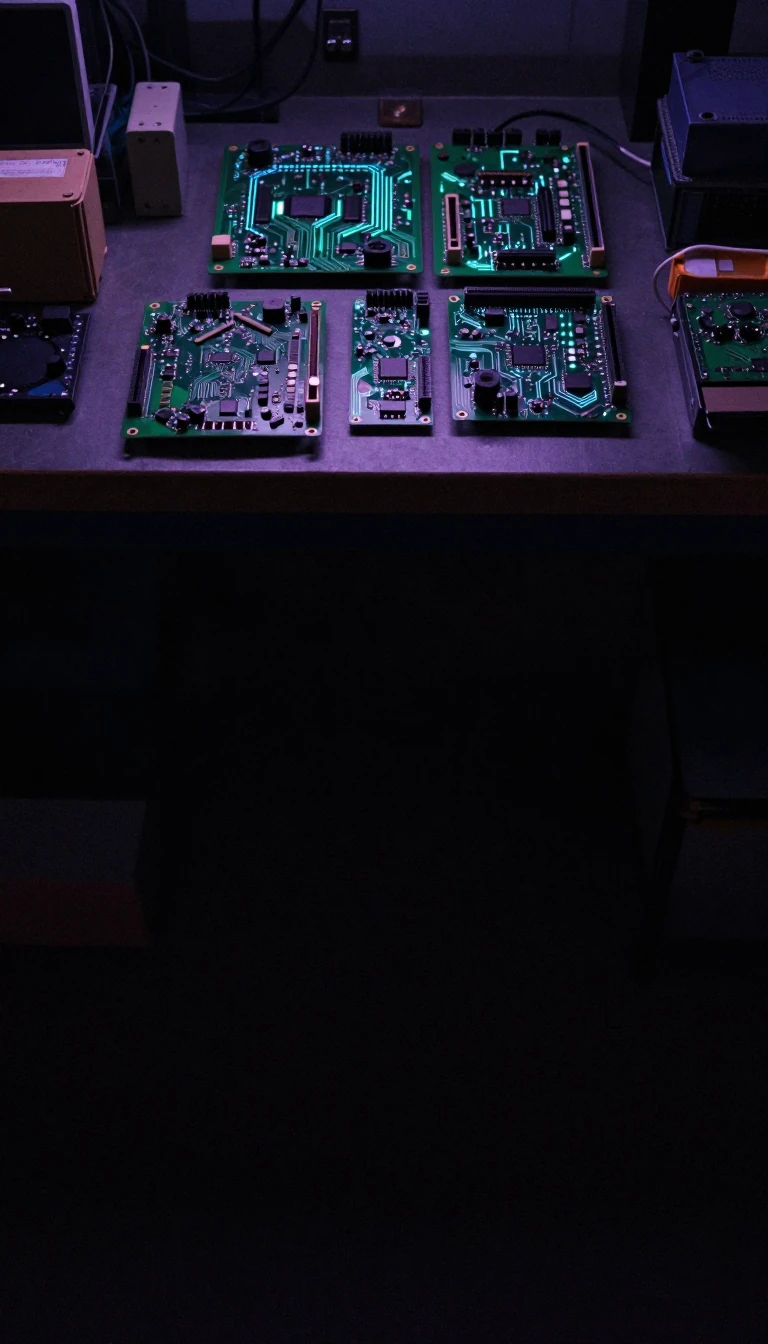
In short: VHDL is a hardware description language that models digital systems from logic gates to complex circuits. Developed for the U.S. military in the 1980s, it allows designers to simulate and verify hardware behavior before committing to physical manufacturing, effectively turning code into the actual gates and wires of silicon.
Commissioned by the U.S. Department of Defense in 1983, VHDL (VHSIC Hardware Description Language) was designed to document the behavior of ASICs. A team including Intermetrics, Inc., Texas Instruments, and IBM created the language, which draws heavily from Ada for its syntax and strong typing. By the time the first IEEE standard was published in 1987, it had become a vital tool for modeling, documenting, and verifying digital systems.
Unlike procedural languages like C, where instructions run sequentially, VHDL is a dataflow language designed to handle the inherent parallelism of hardware. Every statement is considered for execution simultaneously. This allows engineers to describe concurrent systems and simulate them using event-driven simulators. These simulators use an event queue to manage time, employing delta delays to represent infinitely small steps between statement execution and event processing.
The power of VHDL lies in its ability to bridge the gap between abstract design and physical implementation. Once a model is verified through a simulation testbench, synthesis tools can translate the code into a physical circuit definition. This process is portable, meaning a project designed for one technology can be adapted to another. However, it requires precision; inexperienced developers may accidentally create inefficient hardware, such as unintended transparent latches instead of D-type flip-flops.
Over decades, VHDL has evolved through numerous standards, including IEEE 1076-2008, which introduced major enhancements like external names and generic packages. Specialized extensions like VHDL-AMS allow for analog and mixed-signal design, while others like VITAL support ASIC libraries. Today, VHDL remains a cornerstone of electronic systems design, enabling the creation of complex, reusable, and portable hardware architectures.
Opens the Intellect+ feed with this card first. Swipe up for the next one.
Sources
- Summary by Intellect · source: VHDL
To cite this card, link to https://intellectplus.co.uk/app/technology-vhdl.
How we source, check and correct cards: Editorial standards.
General information, not professional advice. Spotted an error? Flag the card or see corrections and complaints.
Intellect Plus is a visual educational discovery platform for exploring fascinating facts and ideas. Brain Food, Not Brain Rot. What is Intellect Plus?
Related
More in Cars · More in Technology · Latest · A–Z · All topics
