The untethered explorers mapping the silent, crushing depths of our oceans
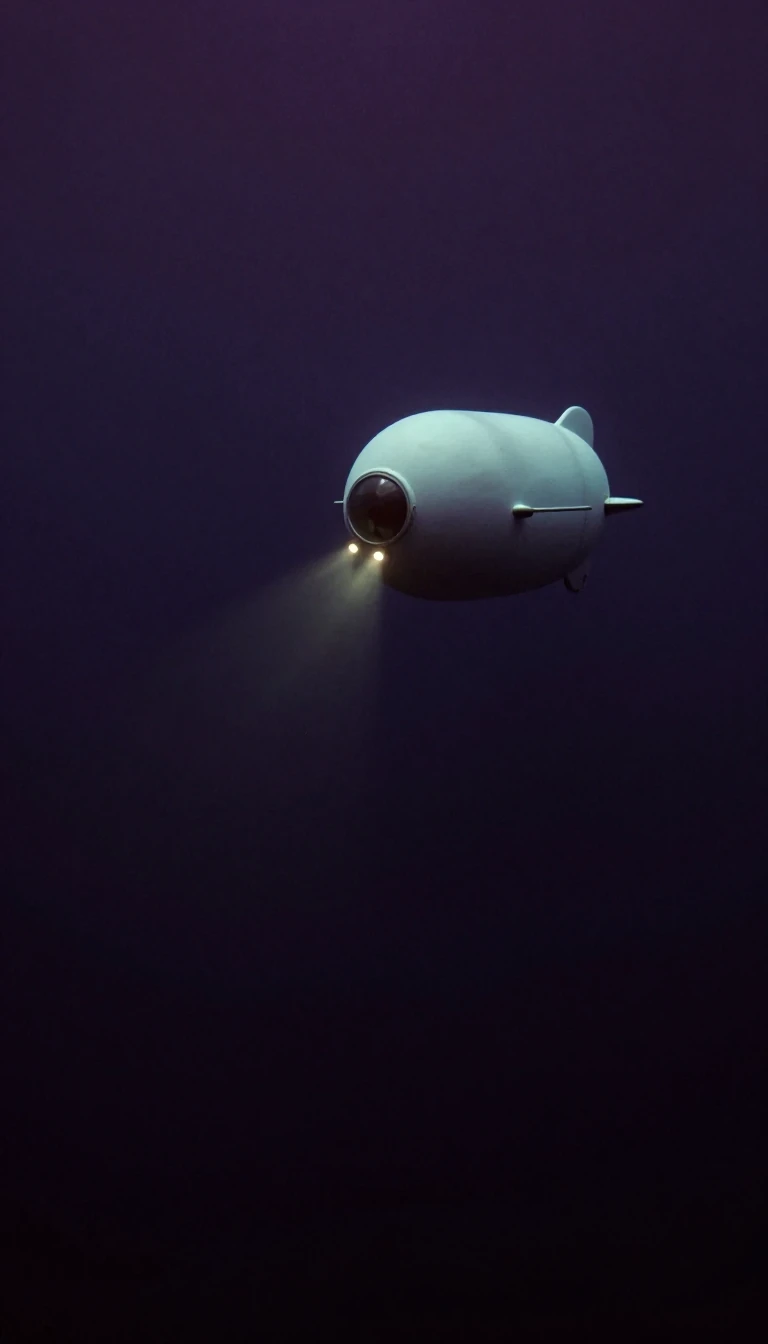
In short: Unlike traditional submersibles, these independent robots operate without a pilot or a physical connection to a surface ship. From tracking submarine wakes in the 1950s to protecting the Great Barrier Reef today, autonomous underwater vehicles are redefining how we survey the most inaccessible frontiers on Earth.
The lineage of autonomous underwater vehicles (AUVs) began as early as 1957 at the University of Washington's Applied Physics Laboratory. Pioneers Stan Murphy, Bob Francois, and Terry Ewart developed the SPURV, a vehicle designed to study acoustic transmission and submarine wakes. By the 1970s, development expanded to MIT and the Soviet Union, eventually evolving into the specialized deep-sea mapping tools used today.
Technologically, AUVs differ fundamentally from Remotely Operated Vehicles (ROVs). While ROVs rely on an umbilical cord for power and control, AUVs are untethered, executing pre-programmed trajectories. This independence allows them to navigate complex environments, such as the 130-meter-wide channels in the Firth of Lorne or the extreme pressures of the deep sea. Some models, like the torpedo-shaped Sentry, can survey topographic features up to 6,000 meters deep, while others are built with wider bodies to withstand immense crushing pressures.
The applications of this technology are remarkably diverse. In the energy sector, the oil and gas industry utilizes AUVs for cost-effective seafloor mapping and pipeline inspections. In conservation, the COTSBot uses neural networks to identify and eradicate crown-of-thorns starfish in the Great Barrier Reef. Meanwhile, scientific programs like the NERC 'Autosub Under Ice' initiative push the boundaries of exploration, deploying vehicles into the Antarctic and Arctic to study ice shelves and polar environments.
Despite their autonomy, these robots still require periodic human interaction. They often surface to update GPS positions via satellite or to allow researchers to download high-resolution data collected by onboard sensors, such as CTDs, fluorometers, and pH sensors. As they become more sophisticated, these 'robot submarines' continue to bridge the gap between surface knowledge and the mysteries of the deep.
Opens the Intellect+ feed with this card first. Swipe up for the next one.
Sources
- Summary by Intellect · source: Autonomous Underwater Vehicles | National Oceanography Centre
- Also: Autonomous Underwater Vehicles - NOAA Ocean Exploration
- Also: Autonomous underwater vehicle
To cite this card, link to https://intellectplus.co.uk/app/wars-autonomous-underwater-vehicle.
How we source, check and correct cards: Editorial standards.
General information, not professional advice. Spotted an error? Flag the card or see corrections and complaints.
Intellect Plus is a visual educational discovery platform for exploring fascinating facts and ideas. Brain Food, Not Brain Rot. What is Intellect Plus?
Related
More in Submarines · More in Wars & Conflicts · Latest · A–Z · All topics
