 Intellect Plus
Latest cards
The newest cards first. Page 17 of 50. Older cards are under their topics and in the A–Z index.
 How ancient philosophy offers a blueprint for modern emotional resilienceDiscover why Stoicism remains a cornerstone of practical wisdom. This video explores how this 400-year tradition teaches individuals to maintain composure and courage when facing …
 The art of non-action: finding power in yielding to the flowIn a world obsessed with striving, Taoism offers a radical alternative: wu wei. This concept of "effortless action" suggests that true effectiveness comes not from forced struggle…
 The moral math of maximizing happiness for everyoneIs an action right because of your intentions, or solely by its results? Utilitarianism argues that morality is a calculation. To do the right thing, you must look past your own m…
 How corporations secure your personal phone without invading your private lifeWhen you use a personal device for work, how does your company keep data safe without seeing your photos? The answer lies in containerization—a digital vault that separates corpor…
 From West Point artillery to the helm of a healthcare giantAlex Gorsky navigated one of the most complex corporate landscapes in modern history, leading Johnson & Johnson through massive litigation and market shifts. His journey from an A…
 The hidden architecture of a word processor's 'bundle'Saving a document in Apple Pages creates a complex container rather than a simple file. By renaming these bundles as zip folders, you can uncover internal components like unformat…
 The high-stakes tug-of-war over the architecture of your smartphoneFor a decade, Imagination Technologies powered the graphics in every iPhone. But when their biggest client decided to move on, it triggered a corporate drama involving multi-milli…
 The high cost of secrecy in the world's most private tech giantApple markets itself on privacy, yet internal reports describe a culture of fear where employees feel terrified to speak out. From alleged 'raids' on homes to secret police-style …
 How Apple spun off its own apps to save the MacIn 1987, Apple faced a dilemma: their bundled software was so good that third-party developers couldn't compete. To fix this, Apple did something rare—they handed over the source …
 The invisible tether: how your Apple Account governs your digital lifeAn Apple Account is more than a login; it is a central nervous system for your personal data. From syncing your health metrics to managing store purchases, this single identifier …
 A nation's history ignited: The mystery of Canada's church arsonsStarting in June 2021, a wave of suspicious fires destroyed Christian churches across Canada. While law enforcement struggled to find conclusive motives for most incidents, the ti…
 The man who rebranded the internet as a collective intelligenceBefore the modern web was a household staple, Tim O'Reilly was already mapping its DNA. From popularizing 'open source' to defining 'Web 2.0,' he shifted our understanding of tech…
 How to silence a room by playing the exact opposite of noiseSound is essentially a pressure wave of compression and rarefaction. Active noise control works by generating a second sound wave with an inverted phase—an antiphase signal. When …
 The Anti-Claude: The painter who traded pastoral peace for wild sublimeWhile his contemporaries painted serene, sun-drenched idylls, Salvator Rosa chose the jagged beach and the haunted ruin. A perpetual rebel of the Baroque era, he pioneered a 'subl…
 Your brain knows what it doesn't know—mostlyHave you ever felt that nagging sense of a forgotten name, certain you could recognize it if you saw it? This isn't just a glitch; it is metamemory. It is the brain's ability to m…
 Is your favorite probiotic actually surviving the journey to your gut?Streptococcus thermophilus is a staple of the global probiotic market, famous for its role in yogurt and its purported health benefits. But there is a significant scientific hurdl…
 Can we turn human breath into a digital health fingerprint?Measuring a smell was once considered impossible because it involves physical particles rather than simple energy. Today, NASA-developed technology is turning that challenge into …
 The rise and fall of Apple's dedicated server operating systemBefore macOS became a universal powerhouse, Apple sold a distinct OS for heavy lifting. From rack-mounted Xserve towers to the App Store's 'Server' app, this history reveals how A…
 The man who turned a $816 million loss into an iPod empireIn 1997, Apple was bleeding cash and losing its reputation as an innovator. Enter Jon Rubinstein: the engineer tasked with fixing a broken roadmap. He didn't just save the company…
 Two different worlds share the same nameThe term iWork describes two vastly different things: a suite of creative software and a specialized employment service in London. One helps you build digital documents, while the…
- Why an impact wrench can turn a rusted bolt but not a springImagine a tool capable of loosening massive, seized industrial bolts while being completely unable to tighten a small screw on a spring. This counter-intuitive behavior stems from…
- From DOS 'Nutshell' to a Workplace Innovation PlatformBefore it was an Apple subsidiary staple, FileMaker began as a humble MS-DOS program called Nutshell. Its journey from a simple data engine to a cross-platform relational database…
 The digital return of the monoculture: why we still crave human curationIn an era of hyper-personalized algorithms, a global radio station offers something different: a shared musical experience. Apple Music 1 (formerly Beats 1) leans into the "old-sc…
 The government's plan to 'free' Indigenous people by erasing their identityIn 1969, the Canadian government proposed a radical policy to abolish all treaties and legal statuses of First Nations. They framed it as a path to equality—moving from "wards of …
 The man who claimed all knowledge as his provinceIn the early 17th century, England existed in a philosophical vacuum. For over two hundred years, serious philosophy had virtually ceased to develop in the country. Into this sile…
 A 19-minute map of the human search for meaningThis video provides a rapid overview of the major schools of thought in philosophy. It is designed to spark curiosity and serve as an entry point for those looking to explore comp…
 Can we be good without the guidance of religion?Immanuel Kant lived in an era where philosophy was beginning to replace religion as the primary source of moral authority. He sought to answer a fundamental question: how can huma…
 Temperature is not just heat; it is the speed of atomsWhen you feel a chill or a fever, you are experiencing the frantic dance of microscopic particles. Temperature isn't a static property like weight; it is a direct measurement of m…
 The intersection of British comedy and sporting iconsExperience a whimsical moment from the classic comedy series A Bit of Fry and Laurie. This clip features Hugh Laurie performing a unique musical tribute to tennis legend Steffi Gr…
 The chemical gatekeeper of your gut's movement is serotoninIs the movement of your intestines a simple mechanical reflex or a complex chemical conversation? Research suggests that serotonin (5-HT) isn't just a bystander in digestion; it a…
 How do we measure 'making a difference' in public service?From celestial collisions to social care, 'impact' describes the measurable change resulting from an action. In the UK, this concept is being operationalized into structured caree…
 The liver can rebuild itself from just 10% of its original massUnlike most organs, the liver possesses an extraordinary ability to restore its own tissue after severe injury or surgical removal. It doesn't just heal; it undergoes a complex mu…
 The King of Siam predicted an eclipse more accurately than FranceIn 1868, a total solar eclipse revealed a new element to science. But the most precise calculations for its arrival didn't come from the established European academies—they came f…
 A medieval machine that mapped the universe before we knew its shapeThe Wells Cathedral clock is more than a timekeeper; it is a mechanical philosophy. Built in the late 14th century, it depicts a geocentric cosmos where the Earth sits still while…
- The mechanical heartbeat that traded precision for the birth of modern timeBefore the pendulum's steady beat, human civilization relied on a clunky, reciprocating dance of gears. The verge escapement was the first mechanism to break time into discrete ti…
 A medieval masterpiece that survived demolition and a century of neglectHidden in a cathedral tower for decades, the Salisbury Cathedral clock is often cited as the world's oldest working mechanical clock. It isn't just a relic; it is a complex feat o…
 The medieval machine that predicted tides and lunar nodesIn the early 14th century, a monk-turned-abbot designed a mechanical marvel so complex it rivaled the greatest engineering of the era. It didn't just tell time; it calculated the …
 A medieval machine that mapped the heavens in real timeIn 1364, an Italian engineer built a device so complex it functioned as a clock, a calendar, and a mechanical model of the solar system. While we often view the Middle Ages as tec…
 The medieval Islamic masterpiece that automated time with water and serpentsBefore the cuckoo clock, there was an elephant. In the 12th century, engineers designed a mechanical marvel that used gravity, hydraulics, and complex automata to track hours. It …
- The medieval clock tower was a community's first public heartbeatBefore everyone owned a watch, cities lived by the sound of bells. Clock towers weren't just aesthetic landmarks; they were essential infrastructure that synchronized human life, …
- The 18th-century mechanical boy that could write with real inkLong before Charles Babbage conceived of the modern computer, a French watchmaker was building programmable machines. These were not just toys; they were sophisticated feats of en…
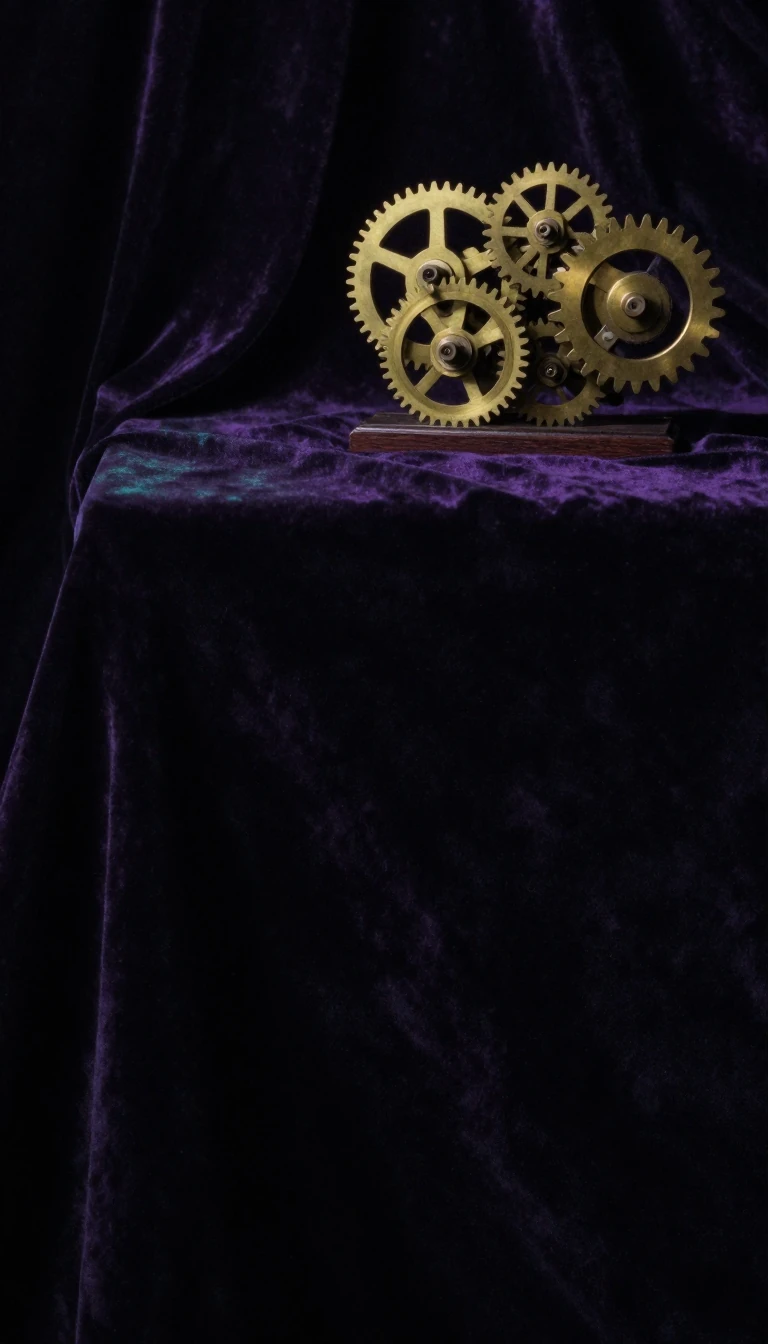 A mechanical artist with a memory larger than any of its peersAround 1800, a Swiss mechanician constructed a brass machine capable of sketching and composing poetry. For centuries, its true identity remained hidden from history until the dev…
 The 18th-century dolls that paved the way for modern computingBefore silicon chips and binary code, there were clockwork dolls capable of drawing portraits, playing organs, and writing custom text. Built in the 1760s as luxury toys for Europ…
- The mechanical duck that fooled France with a fake metabolismIn 1764, an automaton appeared to eat grain and defecate waste in real-time. It was a masterpiece of deception so convincing it sparked centuries of debate over the definition of …
 The ancient Greek computer that defied the limits of historyIn 1900, a shipwreck off the Greek island of Antikythera yielded a device so complex it remained a mystery for decades. It wasn't just a tool; it was an analog planetary computer.…
 The Song Dynasty's secret to the world's first endless chain driveBefore modern motorcycles or industrial conveyors, a medieval Chinese polymath engineered a way to turn water power into complex motion. By depicting the first continuous, endless…
 The 17th-century optical planetarium that projected a royalist night skyBefore modern technology allowed us to map the heavens, humans built physical models of the cosmos. One such device, created in 1699, didn't just show the stars—it used light and …
 The white paper: a government's blueprint for radical systemic reformIn policy circles, a white paper isn't just a document; it is a philosophy in print. It signals a shift from identifying problems to proposing specific, authoritative solutions. F…
 The moon that is slowly falling into the Red PlanetPhobos orbits Mars so closely that it completes three revolutions every single day. Because of its proximity, there are spots on the Martian surface where the moon remains hidden …
 Is the internet becoming a planetary nervous system?The World Wide Web resembles a brain: web pages act as neurons, while hyperlinks serve as synapses. This isn't just a metaphor; it describes a complex adaptive system where inform…
- From Ancient Twins to Artificial Intelligence and Space ExplorationThe name Gemini functions as a linguistic bridge across human history. It connects ancient Greek mythology and zodiac constellations to modern artificial intelligence, orbital spa…
 What Is an Imaginary Number?How the square root of a negative number went from a 'mental torture' in Cardano's 1545 algebra to a tool for electrical engineering and a testable question in quantum theory.
- The business of prestige: how consulting firms monetize industry awardsFrost & Sullivan is a global powerhouse in market research, but its influence extends into the mechanics of corporate recognition. By blending proprietary data with a unique award…
- Apple's new subscription model bundles pro tools into one suiteFor years, professional creative software was sold as a collection of individual purchases. On January 28, 2026, Apple shifted the landscape by launching Creator Studio, a subscri…
- How sea turtles use the Earth's magnetic field as a GPSSea turtles navigate thousands of kilometers across open oceans to reach specific foraging and breeding grounds. While their movements seem aimless, they actually rely on a sophis…
 Can a computer simulate the pulse of a virus?Klaus Schulten pioneered the use of supercomputers as a "computational microscope." By modeling millions of atoms, he revealed that viruses—which appear symmetrical in still photo…
 The fastest known example of human evolution occurred in just 3,000 yearsWhile most evolutionary changes take millennia, certain human populations adapted to the thin air of high altitudes with startling speed. By decoding their DNA, scientists have id…
 The muscle that defies geometry to power your breathMost skeletal muscles are limited by their shape, but the human diaphragm operates on a different set of rules. By prioritizing force-length behavior over simple geometric predict…
- Your body is already a high-performance filtration systemFrom metabolic waste to complex pharmaceuticals, your internal chemistry is constantly being scrubbed. While marketing sells elaborate 'cleanses' and 'detox diets,' the reality of…
 Your brain doesn't just store memories; it actively reorganizes them.Think of your brain as a workspace that needs to be tidied every night. Sleep isn't a passive state of rest; it is an active physiological process where the brain physically remod…