 Intellect Plus
Abrahamic religions
389 cards. Each one is a 40-second story with a five-minute read behind it. Page 3 of 7.
 Who were the Sahabah, the primary witnesses to the life of the Prophet Muhammad?The Sahabah were followers who personally encountered Muhammad, serving as the essential human links for the Hadith—the recorded sayings and actions that define Islamic tradition.…
 Why this radical Protestant movement dismantled the hierarchy to empower the individual believerEmerging from 16th-century English Separatism, Congregationalism challenged the necessity of bishops and central authority. By championing the autonomy of the local congregation a…
 Why the Protestant Reformation shifted from criticizing church behavior to challenging its core doctrine.Martin Luther did not just want to reform the church's conduct; he sought to dismantle its entire system of salvation. By rejecting the idea that humans could earn divine favor th…
 Is true repentance a feeling of sorrow or a radical breaking of the heart?In Christian theology, contrition is more than just feeling bad about past mistakes. Derived from a Latin term for breaking something hardened, it represents a fundamental reorien…
 Cornelius Jansen spent 22 years writing a book that the Pope eventually banned.Cornelius Jansen, a Flemish bishop, dedicated two decades to a massive theological treatise intended to revive the teachings of St. Augustine. Instead of securing his legacy, the …
 Was Cotton Mather a villain of the Salem witch trials or a misunderstood intellectual?Cotton Mather is often remembered as the primary architect of the Salem witch hysteria. Yet, historical analysis reveals a more complex figure: a prolific scientist, a champion of…
 Why biblical covenants were sealed by cutting flesh and spilling bloodThe Hebrew word for covenant, brit, stems from a root meaning to cut. In ancient Near Eastern tradition, these pacts were not mere promises but binding legal agreements often seal…
 Is the Christian Bible a consistent historical record or a collection of contested texts?For centuries, critics have challenged Christianity by questioning the historical accuracy of its scriptures and the moral implications of its doctrines. From the early Roman era …
 How have critics engaged with Islamic doctrine and history over the last millennium?From medieval polemics to modern academic revisionism, the scrutiny of Islam has evolved through shifting lenses. Critics have long debated the authenticity of its scriptures, the…
 How a Bulgarian monk became the architect of a unified Russian Orthodox ChurchCyprian, a Bulgarian-born hesychast, navigated the volatile power struggles between Moscow and Lithuania to secure his role as Metropolitan of Kiev and all Rus'. Beyond his politi…
 Did a fourth-century bishop invent the blueprint for how Christians learn their faith?Cyril of Jerusalem was a pivotal early Christian leader who helped transform his city into a global pilgrimage destination. Beyond his geography, he is remembered as a foundationa…
 The monk who accidentally invented our modern calendar to avoid a tyrant's memoryDionysius Exiguus, a 6th-century monk, sought to replace the Diocletian calendar because he despised the emperor who persecuted Christians. By anchoring time to the incarnation of…
 How a medieval preacher turned a mission against heresy into a global intellectual powerhouse.Dominic de Guzmán did not just start a religious order; he revolutionized how the Church engaged with the world. By trading monastic isolation for urban scholarship and rigorous t…
 Before the universe existed, what was God? Kabbalah calls this state Ein Sof.In Jewish mysticism, Ein Sof represents the divine before any self-manifestation or creation. It is the infinite, nameless being that transcends all human attributes, forms, and n…
 How a sharecropper's son built a powerful, controversial movement for Black American independenceBorn Elijah Poole in 1897, this Georgia-born leader transformed the Nation of Islam from a small Detroit group into a nationwide force. By preaching racial separation and strict p…
 How a widowed New York socialite became the first American-born saint in historyBorn into a wealthy Episcopalian family, Elizabeth Ann Seton navigated bankruptcy and widowhood before converting to Catholicism. She went on to establish the first American congr…
- Why Martin Luther once dismissed this New Testament letter as an epistle of strawThe Epistle of James is a polarizing work of wisdom literature that challenges the core of Christian theology. By insisting that faith without works is dead, it sparked centuries …
- Why did a tiny, mysterious New Testament letter quote a banned, non-canonical book?The Epistle of Jude is a brief, fiery warning against unnamed intruders threatening the early church. It is famous for its combative tone and its surprising reliance on the Book o…
- Can a single letter from a Roman prison dismantle the logic of human slavery?Paul the Apostle wrote a brief, 335-word letter to a wealthy Christian named Philemon. He did not command the abolition of slavery, yet he urged Philemon to receive his runaway sl…
 Is the Epistle to the Ephesians actually a letter written by the Apostle Paul?The Epistle to the Ephesians is a cornerstone of Christian theology, yet its origins remain a subject of intense academic debate. While tradition links the text to Paul the Apostl…
 Was the Epistle to the Galatians written before the historic Council of Jerusalem?The Epistle to the Galatians is a foundational Christian text, yet its origins remain a puzzle. Scholars debate whether Paul wrote this letter to address a crisis before or after …
- Why is the most eloquent book of the New Testament anonymous and widely misunderstood?The Epistle to the Hebrews is a masterpiece of Greek prose that defies traditional authorship. Long misattributed to Paul the Apostle, this intricate text functions more like a se…
 Is the Epistle to the Philippians actually a collection of three separate letters?Modern biblical scholarship suggests the Epistle to the Philippians is not a unified work, but a composite of three distinct fragments. By analyzing abrupt shifts in tone and conf…
 Is the Epistle to the Romans a private letter or a public theological masterpiece?Paul the Apostle’s longest letter remains a subject of intense scholarly debate. While some view it as a systematic theological treatise, others argue it is a strategic, historica…
- Did Paul the Apostle actually write the Epistle to Titus, or was it someone else?The Epistle to Titus is a short, three-chapter New Testament letter traditionally attributed to Paul. Yet, beneath its surface, scholars debate whether it was penned by the apostl…
- Were the Essenes the true architects of a radical, ancient Jewish breakaway movement?Flourishing between the second century BCE and the first century CE, the Essenes were a mysterious Jewish sect known for their strict discipline and communal life. While ancient w…
 How a medieval woman’s final journey transformed a small town into a global religious hubFatima bint Musa, a descendant of the Prophet Muhammad, never intended to settle in Qom. Yet, her death there in the ninth century turned the city into one of the most significant…
 The Polish nun who became the unlikely secretary of a global religious movementHelena Kowalska, a poor peasant girl with no formal training, claimed to receive visions of Jesus that sparked the worldwide Divine Mercy devotion. Despite facing a Vatican ban on…
 A reclusive imam in Pennsylvania became the central figure in Turkey's modern political turmoil.Fethullah Gülen built a global network of schools and civil society organizations, transforming from a key ally of the Turkish government into its most accused enemy. After moving…
 Is the First Epistle of John a letter or a circular theological meditation?The First Epistle of John lacks the standard opening and closing of biblical letters, reading more like a rhythmic, circular meditation. Written in Ephesus between 95 and 110 AD, …
 Was the First Epistle of Peter written by an apostle or a later ghostwriter?The First Epistle of Peter is a New Testament cornerstone, yet its origins remain a profound mystery. While tradition credits the Apostle Peter, modern scholars debate whether its…
 Is the First Epistle to the Corinthians a single letter or a patchwork?Paul's letter to the Corinthians is a foundational text of early Christianity, yet it remains a puzzle. Scholars debate whether it is a unified composition or a collection of frag…
- Is this the oldest surviving document of the entire New Testament?Written by Paul the Apostle to a young congregation in Greece, 1 Thessalonians is widely considered the earliest Christian text still in existence. Unlike his later, more argument…
- Is the First Epistle to Timothy actually a letter written by the Apostle Paul?Traditionally attributed to Paul, the First Epistle to Timothy is now widely considered by scholars to be the work of an anonymous author writing decades after his death. This pas…
 The five solae are the core pillars of Protestant theology, but were they always five?The five solae define the Protestant Reformation, asserting that salvation comes through grace, faith, and Christ alone, guided by Scripture and for God's glory. Yet, these famous…
 The frail Italian immigrant who became America's first canonized saint by defying the VaticanBorn prematurely and plagued by lifelong health issues, Maria Francesca Cabrini was rejected by multiple religious orders. Yet, she defied the Pope’s original vision, navigated in…
 A cardinal who lived in poverty while wielding the absolute power of the Spanish state.Francisco Jiménez de Cisneros rose from humble beginnings to become the most powerful religious figure in Spain. As grand inquisitor and twice regent, he enforced brutal religious…
- Why Free Will Baptists reject the popular doctrine of once saved, always savedUnlike many Baptist traditions rooted in Calvinist predestination, Free Will Baptists believe salvation is a choice available to everyone. They argue that faith is a continuous, a…
 Can words be numbers? Exploring the ancient practice of gematriaGematria is the practice of assigning numerical values to letters to uncover hidden connections between words. While often associated with Jewish mysticism, this system of alphanu…
 George Fox, the shoemaker who rejected the church to find God within himself.Born in 1624, George Fox was an English mystic who founded the Religious Society of Friends, or Quakers. Amidst the chaos of the English Civil War, he abandoned traditional religi…
- The mysterious monk who founded the world's first international religious orderGerard Sasso, a Benedictine lay brother, transformed a humble Jerusalem hospice into the powerful Knights Hospitaller. Despite his immense influence, his origins remain a historic…
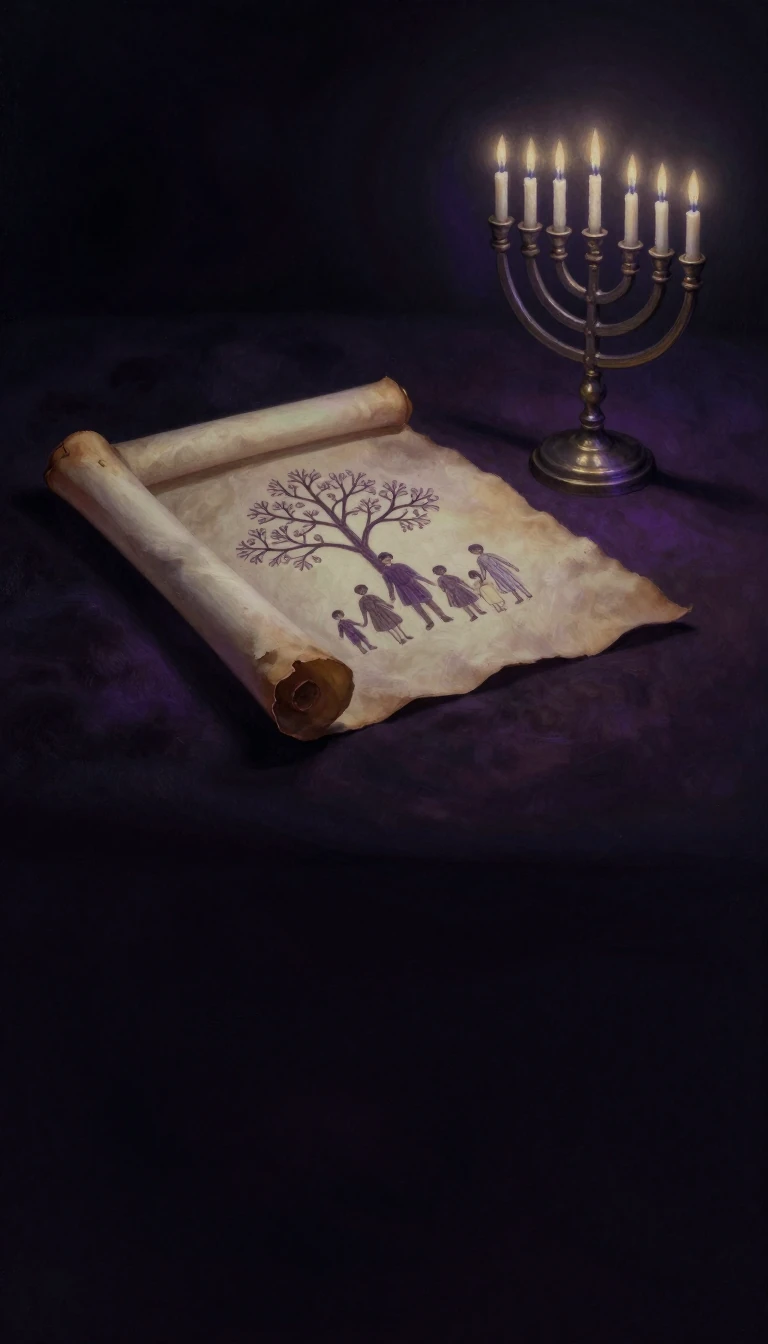 The Ginza Rabba is a sacred treasury of Mandaean wisdom with mysterious, debated origins.The Ginza Rabba, or Great Treasury, is the most significant holy scripture of Mandaeism. This composite text, written in Classical Mandaic, is divided into two distinct volumes: t…
- Why the title Father for God carries vastly different meanings across the world's faithsCalling God Father is a practice spanning millennia, yet it signifies everything from a simple metaphor for a creator to a metaphysical, eternal relationship. While some tradition…
 Why the title God the Son is a theological development rather than biblical scriptureThe term God the Son is central to mainstream Christian belief, yet it is absent from the pages of the Bible. This designation emerged through centuries of debate as early thinker…
 Are good deeds the price of admission to heaven or just the fruit of faith?In Christian theology, the relationship between faith and good works is a central, long-debated tension. While some traditions argue that salvation is a free gift received through…
- Why did Jesus combine two ancient laws into one supreme moral mandate?When asked to identify the greatest commandment, Jesus of Nazareth bypassed the era's divisive debates over ritual law. Instead, he unified two existing scriptures into a singular…
 The Great Commission: How a Single Commandment Shaped the Global Spread of ChristianityIn the final moments of his ministry, Jesus Christ issued a directive that would define the trajectory of a global faith. Known as the Great Commission, this instruction to baptiz…
 Is the Great Tribulation a future apocalypse or a historical event from AD 70?Christianity offers three distinct interpretations of the Great Tribulation. Some see it as a future period of global suffering preceding the Second Coming. Others argue it occurr…
- Why the term Greek Orthodox describes far more than just the nation of GreeceThe label Greek Orthodox is often misunderstood. While it refers to the Church of Greece, it also encompasses a vast, ancient tradition rooted in the Byzantine Empire. From the Ec…
 The rigorous discipline of becoming a Hafiz: memorizing thousands of verses in Classical ArabicA Hafiz is a person who has committed the entire Quran to memory. This feat involves mastering 114 chapters and over 77,000 words in Classical Arabic. Beyond the intellectual achi…
 How a Meccan Nobleman Became the First Leader of the Martyrs in Islamic HistoryHamza ibn Abd al-Muttalib was a powerful Meccan aristocrat who transformed from a skeptical observer into a pivotal military commander for Muhammad. His conversion provided essent…
 How the Hanafi school became the largest legal tradition in the Islamic worldEmerging from the intellectual hubs of ancient Iraq, the Hanafi school transformed Islamic jurisprudence through systematic reasoning. By balancing the Quran and tradition with an…
 The Hanbali School: Why the Smallest Sunni Legal Tradition Remains So Influential TodayAs the smallest of the four major Sunni schools of jurisprudence, the Hanbali tradition accounts for barely 2% of the global Muslim population. Yet, its emphasis on literal script…
 The eleventh Shia Imam lived under constant house arrest, yet shaped a global faith.Hasan al-Askari spent his life in the garrison town of Samarra, held under strict Abbasid surveillance. Despite his isolation and early death at twenty-eight, his legacy became th…
 How a successful jewel merchant became the archetype of Islamic world-renouncing asceticismHasan al-Basri was once a prosperous businessman traveling to Byzantine courts. A single, haunting encounter with the reality of mortality transformed him into a celebrated preach…
 Why did the Prophet’s grandson abdicate his caliphate to his father’s greatest enemy?Hasan ibn Ali, the eldest grandson of Muhammad, briefly ruled as caliph in 661 before signing a peace treaty with his rival, Mu'awiya. While critics labeled the move a sign of pol…
 Havdalah is a multi-sensory ritual designed to bridge the gap between sacred and ordinary.Marking the end of Shabbat, the Jewish ceremony of Havdalah engages all five senses to transition into the new week. Through wine, spices, fire, and song, participants create a sy…
- In Mandaeism, the Supreme God is not the direct creator of our earthly world.For Mandaeans, Hayyi Rabbi—or The Great Life—is the eternal, supreme force from which all existence emanates. While He is the ultimate source of all light and life, the creation o…
- How a disgraced inquisitor's personal vendetta defined the early modern witch huntHeinrich Kramer, a Dominican friar, was once forced out of Innsbruck for his erratic behavior and failure to prove his accusations. Yet, his subsequent attempt to validate his met…
- How a nineteenth-century preacher became the most famous man in AmericaHenry Ward Beecher was a nineteenth-century orator who transformed the American pulpit. By focusing on God’s love rather than strict dogma, he drew thousands to his Brooklyn churc…