 Intellect Plus
Abrahamic religions
389 cards. Each one is a 40-second story with a five-minute read behind it. Page 2 of 7.
 How a medieval monk became the de facto ruler of the rising Muscovite stateBorn into a noble boyar family, Alexius rose from a quiet monastic life to become the Metropolitan of Kiev and all Rus'. As a spiritual tutor and regent, he navigated the treacher…
 The tenth Shia Imam lived under house arrest for two decades in Samarra, Iraq.Ali al-Hadi, the tenth of the Twelve Imams, spent twenty years under Abbasid surveillance in the garrison town of Samarra. Despite being treated as a prisoner, he maintained a cla…
 Why did an Abbasid Caliph force his rival to become his official heir?In 817, Caliph al-Ma'mun shocked the Islamic world by naming Ali al-Rida, a descendant of the Prophet, as his successor. It was a move of desperate political theater, forcing a re…
 How the sole survivor of a massacre became the ornament of Islamic worshipAfter the brutal 680 Battle of Karbala, Ali al-Sajjad emerged as the sole surviving son of Husayn. While others sought violent retribution against the Umayyad caliphate, al-Sajjad…
 The silent powerhouse of Iraq: How Grand Ayatollah Sistani reshaped a nation's political futureAs the dean of the Hawza in Najaf, Grand Ayatollah Ali al-Sistani has become the most influential figure in post-invasion Iraq. By advocating for popular sovereignty and democrati…
 From noble heir to plague nurse: the brief, radical life of Aloysius GonzagaBorn into the high-stakes world of Renaissance aristocracy, Aloysius Gonzaga abandoned his inheritance and military destiny to join the Jesuits. His life was defined by a stark co…
 Why the first and last letters of the alphabet define the divine in scriptureThe phrase Alpha and Omega, appearing in the Book of Revelation, serves as a profound title for God and Christ. By invoking the start and finish of the Greek alphabet, this symbol…
 How a failed lawyer became the patron saint of confessors and moral theologiansAfter losing his first major court case, Alphonsus Liguori abandoned a promising legal career to serve the marginalized. He went on to revolutionize Catholic moral theology, rejec…
 Why do billions of people end their prayers with the same ancient Hebrew word?Across Judaism, Christianity, and Islam, the word amen serves as a universal seal of affirmation. While often dismissed as a simple closing, this linguistic relic carries thousand…
- Why the sacrament of anointing is for the living, not just the dyingLong known as Extreme Unction, the anointing of the sick was once reserved for those near death. Today, the Roman Catholic Church emphasizes it as a source of grace for anyone fac…
 The nineteenth-century preacher who challenged Darwin’s scientific claims about female inferiorityAntoinette Brown Blackwell was the first woman ordained as a minister in a recognized U.S. denomination. Beyond the pulpit, she became a pioneering intellectual who dared to criti…
 Did the Twelve Apostles actually write the creed that bears their name?The Apostles' Creed is a cornerstone of Western Christian liturgy, yet its origins are far more complex than the medieval legend of twelve apostles each contributing a single arti…
 Aqidah is the Islamic term for creed, but it means far more than belief.Derived from the Semitic root for tying a knot, aqidah represents the systematic architecture of Islamic theology. While it encompasses the fundamental articles of faith shared by…
 Why millions of pilgrims walk to Karbala every year for a centuries-old ritualEach year, millions of people converge on the Iraqi city of Karbala to mark Arba'in, the world's largest annual public gathering. While rooted in the martyrdom of Husayn, the gran…
 Is Armageddon a literal battlefield or a symbolic vision of the end times?The term Armageddon appears only once in the Bible, yet it has evolved into a global shorthand for total destruction. While many envision a final, cataclysmic war, scholars and th…
 Why Ash'arism argues that natural laws are merely divine customs, not fixed physical rules.Ash'arism, the most influential school of Sunni Islamic theology, rejects the idea of fixed natural laws like gravity. Instead, it proposes that God creates every moment and parti…
- Atharism: The Islamic School That Rejects Human Logic to Preserve Divine TruthAtharism is a Sunni theological tradition that prioritizes the literal, uninterpreted word of the Quran and the Prophet over human reasoning. By insisting that divine attributes m…
 How a Roman monk turned a pagan kingdom into the heart of English ChristianityIn 597, a Benedictine leader arrived on the shores of Kent with a small band of monks. Sent by Pope Gregory the Great, he faced a daunting mission to convert a pagan Anglo-Saxon s…
- The 19th-century merchant who claimed to be the gateway to a new worldBorn in Shiraz in 1819, the Báb was a young merchant who launched a religious movement that challenged the foundations of Qajar Iran. By claiming he was a divine messenger prepari…
 Was the legendary Sufi saint Baba Farid actually a traveler to medieval Jerusalem?Baba Farid, the 13th-century mystic and founding father of the Chishti Sufi order, is a revered figure across South Asia. While his legacy is anchored in the Punjab region, persis…
 Could a tiny, 27-acre microstate in Albania become the world's smallest sovereign nation?The Bektashi order, a mystic Sufi movement with roots in 13th-century Anatolia, is considering an unprecedented move: establishing a sovereign microstate in Tirana. Modeled after …
 Why the Benedictine monks are not actually a single religious orderThe Benedictines are famous for shaping Western monasticism, yet they lack a central hierarchy. Instead of a unified organization, they function as a collection of autonomous mona…
 Why do some Bibles contain extra books, while others leave them out entirely?The Biblical Apocrypha are ancient texts that sit in a theological limbo. While some traditions view them as essential scripture, others relegate them to an intertestamental appen…
 Was the Black Church a tool of oppression or a engine of liberation?Critics once labeled the Black Church an opiate that pacified the enslaved. Yet, history reveals a far more subversive reality. Far from merely offering false comfort, these insti…
 Is the Book of Baruch a lost prophecy or a clever literary mosaic?The Book of Baruch sits in a strange limbo of biblical tradition. While Catholic and Orthodox churches revere it as canonical scripture, Protestants categorize it as apocrypha. Sc…
 The Book of Ezekiel: A Priestly Vision of Exile, Judgment, and Divine RestorationExiled in Babylon, the priest Ezekiel recorded visions that redefined Jewish theology. From the chariot-throne of God to the resurrection of dry bones, his work introduced the con…
- Is the Book of Ezra a historical record or a carefully crafted theological narrative?The Book of Ezra describes the return of Jewish exiles from Babylon to Jerusalem, but its true nature remains a subject of intense scholarly debate. Rather than a straightforward …
- Was the prophet Jeremiah actually a failed leader mirroring the life of Moses?The Book of Jeremiah presents a deeply human, often agonizing portrait of a prophet who felt betrayed by his divine calling. While tradition frames his forty-year mission as a par…
 Is the Book of Joshua a historical record or a theological construction of conquest?The Book of Joshua depicts a swift, divinely sanctioned conquest of Canaan, yet modern scholars view it with skepticism. Far from a straightforward chronicle, the text functions a…
 Is the Book of Judges a historical record or a carefully crafted political argument?The Book of Judges presents a repeating cycle of Israelite apostasy, divine punishment, and military deliverance. While often read as a chronicle of pre-monarchic heroes, scholars…
- Why the Book of Lamentations remains a masterpiece of ancient, unresolved griefThe Book of Lamentations is a collection of five poems mourning the destruction of Jerusalem in 586 BCE. Unlike other ancient city laments that promise restoration, this text offe…
- Was the Book of Nehemiah originally just a chapter of someone else's memoir?For centuries, the Book of Nehemiah did not exist as a standalone text. It was bundled with the Book of Ezra, and even then, it was often attributed to Ezra himself. Today, schola…
- Why the Book of Numbers records a massive army that likely never existedThe Book of Numbers chronicles forty years of Israelite wandering, anchored by two massive censuses of fighting men. While these counts suggest a total population reaching into th…
- The Books of Chronicles are a calculated rewrite of Israel’s history for a new era.Far from a simple historical record, the Books of Chronicles were a deliberate editorial project. By selectively curating the past, a single author known as the Chronicler reshape…
- The Books of Samuel: A Theological History of Israel’s Rise and Royal TurmoilThe Books of Samuel chronicle the dramatic transition from tribal judges to a monarchy. From the miraculous birth of a prophet to the rise of a shepherd king, this narrative explo…
 A Nobel Peace Prize winner who became a symbol of resistance and later disgrace.Carlos Filipe Ximenes Belo rose to global prominence as a courageous bishop in East Timor, using his moral authority to challenge Indonesian occupation. Yet, the legacy of this No…
 Why the Catholic Church rejects both the excesses of capitalism and the failures of socialismCatholic social teaching is not a political platform, but a moral framework for human dignity. Since 1891, the Church has navigated the tensions between private property and the c…
 The 18th-century rabbi who traveled Europe to save his community and cataloged its secrets.Chaim Yosef David Azulai, known as the Hida, was a legendary Sephardic scholar who spent years traversing Europe as a fundraising emissary. Between his dangerous missions, he meti…
 The word chapel traces its origins to a soldier’s cloak and a holy relic.A chapel is more than a small church. It is a versatile space that has evolved from a portable tent for a king’s relic into a global fixture of airports, hospitals, and universiti…
 Why charity is considered the foundation of all Christian virtues, not just giving money.In Christian theology, charity is not merely an act of kindness or financial donation. It is the highest form of love, a divine force that unites the human soul with God. By refle…
 How a Catholic priest became the most influential and controversial voice on American radioIn the 1930s, Father Charles Coughlin commanded a weekly audience of 30 million listeners, using his mellifluous voice to champion the poor and attack the establishment. Once a ce…
- Charles Taze Russell and the enduring, revolutionary appeal of millennialist religious movementsCharles Taze Russell founded the Bible Student movement, the precursor to Jehovah’s Witnesses, by rejecting traditional doctrines like eternal hell. His work tapped into the ancie…
- Why this ancient Sufi order forbids its teachers from ever entering a royal court.The Chishti order, a prominent Sufi brotherhood, maintains a strict code of detachment from worldly power. Its teachers are explicitly forbidden from seeking favors from rulers, b…
- Was Christendom a unified church-state or merely a shifting map of Christian influence?Christendom was once envisioned as a singular, holy entity where spiritual and secular powers worked in tandem to govern Europe. Yet, this grand ideal of a unified church-state fr…
- Christianity is more than a religion; it is a vast, evolving cultural legacyChristianity is the world's largest faith, but it is also a sprawling cultural phenomenon. Beyond its core theological focus on Jesus Christ, it has generated two millennia of art…
- Is Christian ethics a rigid set of rules or a flexible guide for living?Christian ethics is not merely a list of divine commands. It is a complex, evolving discipline that blends virtue, duty, and natural law. By bridging theology with social science,…
- Christian fundamentalism emerged as a defensive reaction to modern science and biblical criticism.Born in the late 19th century, this American Protestant movement sought to preserve traditional doctrines against the encroaching tide of evolution and historical analysis. By ins…
- Why the earliest Christian worship was centered on a fellowship meal with the MessiahThe roots of Christian liturgy lie in an intense, ancient expectation of a messianic banquet. Early believers viewed their communal meals not merely as ritual, but as a direct con…
- Christian missions have shaped global history far beyond the simple act of conversion.For centuries, missionaries have traversed the globe, acting as agents of cultural exchange, education, and medical aid. While often linked to imperial expansion, their work funda…
- Did the first Christian monks actually live in monasteries or alone in the desert?Christian monasticism began not with communal cloisters, but with solitary figures seeking extreme isolation. These early desert anchorites lived in caves and abandoned tombs to b…
 Is violence inherently incompatible with the teachings of the Christian faith?Christian pacifism posits that Jesus was a pacifist whose followers must reject all forms of violence. While some early Church Fathers and modern denominations advocate for total …
 From vocal petitions to silent love: the structured evolution of Christian prayerChristian prayer is far more than spontaneous conversation with the divine. Across two millennia, it has evolved into a sophisticated hierarchy of practices, ranging from vocal pe…
- How early Christians used secret codes and everyday objects to express their faithBefore Christianity became a public religion, its followers communicated through a sophisticated visual language. From hidden fish acrostics to the T-shaped cross, early believers…
 How do theologians define the nature of a God who is beyond human comprehension?Christian theology is the systematic study of the divine, drawing on scripture and tradition to navigate complex questions about God's nature. From the distinction between general…
 How historians use ancient calendars and Roman records to date the life of JesusEstablishing a timeline for Jesus requires reconciling theological texts with secular history. By cross-referencing the reign of Herod the Great, the construction of the Jerusalem…
- Is a church a building, a legal corporation, or a gathering of people?The term church is often used interchangeably for a physical structure and a religious community, but its origins reveal a deeper tension. While some define it as a voluntary soci…
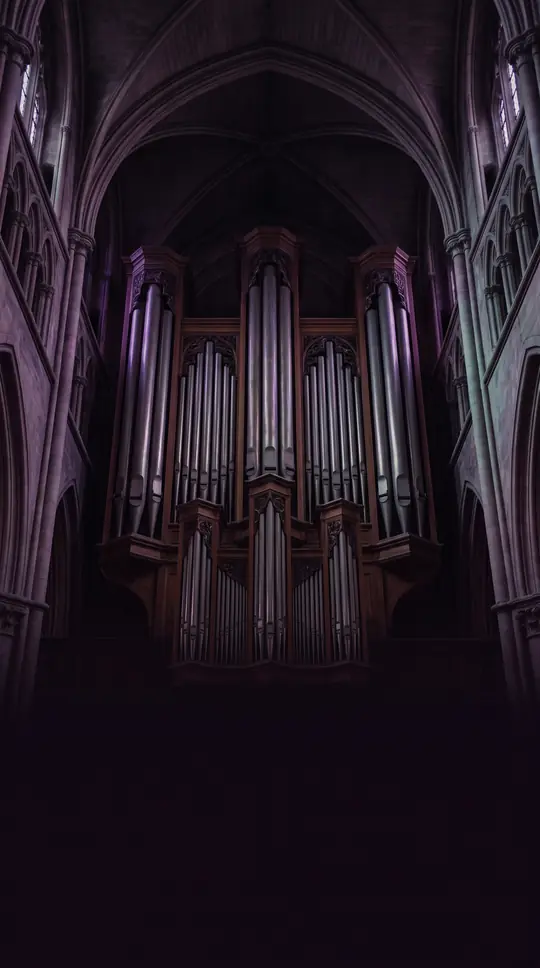 From ancient antiphonal chants to modern gospel, music has defined the Christian experience.Church music is far more than background noise for liturgy. It is a complex, evolving tradition that has absorbed Greek influences, survived the Reformation, and shaped theology t…
 Why do Christians gather for worship, and how has the practice evolved over time?The Christian church service is a communal ritual with roots in Jewish tradition, yet its expression varies wildly across denominations. From the silent, expectant waiting of Quak…
- Was Saint Clotilde a pious queen or a vengeful architect of Merovingian political violence?Clotilde, the sixth-century Queen of the Franks, is remembered as a saint who converted her husband, Clovis I, to Catholicism. Yet, historical accounts paint a complex portrait of…
 The College of Cardinals: From Local Roman Clergy to the Senate of the ChurchThe College of Cardinals is the hinge of the Catholic Church, yet its role has shifted dramatically over a millennium. Once local Roman clergy, these men evolved into a powerful e…