 Intellect Plus
Abrahamic religions
389 cards. Each one is a 40-second story with a five-minute read behind it. Page 6 of 7.
 Pope Damasus I: The Bloody Rise of the First Society PopeDamasus I transformed the papacy during a volatile era, overseeing the canonization of scripture and the creation of the Vulgate. Yet, his ascent to power was marked by brutal fac…
 How a defiant Pope transformed the papacy from a religious office into a temporal power.Pope Gregory II did not just lead the Church; he reshaped the political map of Italy. By challenging the Byzantine Emperor over iconoclasm and navigating the volatile ambitions of…
 Was Pope John X a depraved puppet or the most capable statesman of his age?History long painted Pope John X as a scandalous figure who slept his way to the papal throne. Yet, modern re-evaluation reveals a vigorous leader who commanded armies against Sar…
- How a brutal attack on a Pope led to the birth of an empireIn 799, Pope Leo III was dragged through the streets of Rome, his eyes and tongue targeted by assassins. His survival and subsequent flight to Charlemagne’s camp triggered a geopo…
 How Pope Leo IX transformed the papacy from a local office into global powerBefore 1049, the papacy was a local Roman institution often beholden to imperial whims. Pope Leo IX changed everything. By enforcing strict moral reforms and traveling across Euro…
- Why a fourth-century bishop became the face of New Year's Eve celebrationsPope Sylvester I lived during a pivotal era for the Church, yet his historical reality is eclipsed by centuries of myth. While he oversaw the construction of Rome's most iconic ba…
- Was Pope Zephyrinus a martyr, or did history simply misremember his long, difficult reign?Serving as bishop of Rome for eighteen years, Zephyrinus navigated a period of intense imperial persecution and internal theological fracture. While later traditions honored him a…
 If God has already decreed your destiny, are you truly responsible for your actions?In Islamic theology, the concept of Qadar—divine preordainment—suggests that every event, from the falling of a leaf to the fate of a human soul, is written in a celestial Book of…
 Islamic law is not a static code but a rigorous, evolving system of interpretation.Islamic jurisprudence, or usul al-fiqh, provides the methodological framework for deriving legal rulings from sacred texts. Far from being a monolithic set of rules, it is a sophi…
 Why the direction of prayer for over a billion people is a mathematical puzzleFor Muslims, the qibla—the direction toward the Kaaba in Mecca—is a daily necessity for prayer. While it seems simple, calculating this orientation from thousands of miles away re…
 Is analogical reasoning a legitimate tool for divine law or a dangerous human innovation?Qiyas, or deductive analogy, allows Islamic jurists to apply ancient religious rulings to modern problems. While a cornerstone of Sunni legal tradition, it has faced centuries of …
 The Qulasta is an ancient, fluid collection of Mandaean prayers with no standard version.The Qulasta serves as the essential prayerbook for Mandaean rituals, including baptisms and the soul's ascension. Because no single authoritative edition exists, scholars rely on …
 The Rapture is a modern theological concept that does not appear in the Bible.The idea of believers being snatched into the clouds to meet Jesus is a staple of pop culture, yet the word itself is absent from scripture. While often linked to ancient prophecy…
 How one Babylonian rabbi unified wealth, political authority, and the editing of the TalmudRav Ashi was a rare figure who combined immense scholarly prestige with significant political influence. As the head of the Sura Academy, he transformed it into the intellectual h…
- Beyond mere regret: why repentance is a radical act of ethical self-transformationRepentance is often mistaken for simple guilt, but it is actually a proactive commitment to change. Across major world religions, this process involves more than feeling sorry; it…
 Why many religious movements believe the true faith was lost and must be restored.Restorationism is the radical idea that the original, pure Christianity of the apostles was corrupted over time. By looking back to the primitive church as a normative model, vari…
 The Roman Curia is the Vatican's central engine, evolving from medieval court to modern bureaucracy.The Roman Curia acts as the administrative heart of the Holy See, assisting the pope in governing the global Catholic Church. While its roots stretch back centuries, recent reform…
 How a 1,500-year-old manual for monks created a blueprint for modern communal livingWritten around 530 AD by Benedict of Nursia, the Rule of Saint Benedict was designed to foster order and spiritual growth within autonomous communities. By balancing prayer with m…
 Are the traditional biographies of Muhammad historical records or carefully crafted religious narratives?Sīrah, the prophetic biography of Muhammad, serves as a primary source for early Islamic history. Yet, these texts evolved over centuries, shifting from simple military accounts i…
 How a violent confrontation over a secret manuscript changed the course of Islamic historySa'id ibn Zayd was an early convert to Islam whose private devotion triggered a pivotal moment. When his wife's brother, the future Caliph Umar, discovered them reading, the ensui…
- How a 17th-century mystic convinced thousands he was the long-awaited Jewish MessiahShabbetai Tzevi captivated the Jewish world in 1666, sparking a movement that spanned from Amsterdam to London. Yet, when faced with an ultimatum from the Ottoman sultan, he chose…
- Is Christian authority found in the Bible alone or in a living tradition?For many Christians, the Bible is the sole source of truth. Yet, others argue that scripture and sacred tradition are inseparable, forming a single deposit of faith. This divide s…
 The Sadducees: Why the Temple’s Elite Vanished When the Stones FellThe Sadducees were the wealthy, aristocratic power brokers of ancient Jerusalem. They controlled the Temple, collaborated with Roman rulers, and rejected the oral traditions that …
 Did a fugitive stonemason accidentally create the world's oldest surviving sovereign state?Saint Marinus, a stonemason fleeing Roman persecution in 301, sought refuge on a mountain to live as a hermit. His quiet retreat on Monte Titano eventually blossomed into a monast…
 Was Saint Timothy the reserved, timid companion of the Apostle Paul?Timothy was a central figure in early Christianity, serving as Paul the Apostle's trusted missionary partner and the first Bishop of Ephesus. Despite his close bond with Paul, his…
 Salah is more than just prayer; it is a complex, ancient ritual of connection.Salah, the formal worship practiced by Muslims, is far older than Islam itself. Drawing on Late Antique traditions of bowing and prostration, this ritual of five daily prayers ser…
 A Persian seeker who became a cornerstone of the early Islamic community.Born into a Zoroastrian family in Sassanid Iran, Salman the Persian spent his life traversing the Byzantine Empire in search of religious truth. His journey eventually led him to …
- How one rabbi saved Orthodox Judaism by embracing the modern worldSamson Raphael Hirsch transformed 19th-century German Judaism by rejecting the Reform movement's abandonment of tradition. Instead of retreating, he pioneered Neo-Orthodoxy, argui…
 How a conservative archbishop became the voice of the voiceless in El SalvadorÓscar Romero began his career as a cautious, traditional cleric who favored government cooperation. Yet, witnessing the brutal violence of the Salvadoran civil conflict transforme…
 Is the Second Epistle of John a letter to a person or a church?The Second Epistle of John remains a historical puzzle. Addressed to an enigmatic 'elect lady,' the text sparks debate: is it a personal note to a specific woman, or a coded metap…
 Is the Second Epistle of Peter a genuine farewell or a sophisticated literary fiction?Attributed to the Apostle Peter, this New Testament letter claims to be a final warning before the author's death. Yet, most modern scholars view it as a pseudepigraphical work—a …
 Is the Second Epistle to the Corinthians actually a collection of several different letters?While traditionally viewed as a single document, many scholars argue that the text we call 2 Corinthians is a composite work. Evidence suggests Paul the Apostle wrote at least fou…
 Is the Second Epistle to the Thessalonians a genuine letter from Paul the Apostle?Scholars remain deeply divided over whether this New Testament letter was written by Paul or a later imitator. While some point to its unique structure and eschatological teaching…
 Is the Second Epistle to Timothy a genuine farewell or a transparent literary fiction?Traditionally viewed as the final letter of Paul the Apostle before his execution, the Second Epistle to Timothy remains a subject of intense scholarly debate. While some defend i…
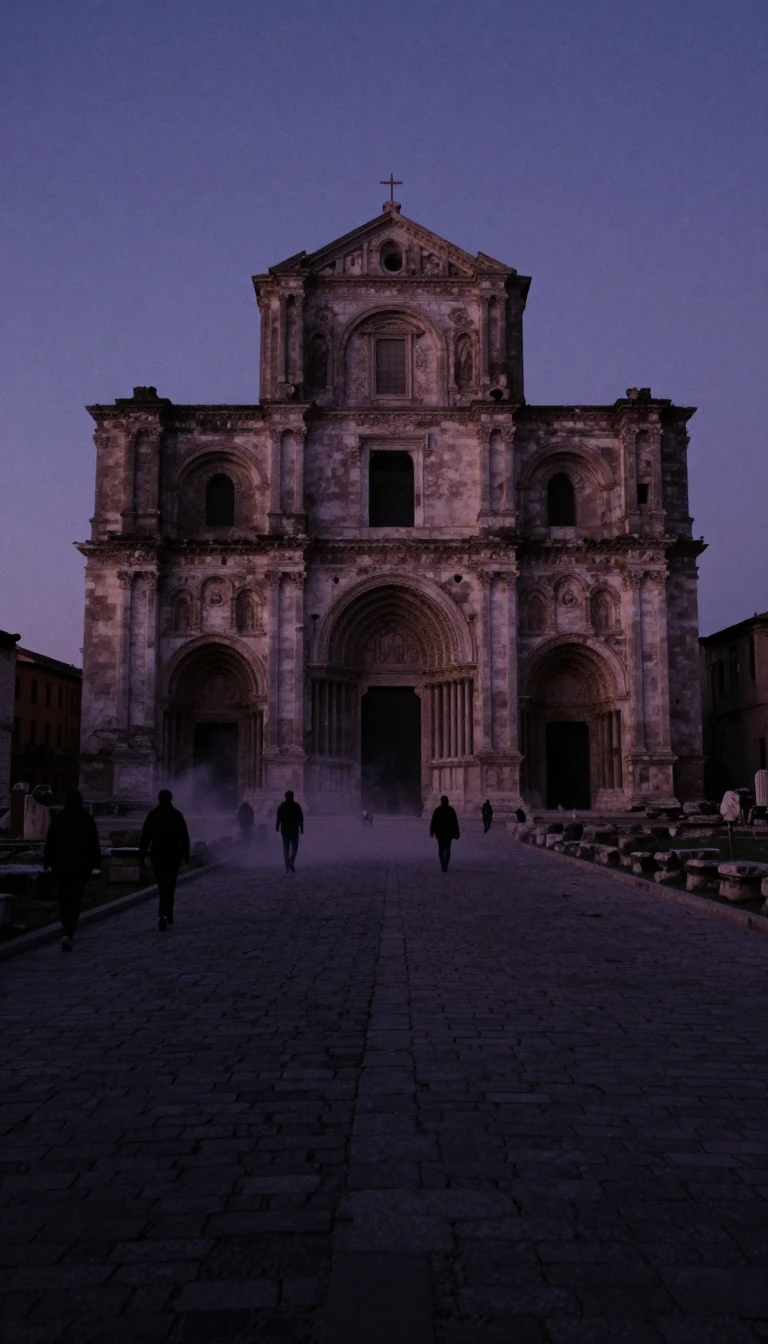 Why some traditionalist Catholics believe the Holy See has been vacant since 1958.Sedevacantism is a movement claiming that modern popes are illegitimate heretics who forfeited their authority through the reforms of the Second Vatican Council. Believing the cha…
 The Sefirot are the ten divine channels through which the infinite reveals itself to humanity.In Kabbalah, the Sefirot are not ten separate gods, but ten structural forces or emanations of the one God. These channels bridge the gap between the unknowable infinite and our p…
 Beyond the pulpit: how the sermon evolved from ancient oratory to global digital mediaThe sermon is far more than a Sunday lecture. From the fire-and-brimstone revivals of the Great Awakening to the rhythmic, tonal chants of Black preaching traditions, this ancient…
 Why the Shafi'i school of law rejected personal opinion to prioritize textual evidenceFounded in the 9th century, the Shafi'i school transformed Islamic jurisprudence by insisting that law must be anchored in the Quran and the Sunnah. By rejecting local traditions …
 How one scholar saved Shia jurisprudence from the ashes of a burning BaghdadWhen sectarian violence destroyed his library and home in 1055, Muhammad ibn al-Hasan al-Tusi did not retreat into obscurity. Instead, he fled to Najaf, where he founded a seminar…
- How a Rabbi Turned Mysticism Into a Rational System for the Average PersonShneur Zalman of Liadi, the founder of Chabad, transformed Hasidic thought by grounding its mystical teachings in intellect rather than emotion. By arguing that the mind must rule…
 Was the apostle Silas actually a Roman, a Greek, or a Hebrew scholar?Silas was a central figure in early Christianity, yet his identity remains a historical puzzle. Known by multiple names across different languages, he served as a key companion to…
 Was the infamous sorcerer Simon Magus actually a coded attack on the Apostle Paul?Simon Magus, the first-century Samaritan magician who tried to buy apostolic power, remains a figure of intense debate. While early church writers cast him as the father of Gnosti…
 Was the apostle Simon a political revolutionary or simply a man from Cana?Simon the Zealot remains one of the most enigmatic figures in the New Testament. While his name suggests a connection to a militant political movement, scholars debate whether he …
 Is the 'Sinner's Prayer' a modern invention or a timeless path to salvation?The Sinner's prayer is a staple of modern evangelicalism, yet it is absent from the New Testament and historic Christian confessions. While millions use it to invite Jesus into th…
- Why sixteenth-century radicals insisted that Christian faith must be entirely rationalEmerging from the Reformation, Socinianism challenged the core of Christian orthodoxy by rejecting the Trinity and the divinity of Christ. These thinkers argued that faith should …
- How do Islamic jurists derive legal rulings when the primary scriptures remain silent?Islamic law, or Sharia, is not a static code but a dynamic framework. While the Qur'an and Sunnah serve as foundational pillars, jurists have developed sophisticated secondary met…
- Are spiritual gifts supernatural powers or simply divine enablements for the common good?In Christian theology, charisms are extraordinary capacities believed to be bestowed by the Holy Spirit. Far from being personal accolades, these gifts are intended to build up th…
 A reluctant archbishop who became the first president of Russia's Holy SynodStefan Yavorsky rose from a humble monastery leader to the highest office in the Russian Church in just seven months. Despite his rapid ascent under Peter I, he remained a relucta…
- Are humans the masters of the Earth or its divinely appointed caretakers?Stewardship is the theological belief that humans are entrusted by a higher power to manage the world and its resources. While historically focused on the financial maintenance of…
- Was the leader of a global faith meant to be a permanent figurehead?In 1850, the Báb appointed 19-year-old Subh-i-Azal to lead his followers. Yet, within decades, his influence vanished, eclipsed by his half-brother, Baháʼu'lláh. Was this appointm…
- How a medieval Sufi order shaped the political landscape of the Persianate worldFounded in the twelfth century, the Suhrawardiyya order became a powerhouse of influence across Iran and India. By operating through a network of lodges and maintaining deep ties …
 Sun Myung Moon built a global empire on a vision of divine family unity.Founder of the Unification Church, Sun Myung Moon was a polarizing figure who claimed a messianic mission to unite humanity. From mass weddings to massive business investments and…
 Is the Sunnah simply the life of Muhammad, or an ancient, evolving legal tradition?While often equated with the hadith—the recorded sayings and actions of the Prophet—the term sunnah originally carried a far broader meaning. Far from being a static set of rules,…
 The Quran is organized by length, not by the timeline of its divine revelations.The 114 chapters of the Quran, known as surah, defy standard editorial logic. They are not ordered by theme or chronology, but by size. This unique structure creates a text where …
- Tafsir is the centuries-old Islamic tradition of uncovering the Quran's deeper, hidden meanings.Tafsir, or Quranic exegesis, is far more than simple translation. It is a rigorous, scholarly discipline that balances linguistic precision, historical context, and theological re…
 Tajwid is the precise, ancient system for reciting the Quran with perfect, measured clarity.To recite the Quran correctly is to honor a tradition of exact pronunciation dating back to the prophet Muhammad. Tajwid provides the technical rules for how every letter must be …
- Is following established religious tradition a sign of wisdom or a path to stagnation?In Islamic jurisprudence, taqlid represents the act of accepting legal decisions without knowing their underlying basis. While some view this as essential for maintaining order an…
 Why ancient Aramaic translations of the Bible became more than just simple word swapsAs Aramaic replaced Hebrew as the common language of Jews in Palestine, the Targum emerged as a vital bridge. What began as a simple oral translation for the congregation evolved …
- Tawhid is the Islamic principle of absolute oneness that defines the nature of God.Tawhid, the foundational doctrine of Islam, asserts that God is indivisibly one and unique. This concept of absolute monotheism shapes every aspect of a believer's life, from dail…
- Televangelism is not just broadcasting; it is a calculated evolution of urban revivalism.Televangelism is often dismissed as a modern media spectacle, but its roots reach back to the 19th century. By blending the sales-driven techniques of urban revivalists with the r…