 Intellect Plus
Eastern religions
135 cards. Each one is a 40-second story with a five-minute read behind it. Page 3 of 3.
 Can the entire physical universe be reduced to indivisible, eternal particles called atoms?Long before modern physics, the ancient Indian school of Vaisheshika proposed a sophisticated atomic theory. Founded by Kanada between the 6th and 2nd century BC, this philosophy …
 Why your feelings are not what you think they are in Buddhist philosophyIn Buddhist thought, vedanā is not an emotion, but a raw, hedonic tone. It is the bare affective quality of an experience—pleasant, painful, or neutral—that arises when your sense…
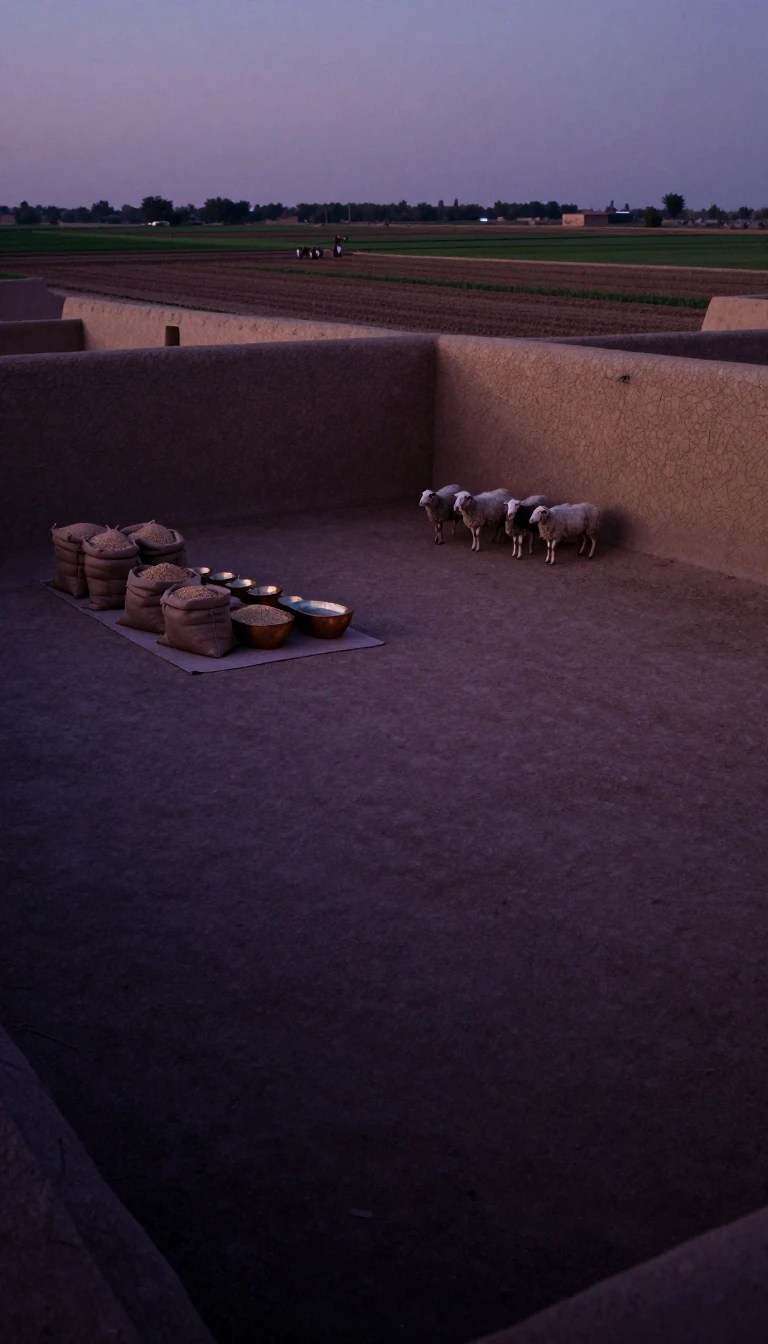 How ancient Indian scholars used complex linguistic gymnastics to preserve the world's oldest texts.Vedic chant is likely the oldest unbroken oral tradition on Earth, dating back to 800 BC. To ensure perfect fidelity across millennia, ancient sages developed eleven distinct reci…
 Is consciousness the root of suffering or the key to your liberation?In Buddhist philosophy, vijñāna—or consciousness—is not a static soul, but a dynamic, dependent process. It acts as the bridge between your senses and your reality, fueling the cy…
 Why Tibetan Buddhist art depicts deities in eternal, intimate embraceThe striking Yab-Yum imagery, where male and female deities are locked in union, is far more than a provocative icon. It is a sophisticated visual shorthand for the fundamental Bu…
 Yajna: The Ancient Vedic Ritual of Fire, Sacrifice, and Symbolic TransformationYajna is a foundational Vedic ritual centered on the sacred fire, Agni, who acts as a divine intermediary. While historically involving physical oblations, the practice evolved ov…
- The Yajurveda: Ancient Ritual Manuals That Shaped the Foundations of Hindu PhilosophyThe Yajurveda is a foundational Vedic scripture composed of prose mantras and ritual formulas. Divided into 'white' and 'black' traditions, this ancient text evolved from simple s…
 Why Buddhism uses the metaphor of a vehicle to describe the path to awakeningIn Buddhist tradition, the term yana, or vehicle, serves as a metaphor for spiritual practice. It suggests that teachings are not absolute truths but skillful means, adapted to th…
 Can a bowl of rice save a soul from the realm of hungry ghosts?The Yulanpen Sutra offers a profound answer to the weight of filial duty. It tells the story of Maudgalyayana, a disciple of the Buddha who discovers his deceased mother suffering…
 Is the iconic image of Zen meditation a modern invention for Western audiences?Zazen, the seated meditation central to Zen Buddhism, is often imagined as a timeless, universal practice. Yet, scholars argue its modern prominence is a recent construction, shap…
 Why did the Buddha's disciples suddenly need a rulebook?In the early years of Buddhism, the community lived in harmony without any formal rules. It wasn't until thirteen years into the Buddha's teaching that the expanding group began f…
- The mysterious gate that marks the boundary between the mundane and the sacredMore than just a beautiful landmark, the Japanese torii serves as a symbolic threshold. Whether carved from ancient wood or modern steel, these gates signal a transition into a sp…
 The hereditary dynasty that once ruled Tibet as imperial viceroysWhile most Buddhist lineages rely on reincarnation, the Sakya school preserves power through bloodline. From the 11th-century foundation of the Khon family to their role as admini…
 Can the human physical form dissolve into pure light?In the ancient Tibetan tradition of Dzogchen, certain masters are said to achieve the 'rainbow body.' This profound state of realization involves the transmutation of the physical…
 Is personal liberation a spiritual victory or a selfish retreat?In Buddhist tradition, the Arhat is a master who has broken the cycle of rebirth. Yet, within different schools, this achievement is viewed with wildly different lenses: some see …