 Intellect Plus
Philosophy
492 cards. Each one is a 40-second story with a five-minute read behind it. Page 8 of 9.
 The Golden Rule got its English name from two Anglicans in 1604Treating others as you would want to be treated is found in nearly every ethical tradition, from Egyptian papyri to Confucius to the Torah. Yet the label itself is surprisingly re…
 The ancient Greek word for good first meant brave and capableIn early Greek, agathos described someone good at things, brave and competent, while kakos meant bad or cowardly. Only around 400 BC, with Democritus and then Plato, did the words…
 Chasing pleasure directly may be the surest way to miss itHedonism, one of philosophy's oldest ideas, puts pleasure at the centre of motivation, value or morality. Yet its own supporters face awkward obstacles: the paradox of hedonism an…
 One medieval Hindu school sought immortality through mercuryHindu philosophy calls itself darshana, a word meaning viewpoint, from a root meaning to see. The views were remarkably varied. Alongside rigorous logicians and dualists sat syncr…
- Ancient India produced atomists, sceptics, materialists and logicians long before modern scienceEastern philosophy spans Chinese, Japanese, Korean, Vietnamese and Indian traditions. India alone produced a startling range: one school argued the universe reduces to indivisible…
 A 12th-century desert-island novel helped shape John Locke's blank slateIbn Tufail, an Andalusian philosopher, imagined a child growing up alone on an island and reaching adult understanding through experience alone. A Latin translation published in 1…
 Stopping by the one real barn in fake-barn country breaks the definition of knowledgeImagine driving through a district full of convincing fake barns, unaware of the trick, and happening to stop at the only genuine one. You believe it is a real barn, you have good…
 Does Santa Claus have being without existing? One philosopher said yesAlexius Meinong argued that every object of thought has being, but only some of them exist. Santa Claus, on his view, is a genuine individual that simply lacks the property of exi…
 Sartre first rejected the existentialist label, then made it famousGabriel Marcel, a French Catholic philosopher, pinned the word existentialism on Jean-Paul Sartre at a 1945 colloquium, and Sartre refused it. Weeks later, on 29 October 1945, he …
 Does pain represent anything, or is it just raw feeling?Philosophers traditionally held that every experience points at something beyond itself. Pain is the awkward test case. Critics say it is pure sensation with nothing represented; …
 A clever argument suggests there might be only one fact: the truthThe Slingshot argument claims every true statement ultimately stands for the same thing, the value true. If facts are whatever true statements refer to, the conclusion is bizarre:…
 A fallacious argument can still land on a true conclusionFaulty reasoning does not guarantee a false answer. Affirming the consequent is a textbook error, yet it can stumble onto the truth by accident. What makes an argument fallacious …
 You cannot change the past or the laws of nature, so are your choices yours?In the 1960s Carl Ginet sharpened an old worry into a crisp argument. If determinism holds, your present state follows from the distant past plus the laws of nature, and you contr…
 Allow one contradiction into classical logic and you can prove absolutely anythingLogicians call it the principle of explosion: once a set of axioms contains a contradiction, every proposition becomes provable. Latin gives it a cheeky name, ex falso quodlibet, …
 The phrase critical thinking first surfaced in an 1815 literary journalAccording to the Oxford English Dictionary, the exact words appeared in The Critical Review in 1815, describing literary analysis. Within a century they had come to mean a general…
- A perfectly valid argument can prove that no cats are frogs using false premisesDeduction cares about form, not truth. Say every frog is a mammal and no cat is a mammal, and it follows flawlessly that no cat is a frog. The reasoning is valid even though a pre…
 Laplace imagined a mind that could read the entire future from particle positionsPicture an observer who knows the exact position and velocity of every particle in the universe. Pierre-Simon Laplace argued such a being could calculate everything still to come.…
 Bentham and Mill never held a philosophy job; today almost every philosopher doesMany of the nineteenth century's great thinkers were journalists, politicians, clergy or civil servants. Then philosophy turned into a profession with doctorates, departments and …
 The Buddha told his students to scrutinise him like a suspectBuddhist philosophy did not ask for blind faith. Early texts describe followers weighing the teachings with wisdom before accepting them, and one discourse has the Buddha inviting…
- Physics says a butterfly triggers a tornado but does not cause itIn physics, a cause must sit inside the past light cone of its effect, reachable by a signal no faster than light. Break that rule and some observers would see messages arrive bef…
- A politically shattered China produced a Hundred Schools of ThoughtBetween about 770 and 221 BCE, rival Chinese states fought constantly, and that turmoil bred an astonishing burst of ideas. Confucius, Laozi, Mozi and Han Fei offered competing an…
 Is Christian philosophy original thought or Greek ideas in new clothes?Early Christians disagreed sharply about reason. Origen and Augustine saw faith and science in harmony; Tertullian saw a clash. Out of that argument grew a tradition spanning more…
 Common sense started life as Aristotle's name for a sixth senseFor Aristotle, the 'common sense' was an inner faculty that fused sight, sound and smell into perception of one real thing. Romans turned it into tact and community feeling. Only …
 Boathouse or houseboat: how your mind snaps simple ideas togetherPut 'boat' and 'house' together one way and you get a shed for boats; flip them and you get a floating home. Concepts are the building blocks behind that trick. They let you recog…
 Socrates heard an inner voice that only ever told him noSocrates claimed a divine sign warned him whenever he was about to make a mistake, but never urged him toward anything. That image of a restraining inner voice is one of many ways…
 The world's first outcome-based ethics came from China, not Victorian EnglandLong before Jeremy Bentham tallied pleasure against pain, the Chinese thinker Mozi judged actions by whether they benefited everyone under heaven. The Stanford Encyclopedia of Phi…
 Can you know something is true without ever checking the world?Nobody needs a weather report to know that London is either sunny or not sunny today. Whether it actually is sunny, though, requires looking outside. That small gap between knowin…
 Every word you know began as an act of throwing detail awayCalling a scuffed leather football simply a ball means ignoring nearly everything about it. That deliberate forgetting is abstraction, and researchers think humans began doing it …
 The Morning Star and the Evening Star launched a whole philosophical movementBoth names point at Venus, yet saying one equals the other tells you something, while saying the Morning Star is the Morning Star tells you nothing. Gottlob Frege's 1892 puzzle ab…
 A perfectly valid argument can still prove that bats are birdsBats fly, and every flying creature is a bird, so bats are birds. The conclusion is false, yet logicians call the argument valid, because if both premises were true the conclusion…
 Is beauty in the object, the beholder, or a jury of experts?Weighing a grapefruit is objective; liking its taste is personal. Calling it beautiful sits awkwardly between the two, grounded in feeling yet claiming everyone should agree. Phil…
 Odin traded an eye for wisdom, and psychologists now try to measure itIn Norse myth Odin plucked out an eye to buy a drink from the well of knowledge. Humans have prized wisdom for as long as they have written anything down, from Sumerian proverbs t…
 Reading an attack on your worldview can make thoughts of death surfacePatriotic Canadians who read an essay attacking their national values became more likely to complete COFF__ as COFFIN. Psychologists say that is because a worldview, the deep fram…
 Some values people refuse to trade away at any price, and that changes negotiationsAsk someone whether they would take one life to save many, and many will refuse no matter the arithmetic. Philosophers call such commitments protected or sacred values. They sit a…
 Aristotle's golden mean is not the exact middle between two vicesCourage lies somewhere between cowardice and recklessness, Aristotle argued, but not at the halfway point. The right spot shifts with the moment, the person and the purpose. That …
 Western philosophy began when one man declared that everything is waterThales of Miletus was wrong about water, but he reached his answer by observing and reasoning rather than repeating myths. That shift from story to argument launched Western philo…
 Sophist once meant a master craftsman before it became an insultCalling someone a sophist today accuses them of slippery, dishonest argument. In ancient Greek the root word praised skill: charioteers and sculptors could be called wise in their…
 Stoicism is named after a painted porch in the Athens marketplaceAround 300 BCE, Zeno of Citium taught in the open, under a colonnade decorated with battle scenes on the north side of the Athenian Agora. That Painted Porch, the Stoa Poikile, ga…
 To a scientist, a theory is the opposite of a hunchIn daily speech, a theory is a hunch. In science it means nearly the opposite: a well-confirmed explanation of nature, the most rigorous and reliable form of scientific knowledge.…
- Plato thought the table in your kitchen is only a shadowFor Plato, the chair you sit on and the horse in the field are less real than their Forms: perfect, changeless essences that exist beyond space and time. Every physical object onl…
 Thomas Aquinas called Aristotle simply the Philosopher, and built on himA 13th-century Dominican friar took a pagan Greek thinker so seriously that he called him simply the Philosopher. By weaving Aristotle together with Christian theology, Thomas Aqu…
 Galileo probably settled falling bodies with logic, not the Leaning TowerThe familiar picture has Galileo dropping two weights from the Leaning Tower of Pisa. His own 1638 book tells a different story: he proved that heavy and light bodies fall at the …
- Philosophers still cannot agree on what makes something trueEveryone uses the word truth, and a working definition sounds easy: matching reality. Yet philosophers have defended at least half a dozen rival accounts, from correspondence with…
 John Stuart Mill thought he coined utilitarian; Bentham got there firstIn 1861 John Stuart Mill claimed to be the first person to put the word utilitarian into circulation, having picked it up from a novel. He seems not to have known that his predece…
 Socrates called his questioning technique a kind of midwiferySocrates claimed he taught nothing. Instead he asked question after question until his partner either reached a conclusion unaided or tangled themselves in contradiction and admit…
 Santa Claus is not real, but books about him areOne old test for what is real says a thing must be able to make a difference. Gandhi passes: he moved millions. Santa Claus fails, since he cannot act on anything. Yet the childre…
- The Greek word behind reason also meant an account of moneyLogos, the ancient Greek root of logic, could mean speech, explanation, or a financial account. Latin translated it as ratio, which also served for balancing the books. From that …
- Temperature is just molecules moving, and that is reductionism in one lineThe warmth of a gas turns out to be nothing over and above the average energy of its jostling molecules. Explaining a whole by its parts has powered physics, chemistry and molecul…
 Is everything relative? Then that claim must be relative tooThe oldest objection to relativism is a trap: if all truth is relative, is that statement itself relative or absolute? Either answer seems to sink it. Yet the objection only bites…
 Medieval Europe knew only two and a half dialogues of PlatoFor centuries, Western scholars had direct access to just a sliver of Plato's writing. Then fifteenth-century Italy translated him wholesale, and in 1484 Marsilio Ficino published…
- One ancient Greek sceptic refused to speak and just wiggled his fingerCratylus decided that meanings shift so constantly that communication is impossible, so he stopped talking and wagged a finger instead. Few sceptics went that far, but the traditi…
- Pragmatism says an idea means nothing more than what it doesAmerica's homegrown philosophy started in a Cambridge discussion group in the 1870s with a bold test: to understand any concept, list the practical effects it would have, and that…
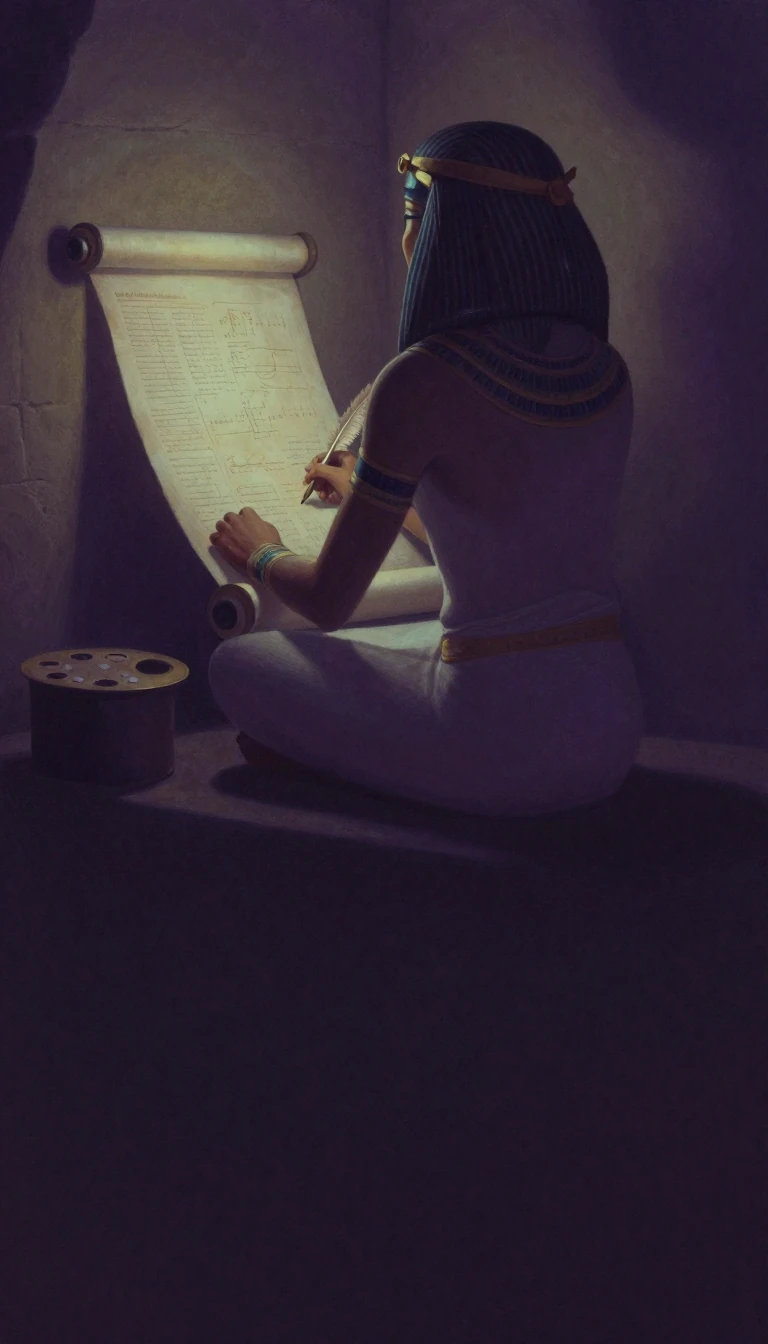 Carl Sagan's invisible dragon shows why unfalsifiable claims fail as scienceSuppose someone insists a dragon lives in their garage, but it is invisible, weightless and breathes heatless fire, so every test you propose misses it. Carl Sagan's point was sim…
- Rationalists believed you could discover truths without getting off the couchCan you know something for certain without looking at the world? Rationalists say yes. The number three is prime and bigger than two, so a prime greater than two exists, and no ex…
 Newton's great physics book called itself philosophy, and nobody found that strangeIsaac Newton titled his 1687 masterpiece Mathematical Principles of Natural Philosophy. Today we file it under physics. For most of history philosophy covered nearly every kind of…
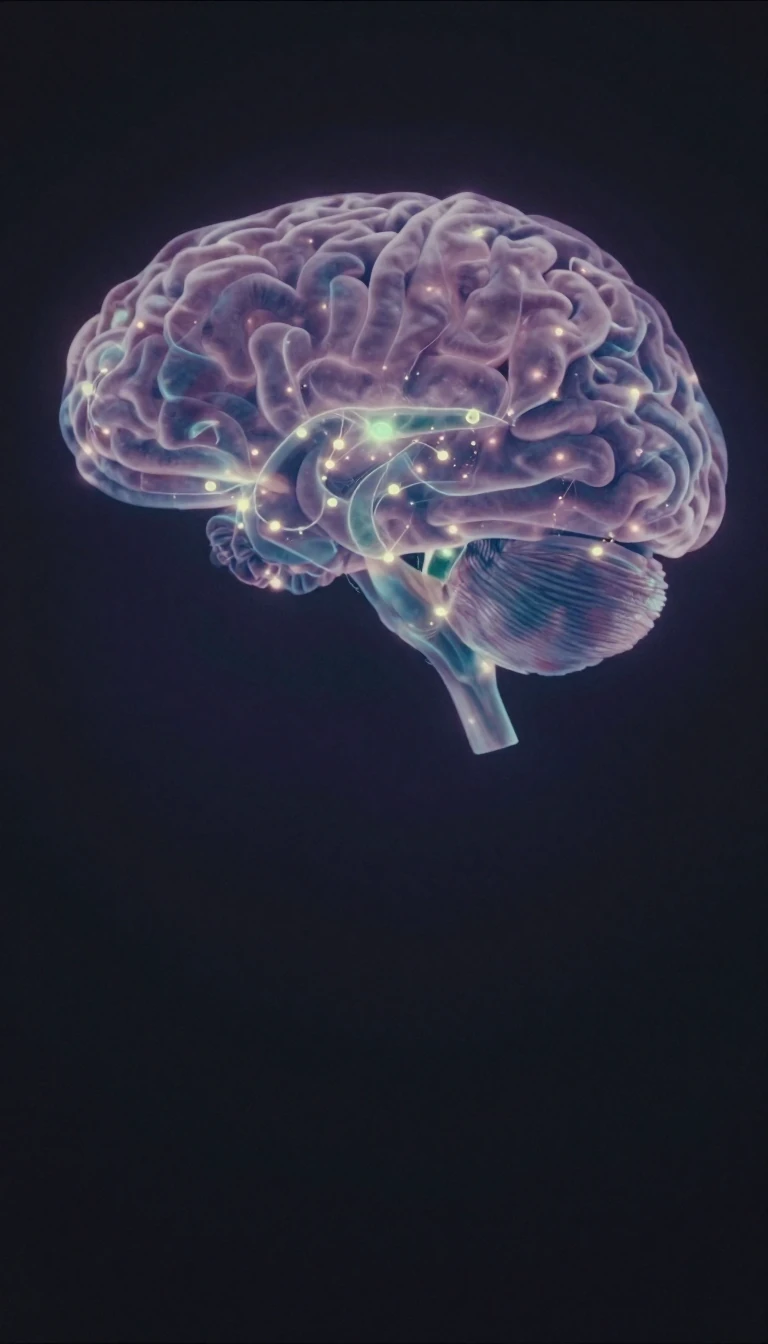 You can ask how a burnt finger feels, but not how glutamate feelsIt makes sense to ask what a blue sky looks like or what a burnt finger feels like. Asking what a surge of glutamate in the prefrontal cortex feels like sounds odd, even meaningle…
 Aquinas and Bertrand Russell agreed on the rules for believing in GodThomas Aquinas and Bertrand Russell reached opposite conclusions about God, yet they shared a principle: belief is rational only when backed by sufficient evidence. Their quarrel …
 A well-fed chicken shows why science can never prove its general lawsEvery morning the farmer brings food, so the chicken expects breakfast tomorrow. It is reasonable, and it may be fatally wrong: perhaps the farmer is fattening it up. That small p…
 Plagiarism literally means kidnapping, thanks to an angry Roman poetIn the first century the Roman poet Martial complained that a rival had kidnapped his verses, using the Latin word plagiarius, a kidnapper. The insult stuck. Ben Jonson brought pl…
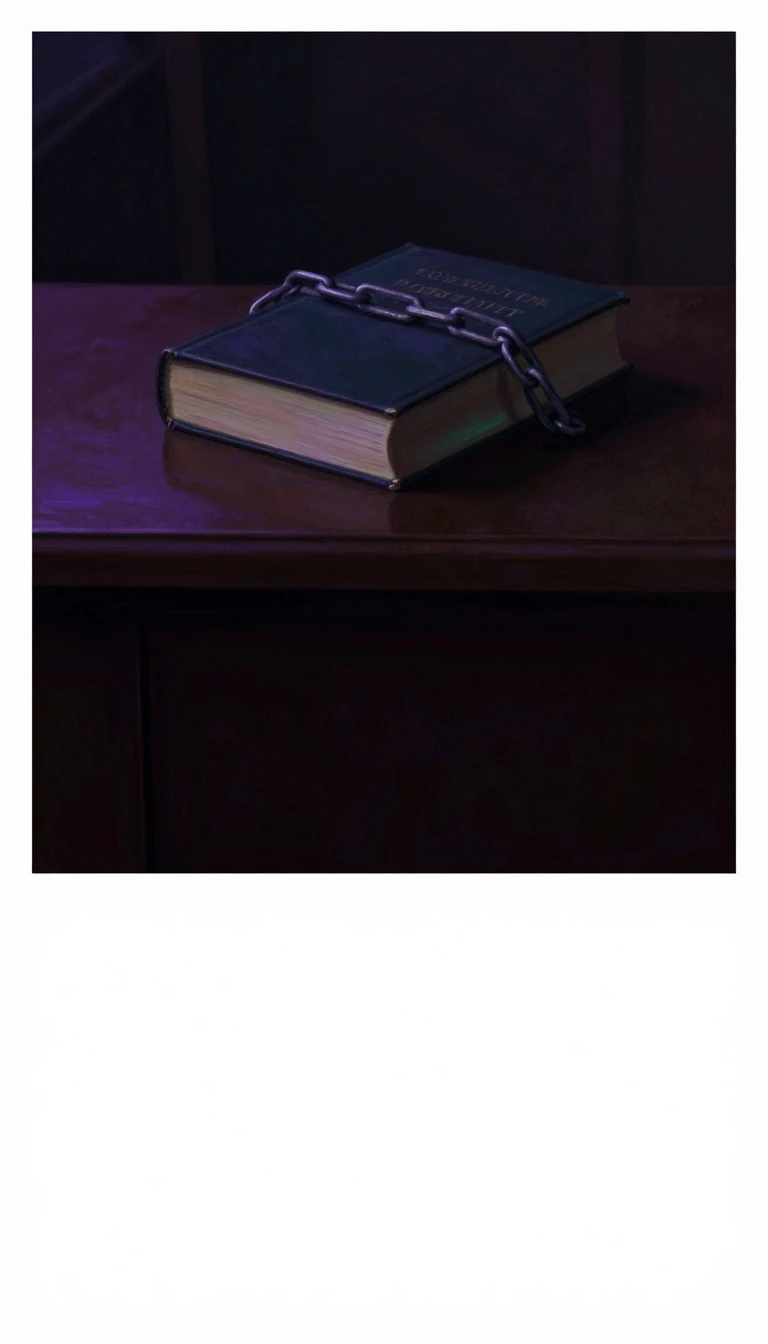 Governments are human inventions, which is exactly why political philosophy existsNo form of government comes ready-made from nature. States, constitutions and parliaments are human creations, and anything built can be rebuilt for better or worse. That simple o…