 Intellect Plus
Philosophy
492 cards. Each one is a 40-second story with a five-minute read behind it. Page 4 of 9.
 Why courage is the most vital virtue in a polarized worldJournalist Bari Weiss examines the growing political divide in the United States and argues that courage is the essential virtue needed to combat modern conformity and silence.
 Bravery is not the absence of fear but a relationship with itWriter Laurel Braitman reflects on her father's final days to explore how we navigate life's inevitable tests. This talk offers a profound look at how to embrace the full spectrum…
 Is destiny written in the stars or chosen by the sword?Explore the central tension of Shakespeare's Macbeth: the conflict between predestination and personal agency. This video examines whether the titular character was destined for h…
 How Aristotle's rules for theater trigger emotional releaseThis video explores the mechanics of tragedy as defined by Aristotle. It examines how specific theatrical elements can be used to achieve catharsis, the profound emotional release…
 Before the era of science, there were the PresocraticsThis video explores the shift from mythological explanations to natural philosophy. It examines how early thinkers began to seek the fundamental substance of the universe, laying …
 Is the Chinese Century already over, or is it just beginning to unfold?The term Chinese Century suggests a geopolitical shift where China replaces the United States as the world's dominant power. While some experts argue this era is already underway,…
 Can we be free if our choices are already determined by the universe?Compatibilism argues that free will and determinism are not mutually exclusive. By redefining freedom as the ability to act according to one's own motivations without external coe…
 Are you trapped in an echo chamber, or just an epistemic bubble?We often blame algorithms for our polarized world, but the reality is more nuanced. While digital platforms amplify like-minded views, the difference between a simple informationa…
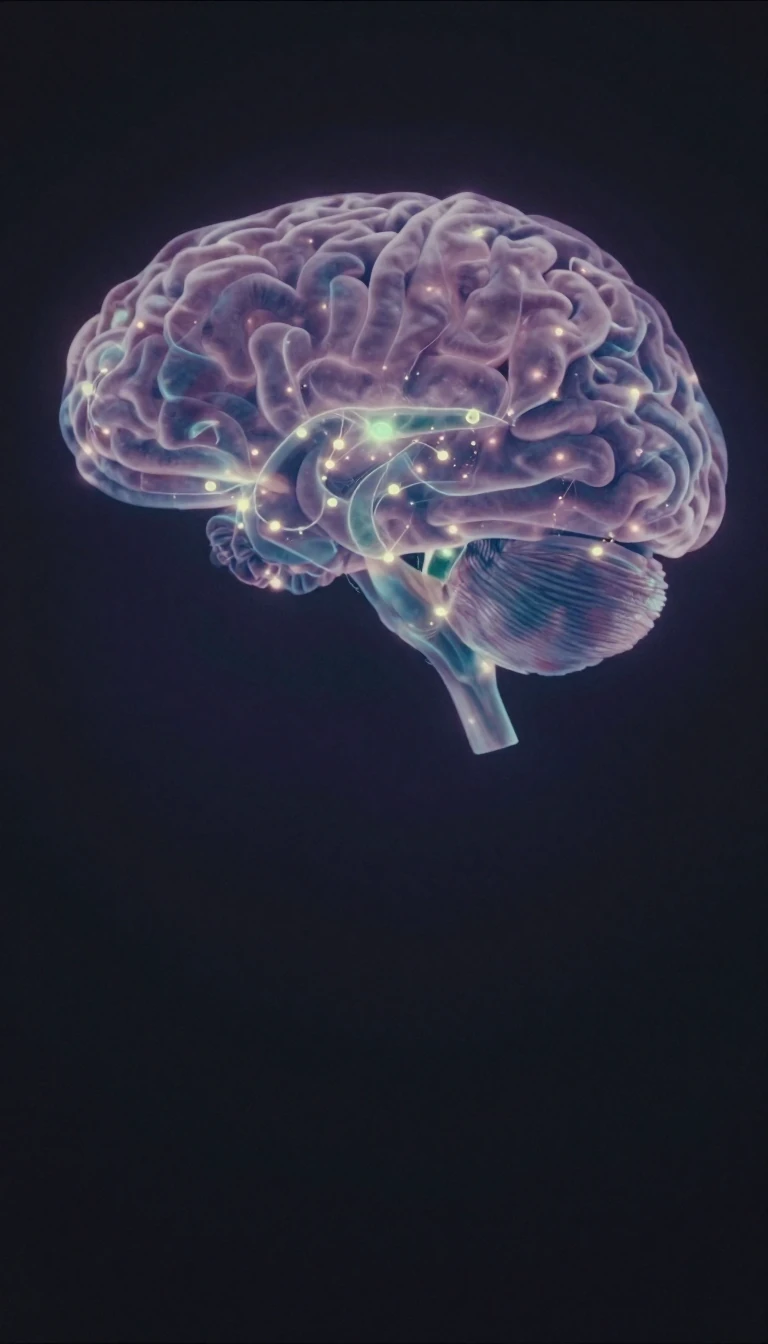 Is your mind trapped inside your brain, or is it shaped by your body?Traditional science once viewed the brain as an isolated computer, processing abstract symbols to navigate the world. Embodied cognition challenges this, arguing that our thoughts…
 Is a film adaptation a faithful translation or a completely new work of art?Film adaptation is far more than just moving a story from page to screen. It is a complex, dialogic process where directors balance the expectations of fans against the practical …
 Are Hobbits merely a creative anachronism designed to bridge our modern world and ancient myth?Tolkien’s hobbits are not ancient heroes, but modern figures equipped with umbrellas, clocks, and matches. By placing these familiar, rural characters into the dangerous, heroic l…
- How W. V. D. Hodge linked the rigid world of topology to differential equationsIn the 1930s, W. V. D. Hodge transformed algebraic geometry by proving that every cohomology class on a smooth manifold possesses a unique, canonical representative. By applying t…
 Is the Judeo-Christian tradition a genuine historical bond or a modern political invention?The term Judeo-Christian is often cited as the bedrock of Western values, yet it is a surprisingly recent creation. Emerging in the 19th century for specific religious conversions…
 Was human consciousness a recent invention triggered by the collapse of a split brain?For most of history, humans may have functioned without an inner self. Psychologist Julian Jaynes proposed that ancient people operated via auditory hallucinations, only developin…
 Why the ancient Greeks had two words for time, and why it matters today.Ancient Greeks distinguished between chronos, the sequential ticking of the clock, and kairos, the elusive, qualitative moment of opportunity. While chronos is quantitative, kairo…
 Asia's linguistic landscape is a complex mosaic of ancient families and shifting power dynamics.From the vast reach of Indo-European tongues to the isolated pockets of the Caucasus, Asia hosts a staggering array of languages. While major families dominate continental discour…
 The Lord Chancellor: From Keeper of the King's Conscience to Modern Minister of JusticeFor nearly a millennium, the Lord Chancellor has served as a cornerstone of British governance. Once a powerful cleric and the King's personal conscience, this official has evolve…
 Why do people report lucid, meaningful experiences while their brains are shutting down?Near-death experiences often feature profound serenity, life reviews, and light. While some dismiss these as simple hallucinations, researchers now argue that authentic experience…
 Why speeding up your favorite songs is more than just a digital gimmickNightcore, once a niche school project by a Norwegian DJ duo, has evolved from underground file-sharing curiosity to a mainstream industry standard. By accelerating tracks by roug…
 Why philosophy is finally moving past the human-centric view of our realityObject-oriented ontology argues that humans are not the center of the universe. Instead, it treats every entity—from rocks to raindrops—as having an independent existence. By reje…
- Do infants truly grasp that hidden objects exist, or are we misinterpreting their behavior?Object permanence—the realization that things persist even when out of sight—was long considered a milestone reached by age two. Yet, modern experiments suggest infants might gras…
 Why the bullshitter is a more dangerous enemy of the truth than the liarWe often mistake bullshit for simple lying, but the two are fundamentally different. While a liar acknowledges the truth by actively trying to hide it, a bullshitter is entirely i…
 Is consciousness a fundamental feature of the universe rather than a biological accident?Panpsychism suggests that mind is not an exclusive byproduct of complex brains, but a basic, ubiquitous ingredient of reality. From ancient philosophy to modern neuroscience, thin…
 Why do we see human faces in abstract concepts like justice or liberty?Personification turns the intangible into the visible. By casting abstract ideas as human figures, we have spent centuries populating our cathedrals, coins, and monuments with all…
 Does the brain operate on quantum mechanics, or is consciousness purely a classical process?Some theorists argue that classical physics cannot explain consciousness, proposing instead that quantum phenomena like entanglement and superposition drive brain function. Critic…
 Why do we keep retelling the same stories through the lens of new technology?A remake is more than just a recycled script. By updating narratives for modern audiences, creators leverage new technology and shifting cultural contexts to breathe fresh life in…
 How Imperial Japan rebranded its ancient folk traditions as a non-religious civic duty.To navigate the pressures of Western-style religious freedom, Imperial Japan declared Shinto a non-religious, patriotic moral tradition. By framing Emperor-worship as a civic obli…
 Is objective truth a reachable destination, or is it merely an elusive philosophical mirage?We often treat subjectivity and objectivity as rigid opposites: the personal versus the universal. Yet, philosophers have long debated whether this binary holds up. From the found…
 How to build a mental filter that detects nonsense and protects your critical thinkingIn his 1995 book, Carl Sagan introduced the baloney detection kit, a set of tools designed to help laypeople navigate a world filled with pseudoscience and superstition. By master…
- Is the world's most popular plagiarism detector actually a giant, profitable student-work archive?Turnitin processes billions of student papers to police academic integrity, yet the service remains mired in controversy. From allegations of privacy violations and the presumptio…
 Is virtue signalling a genuine moral expression or just a performative social weapon?The term virtue signalling has become a ubiquitous accusation, used to dismiss moral stances as empty performance. Yet, the concept is deeply contested. Is it a cynical shortcut t…
 Are angels merely messengers, or do they govern the very mechanics of our universe?Christianity portrays angels as divine messengers, yet theology suggests their roles are far more complex. From guarding individuals to managing celestial bodies and restraining e…
 The world's oldest active military alliance was forged in 1386 and still holds today.Spanning over six centuries, the Anglo-Portuguese Alliance remains the longest-running bilateral agreement in history. From medieval crusades to the strategic airfields of the Sec…
 Why your brain mistakes vivid memories for statistical reality and how it misleads youWe often assume that if an idea comes to mind easily, it must be important or frequent. This mental shortcut, known as the availability heuristic, causes us to overestimate the li…
- Could Canada, Australia, New Zealand, and the UK form a new global power?Proponents of CANZUK envision a strategic alliance between four Commonwealth nations, aiming to mirror the European Economic Community through shared trade, security, and freedom …
 Does the Christian promise of salvation actually include every single human being?Christian universalism posits that all souls will eventually be reconciled to God, rejecting the notion of eternal punishment. While often dismissed as a modern liberal invention,…
 Why the Copernican Revolution was actually a victory of mathematical infiltration, not immediate truth.Nicolaus Copernicus did not just move the Earth; he challenged the very definition of scientific reality. While his heliocentric model eventually dismantled the geocentric univers…
 Cosmogony: Why we struggle to define the beginning of our universeCosmogony seeks to explain the origin of the universe, yet it remains a field where ancient myth and modern physics collide. While science uses the Big Bang to map our past, it hi…
 A definition is not the meaning of a word, but a way to convey it.We often mistake definitions for the essence of things, but they are merely tools for communication. Whether you are pointing at a rabbit or calculating the properties of a triang…
- Equanimity is not a static state of cold indifference but a dynamic mental mobilityOften mistaken for dry neutrality or aloofness, true equanimity is a vibrant, active engagement with reality. Far from being a passive shield against emotion, it is a sophisticate…
 Can a computer truly think like a human expert, or just follow rules?Expert systems were the original pioneers of artificial intelligence, designed to replicate human decision-making in specialized fields. By combining vast knowledge bases with log…
- How to predict the future of your product by systematically imagining its total failure.Failure Mode and Effects Analysis (FMEA) is a rigorous design tool that forces teams to confront the unthinkable. By mapping every potential point of failure before a product is b…
 Why the forbidden fruit of Eden is almost certainly not an appleThe iconic image of an apple in the Garden of Eden is a linguistic accident, not a biblical fact. While Western tradition clings to the fruit as a symbol of temptation, ancient te…
 Logical reasoning is the rigorous art of connecting premises to reach a sound conclusion.Logical reasoning is more than just being right; it is a structured, norm-governed process of transforming information. Whether you are using deductive certainty or the probabilis…
 Maya is not just an illusion, but the creative power shaping our perceived reality.In Indian philosophy, maya is often mistranslated as mere illusion. Instead, it represents the mysterious force that makes the phenomenal world appear real, concealing the unchang…
 Is the modern rejection of technology a rational precaution or a dangerous, regressive fantasy?Neo-Luddism is a leaderless movement that views unbridled technological progress as a threat to humanity and the environment. While often dismissed as technophobic, its proponents…
 Why science rarely changes through logic alone, but through the death of old guardA paradigm shift is not just a new discovery; it is a fundamental transformation in how a scientific community perceives reality. Thomas Kuhn argued that science does not progress…
 Philipp Mainländer argued that the universe is the decaying corpse of a dead God.Philipp Mainländer, a 19th-century German philosopher, proposed a radical cosmology: God committed suicide by shattering into the physical universe. He believed all matter is the …
 Does the world exist when you look away, or is it all in your head?Philosophical realism argues that the universe persists independently of our thoughts or perceptions. While this feels like common sense, it remains a central point of contention …
- Can you ever truly know anything, or is certainty just a comforting illusion?Philosophical skepticism challenges the very foundations of human knowledge. By questioning whether we can ever be certain about the external world or our own perceptions, skeptic…
 Could you be a zombie without knowing it, or are you truly conscious?A philosophical zombie is a being physically identical to a human but lacking any inner experience. If you poked one, it would react perfectly, yet feel nothing. This thought expe…
 Why the world is not a collection of things, but a series of events.Traditional philosophy views the world as a collection of static objects. Process philosophy flips this, arguing that reality is fundamentally composed of change, becoming, and sh…
- Why comparing your opponent to Hitler is almost always a logical failureThe reductio ad Hitlerum is a common fallacy where an argument is dismissed simply because Hitler or the Nazis once supported it. By using guilt by association to derail debate, t…
 Russian cosmism was a radical movement aiming to conquer death and colonize the stars.Emerging in late 19th-century Russia, cosmism fused science, religion, and metaphysics into a singular, ambitious worldview. Its proponents sought to use technology to achieve imm…
 Why the most rational minds choose to withhold their final verdict on everythingSuspension of judgment is more than just indecision; it is a deliberate, active state of mind. By resisting the urge to form premature conclusions, thinkers from ancient skeptics …
 Why did scientists once believe life required a mysterious, non-physical spark to exist?For centuries, thinkers argued that living organisms possessed a unique vital force, distinct from the laws of chemistry and physics. While modern biology has largely discarded th…
 The Web Ontology Language turns the chaotic internet into a structured, machine-readable knowledge network.The Web Ontology Language, or OWL, provides a formal framework for defining how objects and their relationships function online. By creating explicit taxonomies that machines can …
- Can we reconcile our human experience with the cold, scientific reality of the universe?Wilfrid Sellars spent his career attempting to bridge the gap between our intuitive, everyday lives and the objective descriptions provided by natural science. He famously attacke…
 Zurvanism: The Forgotten Fatalistic Faith That Once Defined Sasanian PersiaZurvanism was a mysterious, fatalistic offshoot of Zoroastrianism that worshipped Infinite Time as the primordial creator. It famously proposed that the gods of light and darkness…
- What if the ultimate reality is not a thing, but a self-knowing activity?The Absolute is a philosophical heavyweight, representing a reality that is perfectly self-sufficient and free from all external conditions. While often associated with the divine…