 Intellect Plus
Music
3,611 cards. Each one is a 40-second story with a five-minute read behind it. Page 60 of 61.
Subtopics: Acoustics · Blues · Classical music · Deafness · Electronic music · Film & TV music · Folk & country music · Hearing · Heavy metal & punk · Hip hop · Illusions · Improvisation · Instruments · Jazz · K-pop & world music · Mathematics · Measurement · Memory · Modernism · Music · Music technology · Music theory · Musical instruments · Musicians and composers · Notation · Opera · Pop music · Renaissance · Rock music · Silence · Soul, R&B & reggae · Sound · UK & Ireland: music · World music
 The boy who performed for kings wrote 800 works by thirty-fiveWolfgang Amadeus Mozart was composing minuets at five and performing for European royalty before most children learn to read. His father Leopold called him the miracle God allowed…
 Mussorgsky's raw scores were long heard through editorsModest Mussorgsky (1839–1881) built Boris Godunov, Night on Bald Mountain, and Pictures at an Exhibition from Russian history and folklore. For decades listeners mainly met other …
- Rimsky-Korsakov scored empires while serving the navyNikolai Rimsky-Korsakov (1844–1908), one of The Five, painted orchestra with folk tune and fantasy—Scheherazade above all. He spent years as a naval officer and later as a civilia…
- Russia trained Tchaikovsky for bureaucracy, not musicPyotr Ilyich Tchaikovsky (1840–1893) became the first Russian composer with a lasting global concert life. As a boy he was steered toward civil service because the empire lacked m…
 Vaughan Williams found his true voice only in his late thirtiesRalph Vaughan Williams (1872–1958) broke British music free of its German habits, drawing on Tudor composers and English folk-song across nine symphonies written over sixty years.…
 Strauss's tone poems made him a celebrity conductorRichard Strauss (1864–1949) turned the orchestra into storytelling with Don Juan, Till Eulenspiegel, and other tone poems, then ruled opera houses with Salome and beyond. A Munich…
 Wagner built Bayreuth to trap audiences inside his mythsRichard Wagner (1813–1883) wrote both words and music for every stage work, wove leitmotifs through dense orchestral textures, and finally built his own theatre at Bayreuth to plu…
 Schumann married Clara against her father's bitter willRobert Schumann (1810–1856) wrote poetic piano cycles and songs at the heart of early Romanticism. A Zwickau bookseller's son, he wavered between law and music before piano study …
 Prokofiev left revolutionary Russia then composed War and PeaceSergei Prokofiev (1891–1953) shocked Saint Petersburg with ferociously dissonant piano music, left Russia after 1917 with official blessing, and came home in 1936 to write Peter a…
 America's signature sound began as a Depression survival planCritics later crowned Aaron Copland the Dean of American Music for open harmonies that feel like prairie sky. That vernacular voice was not his first language. After Paris moderni…
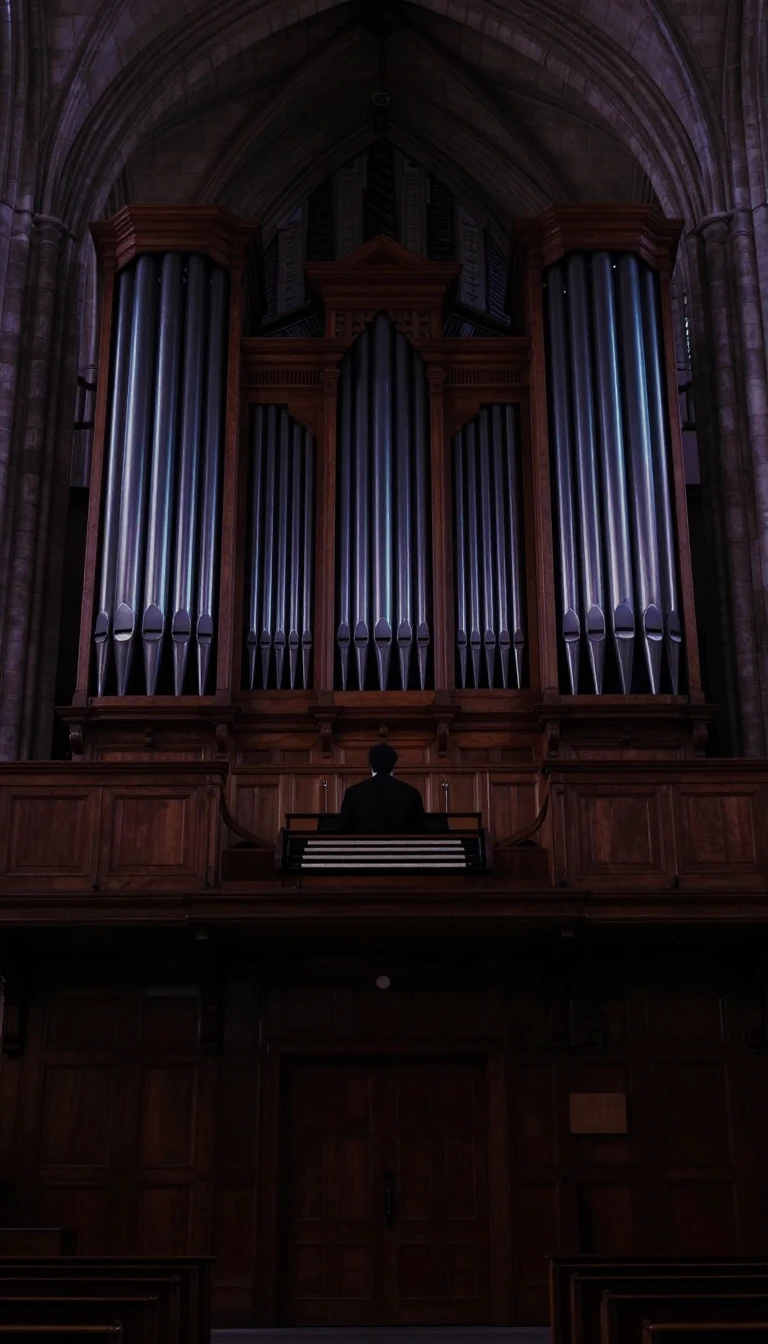 The humble organist who wrote symphonies critics called too longAnton Bruckner bowed to Wagner and rewrote his own scores again and again, yet his vast symphonies helped define late Romantic radicalism. Hans von Bülow called him half genius, h…
 Brahms opened the door; America made Dvořák immortalAntonín Dvořák folded Bohemian and Moravian folk rhythm into symphonic craft until critics called him his era's most versatile composer. International fame, though, arrived throug…
 The Red Priest wrote The Four Seasons for orphaned girlsAntonio Vivaldi forged the solo concerto that Europe copied, yet much of that fireworks music was homework for Venice's Ospedale della Pietà—an orphanage whose all-female ensemble…
- He freed dissonance, then fled the regime that hated himArnold Schoenberg moved from Wagner-Brahms late Romanticism into atonality and, by 1923, twelve-tone method—rules that reshaped three generations of composers. Antisemitism and Na…
- A Transylvanian nanny's songs remade modern musicBéla Bartók ranks with Liszt among Hungary's greatest composers, yet his lasting method began on holiday in 1904 when he overheard a nanny singing folk tunes to children. With Zol…
 Peter Grimes made Britten Britain's operatic center of gravityBenjamin Britten turned a Suffolk dentist's youngest child into the first composer granted a life peerage. Peter Grimes in 1945 launched international fame; fourteen more operas f…
- Debussy rejected the Impressionist label that stuck anywayClaude Debussy is still sold as the first Impressionist composer, a tag he vigorously refused. The china-shop keeper's son who entered the Paris Conservatoire at ten spent decades…
 Monteverdi defended a seconda pratica that birthed operaClaudio Monteverdi stands at the hinge between Renaissance polyphony and Baroque drama. Court letters from Mantua and Venice still complain about pay and politics, yet L'Orfeo (16…
- Lady Macbeth's fall showed how Soviet power could silence geniusDmitri Shostakovich became a major international composer after his First Symphony premiered in 1926—then spent decades negotiating praise and punishment. Lady Macbeth of Mtsensk …
 England's emblematic composer felt like a permanent outsiderEdward Elgar wrote the Enigma Variations and Pomp and Circumstance marches that still soundtrack British ceremony. Yet he drew more from continental models than English schools, s…
 Mendelssohn revived Bach—then history nearly erased himFelix Mendelssohn's Wedding March and Midsummer Night's Dream music feel permanent, yet late-nineteenth taste and antisemitism pushed his name down for decades. The baptized grand…
 Chopin gave only thirty public concerts—and remade the pianoFrédéric Chopin's poetic pianism still defines early Romantic celebrity, yet after settling in Paris at twenty-one he preferred salons to halls, giving only about thirty public pe…
- Lisztomania was the prototype of modern music stardomFranz Liszt turned piano virtuosity into a public craze nineteenth-century writers named Lisztomania—fame earlier keyboard heroes never touched. Between Czerny lessons and Europea…
 Schubert wrote over a thousand works and died at thirty-oneFranz Schubert packed more than 1,000 compositions—including over 600 Lieder—into a life that ended on 19 November 1828. Vienna's wider public barely noticed while he lived; Mende…
- Fauré bridged Chopin's world and the age of jazzGabriel Fauré's Requiem and Pavane sound gently inevitable, yet Grove called him the most advanced French composer of his generation. Born while Chopin still wrote, he died as jaz…
- Handel quit Italian opera after Messiah conquered LondonGeorge Frideric Handel imported Italian opera to London, founded companies for the nobility, then after a 1737 collapse reinvented himself for middle-class English oratorio. Messi…
- Boulanger refused Gershwin—afraid classical study would tame himGeorge Gershwin jumped from song-plugging to Rhapsody in Blue without surrendering jazz inflection. When he sought Nadia Boulanger's teaching in Paris, she declined, fearing rigor…
 Four Puccini operas still rule the world's stagesGiacomo Puccini is widely called the greatest Italian opera composer after Verdi, and the box office agrees: La bohème, Tosca, Madama Butterfly, and the unfinished Turandot remain…
- Gilbert's topsy-turvy worlds needed Sullivan's unforgettable tunesW. S. Gilbert and Arthur Sullivan wrote fourteen comic operas between 1871 and 1896, and three of them still define Victorian musical comedy for most listeners. Producer Richard D…
 Rossini quit opera in his thirties at the peak of fameGioachino Rossini wrote thirty-nine operas that reset comic and serious standards, then stopped large-scale composing while still in his thirties. Ill health, accumulated wealth, …
 Palestrina became the textbook sound of Catholic counterpointGiovanni Pierluigi da Palestrina wrote over 105 masses and 250 motets, reconciling beauty with post-Tridentine church function so thoroughly that later ages treated "Palestrinian …
- Va, pensiero turned Verdi into Italy's unofficial soundtrackGiuseppe Verdi dominated Italian opera after Rossini, Bellini, and Donizetti, folding French grand-opera lessons into dramas of power and intimacy. Early choruses such as Nabucco'…
 Machaut's death is how scholars date the end of ars novaGuillaume de Machaut so dominated fourteenth-century French music that modern historians use his 1377 death to mark the turn from ars nova to ars subtilior. Poet-composer in the o…
- Du Fay's Florence motet crowned Brunelleschi's dome in soundGuillaume Du Fay, leading European composer of his generation, wrote an intricate ceremonial motet for the 1436 consecration of Florence Cathedral's dome. An often-illegitimate pr…
- Mahler conducted for a living and composed in the cracksGustav Mahler was unassailable as a conductor long before audiences trusted his vast symphonies. Bohemian-Jewish roots left him feeling permanently unwelcome; conversion and the V…
 Harriet Smithson haunted Berlioz as a musical idée fixeHector Berlioz fell obsessively for Irish actress Harriet Smithson at twenty-four; seven years later she married him. Symphonie fantastique turns her into a recurring idée fixe—th…
- Purcell packed a uniquely English Baroque into thirty-six yearsHenry Purcell, born beside Westminster Abbey in 1659, fused French and Italian colors into a voice still called distinctly English. Dido and Aeneas, The Fairy Queen, and more than…
- More chants survive by Hildegard than by any other medieval womanHildegard of Bingen—abbess, visionary, medical writer, and the Sibyl of the Rhine—left more surviving sacred chants than any other female medieval composer. In 2012 Benedict XVI e…
- Sibelius fell silent for thirty years after TapiolaJean Sibelius helped Finland hear itself while Russification pressed hard—Finlandia, seven symphonies, a violin concerto. After the Seventh (1924), The Tempest music and Tapiola (…
- Orphaned at ten, Bach became the organist posterity forgot firstJohann Sebastian Bach flooded the late Baroque with Brandenburg Concertos, Cello Suites, Well-Tempered Clavier, Passions, and hundreds of cantatas. Decades after 1750 he was remem…
- The Waltz King had a banker father who forbade musicJohann Strauss II composed over 500 dances and the operettas Die Fledermaus and Der Zigeunerbaron, earning the title Waltz King. His famous father wanted him to be a banker instea…
- Brahms was mocked as Bach and Beethoven's heir—and still wonJohannes Brahms wrote four symphonies, four concertos, a German Requiem, and oceans of chamber music while the War of the Romantics cast him as conservative. Hans von Bülow crowne…
 Spielberg's almost-constant composer also runs the Boston PopsJohn Williams has scored most of Steven Spielberg's features and the galaxy far away for George Lucas, banking twenty-seven Grammys and five Oscars along the way. The same romanti…
 Haydn shaped the symphony while stuck on a Hungarian estateFranz Joseph Haydn earned nicknames Father of the Symphony and Father of the String Quartet by reinventing forms from inside the Esterházy family's remote palace orchestra. Isolat…
 Josquin may be the first Western composer with afterlife fameJosquin des Prez built a Franco-Flemish polyphonic language so prized that sixteenth-century Europe performed and imitated him for decades. Martin Luther praised him; theorists Gl…
- Ravel rejected Impressionism yet ruled French music anywayMaurice Ravel is forever paired with Debussy under the Impressionist sticker both men refused. In the 1920s and 1930s he was nonetheless ranked France's greatest living composer—a…
 Orchestras didn't always agree what an 'A' sounds like.Today most music is tuned so the A above middle C vibrates at 440 times a second. For centuries, pitch varied from city to city, even organ to organ. An international conference i…
- Perfect pitch may have more to do with your first language than your genes.People with absolute pitch can name a note out of thin air. It is often called one in 10,000, but nobody really knows. What is clear is that it is far more common among people who…
 Did a 14-year-old Mozart really steal the Vatican's secret music by ear?The story goes that Allegri's Miserere was guarded by the Pope, and that the teenage Mozart heard it once in the Sistine Chapel and wrote it all down from memory. The piece was re…
 Six seconds of drumming from 1969 built entire genres.Near the end of 'Amen, Brother', a B-side by the funk band The Winstons, drummer G. C. Coleman plays a four-bar solo lasting about six seconds. Sampled and sped up, it became the …
 A performance of a John Cage organ piece began in 2001 and will end in 2640.Cage's score says only to play 'as slow as possible'. In a German church in Halberstadt, a specially built organ is taking that literally: a 639-year performance, with sandbags ho…
 At the premiere of his Ninth Symphony, Beethoven couldn't hear the applause.On 7 May 1824, Vienna heard Beethoven's Ninth for the first time. The almost completely deaf composer stood on stage beating time, while the players had been told to follow the re…
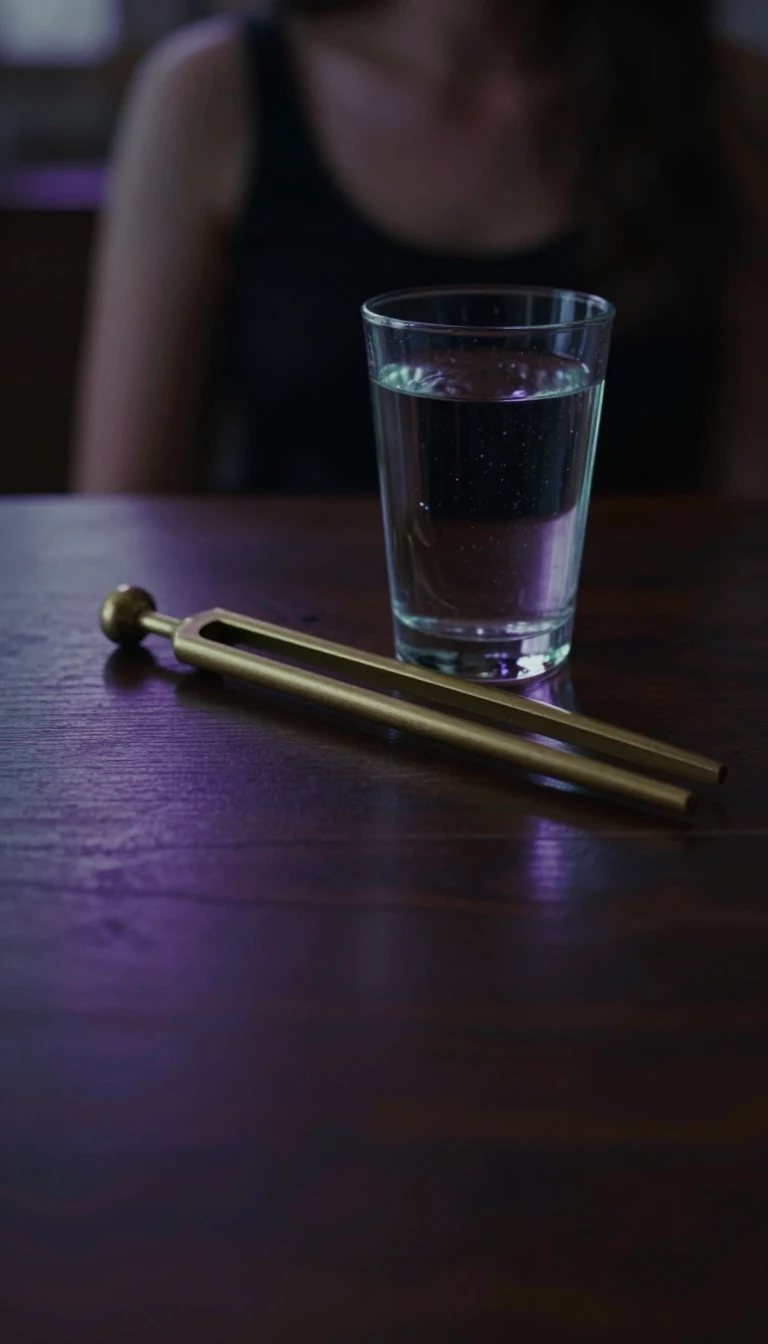 The blues lives in notes that fall between the piano keys.A blue note is sung or played slightly flatter than the standard pitch, often somewhere a piano simply can't reach. Measurements of early blues recordings suggest these notes clus…
 The piano was invented by a Medici instrument keeper, and critics found it too quiet.Around 1700, in Florence, Bartolomeo Cristofori built a harpsichord that could play soft and loud, depending on how hard you struck the keys. Hence its name: pianoforte. Its hamme…
 Can't get a song out of your head? Try chewing gum or doing an anagram.Nearly everyone gets earworms: short loops of music that replay uninvited, usually just 15 to 30 seconds long. Researchers have found that they feed on the same mental machinery y…
- Two tones with equal sound pressure can sound unequally loud. Blame your ears.Loudness isn't just physics. Our ears are most sensitive between about 2,000 and 5,000 hertz, partly because of how the ear canal resonates, so deep bass and very high notes need …
 Almost every piano is slightly out of tune, on purpose.Modern Western tuning splits the octave into 12 exactly equal steps, each a ratio of the twelfth root of two. The cost is that only the octave is acoustically pure; every other in…
 John Cage's most famous piece has no notes in it, and it isn't silent.In 1952 a pianist walked on stage, closed the keyboard lid, and played nothing for four minutes and thirty-three seconds. The audience thought it was a joke. Cage's point was that…
 In Bali, instruments are tuned slightly out of step so the music breathes.Balinese gamelan instruments are built in pairs, one tuned a fraction higher than the other. Played together, they produce a shimmering pulse called ombak, 'wave', meant to evoke …
 Benjamin Franklin invented a musical instrument, and Mozart wrote for it.In 1761 Franklin mounted 37 glass bowls on a spinning rod and played them with wet fingers. The glass armonica sounded, as one listener said of its forerunner, like a cherub in a …