 Intellect Plus
Society
7,726 cards. Each one is a 40-second story with a five-minute read behind it. Page 79 of 129.
Subtopics: Ancient · Basics · Charity & volunteering · Childhood · Communication · Contemporary · DIY & home improvement · Early modern · Education · Education & schools · Everyday inventions · Everyday life: General · Family and kinship · Family life · Family, kinship and interpersonal relationships · Generations · Hobbies & collecting · Home & housekeeping · Home living · Household items · Housing · International organizations · Journalists · Law · Law & justice · Law enforcement, intelligence, and security officials · Leisure & holidays · Mass media · Modern · Pets · Post-classical · Postal services · Public transport · Railways · Roads & driving · Social media & the internet · Socialites and favorites · Society · Society and social sciences: General · Sociology · Stages of life · UK & Ireland: life
 Why do we obey? The fragile, invisible foundation that keeps modern states from collapsingPolitical legitimacy is the silent engine of governance. Without it, regimes face deadlock or total collapse. While we often measure it through elections or public trust, the conc…
 Are political machines efficient engines of urban progress or corrupt webs of patronage?Political machines once dominated American city life, trading jobs and services for reliable votes. While critics condemned them as corrupt, supporters argued these hierarchical o…
 Beyond the Nation-State: How Empires and Leagues Shaped Our Political RealityWe often view the world as a map of independent countries, but political systems are far more fluid. From ancient empires held together by force to modern leagues formed for mutua…
 Australia's government is a unique hybrid of British parliamentary tradition and American federal structure.Often called a Washminster mutation, Australia's political system blends the constitutional monarchy and fused executive of the United Kingdom with the federalism and written cons…
 How Canada’s Political Landscape Shifted from Two-Party Dominance to Regionalized Power StrugglesCanada’s political system, once defined by a stable two-party brokerage model, has undergone dramatic transformations. From the rise of regional interests in Quebec to the collaps…
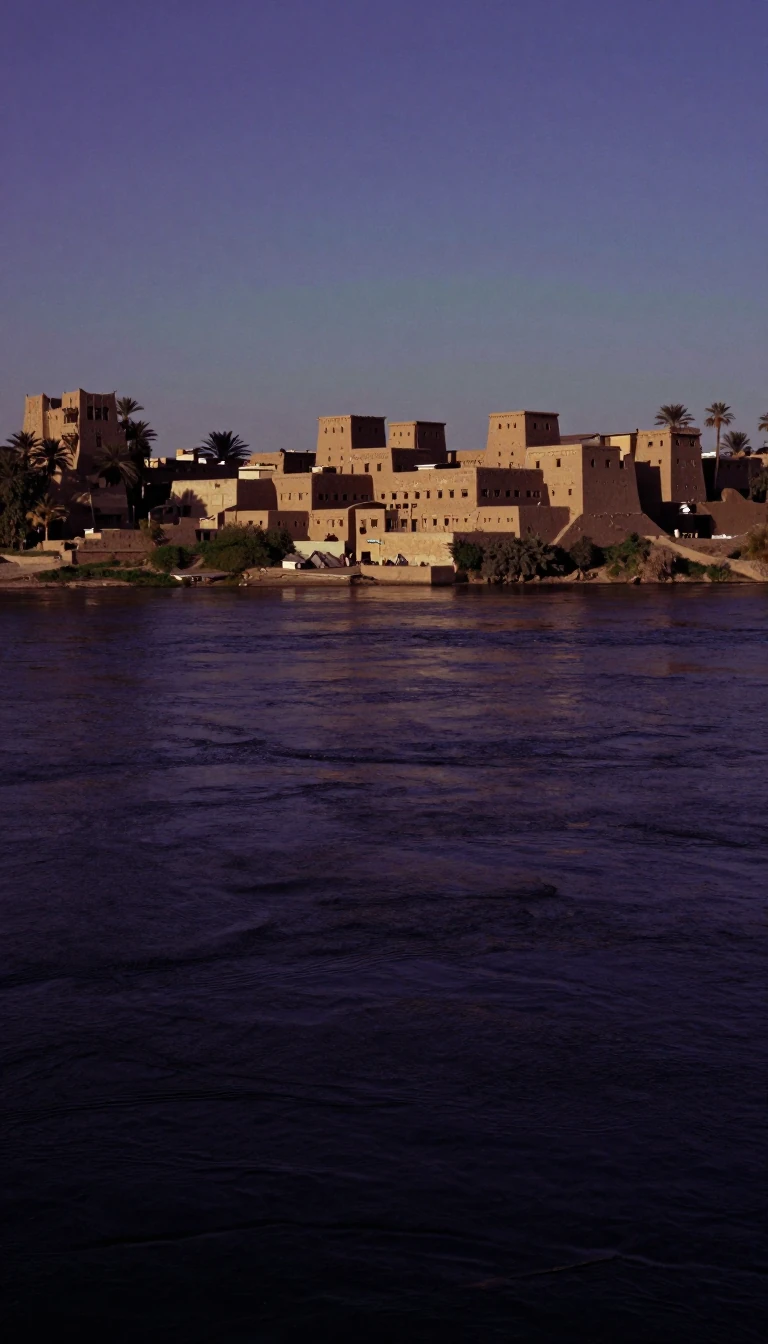 Egypt’s constitutional history is a cycle of rapid change, revolution, and executive power expansion.Since 1923, Egypt has navigated a turbulent path through multiple constitutions, shifting from monarchy to republic and back through various military and civilian administrations.…
 How the French Fifth Republic reshaped the power of the presidency and parliamentSince 1958, France has operated under a semi-presidential system designed to stabilize a historically volatile political landscape. By strengthening executive authority and refini…
 How India’s post-colonial map was redrawn by the power of regional languagesWhen India became a republic in 1950, it inherited a complex patchwork of colonial provinces and princely states. To forge a unified nation, the government faced the monumental ta…
 Why Israel’s parliamentary system often makes small parties the ultimate political kingmakersIsrael’s unique proportional representation system turns the entire country into a single constituency, fragmenting the legislature. Because no single party typically secures a ma…
 Why Italy's government changes so often despite a rigid constitutional frameworkItaly has seen 69 governments since 1945, averaging one every 1.11 years. While the nation operates under a structured parliamentary republic, its political landscape is defined b…
 How Japan’s postwar constitution transformed an imperial throne into a symbol of unityJapan’s 1947 constitution fundamentally reshaped the nation, shifting sovereign power from the emperor to the people. By establishing a parliamentary democracy and renouncing war,…
 How Mexico transitioned from seven decades of one-party rule to a competitive democracyFor most of the 20th century, Mexico functioned as an effective one-party state under the Institutional Revolutionary Party. The president held near-total control, handpicking suc…
 Is Pakistan’s political identity defined by religious ideology or the influence of its military?Pakistan’s political landscape is a complex interplay between competing visions of national identity and a powerful military establishment. While debates over the role of Islamic …
 South Africa's political landscape shifts as the ANC loses its historic parliamentary majorityFor three decades, the African National Congress held an iron grip on South African governance. That era ended in 2024 when the party failed to secure a majority, forcing the form…
 Why Spanish democracy remains locked in a persistent, decades-old constitutional divideSpanish politics is often viewed through a simple left-right lens, but a deeper, more volatile fracture defines the nation. Since the democratic transition of 1978, the country ha…
 Sweden's government functions through a unique system where the monarch holds only ceremonial power.Sweden operates as a constitutional monarchy, yet its king exerts no political influence. Instead, the nation relies on a unicameral parliament and a prime minister who can govern…
 How Taiwan’s unique five-branch government evolved from authoritarian roots to a full democracyTaiwan operates under a distinctive five-power system, blending Western democratic structures with traditional Chinese administrative philosophy. Once an authoritarian one-party s…
 Is the British monarch actually in charge of the United Kingdom's government?The United Kingdom operates as a constitutional monarchy where the King formally holds immense power, yet rarely exercises it directly. Instead, executive authority is delegated t…
 Beyond the Beltway: How 90,000 Local Governments Keep the American Machine RunningWhile national politics dominates the headlines, the United States is actually a sprawling web of over 90,000 local governments. From school districts to special-purpose entities,…
 How Turkey transitioned from a parliamentary democracy to a centralized presidential systemFor decades, Turkey balanced a parliamentary system with periodic military interventions. However, a 2017 constitutional referendum fundamentally reshaped the nation's governance.…
 Is popular sovereignty a foundation of democracy or a tool for political maneuvering?The principle that government derives legitimacy from the people sounds like the bedrock of modern democracy. Yet, in 19th-century America, the same term was used to justify the e…
 Is it a crime to possess stolen goods if you did not know?Possessing stolen property is a serious legal offense, but the outcome often hinges on a single, elusive factor: your state of mind. While the law targets those who knowingly hand…
 A power of attorney is not just a legal document; it is a profound delegation.Granting someone the power to act on your behalf is a significant legal move. Whether for financial management or critical health decisions, this authorization creates a fiduciary…
 Becoming a lawyer is a rigorous, multi-year commitment that demands more than just legal knowledge.Entering the legal profession requires navigating complex pathways, from traditional university degrees to modern apprenticeships. Whether you aim to be a solicitor or a barrister…
- The ancient royal orders that still keep modern governments in check todayOnce the exclusive tools of the English monarch to command subordinates, prerogative writs have evolved into essential constitutional safeguards. From the halls of the Supreme Cou…
 Why the distinction between primary and secondary law shapes how modern nations actually functionLaws are rarely written in their entirety by parliaments. Instead, legislatures set broad principles, leaving executive branches to fill in the technical details through secondary…
 Why some nations view prison escape as a fundamental human rightWhile most countries treat breaking out of prison as a serious criminal offense, some jurisdictions view the act as an expression of human nature. This philosophical divide highli…
- Why the distinction between public and private law shapes your daily lifeWe often view law as a singular monolith, but legal systems have long divided the world into two spheres. Public law governs the state and its citizens, while private law manages …
 Is private property a natural right or a legal fiction enforced by the state?Private property is often framed as an inherent, natural right, yet history reveals it is a complex legal construct defined by political systems. From ancient Mesopotamia to moder…
- Why the rules of the game matter more than the game itself in courtSubstantive law defines your rights, but procedural law determines whether you can actually enforce them. Without a formal, systematic framework to govern how evidence is presente…
 Why prohibition rarely works: from ancient droughts to the modern underground marketProhibition is the legal act of forbidding alcohol, yet history shows it is notoriously difficult to enforce. Whether driven by moral conviction, religious belief, or public healt…
 Why do we make promises, and are we ever truly obligated to keep them?A promise is more than a simple word; it is a formal manifestation of intent to act or refrain from acting. Whether legal, solemn, or political, promises bridge the gap between ou…
 Why do criminals target specific homes and vehicles while ignoring others?Property crime is rarely random. According to rational choice theory, offenders weigh risks against potential rewards before acting. From the timing of residential burglaries to t…
- Is justice a balancing act? How the principle of proportionality shapes our legal world.Proportionality is the legal art of balancing competing interests, from deciding if a criminal sentence fits the crime to weighing civilian risks against military gains in war. It…
 In 1258, English barons forced a king to accept a council of fifteen advisors.Tired of foreign influence and royal overreach, the English baronage demanded constitutional reforms at the Oxford Parliament. They stripped Henry III of his absolute power, forci…
 Why do governments spend more than they earn, and does it actually matter?Public finance is the engine room of government, managing everything from national defense to healthcare. While we often focus on the annual budget, the real story lies in how gov…
 Why governments rarely launch public inquiries into their own potential failuresPublic inquiries are official reviews into significant events, often involving mass casualties or systemic crises. While they are designed to uncover truth and provide recommendat…
- Is the public interest a noble ideal or just a mask for political power?The public interest is a cornerstone of democratic governance, yet it lacks a single, universally accepted definition. While often invoked to justify policy, it frequently functio…
- Public law is the essential legal framework that keeps the state accountable to you.Public law governs the relationship between individuals and public bodies, from local governments to the police. It ensures these organizations act fairly and within their legal b…
- Why your legal duty of care depends entirely on who walks through the doorPublic liability law governs the civil responsibility of property owners for injuries occurring on their premises. Whether you are a customer, a salesman, or a trespasser, the leg…
 Why every pyramid scheme is mathematically destined to collapse and leave you brokePyramid schemes promise rapid wealth, but they are built on a foundation of inevitable failure. By prioritizing recruitment over actual product sales, these models rely on exponen…
- When the law creates a contract out of thin air to ensure fairnessA quasi-contract is not a contract at all, but a legal fiction. When no formal agreement exists, courts may impose an obligation as if one did, preventing one party from unfairly …
 Ratification is the legal bridge between a proposed agreement and its binding realityRatification is more than a rubber stamp; it is the formal mechanism that transforms a negotiated promise into a legally enforceable obligation. Whether in private contracts, inte…
- Realpolitik is not just cold power; it is the art of adapting to reality.Often dismissed as an amoral pursuit of power, Realpolitik originated as a pragmatic strategy for liberals to achieve their goals in an imperfect world. It prioritizes practical o…
 What separates a modern democracy from an arbitrary state of power?The Rechtsstaat, or legal state, is a foundational concept in continental European jurisprudence. It dictates that government power must be constrained by law, ensuring that even …
 What defines a regional power beyond simple economic or military size?A regional power is more than just a strong neighbor. It is a state that shapes its region's identity, defines security agendas, and commands recognition from peers. While some na…
- Are regulatory agencies protecting the public interest or serving the private interests of industry?Regulatory agencies are designed to set and enforce standards outside direct executive control. While often justified as a necessary correction for market failures like monopolies…
- Why do organizations struggle to follow the rules, even when they want to?Regulatory compliance is more than just following laws; it is a complex balancing act between operational transparency and the risk of over-regulation. While organizations strive …
- Can prisons actually rehabilitate offenders, or is the concept fundamentally flawed from the start?Rehabilitation aims to re-educate offenders to prevent recidivism, yet its effectiveness remains deeply contested. While some nations prioritize normalization and humane treatment…
 Why removing a law is often more complex than passing one in the first place.Repealing a law is not merely deleting text. It can involve replacing outdated statutes with modern alternatives, or completely abolishing provisions that no longer serve society.…
- Are reproductive rights universal human rights or a subject of intense global debate?Reproductive rights encompass the freedom to make personal choices about family planning and health, free from coercion or violence. While international bodies often frame these a…
 Beyond the gavel: How resolutions shape corporate governance and legislative powerA resolution is more than just a formal decision; it is the essential mechanism by which deliberative bodies, from corporate boardrooms to national legislatures, authorize action.…
- Does justice require punishment, or can it be found through healing and dialogue?Restorative justice challenges the traditional view of crime as an offense against the state. By shifting the focus from retribution to repairing harm, this approach empowers vict…
- Is punishment a moral duty or just a tool to keep society safe?Retributive justice argues that criminals deserve punishment simply because they have broken the law. Unlike utilitarian approaches that use penalties to deter future crimes, retr…
 Richie Benaud was more than a cricketer; he was the architect of modern Australian dominance.As a captain, Richie Benaud transformed Australian cricket, leading the national team through an undefeated streak in Test series from 1958 to 1963. Beyond his tactical brilliance…
 From ancient church sanctuary to modern legal battles, the right of asylum remains contested.The right of asylum, once a sacred sanctuary for fugitives in medieval churches, has evolved into a complex, often unpredictable modern legal framework. Today, nations balance hum…
- Is the right to self-defense a natural human instinct or a legal construct?The right to self-defense is often viewed as a fundamental human necessity, yet it sits at the heart of a centuries-old debate. From Roman law to modern criminal theory, society h…
 Is the right to bear arms a global norm or American exceptionalism?While the United States Constitution explicitly protects the right to keep and bear arms, this inclusion is globally rare. Fewer than nine percent of national constitutions curren…
 Modern riot control aims to minimize fatalities, but the psychological toll remains deeply severe.Riot control has evolved from the blunt, often lethal force of the 20th-century military to specialized, less-than-lethal tactics. While modern gear and chemical agents are design…
 A royal charter is more than just a piece of paper from the monarch.For centuries, monarchs used these legal documents to create everything from trading empires to universities. While they once held the power to grant monopolies and define the sta…