 Intellect Plus
Society
7,726 cards. Each one is a 40-second story with a five-minute read behind it. Page 80 of 129.
Subtopics: Ancient · Basics · Charity & volunteering · Childhood · Communication · Contemporary · DIY & home improvement · Early modern · Education · Education & schools · Everyday inventions · Everyday life: General · Family and kinship · Family life · Family, kinship and interpersonal relationships · Generations · Hobbies & collecting · Home & housekeeping · Home living · Household items · Housing · International organizations · Journalists · Law · Law & justice · Law enforcement, intelligence, and security officials · Leisure & holidays · Mass media · Modern · Pets · Post-classical · Postal services · Public transport · Railways · Roads & driving · Social media & the internet · Socialites and favorites · Society · Society and social sciences: General · Sociology · Stages of life · UK & Ireland: life
 Who actually holds the power of the British Crown in the modern era?Royal prerogative powers date back to the Middle Ages, but today they are largely wielded by government ministers rather than the monarch. While these powers once defined absolute…
 The most effective way to destroy an organization is to act stupidly.Sabotage is not just about blowing things up. From the French railroad strikes of 1910 to the OSS manuals of World War II, the most potent form of disruption is often the most mun…
 Why do some regions attempt to break away from their parent nations to survive?Secession is the act of a territory splitting from its home state to form a new entity or join another. While international law remains ambiguous on the right to leave, scholars d…
 Why the term Second World vanished from global politics after the Cold War endedDuring the Cold War, the world was divided into three distinct spheres. While the First and Third Worlds remain common parlance today, the Second World has largely disappeared. On…
 Is true freedom the ability to govern yourself or the absence of external control?We often equate freedom with independence from others, but history’s greatest thinkers argue that real autonomy begins within. From Plato to modern political theory, self-governan…
 Does mandatory sentencing actually reduce crime or just shift power to the prosecutor?Mandatory sentencing was designed to remove judicial bias and ensure consistent punishment. Yet, critics argue it has simply transferred power from judges to prosecutors, who now …
 Why the vast majority of legal disputes never actually reach a courtroom trialMost lawsuits end long before a judge delivers a verdict. Driven by the high costs of litigation and the desire for certainty, parties frequently choose to settle. This private co…
 The sheriff is an ancient royal official that evolved into a modern global chameleon.Tracing its roots to the Old English shire reeve, the office of sheriff has survived for over a millennium. Once a powerful tax collector and enforcer for the crown, the role toda…
 Is social policy a dying academic field or a vital tool for human welfare?Social policy emerged after the Second World War to study how governments meet human needs. Today, as welfare states contract and provision fragments, some argue the field is obso…
 Was socialist law a distinct legal system or just a variation of civil law?Socialist law, once a dominant global legal framework, remains a subject of intense academic debate. While it fundamentally modified civil law to serve Marxist-Leninist ideology a…
 Is it better to twist minds than to twist arms? The truth about soft power.Soft power is the ability to get what you want through attraction rather than coercion or payment. Coined by Joseph Nye in 1990, the concept challenges the traditional view that p…
 Beyond the courtroom: what does a solicitor actually do for their clients?While barristers are the public face of advocacy, solicitors are the backbone of the legal system. They act as the primary point of contact for clients, managing everything from p…
 Can a government be sued? The complex reality of sovereign immunitySovereign immunity is the legal doctrine that a government cannot be sued without its consent. Rooted in the ancient idea that the king can do no wrong, this principle has evolved…
- Why courts rarely force you to keep a promise you made in a contractIn common law, money is the default remedy for broken contracts. While courts can order specific performance—forcing a party to fulfill their exact promise—they rarely do. This eq…
 A sphere of influence is a geopolitical tool for asserting power over foreign territories.A sphere of influence defines a region where a powerful nation exerts cultural, economic, or military control over others. While often associated with formal treaties, these zones…
- The complicated legacy of the man who founded The Washington Post in 1877Stilson Hutchins is remembered for launching The Washington Post, but his career was defined by virulent racism and political maneuvering. From his early days in Iowa to his later…
- How Stuart Scott Transformed Sports Broadcasting With Hip-Hop Culture and Unapologetic AuthenticityStuart Scott did not just report on sports; he redefined the language of the game. By blending hip-hop vernacular with professional broadcasting, he created a unique, rhythmic sty…
 Substantive law defines your rights, while procedural law dictates how you enforce them.Ever wonder why the law feels like a maze? It is because our legal system is split in two. Substantive law sets the rules for how we behave and what we are owed, while procedural …
- Why some crimes are tried without a jury: the origins of summary offencesSummary offences are minor violations handled without the traditional jury trial. Designed to provide speedy justice for petty infractions, these proceedings bypass the complexity…
 Why the highest court in the land is often not called a Supreme CourtThe title Supreme Court is a misleading label. In many nations, the highest judicial authority bears a different name, while courts explicitly named Supreme Court often sit beneat…
 Why the United Kingdom’s highest court cannot strike down acts of ParliamentUnlike supreme courts in nations like the United States or India, the UK Supreme Court lacks the power to overturn primary legislation. Established in 2009 to separate judicial fu…
- How China's highest court evolved from military occupation to a modern judicial powerhouseEstablished in 1949, China's Supreme People's Court has navigated turbulent political shifts, including a five-year period of military control during the Cultural Revolution. Toda…
- A surety is a promise to stand in for someone else's legal obligationWhether securing a defendant's appearance in court or guaranteeing a complex business contract, a surety acts as a financial and moral anchor. By pledging resources or reputation,…
 Why the most critical tool for surviving a disaster is not in your kitSurvival is often framed as a battle against the elements, requiring knives, fire-starters, and water filters. Yet, the most decisive factor in life-or-death scenarios is mental c…
- Why do leaders try to stay in power despite constitutional term limits?Term limits are designed to prevent the rise of dictators by mandating rotation in office. Yet, from ancient Rome to modern states, leaders have consistently found ways to bypass …
 How a Bare-Knuckle Boxer Transformed British Medicine and Public HealthThomas Wakley was a surgeon, radical MP, and coroner who used his medical journal, The Lancet, to dismantle institutional corruption. From exposing lethal medical incompetence to …
- Why the Cold War era divided the entire globe into three distinct worldsDuring the Cold War, the three-world model served as a primary lens for understanding global politics. By categorizing nations based on their alignment with the United States or t…
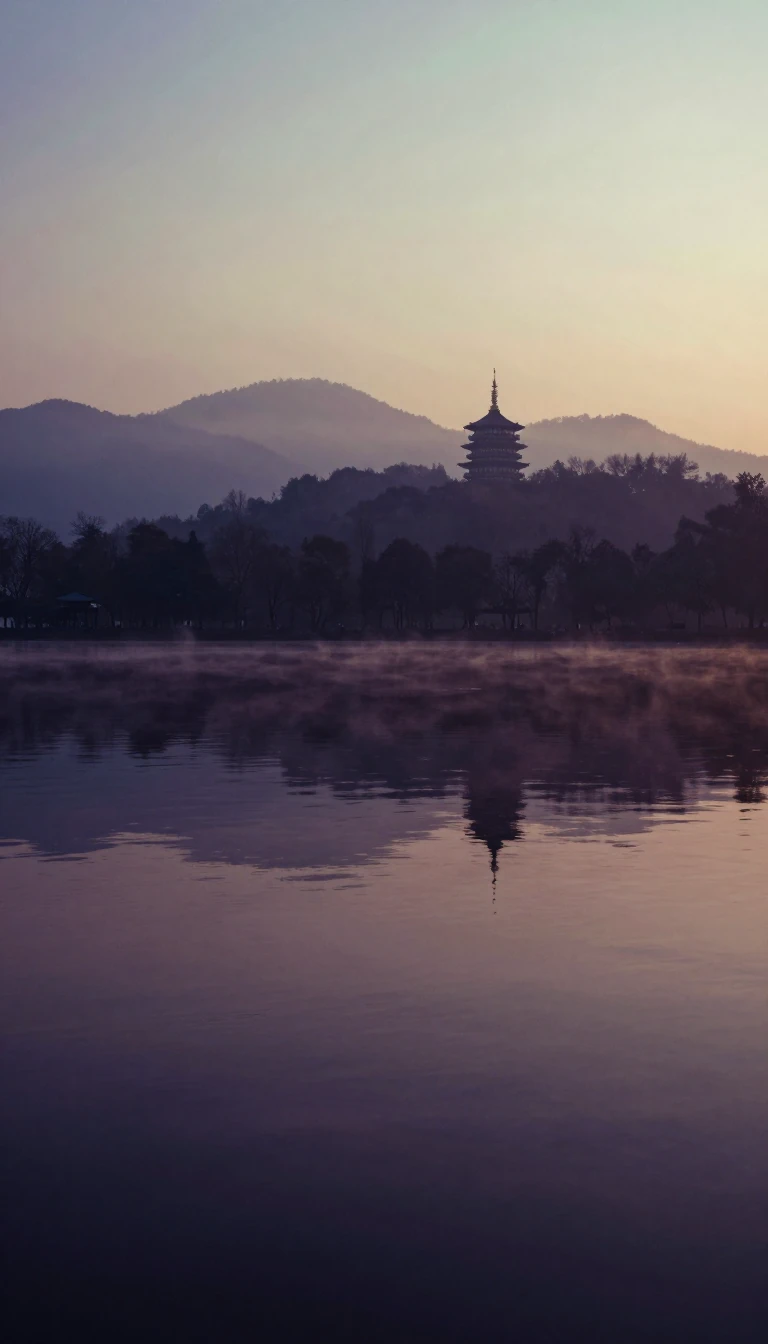 Why China’s ancient vision of 'all under heaven' still shapes its modern global strategyTianxia, or all under heaven, is more than a historical relic. For millennia, this Chinese framework has prioritized global harmony over individual state interests. Today, it serv…
 Trade secrets offer indefinite protection for business assets without the expiration date of patents.Unlike patents or copyrights, trade secrets require no formal registration and can last forever. By keeping formulas or processes confidential, companies like Coca-Cola maintain a…
- How do nations heal after mass atrocities and move toward a democratic future?When regimes collapse or civil wars end, societies face a daunting question: how to address deep-seated trauma without triggering further violence. Transitional justice offers a t…
- When is a contract so unfair that the law refuses to enforce it?Unconscionability is a legal doctrine that voids contracts so overwhelmingly one-sided or unjust that they offend good conscience. It protects vulnerable parties from exploitation…
 Undue influence is a calculated process of psychological control, not a single event.Often mistaken for a simple lapse in judgment, undue influence is a sophisticated strategy used to supplant a person's free will. Perpetrators exploit trust and vulnerability, ope…
 Are United Nations resolutions actually binding laws or just polite international suggestions?A United Nations resolution is a formal text adopted by a UN body, but its power varies wildly. While Security Council mandates are theoretically binding, General Assembly resolut…
- The power to forbid: how a Roman political tool shaped modern global governanceDerived from the Latin for I forbid, the veto is far more than a presidential button. From ancient Roman tribunes protecting the plebeians to the absolute power of United Nations …
- The voice of the Dodgers: How Vin Scully defined baseball broadcasting for 67 yearsFor nearly seven decades, Vin Scully served as the definitive voice of the Dodgers, bridging the gap between the team's Brooklyn roots and its Los Angeles future. Recognized as th…
 A vow is more than a promise; it is a sacred contract with the divine.While we often use the word casually, a true vow is a solemn, binding commitment made to a deity. Unlike a standard oath, which merely invokes a witness, a vow establishes a direc…
- A warranty is a promise, not a guarantee, and its fine print matters.We often confuse warranties with guarantees, but legally, they are distinct. A warranty is a contractual assurance regarding a product's quality or state, not a total safety net. …
 William Rees-Mogg: The journalist whose predictions shaped the future of the digital stateAs editor of The Times, William Rees-Mogg was a titan of British journalism. Yet, his most enduring legacy lies in his later work on the information age. Co-authoring The Sovereig…
 How Women's Studies Transformed from Grassroots Activism into a Global Academic DisciplineBorn from the consciousness-raising groups of the 1960s, women's studies began as an unofficial, unpaid effort to challenge male-centric curricula. Today, it is a rigorous, interd…
- Why the law distinguishes between a simple mistake and a moral failingThe concept of a wrong, rooted in the Old English word for crooked, is far from straightforward. While we often conflate illegal acts with immoral ones, the law frequently separat…
 For every ten people executed on death row, at least one is innocentThe death penalty is often defended as a necessary tool of justice, yet history reveals a chilling reality: the state frequently executes the wrong person. From coerced confession…
 How a Chinese revolutionary used ancient Buddhist logic to challenge Western philosophical dominanceZhang Binglin was a polymath who helped define the Republic of China while under house arrest. A radical philologist and revolutionary, he turned to Yogacara Buddhism to create a …
 Why private security guards often outnumber public police in modern societySecurity guards are far more than simple watchmen. Today, they act as a massive, private layer of protection for businesses and governments alike. From deterring theft to managing…
- How a former football hooligan became the face of Britain's far-right movementBorn Stephen Yaxley-Lennon, the activist known as Tommy Robinson has spent nearly two decades at the center of British political controversy. From co-founding the English Defence …
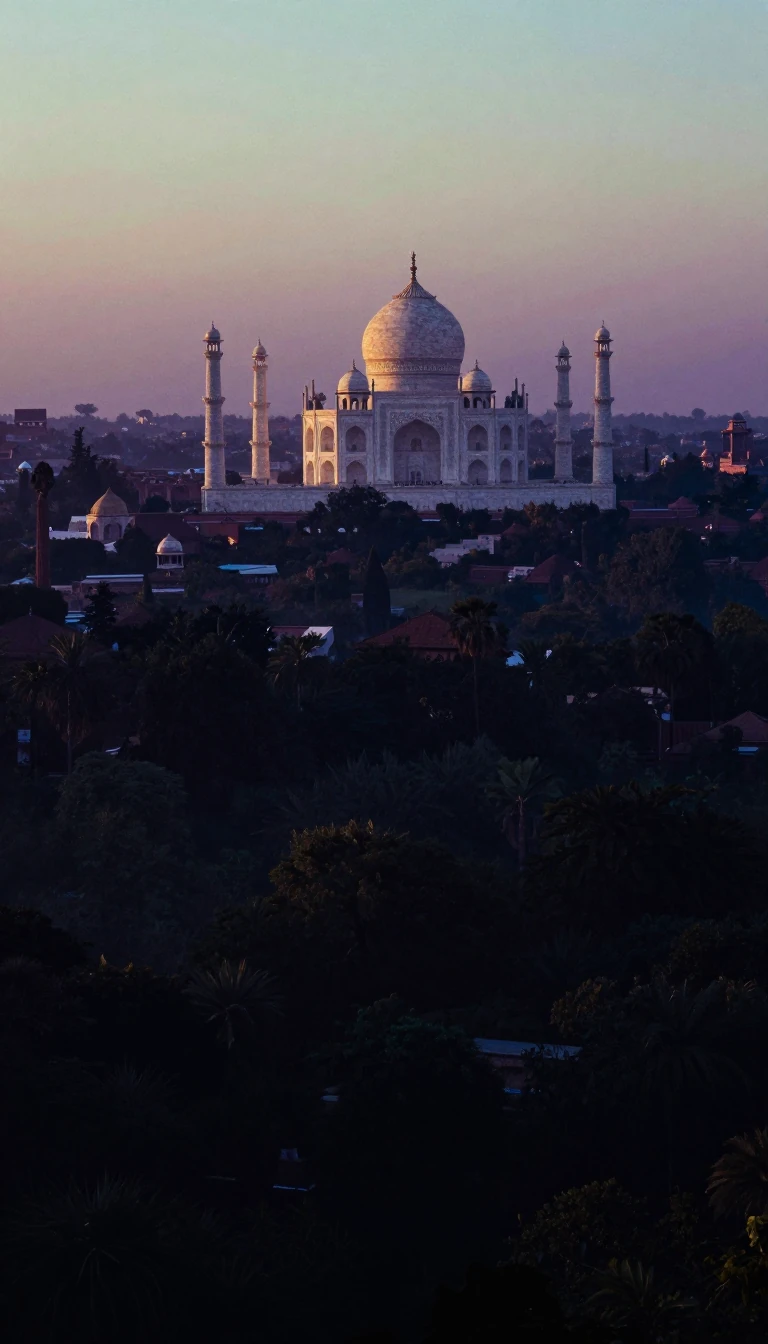 Can a single social scientist solve the systemic failures of rural and urban poverty?Akhtar Hameed Khan, a former civil servant turned development practitioner, rejected bureaucratic top-down mandates to pioneer grassroots participatory models. From the Comilla Mo…
- How one scholar mapped the social DNA of China’s rural village lifeFei Xiaotong was a foundational figure in Chinese social anthropology who bridged the gap between Western functionalism and the realities of village life. By examining the intrica…
 Why do some societies intentionally remain stateless, illiterate, and outside the reach of government?James C. Scott, one of the most influential social scientists of his time, argued that state control is not an inevitable evolutionary step. Instead, he revealed how marginalized …
 Why your social circle is less about your personality and more about your position.Sociologist Peter Blau argued that our relationships are governed by structural forces rather than mere personal preference. By mapping individuals across a multidimensional space…
 Why the decline of bowling leagues might signal the collapse of American democracyRobert D. Putnam transformed political science by arguing that the health of a democracy depends on social capital—the networks and trust built through community life. His researc…
- The Tiger of Bengal: How One Man Shaped the Fate of Two NationsAbul Kasem Fazlul Huq was a political titan who navigated the turbulent transition from British colonial rule to the birth of Pakistan. Known as Sher-e-Bangla, he was a populist o…
- Why a legendary film critic walked away from the movies after two decadesAfter twenty-three years of shaping cinematic discourse at The New York Times, A. O. Scott stepped down from his role as chief film critic. He cites a widening disconnect between …
- How a Khitan Chieftain Built an Empire by Mastering Two Worlds at OnceAbaoji transformed a collection of nomadic tribes into the formidable Liao dynasty by rejecting traditional Khitan power structures. By implementing a dual administrative system t…
 How a Sudanese Military Officer Became the Central Figure in a Devastating Civil WarAbdel Fattah al-Burhan rose from a village in northern Sudan to lead the nation’s military junta. Since the 2019 revolution, his career has been defined by broken promises of civi…
- How a diplomat convicted of theft became Algeria's longest-serving head of stateAbdelaziz Bouteflika rose from a young independence fighter to a global diplomat, only to be convicted of embezzlement in 1983. Yet, he returned from exile to lead Algeria for two…
- How a founding Taliban leader became the architect of the U.S. troop withdrawalAbdul Ghani Baradar helped launch the Taliban in 1994, eventually rising to become the movement's de facto leader. After years of insurgency and a long imprisonment in Pakistan, h…
 The only monarch in history to serve as King of Malaysia twiceSultan Abdul Halim of Kedah remains the only ruler to serve two terms as the Yang di-Pertuan Agong, Malaysia's constitutional monarch. His unique reign spanned decades, bridging t…
- The Red Maulana: How a Peasant Leader Shaped the Birth of BangladeshKnown as the Red Maulana, Abdul Hamid Khan Bhashani was a pivotal, often contradictory force in South Asian politics. From organizing peasant revolts against colonial landlords to…
 The Iraqi leader who balanced communists, nationalists, and Kurds before his violent downfallAbdul-Karim Qasim, known as The Leader, seized power in Iraq’s 1958 revolution. He transformed the nation from a pro-Western monarchy into a republic, yet his attempts to balance …
- How the second ruler of the Emirate of Diriyah reshaped the Arabian PeninsulaAbdulaziz bin Muhammad Al Saud transformed a regional power into a formidable force that challenged Ottoman authority. By blending military expansion with a strict religious ideol…
 The butcher's son who dismantled a monarchy and redefined Yemen's political futureBorn into a humble family in a village outside Sanaa, Abdullah al-Sallal rose from an orphanage to lead the 1962 revolution that ended Yemen's monarchy. As the first president of …