 Intellect Plus
Astronomy
1,544 cards. Each one is a 40-second story with a five-minute read behind it. Page 13 of 26.
 A celestial triple-threat: The solar system's first three-lobed asteroidFor over 150 years, astronomers knew only that asteroid 44 Nysa was a bright speck in the main belt. It took modern high-contrast imaging to reveal its bizarre anatomy: a massive …
- Why looking at a solar eclipse can cause physical eye painThe upcoming 2026 solar eclipse offers a spectacular view, but watching it without proper protection can be dangerous. This video explains the physiological impact of solar radiat…
 A rare helium nova is launching cosmic cannonballs across the starsDiscover the mechanics behind a newly observed helium nova that is ejecting massive, ball-like structures of matter into deep space.
 The universe's first 'titans' defy our models of cosmic evolutionWhen the James Webb Space Telescope first peered into the deep past, it found something impossible: massive red objects appearing far too early in history. These 'Little Red Dots'…
 The Sun's closest neighbors are locked in eternal day and nightJust under six light-years away, Barnard’s Star hosts a planetary system that defies our own solar system's rules. These four worlds are smaller than Venus but larger than Mars, y…
 Cosmic giants are colliding to build the universe's largest behemothsSupermassive black holes are not just stationary anchors at the centers of galaxies. They are dynamic wanderers, spiraling toward one another to merge into even greater monsters. …
 New imagery reveals unprecedented details of the Sun's surfaceExperience a visual shift in solar observation. This video showcases recent discoveries and high-resolution images from the Sun’s surface, offering a perspective on our star that …
- The Godzilla of Earths: A planet that shouldn't existAstronomers expected a gas giant but found something far denser. Kepler-10c defies current planetary formation theories, existing as a massive rocky world that challenges our unde…
 A telescope with a field of view 100 times larger than HubbleThe Nancy Grace Roman Space Telescope is designed to survey the cosmos at a scale previously unimaginable. By scanning the sky 1,000 times faster than its predecessor, it aims to …
 Saturn's south pole is growing a new geometric neighborFor over 40 years, Saturn’s north pole has been defined by its iconic hexagonal storm. Now, a bizarre 10-sided decagon is emerging at the south pole—a giant atmospheric wave that …
 How methane might have saved Earth from a prehistoric deep-freezeThree billion years ago, our Sun was significantly dimmer than it is today. By all accounts, the early Earth should have been a frozen wasteland, yet evidence suggests it remained…
 The cosmic ghost: a massive galaxy that never lit upMost galaxies are defined by their stars, but astronomers have discovered Cloud-9—a massive structure dominated by dark matter and gas with absolutely no stars. This "failed galax…
 Why Venus likely swallowed its own moonNew research suggests that if Venus ever had a moon, it didn't drift away like ours—it was pulled into the planet. This video explores the orbital mechanics and simulations behind…
 How cosmic collisions and black holes sculpt our universe's architectureExplore a stunning new gallery of 16 galaxies that reveal the violent forces shaping our cosmos. This collection uses multi-wavelength data to expose hidden activities, from explo…
 Witnessing the dynamic evolution of celestial ring systemsExplore the mechanics of how planetary rings behave and change. This video examines unusual ring systems within our solar system, offering a look at the celestial dynamics that sh…
 Why Earth survived the geological death of other rocky planetsMost rocky planets face a terminal geological expiration date within 2 billion years. This video explores the specific heat elements and mechanisms that allowed Earth to remain ha…
- A Dying Star That Refused to Fade Into the VoidExplore the baffling lifecycle of Sakurai's Object, a celestial body that appears to have reversed its own death. This video examines how certain stars can undergo a dramatic tran…
- The first stars shaped the chemical makeup of our entire galaxyResearchers reviewing the history of stellar nucleosynthesis found that the very first stars to form after the Big Bang were responsible for seeding the universe with heavy elemen…
- Concentric rings and gaps in a nearby disk suggest early planet formationAstronomers using the Atacama Large Millimeter/submillimeter Array observed the nearest gas-rich protoplanetary disk, TW Hya. They discovered a series of concentric ring-shaped su…
- NASA's Juno probe reveals what lies beneath Io's volcanic crustJupiter's moon Io is a world of extreme violence, featuring hundreds of volcanoes and lava fountains that reach dozens of miles into space. But for the first time, NASA has looked…
- Why your schoolbook definition of Jupiter is likely incorrectMost people hold a standard view of Jupiter based on basic education, but this video argues that those common perceptions are fundamentally flawed. It challenges your existing kno…
- The planet that rolls like a ball through deep spaceUranus is an atmospheric outlier, spinning nearly sideways compared to every other planet in our solar system. This extreme tilt creates seasons so long and intense they redefine …
 The daunting logistics of reaching every planet in our solar systemWhile we often dream of multi-planetary life, the physical reality of space travel involves immense distances and complex timelines. This video explores the actual time required t…
 NASA's asteroid obsession is a matter of planetary survivalWhen a space rock the size of a six-story building exploded over Russia in 2013, it served as a stark reminder of Earth's vulnerability. Now, NASA is engaged in a high-stakes game…
- From Ninth Planet to Dwarf: The Evolution of PlutoDiscover why Pluto lost its planetary status and what NASA's New Horizons mission revealed about this distant world. This video explores the shift in our understanding of the oute…
- A billion-year journey from another star system to our ownFor a brief window in 2025, Earth's most powerful telescopes turned toward a visitor from the deep void. Comet 3I/ATLAS is not a local resident; it is an interstellar traveler car…
 A celestial outsider from another star system just visited our neighborhoodMost objects in our solar system share a common origin, but 3I/ATLAS is a true stranger. This interstellar comet traveled billions of years across the void to reach us, carrying c…
- The mystery of 3I Atlas: a new enigma in outer spaceA strange phenomenon is currently unfolding in deep space. While the term 3I Atlas has been coined to identify this mystery, its true nature and purpose remain unknown to scientis…
 The telescope did more than see the stars; it taught us how to imagine them.For decades, the Hubble Space Telescope has redefined our visual vocabulary of the cosmos. By transforming raw data into high-resolution, vibrant imagery, it shifted our understan…
 A visitor from another star system is passing through our neighborhood3I/ATLAS is not a local comet. It is the third known object ever detected traveling from outside our solar system. Because it follows a hyperbolic path rather than a closed orbit,…
- Is a hidden ninth planet lurking at our solar system's edge?For over a century, astronomers have suspected that an undiscovered world might be hiding in the furthest reaches of space. While we haven't seen it yet, gravitational mysteries s…
- From Dinosaurs to Moon Impacts: The History of Celestial CollisionsThis video traces the history of asteroid impacts, from the events that wiped out the dinosaurs to a massive ancient strike in Canada. It also looks forward at future threats and …
- Why Saturn Might Be the Most Terrifying Planet in Our Solar SystemWhile Mars often captures the public imagination, Saturn presents a different kind of cosmic dread. This video explores the unique characteristics that make this gas giant a formi…
- The universe is bending light like a massive cosmic magnifying glassSpace is not just a void; it is a dynamic medium that warps the very path of light. By observing how gravity curves these rays, astronomers can peer back billions of years, captur…
- The invisible gas surrounding galaxies acts as a vital regulator of galactic growthResearchers studying the circumgalactic medium (CGM)—the diffuse gas located outside galaxy disks but within their gravitational boundaries—found that this nearly invisible materi…
 Biological processes may be responsible for most of Earth's mineral diversityResearchers who tracked the history of planetary minerals found that Earth's geological variety is a product of complex evolution. While early solar system dust contained only abo…
 X-ray observations reveal how black holes interact with their surrounding environmentsA review of 20 X-ray binaries containing confirmed black holes found that these systems follow common behavioral patterns during their outburst cycles. By analyzing these sources,…
- Low dust levels may explain the unexpected brightness of early galaxiesObservations from the James Webb Space Telescope have revealed an unexpected abundance of massive, bright galaxies in the very early universe. Researchers have developed a physica…
- The cosmic forge where half of our heavy metals are bornGold and platinum aren't just rocks; they are the debris of some of the universe's most violent collisions. By watching two city-sized stars smash into each other, scientists have…
 Dust settling in a distant disk creates ideal conditions for planet formationAstronomers observing the protoplanetary disk around the star Oph163131 found that large dust grains have settled into an incredibly thin layer. By comparing gas and dust emission…
- A small but powerful black hole was found in the early UniverseAstronomers using the James Webb Space Telescope observed a luminous galaxy from the early Universe, GN-z11, and discovered it hosts a rapidly growing black hole. By analyzing the…
- Massive black holes power enormous jets of plasma across the cosmosResearchers reviewing the physics of extragalactic radio sources found that these massive structures are powered by gas accreting onto supermassive black holes. These processes cr…
- New X-ray eruptions suggest orbiting objects may trigger galactic burstsAstronomers conducting a systematic search of half the X-ray sky discovered quasi-periodic eruptions in two previously quiet galaxies. These events are high-amplitude bursts of X-…
- Simulations reveal how rare stellar mergers shape galaxy chemistryResearchers using the IllustrisTNG simulations analyzed over 850 Milky Way-like galaxies to track how different elements accumulate over time. They found that europium, an element…
 Galactic metal production patterns have remained remarkably consistent for over 12 billion yearsResearchers analyzing data from the MOSDEF survey found that the relationship between a galaxy's mass and its metal content has remained stable since the early universe. By studyi…
- JWST observations reveal galaxy candidates from the universe's earliest epochsAstronomers using the James Webb Space Telescope (JWST) have identified several galaxy candidates existing as early as 250 million years after the Big Bang. By analyzing the massi…
- First detections of gravitational waves from merging binary black holesDuring the first observing run of the Advanced LIGO detectors, astronomers detected gravitational waves originating from the merger of two black holes. By searching for signals ba…
 Dusty rings around stars reveal the hidden history of planet formationA review of circumstellar debris disks shows that the dust surrounding many stars acts as a cosmic fossil record. Researchers found that while some dust remains from the initial b…
- Seeing through the cosmic dust with a flying telescopeHow do you see the birth of stars hidden behind thick clouds of space dust? By taking a telescope into the stratosphere. NASA's SOFIA observatory bypasses Earth's atmosphere to ca…
- A 30-year-old black hole offers a rare window into cosmic infancyAstronomers have identified what may be the youngest black hole in our local cosmic neighborhood. This discovery allows scientists to observe the development of a black hole in it…
 The 4.5-billion-year-old secrets hidden inside a comet's porous shellComets are the solar system's ultimate time capsules, preserved since their formation over 4.5 billion years ago. By crashing an impactor into one and performing high-speed flybys…
- A retrospective look at NASA's most significant milestones in 2010Explore the pivotal achievements of 2010, a year defined by scientific discovery, technological progress, and the search for life beyond our planet.
 The diverse life paths of massive stars leading to violent supernova endsResearchers studying the life cycles of massive stars found that their evolution is incredibly diverse. Rather than following a single path, these stars are shaped by a complex in…
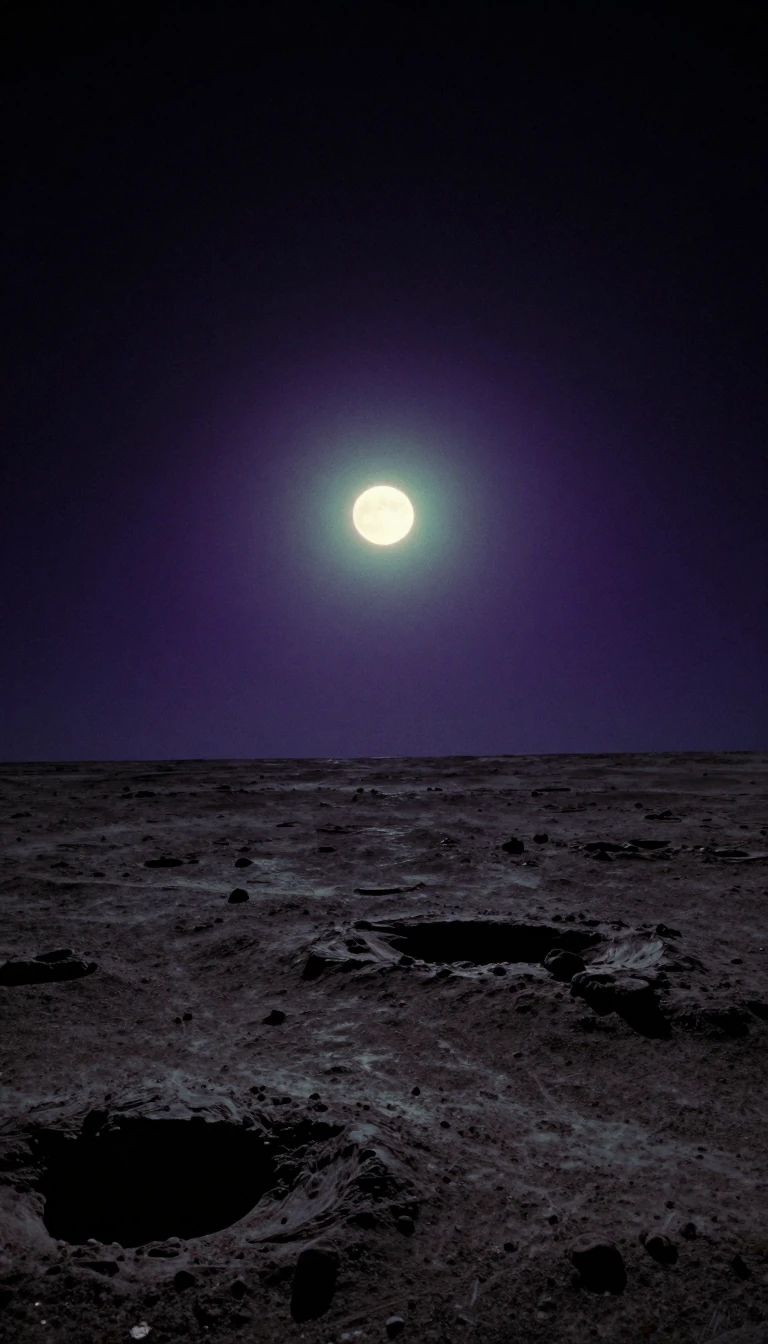 The 60-year celestial clock that defines a Vedic yearIn ancient Indian astronomy, a 'year' isn't always measured by the Sun. The Samvatsara is a Jovian year based on Jupiter's movement through the zodiac. This complex celestial cycl…
- A glimpse of the universe just 480 million years after the Big BangNASA's Hubble Space Telescope has identified a potential record-breaking galaxy candidate. This tiny, ancient object offers a rare look at the deep past, with light that has trave…
- How a 36-year-old telescope still captures the universe's deepest secretsHaving traveled over 5 billion miles, Hubble remains a vital tool for exploring the cosmos. By utilizing gravitational lensing and its unique capacity to revisit specific regions …
- A celestial magnifying glass helps us peer back 13.2 billion yearsThe universe is so vast that some objects are nearly invisible, hidden by the sheer distance of space. To see them, astronomers use a cosmic trick: gravitational lensing. By using…
- The cosmic snowballs that hold secrets to our solar system's birthComets are often described as cosmic snowballs, but their true value lies in their history. By studying these frozen relics of rock, dust, and gas, scientists aim to unlock clues …
- Asteroids are time capsules revealing the solar system's violent birthThe Dawn spacecraft is currently orbiting Vesta, the asteroid belt's second-largest object. By studying these planet-like survivors, scientists are decoding the original building …
- A rock anthem to mark the end of the shuttle eraWatch how R.E.M. frontman Michael Stipe provided a musical send-off for the final space shuttle mission, blending pop culture with the history of astronomy.