 Intellect Plus
Astronomy
1,544 cards. Each one is a 40-second story with a five-minute read behind it. Page 17 of 26.
 How the James Webb Space Telescope peers through cosmic dust to reveal hidden structuresBefore it began capturing the universe in unprecedented detail, the James Webb Space Telescope underwent rigorous cryogenic testing in a historic vacuum chamber. Now, its advanced…
 How NASA turned a century-old piano masterpiece into a lunar nature documentaryClaude Debussy’s 1905 composition Clair de Lune is famous for its quiet, contemplative mood. To celebrate NASA’s 60th anniversary, Goddard scientists transformed this melancholy p…
 Charon was discovered by accident while astronomers were simply trying to refine Pluto's orbit.In 1978, James Christy and Robert Harrington were not hunting for moons. While examining grainy telescope images to better calculate Pluto’s path around the Sun, Christy noticed a…
 The first confirmed visitor from another star system was a mysterious, cigar-shaped rockIn 2017, astronomers identified 'Oumuamua, the first interstellar object ever observed in our solar system. This rocky, reddish traveler defied simple classification, behaving unl…
 How a dead star and a cosmic stone help us decode the universeFrom a comet landing that reshaped our view of the Solar System to a stellar duo acting as a Rosetta stone for mysterious radio signals, scientists are using unique cosmic objects…
 Some massive stars vanish into black holes without the expected supernova explosionAstronomers have observed a massive star simply disappear from view, suggesting it collapsed directly into a black hole. This phenomenon, dubbed a failed supernova, challenges the…
 Step inside the control center that keeps the Hubble Space Telescope flying through spaceFor over 28 years, the Hubble Space Telescope has redefined our view of the cosmos. Now, you can go behind the scenes at NASA’s Goddard Space Flight Center to explore the mission …
 How thousands of engineers built the largest space telescope ever created over two decadesIn 2016, a monumental milestone was reached at NASA’s Goddard Space Flight Center: the completion of the James Webb Space Telescope’s optical and science element. This achievement…
 What would happen if the asteroid Bennu actually collided with our planet in 2182?While Bennu is fragile enough to disintegrate during sampling, it remains a formidable threat. With a 0.037% chance of impact in September 2182, scientists have modeled the afterm…
 A Lonely Mountain on Ceres Breathes Salty Mud Instead of Molten FireOn the dwarf planet Ceres, a solitary mountain named Ahuna Mons defies expectations. Unlike the volcanic peaks of Earth or Mars, this structure is a cryovolcano, formed not by mol…
- Could a private mission save the aging Hubble Space Telescope from its orbital decay?NASA and SpaceX are investigating whether the Dragon spacecraft can boost the Hubble Space Telescope into a higher, more stable orbit. This unfunded study explores the feasibility…
 A giant comet from the Oort Cloud was hiding in plain sight for yearsAstronomers Pedro Bernardinelli and Gary Bernstein discovered Comet C/2014 UN271 in 2021, but the object had been captured in Dark Energy Survey images as early as 2014. This mass…
 How a bus-sized observatory has stayed relevant for over three decades in orbitThe Hubble Space Telescope is not the same machine that launched into orbit. Through five distinct servicing missions and constant upgrades to its internal instruments, engineers …
 How a Sun-watching satellite became the most prolific comet hunter in human historyLaunched in 1995, the Solar and Heliospheric Observatory was designed to study the Sun, not hunt comets. Yet, by using a specialized instrument to block the Sun's blinding glare, …
- Ten Years of Solar Surveillance: How NASA’s SDO Transformed Our View of the SunSince 2010, NASA’s Solar Dynamics Observatory has captured millions of images, providing a constant, high-resolution gaze at our nearest star. By witnessing nearly an entire 11-ye…
 How do we know rocks found on Earth actually originated on the planet Mars?Since no space mission has returned samples from Mars, we rely on chance visitors: meteorites. Scientists confirm their Martian origin by matching gases trapped inside these rocks…
 Why the Hubble Space Telescope pauses its research for one special annual photographEvery year, the NASA/ESA Hubble Space Telescope sets aside a fraction of its limited observation time to capture a single, iconic anniversary image. These portraits are more than …
- Hubble is building a massive library of spectral fingerprints to decode stellar evolutionWithout stars, the universe would be a featureless plasma of hydrogen and helium. To understand how these celestial engines form and evolve, NASA launched ULLYSES, the largest obs…
- The James Webb Space Telescope Successfully Unfolds Its Massive Mirror in Deep SpaceAfter launching on Christmas Day 2021, the James Webb Space Telescope has reached a critical milestone in its mission. By successfully deploying its 6.5-meter primary mirror in sp…
- NASA's New X-Ray Telescope Sees What Even Chandra Cannot ResolveThe Imaging X-ray Polarimetry Explorer (IXPE) is the first mission in 50 years to measure X-ray polarization. By capturing the orientation of electric fields in light from black h…
- Why the James Webb Space Telescope sees the universe with eight-pointed starsThe James Webb Space Telescope is rewriting our understanding of the cosmos, capturing unprecedented detail in the infrared spectrum. Beyond its scientific output, the observatory…
 Stargazer: The 1968 satellite that paved the way for modern space-based astronomyBefore Hubble or Kepler, there was Stargazer. Launched in 1968, this 4,436-pound satellite was NASA’s first successful cosmic explorer. By mastering the ability to lock onto a sin…
 NASA’s Nancy Grace Roman Space Telescope will map the universe with unprecedented speed and scaleFormerly known as WFIRST, this upcoming flagship mission promises to revolutionize our view of the cosmos. By combining the precision of the Hubble Space Telescope with a field of…
- NASA's TESS mission has identified its first Earth-size planet within a star's habitable zoneLocated just over 100 light-years away, TOI 700 d orbits a cool M dwarf star in the constellation Dorado. This landmark discovery marks the first time the Transiting Exoplanet Sur…
- A robotic telescope system scans the northern sky for fleeting cosmic eventsResearchers using the Zwicky Transient Facility (ZTF) are scanning the northern visible sky to identify transient astronomical phenomena. Using a 600-megapixel camera on the Palom…
 New astronomical data release expands our map of the southern skyAstronomers have released the first data set from the third phase of the Sloan Digital Sky Survey. This update includes five-band imaging of a large portion of the southern Galact…
 Could an invisible companion star be responsible for Earth's mass extinctions?For decades, scientists proposed that a hidden neighbor—a hypothetical star called Nemesis—periodically nudged comets into our inner solar system. This 'Death Star' theory aimed t…
 The Moon's many months: why one orbit is never just one cycleWhen we speak of a lunar month, we usually mean the 29.5-day cycle of phases. But the Moon's complex dance with Earth and the Sun creates several distinct 'months,' each governed …
 James Webb Space Telescope exceeds performance expectations during its early testing phaseResearchers evaluating the James Webb Space Telescope (JWST) found that the observatory is performing better than originally anticipated. During a six-month commissioning period, …
 Current cosmic star formation is significantly lower than the historical averageResearchers analyzing data from the Sloan Digital Sky Survey studied approximately 105 galaxies with measurable star formation. By comparing emission lines with continuum properti…
- The Swift mission uses autonomous technology to study high-energy cosmic explosionsA NASA-led international collaboration developed the Swift mission, a multiwavelength observatory designed to hunt for gamma-ray bursts. This satellite is engineered to autonomous…
 Early galaxies show a steady decline in star formation as the universe agesResearchers using the James Webb Space Telescope (JWST) and ground-based imaging have mapped the brightness of galaxies in the very early universe. By analyzing deep images of the…
 Astronomers determine the expansion rate of the universe using Cepheid starsResearchers using the Hubble Space Telescope found that the universe is expanding at a rate consistent across multiple independent measurement methods. By observing Cepheid variab…
- The Spitzer Space Telescope provides high-sensitivity infrared views of the cosmosNASA's Spitzer Space Telescope, launched in 2003, allows astronomers to see the universe in infrared light. By operating from an Earth-trailing solar orbit and utilizing a cryogen…
 Most solar-type stars are single rather than part of multiple star systemsResearchers who surveyed 454 solar-type stars found that the majority of these stars are single. By combining data from various catalogs and using advanced interferometry, the stu…
- A year in motion: witnessing the Moon's 2018 cycle in 4KExperience a high-definition journey through the lunar year. This NASA visualization tracks the Moon's phases and libration at hourly intervals, offering a precise look at our sat…
- Event Horizon Telescope captures first images of the Milky Way's central black holeAstronomers using the Event Horizon Telescope have captured the first images of Sagittarius A*, the supermassive black hole at the center of our galaxy. By analyzing data from 201…
 The James Webb Space Telescope is performing with better than expected image qualityA report on the James Webb Space Telescope mission reveals that the 6.5 m observatory is working perfectly. Developed by a global team of 20,000 people, the telescope is currently…
- New X-ray observatory begins mapping the entire sky in high detailResearchers using the Spectrum-Roentgen-Gamma (SRG) orbital observatory have begun scanning the celestial sphere to create comprehensive X-ray maps. Equipped with the eROSITA and …
- Evidence suggests that planetary systems are common throughout our galaxyAstronomers observing 86 young stars in the Taurus-Auriga dark clouds found that 42% possess detectable emissions from small particles. These findings suggest that most solar-mass…
 Stellar magnetic fields are driven by rotation and limited by kinetic energyAstronomers analyzing over 15,000 high-resolution spectra of M dwarfs found a clear link between how fast a star rotates and the strength of its magnetic field. The study reveals …
- Capturing the shifting shape of our galaxy's central supermassive black holeAstronomers using the Event Horizon Telescope observed Sagittarius A*, the supermassive black hole at the center of our Milky Way. By analyzing data from 2017, they found that the…
- A new model simulates the entire lifecycle of planetary systemsResearchers developed a comprehensive computer model called the Generation III Bern model to simulate how planets form and evolve. By solving complex equations for gas discs, plan…
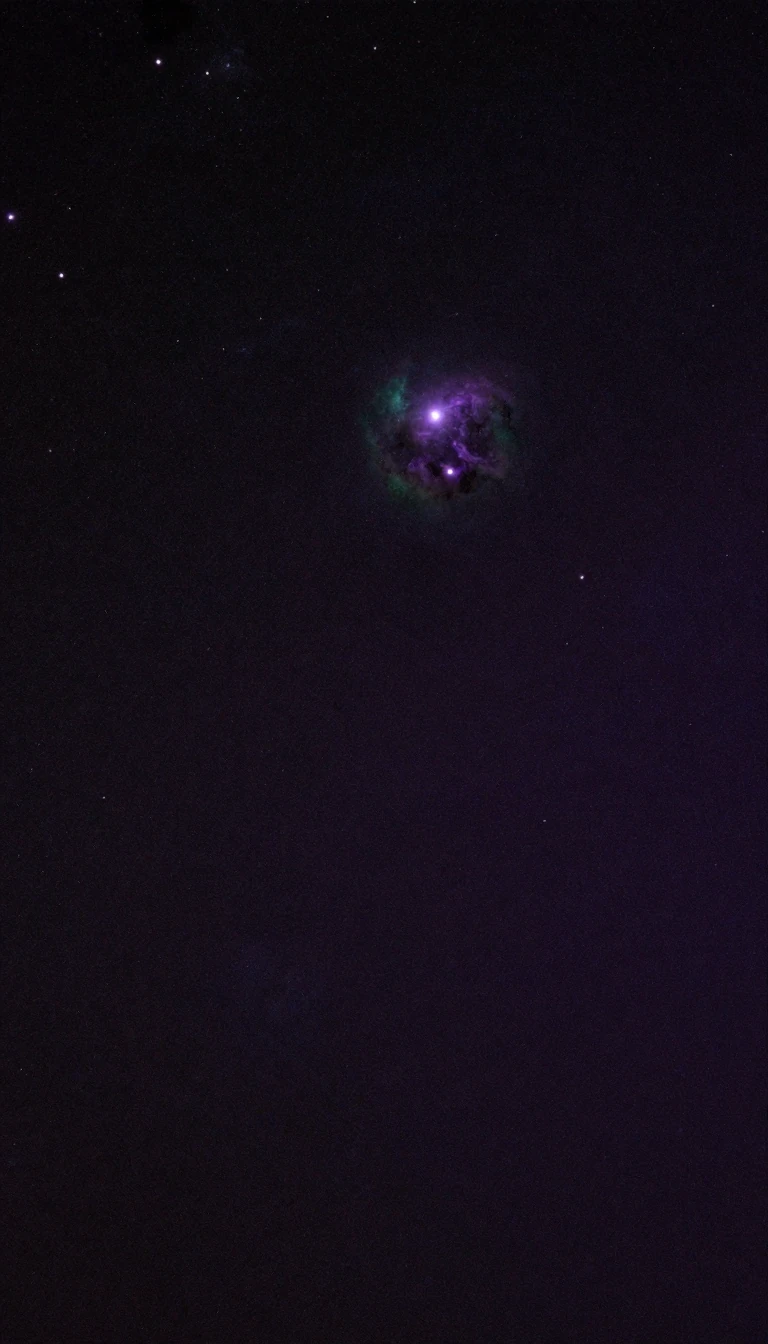 Discovery of a massive neutron star spinning at record speedsAstronomers using the Keck telescope observed a "black widow" pulsar system to identify one of the most extreme objects in our galaxy. By analyzing the light and movement of the p…
 JWST spots two unusually bright galaxies from the universe's first 400 million yearsSearching JWST images covering 49 square arcminutes, astronomers identified two unusually bright galaxy candidates, GLASS-z12 and GLASS-z10, with redshifts of about 12.4 and 10.4.…
- Massive black hole discovered in the most distant known quasarAstronomers observing the distant universe have discovered J0313−1806, the most distant quasar known to date. Located at a redshift of 7.642, this luminous object contains a super…
- Gravitational waves reveal the size and internal structure of neutron starsThe LIGO and Virgo observatories detected gravitational waves from two colliding neutron stars in 2017. By analyzing this signal, researchers were able to measure the physical dim…
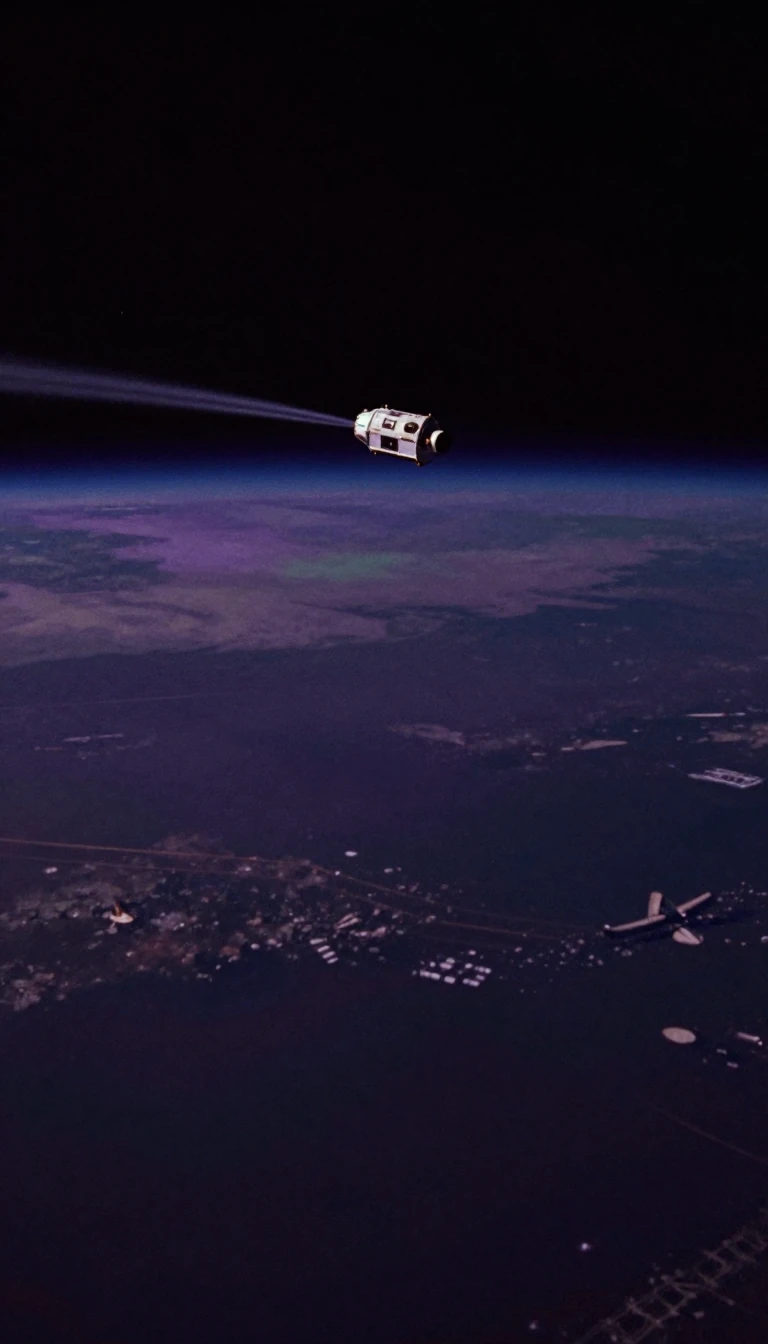 Asteroid impact test shows ejecta recoil significantly boosts momentum transferThe NASA DART mission conducted a kinetic impact on the asteroid Dimorphos to test planetary defense strategies. By striking the asteroid at high velocity, researchers aimed to se…
- New Hubble Space Telescope imaging survey maps the evolution of galaxies and black holesResearchers behind the CANDELS survey have released a massive collection of high-resolution images from the Hubble Space Telescope. By observing five distinct regions of the sky a…
- The telescope built for a decade that has lasted thirty yearsWhen the Hubble Space Telescope launched in 1990, its mission was only projected to last about ten years. Yet, through unprecedented repairs and upgrades by astronauts, this techn…
 How a bus-sized observatory peers billions of years into the pastExplore the operational brilliance behind the Hubble Space Telescope. This video reveals how NASA manages a massive orbiting observatory traveling at 17,000 miles per hour to capt…
 The ratio of carbon monoxide to hydrogen gas varies across different galactic environmentsAstronomers use carbon monoxide (CO) as a primary tool to map the hydrogen gas that fuels star formation. However, because CO does not always represent all the hydrogen present, r…
 Improved satellite data reveals a higher frequency of hidden stellar companionsResearchers analyzing data from the Gaia space mission found that a significant portion of stars in our solar neighborhood have hidden companions. By comparing long-term and short…
 New software updates allow for more precise modeling of pulsating and rotating starsResearchers have updated the Modules for Experiments in Stellar Astrophysics (MESA) software to better simulate the complex lives of stars. The updates introduce new capabilities …
- New measurements refine our understanding of the chemical makeup of the SunResearchers who reassessed the chemical composition of the Sun found that its elemental abundances are slightly lower than previously thought. By using advanced 3D models and stat…
- A massive Hubble survey aims to map the early history of galaxiesAstronomers designing the CANDELS survey plan to image over 250,000 distant galaxies using the Hubble Space Telescope. By observing across various wavelengths from mid-ultraviolet…
 A massive black hole merger challenges existing models of stellar evolutionAstronomers observing gravitational waves detected a rare collision between a black hole and a much smaller compact object. The event, known as GW190814, involved a primary black …
- JWST observations reveal a surprisingly large population of faint, obscured early black holesAstronomers using the JWST EIGER and FRESCO surveys identified 20 active galactic nuclei at redshifts between 4.2 and 5.5. These faint objects, characterized by broad H-alpha emis…
- Astronomers find evidence of a common noise process in pulsar timing dataResearchers using the Parkes Pulsar Timing Array analyzed 18 years of observations from 30 millisecond pulsars to search for a background of low-frequency gravitational waves. The…
- Designing the scanning strategy for the Euclid space mission surveyResearchers developing the Euclid mission have designed an optimized reference survey to map the extragalactic sky. By simulating spacecraft movements and dithering patterns, the …