 Intellect Plus
Astronomy
1,544 cards. Each one is a 40-second story with a five-minute read behind it. Page 26 of 26.
 The Crab Nebula is the wreckage of a star seen shining by day in 1054In July 1054 Chinese astronomers logged a guest star in Taurus bright enough to see in daylight. It stayed visible without a telescope for about two years, then faded. Nearly nine…
 Britain could once see the Southern Cross, until Earth's wobble hid itAround the fourth millennium BC, people as far north as Britain could watch the whole Southern Cross rise. The slow wobble of Earth's axis then dragged it below European horizons,…
 Stephen Hawking bet against the first black hole, hoping he would loseIn 1975 Stephen Hawking wagered Kip Thorne that a bright X-ray source in the constellation Cygnus was not a black hole. It was an insurance policy: if black holes turned out not t…
 Every constellation is slowly coming apart, even Orion and the PloughThe stars in a constellation look like neighbours, yet most sit at wildly different distances from us and drift in their own directions. Give it tens or hundreds of thousands of y…
 How astronomers climb from radar pings to the edge of the universeNo single technique can measure every distance in space. Astronomers instead build a ladder: radar fixes the scale of the Solar System, geometry reaches nearby stars, and known-br…
 Everything visible today once fit inside a speck far smaller than an atomAll the matter and energy in every galaxy we can see was, in the first instant, squeezed into a region trillions of times smaller than a proton. Then space itself ballooned, doubl…
- A single particle from space once carried the punch of a thrown baseballIn 1991 detectors caught one subatomic particle carrying about 50 joules, roughly the energy of a baseball flying at 90 kilometres an hour. That so-called OMG particle belongs to …
 Einstein's self-described ugly fudge factor came back to explain an accelerating cosmosIn 1917 Albert Einstein bolted an extra term onto his equations to hold the universe still, and he disliked it from the start. Once the cosmos was found to be expanding, he droppe…
 Astronomers still pretend the stars are painted on a giant ballNobody thinks the stars are fixed to a shell anymore, yet astronomers map the whole sky as if they did. Treating the heavens as the inside of an enormous sphere throws away distan…
 The southern centaur holds our nearest stellar neighbours and a diamond starCentaurus packs in 281 stars visible without a telescope, more than any other constellation. Among them is Alpha Centauri, the closest star system to the Sun, and a white dwarf wh…
- Centaurus A shoots radio jets longer than a million light-yearsAt the heart of Centaurus A sits a black hole of 55 million suns, firing a jet whose inner portion races at roughly half light speed. The radio glow from that outflow stretches pa…
 Pulsing stars gave astronomers a ruler for the entire universeIn 1908 Henrietta Swan Leavitt noticed that among thousands of flickering stars in the Magellanic Clouds, the slower a Cepheid pulsed, the brighter it truly was. That single patte…
 Ceres was found on New Year's Day, then lost, then rescued by mathsGiuseppe Piazzi spotted a slow-moving point of light on 1 January 1801, fell ill, and watched it slip into the Sun's glare. Nobody could find it again until a 24-year-old Carl Fri…
- The cosmos made its first atoms only after 380,000 years of fogFor its first few hundred thousand years the universe was an opaque glowing plasma, too hot for electrons to settle around nuclei. Around 380,000 years after the Big Bang they fin…
 Comets are named for long hair and built like fried ice creamThe Greeks called them long-haired stars, and the word comet still carries that image. Up close, a comet's core is a loose clump of ice, dust and rock only kilometres wide, yet it…
- One W of stars has been a queen, a camel, and elk antlersGreeks saw a boastful queen chained to a spinning throne. Arab stargazers saw a camel's hump and a henna-dyed hand. Chinese astronomers saw a chariot and its whip, the Sámi an elk…
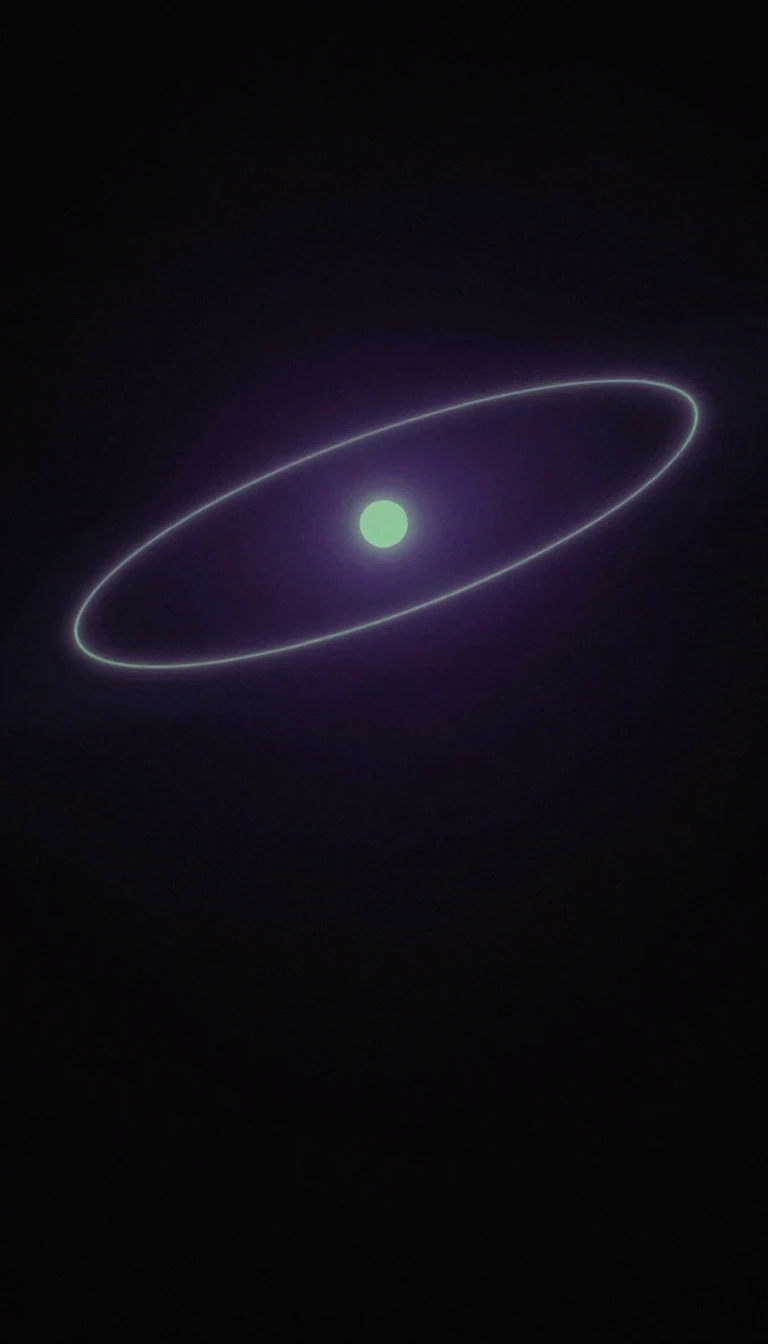 Two orbiting bodies are easy to predict, but add a third and nobody canNewton showed that a planet and its star follow tidy, predictable paths. Add one more body and the neat formulas vanish. Henri Poincaré proved in the 1890s that no general exact s…
 Callisto's battered surface has barely changed in billions of yearsJupiter's moon Callisto wears the oldest, most crater-packed surface in the Solar System, with almost no sign of volcanoes or shifting plates. It orbits too far out to be kneaded …
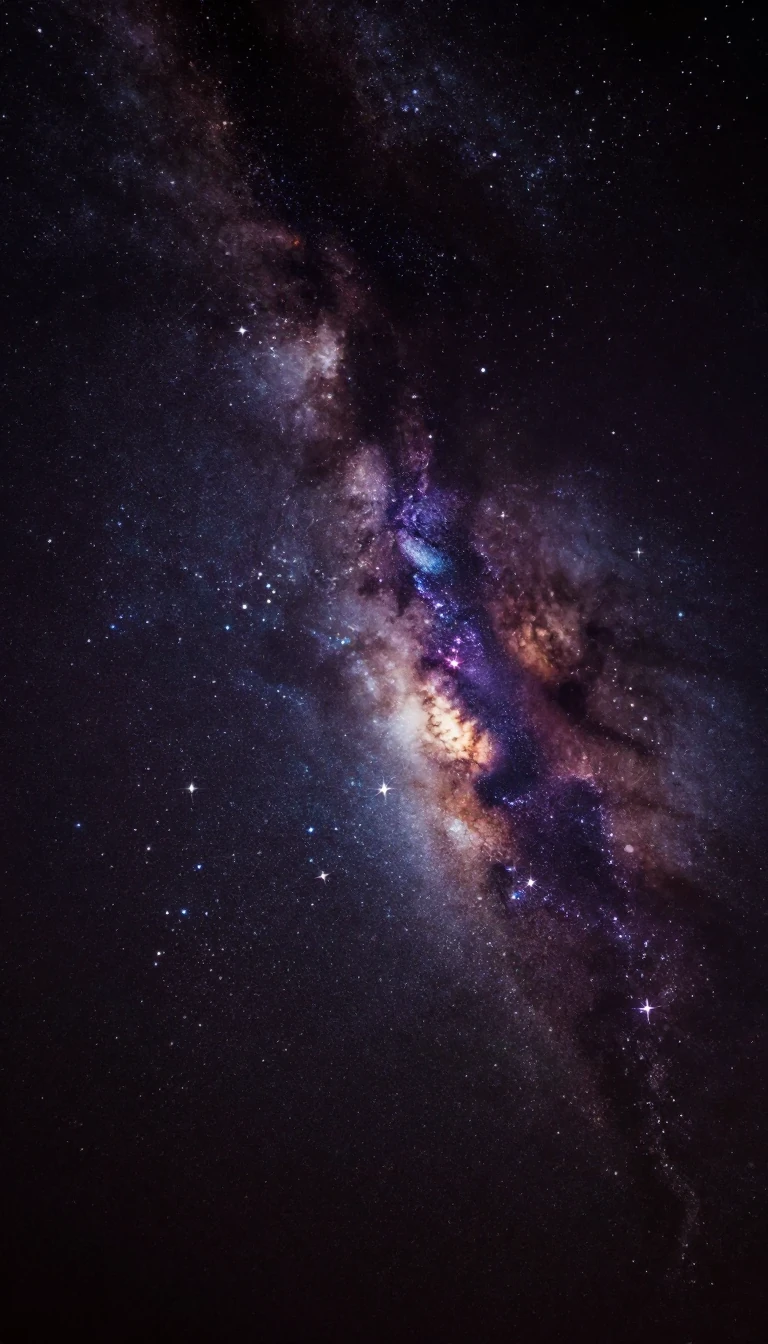 Before it was a dog, Canis Major was a Babylonian bow and arrowThe Greeks saw a hound trotting after Orion. Babylonian skywatchers around 1100 BC saw a weapon instead: Sirius was an arrow aimed at the hunter, and stars to its south formed the…
 Ibn Rushd travelled to Morocco to see a star hidden from CórdobaIn 1153 the philosopher Ibn Rushd journeyed from Córdoba to Marrakesh to watch Canopus, a brilliant star that never climbed above his home horizon. Seeing it appear as he moved so…
- An ancient Mexican building was angled to face the rising of CapellaAround 275 BC, builders at Monte Albán in Oaxaca set one structure, Building J, askew from everything around it. Its steps were aligned so that someone standing in its doorway wou…
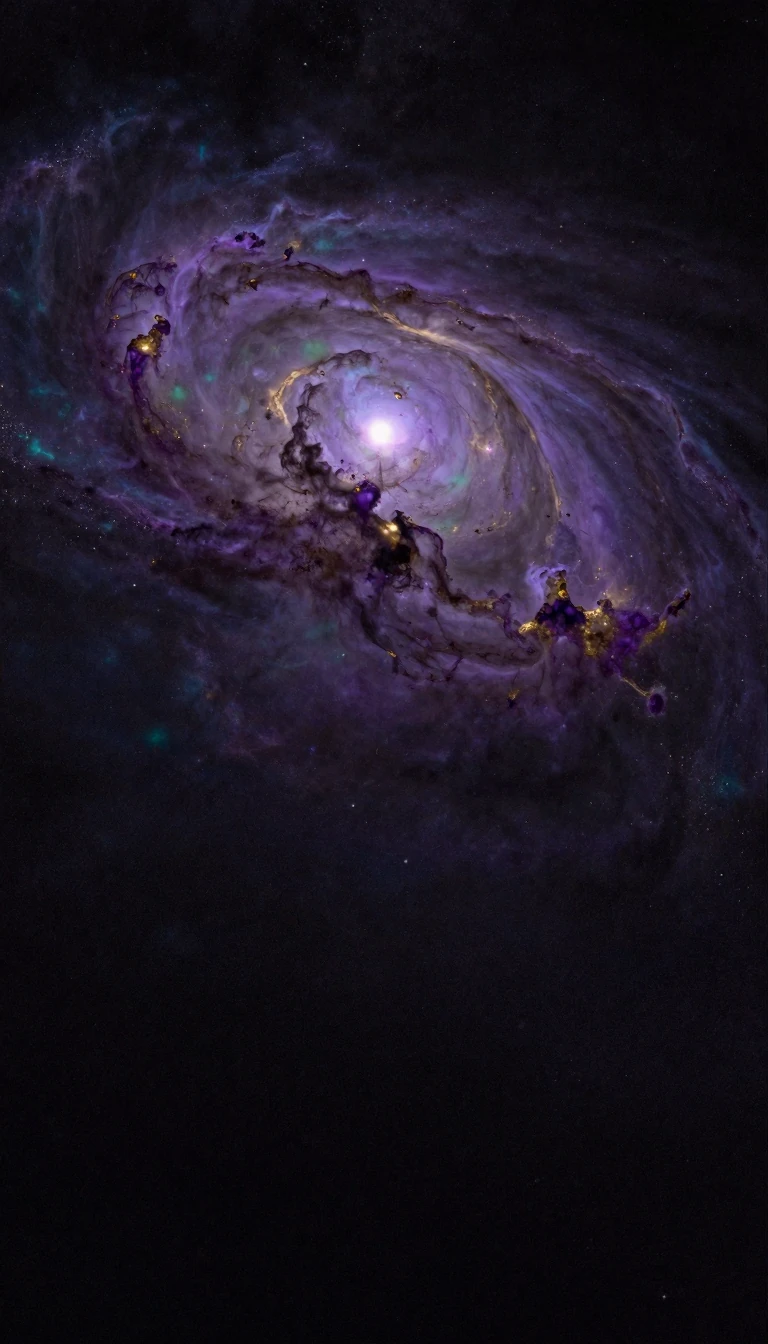 A nebula brighter than Orion's stays obscure because it hides down southThe Carina Nebula is four times larger than the celebrated Orion Nebula and even brighter. Yet few people in the Northern Hemisphere know it, because it sits deep in the southern …
- Statistics proved that many double stars are true partners, not coincidencesTwo stars that look close in the sky might simply line up by chance, one near and one far away. In 1767 the English clergyman John Michell tested that idea mathematically. Studyin…
- Einstein used his own theory to argue that black holes were impossibleIn 1939, Albert Einstein published a calculation meant to show that black holes could not exist. He assumed pressure or spin would always halt a collapsing star before it shrank t…
 Some of the brightest galaxies were first catalogued as flickering local starsAstronomers once listed several objects as irregular variable stars inside the Milky Way, brightening and fading without pattern. They turned out to be colossal galaxies billions …
 A trace of lithium proved brown dwarfs are failed starsTrue stars destroy their lithium quickly, because the heat needed to fuse hydrogen is also enough to burn it. So when a spectrum taken by the Keck telescope in 1995 showed a faint…
- A comet is both a celestial body and a celestial object at onceAstronomers draw a quiet line between a body and an object. A body is one tightly bound lump, such as a planet or star; an object can be a looser structure of many parts, such as …
 Astronomy began with farming calendars and still welcomes amateurs to discover cometsFew sciences let hobbyists make real discoveries, but astronomy does; amateurs with backyard telescopes still find new comets. That openness fits a field born from practical needs…
 Cecilia Payne found what stars are made of and was told to hedgeIn 1925 a doctoral student at Radcliffe, Cecilia Payne, showed that stars consist mostly of hydrogen and helium, nothing like Earth's rocky make-up. The result seemed so unlikely …
 Venus and Mars show how a planet's air can go badly wrongVenus should be chilly, with a calculated equilibrium temperature near −40 °C. Instead its surface sits close to 460 °C beneath air about 80 times denser than ours. Mars went the …
 Our galaxy's central bar may be a phase that comes and goesThe Milky Way has a bar of stars across its middle, like about two thirds of nearby spiral galaxies. Such bars appear to be temporary. Simulations suggest they grow, buckle under …
 The Moon does not orbit Earth's centre, and the Sun wobbles tooEarth and Moon actually circle a shared balance point, and it is not Earth's centre. That point sits about 4,671 km from the middle of our planet, roughly three quarters of the wa…
- Betelgeuse owes its famous name to a medieval misreading of ArabicThe Arabic name meant the hand of al-Jawzā, the figure we call Orion. Around the thirteenth century a European scribe misread a single dotted letter, turning a y sound into a b, a…
- Everything around you survived a cosmic wipeout by a margin of one in thirty millionIn the searing first instants after the Big Bang, matter and antimatter were created and destroyed in almost equal amounts. Some unknown process tipped the balance by about one pa…
 Astronomers keep five different maps of the sky, each drawn around a different equatorThere is no single address for a star. Astronomers choose among several coordinate systems, each built around a different great circle that splits the sky in half: your own horizo…
- The farthest thing most eyes can see is a whole other galaxyOn a moonless night you can spot a faint smudge in the constellation Andromeda without any telescope. That blur is a spiral galaxy about 2.5 million light-years away, larger acros…
- Arcturus was the first star besides the Sun seen through a telescope in daylightIn 1635 the French astronomer Jean-Baptiste Morin trained a telescope on Arcturus in broad daylight and saw it, the first recorded daytime sighting of any star apart from the Sun …
 Every asteroid in the main belt combined weighs just 3 percent of our MoonRoughly a million asteroids are known, most circling between Mars and Jupiter, yet pile them all together and they would make only 3 percent of the Moon. The first was found by ac…
- The asteroid belt is so empty that spacecraft fly through it unharmedFilms show the asteroid belt as a crowded field of tumbling rocks. In reality its known members sit about a million kilometres apart on average, and many uncrewed probes have cros…
- By 1900, astronomers had measured the distances to only about 60 starsPinning down exactly where a star sits sounds dull until you learn that nobody managed a single stellar parallax until Friedrich Bessel. Astrometry, the science of star positions,…
 The farthest thing most backyard telescopes will ever show you is a quasarPoint a modest 6-inch telescope at Virgo between March and July and you can catch 3C 273, light that left a feeding black hole about 2.4 billion years ago. It was the first quasar…
- The brightest steady lights in the cosmos are black holes eatingSome galaxy centres blaze across every kind of light, from radio waves to gamma rays, far brighter than their stars could manage. These active galactic nuclei are the most luminou…
- How much sunlight a planet bounces back can swing its temperature by tens of degreesEarth reflects about 30 percent of incoming sunlight, largely thanks to clouds. That share, called albedo, helps hold the average surface near 15 degrees Celsius. Freeze the whole…
- The nearest star is invisible to the naked eye, but its neighbours shine brightlyAlpha Centauri looks like one brilliant star, the third brightest in the night sky. It is really three. Two Sun-like stars circle each other every 79 years, and a faint red dwarf …