 Intellect Plus
Astronomy
1,544 cards. Each one is a 40-second story with a five-minute read behind it. Page 25 of 26.
 Mars may owe its lopsided face to a Pluto-sized collisionThe northern half of Mars is low and smooth, the southern half high and battered by craters. One explanation is a strike by a body the size of Pluto some four billion years ago, w…
 On Mercury, a single sunrise-to-sunrise day lasts two of its yearsMercury spins three times for every two trips around the Sun, a lockstep that stretches one solar day to about 176 Earth days. Any spot on the surface bakes in sunlight for 88 day…
 To an astronomer, oxygen and carbon count as metalsAstronomers lump every element heavier than helium together as metals, even gases like oxygen that chemists would never call metallic. The quirky shorthand hides a useful clock: b…
 The 1833 Leonid storm proved shooting stars come from spaceOn a November night in 1833, meteors fell over eastern North America at an estimated hundred thousand or more an hour. Denison Olmsted noticed they all streamed from one spot in L…
 Meteoroid, meteor, meteorite: one space pebble, three namesRoughly 25 million bits of space rock and dust plunge into Earth's atmosphere every day, adding up to around 15,000 tonnes a year. While drifting through space each is a meteoroid…
 Spilled milk, a silver river, a path of straw: naming our galaxyGreeks saw spilled milk in the pale band across the night sky, giving us both Milky Way and the word galaxy. Across East Asia it is the Silver River. Finns and Lithuanians call it…
- How an asteroid ended up named after a cat called Mr. SpockThe first asteroids took names from Greek and Roman myth. As discoveries piled into the thousands, astronomers turned to spouses, colleagues, fictional characters and even pets. T…
 Stars are born in cold clouds whose main gas is almost invisibleMolecular hydrogen fills the dark clouds where stars form, yet its symmetrical molecules barely emit anything a telescope can catch. Astronomers found the clouds by chasing a stan…
 The biggest stars are not the most luminous onesBetelgeuse is about 1,000 times wider than the Sun and shines around 100,000 times as brightly. Yet R136a1, only 39 times the Sun's width, pours out more than 6.1 million times th…
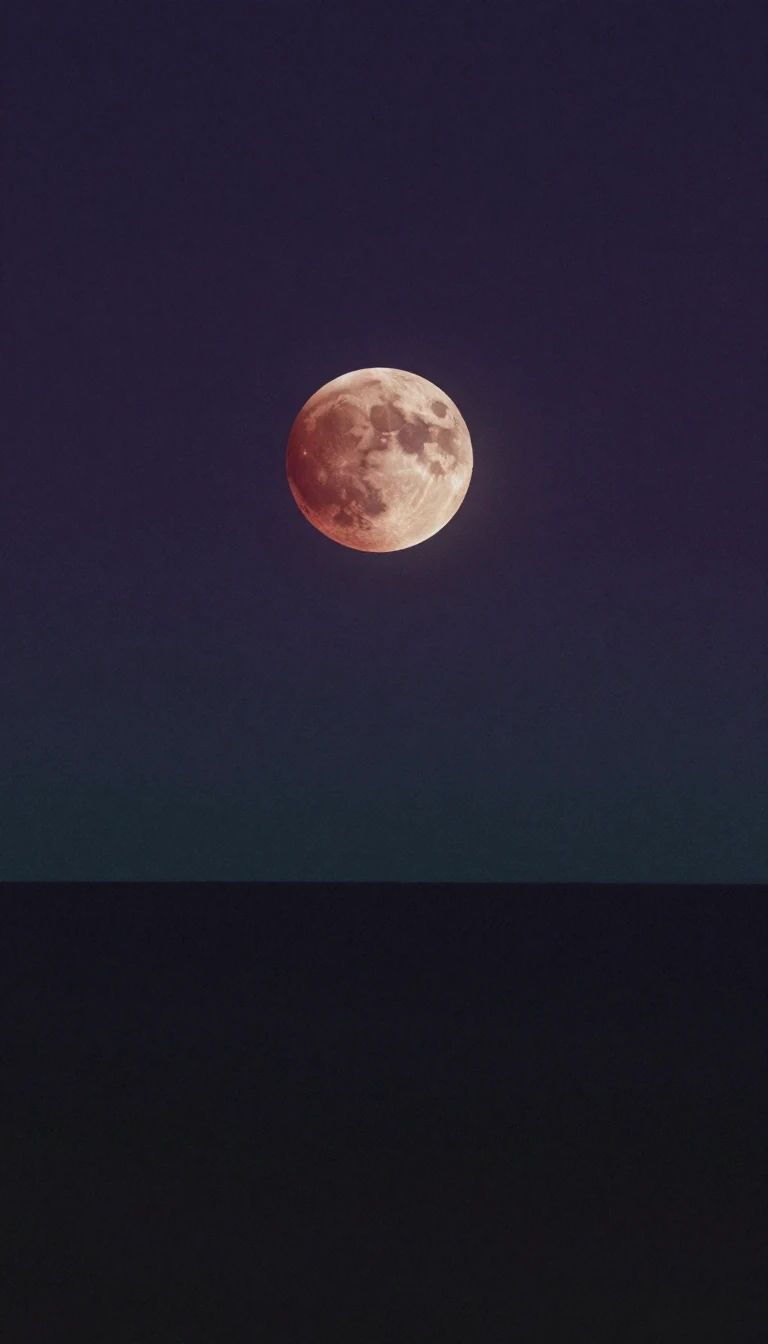 A blood moon is lit by a ring of sunsets around the EarthDuring a total lunar eclipse, anyone standing on the Moon would see the Sun hidden behind a dark Earth circled by a thin red ring. That ring is our atmosphere, bending sunlight in…
 Star magnitudes run backwards because they began as a ranking of sizeIn astronomy, smaller numbers mean brighter stars, and the brightest go negative: Sirius sits at minus 1.46, the Sun at minus 27. The oddity dates back two thousand years, to when…
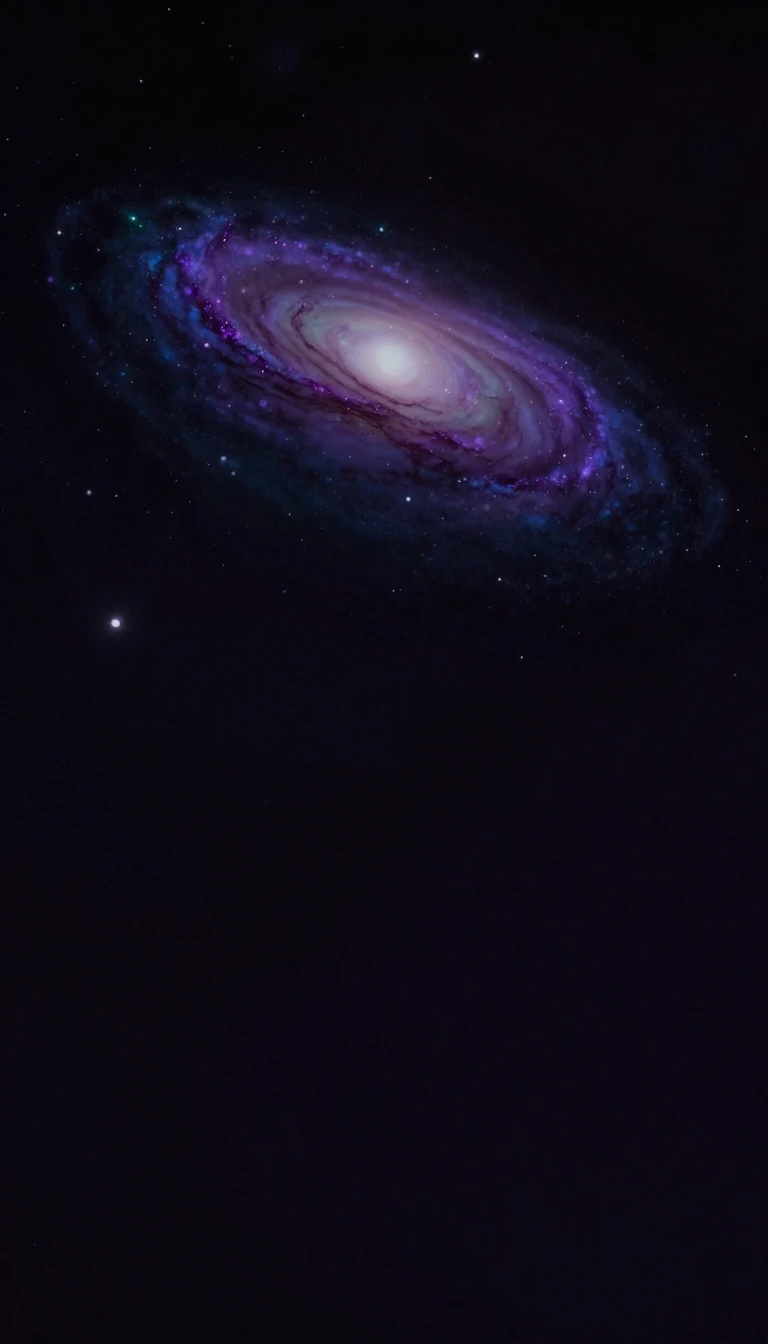 Shapeless galaxies may be the closest living relatives of the universe's first onesAbout a quarter of all galaxies fit neither the spiral nor the elliptical mould. These irregulars have no central bulge, no arms and no symmetry. The smallest of them, dwarf irreg…
 Why the stretch from March to September lasts a week longerFrom the March equinox to the September one takes about 186 days; the return trip takes only about 179. The gap exists because Earth's orbit is a slightly squashed ellipse and our…
 The Kuiper belt is named after an astronomer who thought it had vanishedGerard Kuiper did sketch a disc of icy bodies beyond Neptune, but he assumed Pluto was massive enough to have flung them all away. Had he been right, no belt would exist today. It…
- Jupiter drags two rival camps of asteroids named for the Trojan WarSixty degrees ahead of Jupiter and sixty degrees behind it, two gravitational sweet spots hold more than a million asteroids. Astronomers named those ahead after Greek heroes of t…
 Magellan got the credit, but Vespucci wrote about this galaxy firstIn a letter from 1502, Amerigo Vespucci described three Canopi in the southern sky, two bright and one dark. The bright pair were the Magellanic Clouds, satellite galaxies of the …
 Lenticular galaxies look like spirals that have run out of fuelPicture a spiral galaxy with its arms erased and its star-making gas gone. What remains is a lenticular galaxy: a smooth disc around a fat central bulge, filled with stars all tho…
- Our galactic neighbourhood is a dumbbell whose two ends are falling togetherThe Milky Way belongs to a family of galaxies shaped like a dumbbell. We and our satellites form one lobe; the Andromeda Galaxy and its companions form the other, roughly three mi…
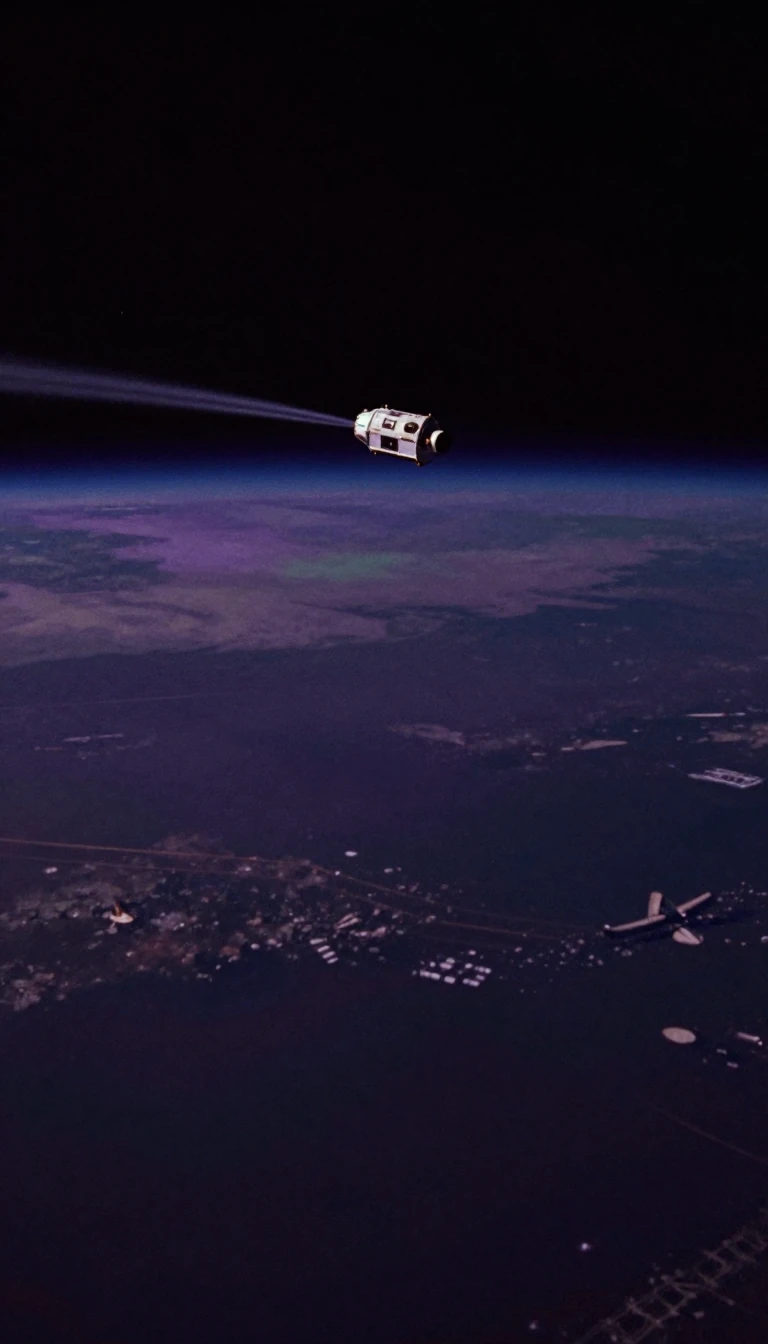 Astronauts in low orbit float despite feeling almost full Earth gravityUp where the space station flies, gravity is only slightly weaker than on the ground, because a few hundred kilometres is tiny compared with Earth's radius. Astronauts float becau…
- The bull's face in Taurus is a star family slowly drifting apartThe V of stars forming the face of Taurus looks like one group, but its brightest point, orange Aldebaran, is an impostor only 65 light-years away. The rest belong to the Hyades, …
- In 2022 humans nudged an asteroid, and beat the target by a mileOn 26 September 2022 NASA deliberately crashed a spacecraft into a small asteroid to see whether it could shift its path. Mission planners would have counted a change of 73 second…
 Is space between the planets hot or cold? Two rivals were both rightJoseph Fourier guessed that the space between planets was about as cold as Earth's poles. In 1959 Sydney Chapman argued it was blisteringly hot, around 10,000 degrees. The gas out…
- The space between stars is emptier than any lab vacuum, yet behaves like weatherOn 25 August 2012 Voyager 1 became the first human-made object to reach interstellar space. What it entered is thinner than the best vacuum chambers on Earth, sometimes just 100 i…
 A navigation engineer spotted the first volcano erupting beyond EarthShortly after Voyager 1 swept past Jupiter's moon Io in March 1979, navigation engineer Linda Morabito noticed an odd plume rising from its edge in one image. Other pictures soon …
 Something hidden behind the Milky Way is tugging on our galaxyOur galaxy and thousands of its neighbours are drifting towards a patch of sky we can barely see, blocked by the dust and stars of the Milky Way. Astronomers named the target the …
- The element that never was: how glowing star nurseries fooled astronomersNineteenth-century spectroscopes revealed a bright green line at 500.7 nanometres in some nebulae that matched no known element. Astronomers called the mystery substance nebulium.…
- A simple star chart once sparked a feud over the age of EarthPlot stars by brightness against temperature and they fall into tidy bands instead of a random scatter. Early astronomers read that pattern as stars shrinking over time, powered b…
 Standing on a beach, the horizon is only about five kilometres awayThat distant line where sea meets sky feels infinitely far, yet for someone of average height standing at the water's edge it lies just under 5 kilometres off. Climb Mount Everest…
- Orion's famous horse's head is a silhouette of dust, found on a photographNobody first spotted the Horsehead Nebula through an eyepiece. In 1888 the Scottish astronomer Williamina Fleming noticed it on a photographic plate at Harvard College Observatory…
 Hubble's law was found first by a Belgian priest who edited himself outTwo years before Edwin Hubble's famous 1929 paper, Georges Lemaître, a Belgian priest and astronomer, showed that distant galaxies recede at speeds proportional to their distance.…
 Why satellite dishes can point at one fixed spot in the skyAt 35,786 kilometres above the equator, a satellite takes exactly as long to circle Earth as the planet takes to turn, so from the ground it seems to hang still. A science fiction…
- Some synchronised satellites trace a figure eight across the sky each dayA geosynchronous satellite circles Earth once every 23 hours, 56 minutes and 4 seconds, matching the planet's spin. Only a perfectly circular one over the equator stays fixed over…
 Gas giants are mostly not gas, and they have no surfaceThe phrase gas giant was coined in 1952 by the science fiction writer James Blish, and it stuck despite being misleading. Deep inside Jupiter or Saturn the pressure is so great th…
 Most stars swell into giants when their core hydrogen runs outA giant star is not simply a big star. It is one that has used up the hydrogen in its core and puffed up, becoming far larger and brighter than a normal star of the same colour. T…
- Earth's pull is not the same everywhere, and Einstein says it isn't a pullDrop a hammer and a feather in a vacuum and they land together: in the same gravitational field, everything falls at the same rate whatever its mass or material. Yet the rate itse…
 Spacecraft steal a little of a planet's motion to speed upThrow a tennis ball at 30 kilometres an hour toward a train coming at 50, and it bounces back at 130. Spacecraft pull the same trick with planets: swinging close past a moving wor…
- Astronomers think today's giant elliptical galaxies began as spinning disksNo laboratory can build a galaxy, so astronomers test their ideas by checking whether a theory predicts the galaxies we actually see. The leading picture now runs backwards from i…
- In a galaxy cluster, the galaxies themselves are the smallest share of the massA galaxy cluster looks like a swarm of galaxies bound together, yet the galaxies move too fast for their own gravity to hold them. Scorching gas between them outweighs the galaxie…
- Hubble sorted galaxies with a tuning fork drawn from photographic platesIn 1926 Edwin Hubble sorted galaxies by how they looked on photographic plates: smooth ellipses, flat spirals, and lens-shaped galaxies in between. Drawn as a two-pronged fork, hi…
 Satellites hunting secret nuclear tests found the universe's biggest explosionsOn 2 July 1967 two American Vela satellites, launched to catch covert Soviet nuclear tests in space, recorded a flash of gamma rays unlike any bomb. It took decades to learn what …
- Ganymede, bigger than Mercury, may hold more water than EarthJupiter's moon Ganymede is the largest moon in the Solar System, wider than the planet Mercury. Beneath its icy crust lies an ocean that may contain more water than all of Earth's…
 Our Sun probably had thousands of sibling stars it has since lostAbout 4.6 billion years ago a fragment of a giant gas cloud collapsed, perhaps nudged by an exploding star. The Sun likely grew up in a crowded cluster of between one thousand and…
- An astronomer used wartime blackouts to peer toward the Milky Way's heartIn the early 1940s, Los Angeles went dark under wartime blackout rules, and Walter Baade seized the chance. Using the 100-inch Hooker Telescope on Mount Wilson, he found a gap abo…
- Edwin Hubble proved galaxies exist but refused to call them galaxiesHubble used Cepheid stars to show that spiral nebulae lie far beyond the Milky Way, settling one of astronomy's great arguments. Yet he kept calling them nebulae, and the word gal…
- On the equinox, day and night are not actually equalEquinox means equal night, yet on that date daylight wins. The Sun is a disc, so its top edge clears the horizon before its centre does, and the atmosphere bends light over the ho…
 The dwarf planet that demoted Pluto was nicknamed XenaEris earned its name. Found in 2005 and first hailed by NASA as a tenth planet, it forced astronomers to define the word planet for the first time, and the 2006 ruling demoted Plu…
- Rockets never actually need to reach escape velocity to leave EarthEscape velocity from Earth's surface is about 11.2 kilometres per second, but that figure only applies to an unpowered object thrown upward once. A rocket firing its engines, or a…
 Squeeze Earth to nine millimetres and it would become a black holeAny lump of matter crushed small enough would turn into a black hole. The threshold, called the Schwarzschild radius, grows with mass: about 3 kilometres for the Sun and a mere 9 …
 The first exoplanet evidence sat unrecognised in a 1917 photograph for a centuryIn 1917 Walter Adams recorded the spectrum of a white dwarf called Van Maanen 2. Only in 2016 did astronomers realise its odd chemistry probably came from a shredded planet rainin…
 Cosmic dust makes distant stars look redder, like a smoky sunsetStarlight crossing the galaxy runs a gauntlet of dust. The grains scatter and absorb blue light more readily than red, so faraway stars arrive dimmer and ruddier than they really …
 The whole universe may once have been warm enough for liquid waterFor roughly seven million years, starting about 10 million years after the Big Bang, the cosmic background glowed between the boiling and freezing points of water. Astrophysicist …
- More of Earth's fresh water sits in polar ice than in rivers, lakes and skyThe great ice sheets of the polar deserts lock away more water than all of Earth's groundwater, lakes, rivers and atmospheric moisture put together. It is one of many quirks of th…
- Why we do not get a solar eclipse at every new moonIf the Moon circled Earth in the same plane that Earth circles the Sun, every full moon would bring a lunar eclipse and every new moon a solar one. The two orbits are tilted again…
- The Sun's yearly path across the sky is why our day lasts 24 hoursEarth spins once relative to the stars in about 23 hours 56 minutes. Our day is four minutes longer because, as we orbit, the Sun creeps a little under one degree eastward each da…
- Edwin Hubble guessed wrong about what elliptical galaxies turn intoEdwin Hubble thought elliptical galaxies were an early stage that later evolved into spirals. That idea turned out to be false. Ellipticals are mostly old, red swarms of stars tha…
 A small icy moon of Saturn sprays an ocean into spaceNear the south pole of Enceladus, more than 100 geysers blast water vapour, salt crystals and ice grains off the moon at around 200 kilograms every second. Some of it snows back d…
- Why astronomers measure sky positions in hours rather than degreesA star's right ascension is written in hours, minutes and seconds, not degrees. The habit comes from how positions were first measured: by timing when each object crossed the meri…
 The Milky Way's biggest star cluster may be the heart of a swallowed galaxyOmega Centauri looks like the Milky Way's largest globular cluster. Astronomers now suspect it is something stranger: the leftover core of a dwarf galaxy, complete with a central …
 Pluto was not the first planet to be demoted, only the most famousIn the 1800s, Ceres was counted as a planet, and by around 1851 the tally had swollen to 23. Astronomers then invented the word asteroid and quietly reshuffled the list. Pluto's 2…
 The Pillars of Creation were once feared destroyed by a supernovaIn 2007, hot gas seen by the Spitzer Space Telescope hinted that a star exploding 8,000 to 9,000 years ago might already be tearing apart the famous Pillars of Creation. When Hubb…