 Intellect Plus
Astronomy
1,544 cards. Each one is a 40-second story with a five-minute read behind it. Page 24 of 26.
 A star like the Sun is built inside out compared with a heavier oneIn the Sun, energy crawls outward from the core as radiation and then boils to the surface in convection currents. In stars more than one and a half times heavier, the arrangement…
 The Sun is the roundest natural object ever measuredSatellites measuring the Sun's shape found it bulges at the equator by just eight parts per million, less than expected. That makes it the closest thing to a perfect sphere nature…
 Not every huge, brilliant star counts as a true supergiantSome stars shine thousands of times brighter than the Sun yet are not supergiants at all. Astronomers define the label two ways, by the look of a star's spectrum and by the stage …
- Stars are born inside freezing clouds that can outweigh the Sun millions of timesThe birthplaces of stars sit at about ten degrees above absolute zero. Giant clouds of molecular hydrogen, some a hundred light-years across and holding up to six million solar ma…
 Some stars that look like partners only line up by chance from EarthTwo stars side by side in the night sky may have nothing to do with each other. Astronomers separate true star systems, bound by gravity and circling one another, from optical dou…
 The smallest known black hole is only about twenty kilometres wideIn 2020 astronomers reported a black hole of just 3.3 solar masses, only 19.5 kilometres across, hiding in a binary called 2MASS J05215658+4359220. Stellar black holes, the collap…
 Wolf-Rayet stars reach surface temperatures near 210,000 kelvinMost stars show dark absorption lines in their spectra. In 1867, Charles Wolf and Georges Rayet found three stars in Cygnus whose spectra glowed with bright, broad emission bands …
 The zodiac was born as the first celestial coordinate systemAround 401 BC, under Persian rule, Babylonian astronomers carved the Sun's yearly path into 12 equal slices of 30 degrees each, modelled on idealised 30-day months. Long before ho…
 Uranus spins on its side, so each pole gets 42 years of daylightUranus is tipped over by 82 degrees, so it rolls around the Sun rather than spinning upright. Over its 84-year orbit, each pole spends about 42 years in unbroken sunlight followed…
- The Big Dipper is only the tail end of a much bigger bearThe seven stars called the Big Dipper in North America and the Plough in Britain form just the hindquarters and tail of Ursa Major, the Great Bear. The whole constellation spreads…
- The Little Bear was once called the 'dog's tail'Ursa Minor, home of the North Star, carried an odd ancient nickname: Cynosura, Greek for dog's tail. Nobody knows why, since no neighbouring constellation was ever a dog. One trad…
 A star that blinked every 11 months helped overturn AristotleIn 1638 Johannes Holwarda noticed that Omicron Ceti brightened and faded on an 11-month cycle. David Fabricius had taken it for a nova in 1596. Together with the supernovae of 157…
- Vega was the first star after the Sun ever photographedOn 17 July 1850, William Bond and John Adams Whipple at Harvard College Observatory pointed a daguerreotype camera at Vega and captured the first photograph of any star besides th…
 The Virgo Cluster is still assembling itself from merging galaxy clumpsSome 53.8 million light-years away, roughly 1,300 galaxies, perhaps as many as 2,000, crowd together in the Virgo Cluster. It is not a settled city but a young one: three main clu…
- The Milky Way lives on the edge of a flattened galaxy superclusterOur Local Group sits near the outskirts of the Virgo Supercluster, strung along a thin filament of galaxies running from the Fornax Cluster toward the Virgo Cluster at its centre.…
- Cosmic voids look empty but still hold some matterBetween the great filaments of galaxies lie voids up to 300 million light-years across that seem almost bare. They are not truly empty: even their sparsest parts contain more than…
 The Whirlpool Galaxy owes its perfect spiral to a smaller neighbourM51, the Whirlpool Galaxy, was the first object ever seen to have spiral arms, and its graceful shape is probably the work of a smaller companion. NGC 5195 appears to have punched…
 Einstein's 'greatest blunder' may decide how the universe endsBelieving the cosmos was static, Einstein added a cosmological constant to his equations to hold gravity in check. When Hubble showed the universe was expanding, Einstein called i…
 Everything you can see makes up under 5 percent of the universeStars, planets, gas and people are all built from ordinary matter, which accounts for only about 4.84 percent of the universe's mass and energy. Invisible dark matter makes up rou…
 Earth, every moon and every asteroid together barely register on the Solar System's scalesPut the whole Solar System on a balance and the Sun alone accounts for 99.86 percent. Of the scraps left over, the four giant planets take 99 percent. Everything else, including E…
- The brightest star's hidden partner was deduced 18 years before anyone saw itIn 1844 Friedrich Bessel noticed that Sirius wobbled as it drifted across the sky, as if tugged by something invisible. He concluded it had an unseen companion. On 31 January 1862…
- A faint smudge in the southern sky handed astronomers their first cosmic yardstickHenrietta Swan Leavitt spent years comparing photographic plates of the Small Magellanic Cloud. Because every star in that dwarf galaxy sits at roughly the same distance, she coul…
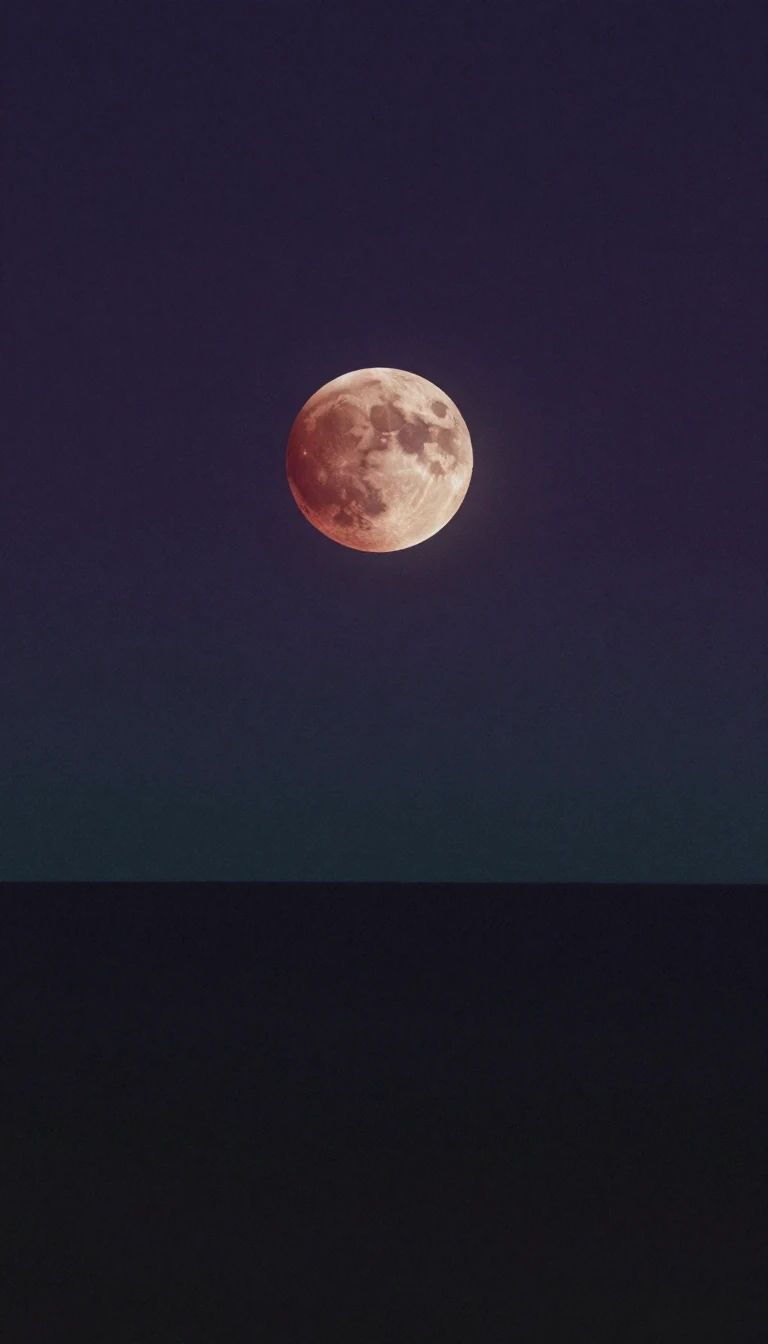 Ancient eclipse records quietly measure how fast Earth's spin is slowingAstronomers can say with confidence that a total eclipse will happen on a given date centuries from now, but not exactly which longitudes the shadow will cross. The reason is that…
 Radio galaxies blow lobes of plasma far beyond their visible starsSeen in ordinary light, a radio galaxy looks like a large elliptical galaxy. Tuned to radio wavelengths, it sprouts two vast lobes stretching well past its stars, inflated over te…
- When a star's core runs dry, its outer layers balloon outwardOnce a Sun-like star uses up the hydrogen in its core, the core shrinks while the layers above swell to tens or hundreds of times the Sun's width. Astronomers call this the mirror…
- Stretched starlight revealed that the universe has a historyLight from the Big Bang started out at about 3,000 kelvin. Stretched by the expansion of space over billions of years, it now arrives as a faint 3-kelvin microwave glow. That stre…
 Rigel is labelled beta yet usually outshines Orion's alpha starJohann Bayer's 1603 lettering normally gives beta to a constellation's second-brightest star, yet Orion's beta, Rigel, nearly always beats Betelgeuse. One astronomer suspects Baye…
 A comet hunter stumbled on the Ring Nebula and filed it awayCharles Messier was searching for comets in January 1779 when he came across a faint smudge in Lyra. It became the 57th entry in his list of objects not to confuse with comets. Wh…
 Earth may once have worn a ring like Saturn'sAbout 466 million years ago, craters from a burst of meteor strikes seem to have clustered in a band around Earth's equator. A 2024 study reads that pattern as the fallout of a ri…
 Why the Milky Way's central black hole earned an asteriskWhen Robert Brown named the compact radio source at the heart of our galaxy in 1982, he tacked on an asterisk because he found it exciting, borrowing the physicists' symbol for an…
- Nobody knows exactly how long a day lasts on SaturnSaturn has no solid surface to track, and its clouds spin at different speeds depending on latitude. Voyager's radio readings suggested a day of about 10 hours 39 minutes, but whe…
- Ordinary-looking spiral galaxies can hide a blazing black hole corePhotograph a Seyfert galaxy in visible light and it resembles any other spiral. Examine other wavelengths and its tiny core turns out to shine about as brightly as all the stars o…
- Procyon's hidden companion was predicted 52 years before anyone saw itIn 1844 Friedrich Bessel concluded from Procyon's wobbling motion that an unseen partner must be tugging on it. Not until 1896 did John Martin Schaeberle, peering through Lick Obs…
- Baby stars shine without fusion, powered by gas slamming into themA newborn star is not yet burning hydrogen at its heart. Instead, a protostar glows because gas falling from its surrounding disk crashes into its surface, releasing radiation. Fo…
 The first pulsar was jokingly labelled a signal from little green menIn 1967 graduate student Jocelyn Bell noticed a strange, perfectly regular radio signal ticking every 1.337 seconds. Nothing like it had ever been recorded, and she and her superv…
 The Moon passing in front of 3C 273 cracked the quasar mysteryIn 1962 astronomers timed the Moon's passage across a baffling radio source called 3C 273 to pin down exactly where it sat. That fix let Maarten Schmidt find its faint visible cou…
 The North Star is only 47th brightest, and it keeps misbehavingMany people assume Polaris is the brightest star in the sky. It actually ranks around 47th. Its fame comes from position: it sits less than a degree from the north celestial pole,…
- A green glow in Orion once convinced astronomers they had found a new elementLook at the middle of Orion's sword and one point seems slightly blurred. That smudge is the Orion Nebula, about 1,267 light-years away and the closest region of massive star form…
 The same trick your two eyes use measures the distance to starsGlance at a car's speedometer from the passenger seat and the needle seems to point at a slightly different number than the driver sees. That shift is parallax, the apparent movem…
- Two brightness readings through coloured filters can reveal a star's temperatureMeasure a star through a blue filter, then a yellow-green one, and subtract. That single number, the colour index, tells astronomers how hot the star's surface is. For 51 Pegasi i…
- Einstein tweaked his own equations to stop the universe from movingIn 1917 Einstein added a cosmological constant to general relativity for one reason: to keep the universe static, as he believed it was. Within about a decade a Belgian priest pro…
- The Pinwheel Galaxy is nearly three times as wide as the Milky WaySeen face-on from 21 million light-years away, Messier 101 spans roughly 252,000 light-years and holds around a trillion stars. Its arms are lopsided because neighbouring galaxies…
 The ancient Greeks counted the Sun and Moon as planets, but not EarthPlanet means wanderer. To ancient observers it meant the Sun, the Moon and five bright points drifting against the stars; Earth joined the club only when heliocentrism won out. Si…
- Planetary nebulae have nothing to do with planets, and the Sun will make oneThrough early telescopes, these glowing rings looked like faint planetary disks, so the name stuck. They are actually the shed outer layers of dying stars, lit up by the exposed c…
 Our tidy arrangement of planets looks unusual among thousands of known systemsSmall rocky worlds close to the Sun, giant planets farther out: it feels like the natural order. Yet among 4,809 planetary systems confirmed by April 2026, few resemble ours. More…
- Why the Seven Sisters so often show only six starsAcross the world, people pictured the Pleiades as seven sisters, and their stories often explain why one went missing. Some scientists suspect the tales reach back to around 100,0…
- Orion the hunter is a signpost to half the winter skyFew star patterns are as easy to spot as Orion, an hourglass of bright stars pinched by a neat row of three. Named for a hunter of Greek myth and catalogued by Ptolemy in the seco…
- Neptune was found with a pen before anyone saw it through a telescopeUranus kept drifting off the path astronomers predicted for it, as if something unseen were tugging it. Two mathematicians worked out where that something should be. On 23 Septemb…
 Why Earth gets more daylight than darkness over a yearIf Earth were an airless world lit by a point of light, day and night would split the year evenly. They don't. The Sun's width and the bending of light by our atmosphere steal sev…
- A nova's new star is actually the burned-out core of a very old oneNova means new star, and to anyone watching, that is how one looks: a point of light where none shone before. The truth is almost the reverse. Nearly every nova erupts on a white …
- Why the visible universe reaches 46.5 billion light-years in every directionLight has been travelling for at most 13.8 billion years, so you might expect the visible universe to end 13.8 billion light-years away. Its edge actually lies about 46.5 billion …
- The best stargazing spot on Earth may be a ridge in AntarcticaAstronomers hunting for perfect skies look for darkness, dryness, height and endless clear nights. A 2009 study concluded that the place offering all of these with the least atmos…
 Omega Centauri may be the leftover heart of a swallowed galaxyFor 1,500 years Omega Centauri was listed as a single star on the Centaur's back. It is actually a ball of roughly 10 million stars, the biggest cluster of its kind in our galaxy,…
 Nobody has seen the Oort cloud, yet its comets keep arrivingNo telescope can image the Oort cloud, a shell of icy bodies that may stretch more than three light-years from the Sun. Jan Oort deduced it in 1950 from a simple puzzle: comets th…
 To catch a spacecraft ahead of you in orbit, don't hit the acceleratorTwo spacecraft share a circular orbit, one trailing the other. The obvious move is for the rear craft to fire its engine and speed forward. Do that, and it climbs to a higher orbi…
- A nebula the size of Earth would weigh only a few kilogramsNebulae look like solid glowing clouds in photographs, yet most are thinner than the best vacuum any laboratory on Earth can make. A patch of nebula as big as our planet would hol…
 The idea that planets grew from a spinning cloud began with a philosopherLong before telescopes could see a single planet around another star, the philosopher Immanuel Kant argued that the Solar System condensed from a slowly turning cloud of gas. His …
 The Moon probably formed when a Mars-sized world struck the young EarthAbout 4.51 billion years ago, the favoured story goes, a body the size of Mars, nicknamed Theia, struck the infant Earth at a glancing angle. Molten debris thrown into orbit gathe…
 Why we stopped calling moons satellites, and what counts as oneKepler coined satellite in 1610, borrowing the Latin satelles, a guard or attendant, for the four companions Galileo had spotted around Jupiter. The word served astronomers for ce…
- The main sequence: the long, steady middle age of nearly every starPlot stars by colour against true brightness and most fall along one diagonal band. That band, the main sequence, is where stars spend the bulk of their lives fusing hydrogen in t…