 Intellect Plus
Industry
243 cards. Each one is a 40-second story with a five-minute read behind it.
 The engineering feat that unlocked a North Sea oil giantIn 1976, the Brent field began production, marking a milestone for offshore energy. It wasn't just about finding oil; it was an architectural and geological puzzle involving tilte…
 The millwright: the ancient ancestor of modern mechanical engineeringBefore the steam engine, there were millwrights. These master craftsmen didn't just build structures; they engineered the first industrial machines. From carving wooden gears to m…
 From Renaissance sketches to Martian probes, how we measure the invisible force of wind.For centuries, we have relied on simple mechanical devices to quantify the wind. From Leon Battista Alberti’s 15th-century designs to the sophisticated ultrasonic sensors used on …
 Why massive battery arrays are becoming the silent guardians of our global power gridsBattery energy storage systems are rapidly transforming how we manage electricity. By responding to grid instability in less than a second, these compact, fuel-free installations …
 How a titan of American industry built the world and then collapsed into historyBethlehem Steel once defined the industrial might of the United States, forging the beams for iconic skyscrapers and the warships that secured victory in two world wars. Yet, desp…
 Turning waste into power: How anaerobic digestion transforms manure and sludge into fuelBiogas captures the energy hidden within organic waste, from farm manure to municipal sewage. By using specialized microbes to break down matter in oxygen-free environments, we ca…
 Canada Day marks a milestone of confederation, not the birth of a nationWhile often called Canada's birthday, July 1 commemorates the 1867 union of three colonies into a single dominion. This day evolved from a modest local observance into a national …
 The ambitious multimedia console that tried to bring the internet to your living roomBefore the web was everywhere, Philips and Sony bet on the CD-i: a standalone machine designed to merge gaming, education, and interactive media. It promised a future of digital e…
 From Roman oil lamps to electric icons, the chandelier has evolved through centuries of light.Originally simple circular frames for candles, chandeliers transformed into symbols of status and luxury. From the medieval corona to the Regency-era waterfall of crystal, these f…
 The massive arch built to seal Chernobyl's reactor 4 faces an uncertain futureDesigned to last a century, the New Safe Confinement is a colossal steel arch engineered to contain the radioactive ruins of Chernobyl. While it successfully slid over the origina…
 Moving beyond the take-make-waste model to build a regenerative industrial futureModern industry relies on a linear path of extraction, production, and disposal. A circular economy flips this script, treating waste as a valuable resource. By redesigning system…
 The New York utility that has traded on the NYSE longer than any otherConsolidated Edison is a massive energy infrastructure network with roots stretching back to 1823. Today, it operates the world’s largest commercial steam system and an undergroun…
- Why this Australian desert town hides its entire life beneath the scorching earthIn the arid reaches of South Australia, residents of Coober Pedy retreat underground to escape extreme desert heat. This subterranean world, born from a history of opal mining, fe…
 Dry ice is the solid form of carbon dioxide that skips the liquid phase entirely.Known for its dramatic fog and industrial utility, dry ice is carbon dioxide frozen into a solid state. Because it transitions directly from solid to gas at atmospheric pressure, …
 Why the secret to West African culinary tradition lies in a humble, ground seed.Egusi is more than a staple ingredient; it is a culinary cornerstone across West and Central Africa. Derived from the protein-rich seeds of specific cucurbitaceous plants, these g…
 India is rapidly transforming its massive power grid to balance coal with green energy.As the world's third-largest electricity consumer, India is navigating a complex energy transition. While coal remains the backbone of its power system, the nation has achieved 50…
 The world produces 62 million tonnes of electronic waste annually, yet recycling remains abysmal.Electronic waste is the fastest-growing solid waste stream globally, yet less than a quarter is recycled through formal channels. The rest is often dumped or processed using hazar…
- Why this ancient English city was once a literal island in the marshes.Long before it became a hub of modern transport, Ely was a remote sanctuary rising from the Fenland marshes. Known as the Isle of Ely, this high ground remained isolated from the …
 How a Massachusetts river town became the world's second-largest textile powerhouseBefore it was known for its unique highway-straddling city hall, Fall River was the Spindle City. By leveraging the natural power of the Quequechan River, this Massachusetts munic…
 Filigree is the ancient art of weaving metal into delicate, lace-like ornamental structures.For thousands of years, artisans have transformed gold and silver into intricate, thread-like designs. By curling, twisting, and soldering fine metal wires, they create structures…
- Henry Ford built a utopian city in the Amazon, but it never produced rubber.In 1928, Henry Ford attempted to transplant a Midwestern industrial town into the heart of the Brazilian rainforest. Intended to secure rubber for his automobile empire, the proje…
 Are the Four Great Inventions of China truly the most important technological breakthroughs?The compass, gunpowder, papermaking, and printing are celebrated as symbols of ancient Chinese ingenuity. Yet, historians now argue this famous list was a Western construct, popul…
 How Fumio Kishida steered Japan through economic shifts and complex geopolitical watersFumio Kishida, Japan's prime minister from 2021 to 2024, navigated a transformative era. From reversing decades of deflation to managing the controversial release of Fukushima's t…
 Why the glow stick is a masterpiece of forbidden chemical engineeringGlow sticks are more than party favors; they are sophisticated, self-contained light sources that operate without electricity, heat, or oxygen. By breaking a tiny glass vial insid…
 Why the world's most critical medicines rely on a global standard of consistencyGood Manufacturing Practices, or GMP, are the invisible guardrails ensuring that every vaccine, blood product, and medicine you receive is safe and effective. By mandating rigorou…
 The Soviet Union hid a massive nuclear explosion for nearly two decades after 1957.On September 29, 1957, a cooling system failure at the Mayak plutonium plant triggered a massive chemical explosion. It released 20 million curies of radioactivity, contaminating …
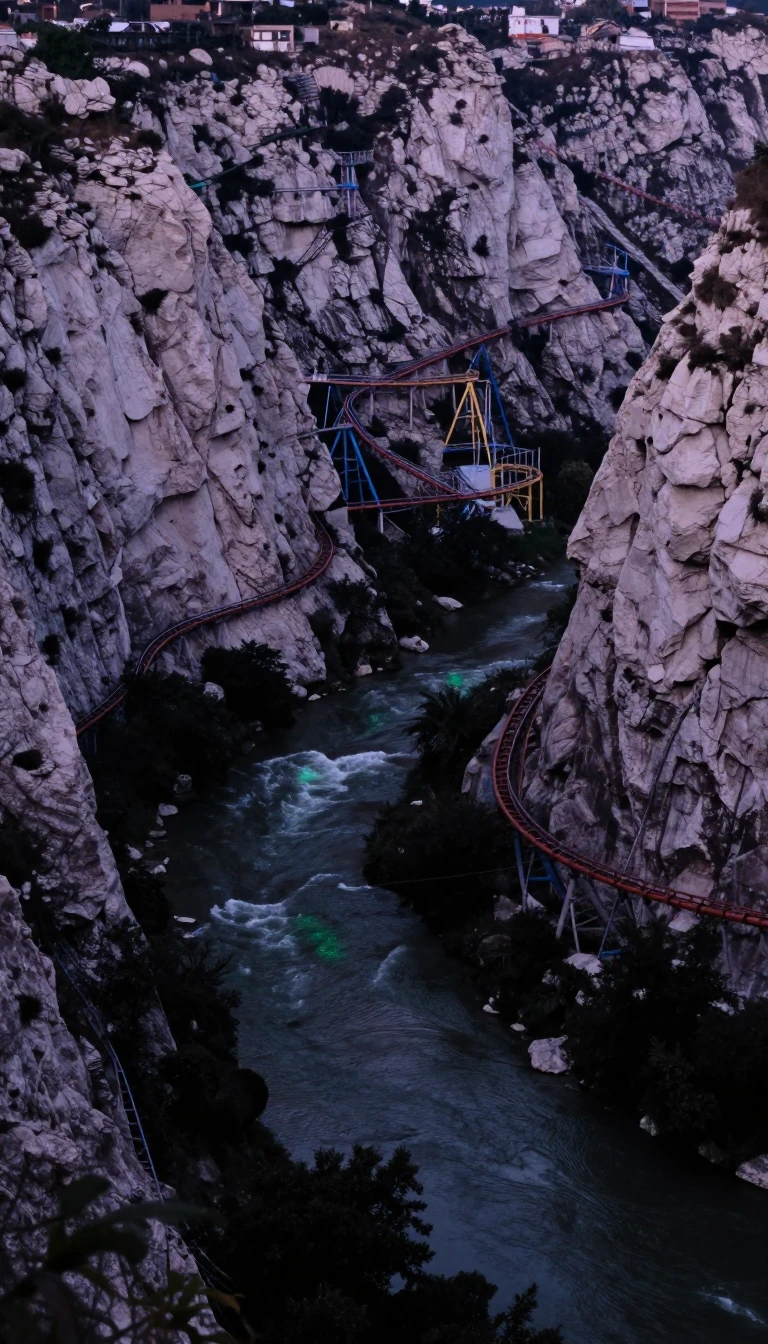 Why the world's most visited theme park is actually built on a second story.Magic Kingdom is not sitting on the ground. To manage logistics, designers built the park atop a massive network of tunnels called utilidors. Because Florida has a high water tabl…
 How a simple Japanese clothing fastener evolved into a miniature masterpiece of intricate sculpture.Traditional Japanese kimono lacked pockets, forcing men to hang personal containers from their sashes. To secure these, they used netsuke: small, functional toggles. Over time, th…
 Why almost every country on Earth uses the same paper, except for North AmericaThe A4 paper you use is a mathematical marvel designed for efficiency. By maintaining a constant aspect ratio of the square root of two, ISO 216 allows you to fold, scale, and pri…
 Passive House is not just a style, but a rigorous, measurable engineering standard.Forget the aesthetic of solar panels or rustic wood. A Passive House is a high-performance machine designed to slash energy consumption by up to 95 percent. By prioritizing airtig…
- Why the unwanted byproduct of metal smelting is actually a master of chemistrySlag is often dismissed as mere industrial waste, but it is the unsung hero of metallurgy. This molten mixture of oxides and impurities does more than just float on top of liquid …
 Why Victorian aristocrats believed drinking salty water could cure everything from scabies to smallpoxLong before modern medicine, Europe’s spa towns were the ultimate wellness retreats. From the Romans to the Victorians, people flocked to natural springs, convinced that mineral-r…
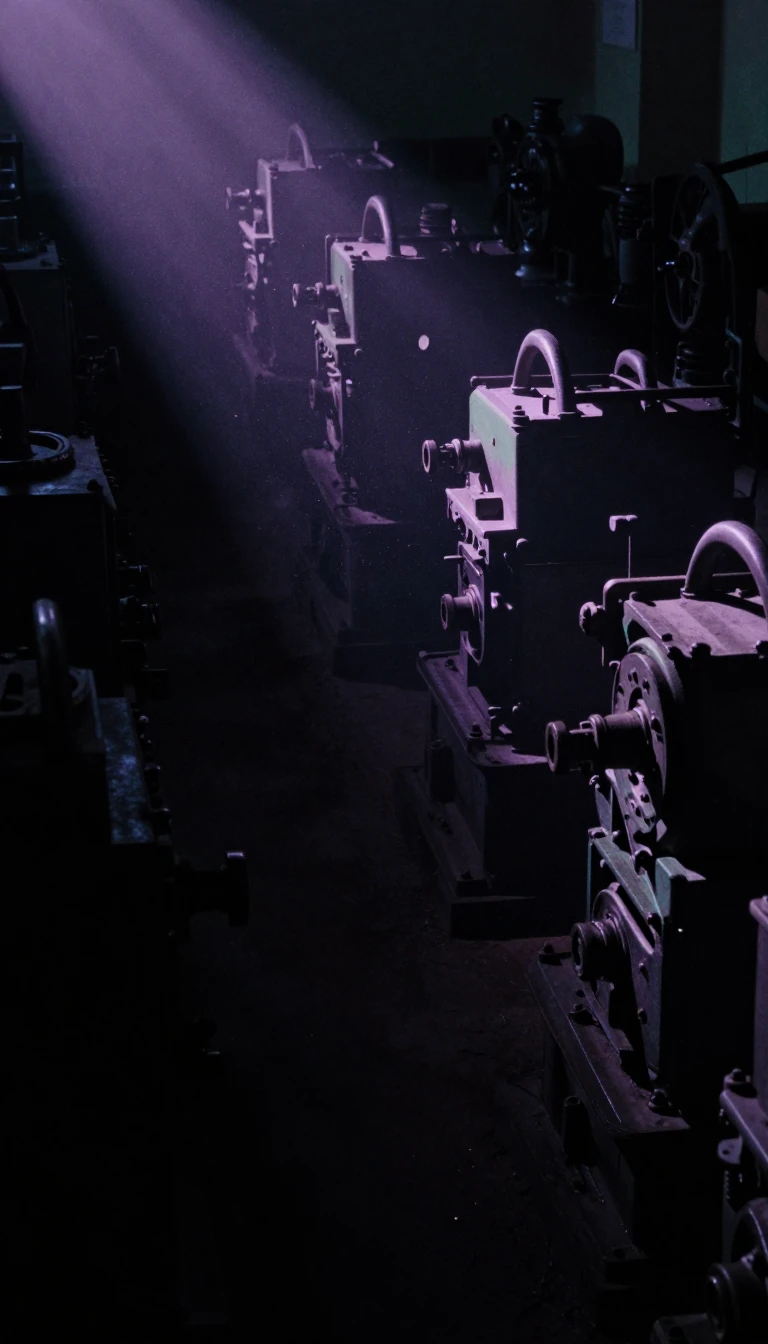 How a Revolutionary War arsenal became the unlikely birthplace of modern mass production.Established by George Washington in 1777, the Springfield Armory was more than a weapons depot. It became a crucible for the Industrial Revolution, pioneering interchangeable part…
 From Toilet Seats to Spitfires: The Turbulent Evolution of Supermarine AviationFounded in 1913, Supermarine evolved from a struggling seaplane startup into the legendary manufacturer of the Spitfire. Before achieving wartime fame, the company survived financ…
 From Jamshedpur to the World: How Tata Steel Built a Global Industrial EmpireFounded in 1907, Tata Steel evolved from a local Indian iron producer into a global steel powerhouse. Despite surviving nationalization attempts and navigating complex internation…
 Why modern cities are increasingly moving their busiest commercial districts deep undergroundFrom ancient Persian refuges to sprawling Japanese shopping hubs, underground cities have evolved from defensive bunkers into sophisticated, climate-controlled commercial networks…
 Is the United States Cyber Command a defensive shield or an offensive digital weapon?Established in 2009, USCYBERCOM has evolved from a defensive network guardian into a full-scale combatant command. It now orchestrates global hunt operations and offensive cyber m…
 How a 19th-century Catholic university became Ireland's largest modern research powerhouseUniversity College Dublin began as a modest 1854 experiment to provide Catholic higher education. Today, it is Ireland's largest university, housing over 38,000 students across a …
 How a medieval shipyard pioneered the assembly line centuries before Henry FordLong before the Industrial Revolution, the Venetian Arsenal functioned as a massive, state-run factory. By standardizing parts and moving ships along a canal to specialized work s…
- Why Warner Brothers Locked Their Most Famous Cartoon Siblings in a Water TowerCreated in 1929, Yakko, Wakko, and Dot were once the stars of nonsensical films that caused chaos across the studio lot. To contain their mischief, executives locked the trio away…
 Why your car's air filter is a masterclass in engineering and physicsAir filters are more than just simple screens. From the labyrinthine oil baths of the early 20th century to the precision-pleated paper elements in modern engines, these devices b…
 Beyond the filter: how air purifiers actually clean the air you breatheAir purifiers range from simple mechanical filters to complex chemical reactors. While HEPA technology remains the gold standard for capturing particles, newer methods like photoc…
 Anodizing turns metal into a canvas of color and a shield against decayAnodizing is an electrolytic process that forces metal to grow a thicker, protective oxide skin. By turning a component into an anode, engineers can boost corrosion resistance, cr…
 From paper pulp to fungal roots: the evolution of the leather substituteArtificial leather is far more than a cheap imitation. From wartime paper-based materials to modern lab-grown mycelium, the industry has spent over a century engineering alternati…
 How a blast of pure oxygen transformed global steel production in twenty minutesMore than half of the world's steel is now produced using the basic oxygen process. By blowing supersonic jets of pure oxygen into molten iron, steelmakers can refine a massive ch…
 The ancient invention that unlocked the power of fire and modern engineeringBellows are more than just a tool for stoking fires. From enabling the smelting of iron in antiquity to protecting the delicate joints of modern buses and powering anesthesia mach…
 Why bending metal is a complex dance of physics, stress, and geometryBending sheet metal seems simple, but it is a sophisticated manufacturing process that must account for material springback, internal stresses, and precise geometric transformatio…
 Before the blast furnace, the bloomery forged the iron that built the ancient world.The bloomery was the earliest furnace capable of smelting iron, producing a porous, slag-filled mass called a bloom. By carefully controlling temperature and airflow, ancient smit…
 From ancient hair styling to shielding jet fuel pipes, braiding is a structural marvel.Braiding is far more than a decorative hairstyle. It is a sophisticated engineering technique that creates durable, flexible, and non-twisting structures. From the 30,000-year-old…
 Brocade: The Ancient Art of Weaving Luxury That Mimics EmbroideryBrocade is a decorative shuttle-woven fabric that creates the illusion of embroidery through a clever supplementary weft technique. Historically reserved for nobility across the g…
 Why carbon fiber is the secret to modern aerospace and high-performance racingCarbon fiber reinforced polymers offer an unmatched strength-to-weight ratio, making them essential for everything from Formula One chassis to the Airbus A350. Yet, these composit…
- Why the term cardboard is actually a misnomer in the world of modern industryWhile we use the word cardboard to describe everything from cereal boxes to shipping containers, professionals in packaging and engineering consider the term obsolete. It is a bro…
 For 7,000 years, humanity has poured molten potential into hollow cavities to shape civilization.Casting is the ancient art of turning liquid into legacy. From 3,200 BC copper frogs to modern industrial components, this manufacturing process enables the creation of complex sh…
- How engineers grow atomically thin materials by turning gas into solid filmChemical vapor deposition is the quiet engine behind modern electronics. By exposing a substrate to volatile precursors that react or decompose on its surface, scientists can grow…
 How a rugged military uniform fabric became the world's most versatile pair of trousersOriginally engineered for the British military in the mid-19th century, chino cloth was designed to be durable, comfortable, and camouflaged. Yet, this utilitarian fabric eventual…
 The unsung workhorse of global industry is a simple loop of rubber and steel.Conveyor belts are the backbone of modern logistics, moving everything from airport luggage to massive loads of coal across continents. While they seem like simple loops, these sy…
 From airport bags to molten metal, conveyor systems are the invisible arteries of industry.Conveyor systems are far more than simple moving belts. They are sophisticated, specialized machines engineered to transport everything from delicate pharmaceuticals to 1,500-degr…
 From ancient clay vessels to modern labs, the crucible has shaped human industry.For millennia, the crucible has been the silent engine of metallurgy and chemistry. From early copper smelting in the Chalcolithic period to the precise gravimetric analysis of mo…
 How the machines that built our modern world turn massive boulders into fine dust.Crushers are the silent giants of industrial progress, transforming raw rock into the building blocks of civilization. By applying immense mechanical force to overcome molecular b…
- Damask: The Ancient Reversible Fabric That Defined Luxury Through Light and ShadowDamask is a reversible, patterned textile defined by its unique ability to play with light. By alternating warp-faced satin weaves with duller ground weaves, it creates soft, shif…