 Intellect Plus
Early modern wars
769 cards. Each one is a 40-second story with a five-minute read behind it. Page 7 of 13.
 The Ottoman flag evolved from ancient symbols and military standards into a modern iconBefore the iconic red star and crescent became the official Ottoman national flag in 1844, the empire relied on a diverse array of military standards and naval ensigns. From horse…
 The sacrilegious union: How France and the Ottoman Empire defied Christendom to surviveIn 1536, France and the Ottoman Empire formed a shocking military alliance that scandalized Europe. By partnering with Suleiman the Magnificent, King Francis I broke the religious…
 How a minor elector traded 8,000 soldiers for a royal crown in 1701Frederick I of Prussia spent his life chasing prestige, maintaining a lavish court and a disproportionately large army to secure his status. By leveraging military support for Aus…
 Why a single year of rule earned Frederick V the title Winter KingFrederick V of the Palatinate was a Calvinist prince who traded his stable German electorate for the Bohemian throne in 1619. His reign lasted barely a year before a crushing mili…
 Five men, one palace, and a desperate attempt to stabilize revolutionary France.After the chaos of the Reign of Terror, France sought a middle path. The Directory, a committee of five executives, was designed to prevent tyranny through divided power and slow,…
 Napoleon’s Egyptian Campaign: A Failed Conquest That Unlocked Ancient SecretsIn 1798, Napoleon Bonaparte launched a daring expedition to Egypt, aiming to cripple British trade and establish French influence in the East. While the military campaign ultimate…
 How a Cambodian King turned colonial rule into a royal crusade for national independenceIn 1863, King Norodom invited France to protect his kingdom from regional rivals. By the 1950s, his successor, Sihanouk, had to navigate a complex web of guerrilla movements, Japa…
 How a desperate Christmas night crossing saved the American Revolution from total collapseFacing expiring enlistments, plummeting morale, and a string of humiliating defeats, George Washington gambled everything on a clandestine winter crossing of the icy Delaware Rive…
 How a 17th-century coalition against France redefined the balance of power in EuropeThe Grand Alliance was a pivotal military coalition formed in 1689 to curb the expansionist ambitions of Louis XIV. By uniting England, the Dutch Republic, and the Habsburg Monarc…
 From elite infantry to romanticized outlaws: the complex legacy of the Balkan hajdukThe term hajduk describes a figure that defies simple categorization. Depending on the era and the observer, they were either disciplined soldiers, heroic freedom fighters, or com…
 How a narrow Danish strait became the world's most profitable toll boothFor centuries, the coastal city of Helsingør controlled the gateway to the Baltic Sea. By taxing every ship passing through the Øresund, the Danish Crown generated immense wealth,…
 How a medieval duke's title became the permanent name for a Balkan regionHerzegovina is not a country, but a region whose name is a linguistic fossil. It derives from the title of a 15th-century nobleman, Stjepan Vukčić Kosača, whose personal designati…
 The Illinois Confederation: A Powerful Indigenous Alliance at the Heart of North AmericaBefore European contact, the Illinois Confederation was a formidable network of Algonquian-speaking tribes controlling the vital Mississippi River corridor. Once a sprawling natio…
 The Storming of the Tuileries: How a Single Day Ended the French MonarchyOn 10 August 1792, armed revolutionaries stormed the Tuileries Palace, forcing King Louis XVI to flee and effectively ending the French monarchy. This violent insurrection, driven…
 How a humble Pure Land movement transformed into a formidable medieval military powerJōdo Shinshū began as a decentralized network of lay followers seeking salvation through faith alone. Yet, by the sixteenth century, this school of Buddhism had become Japan's lar…
 Why German hunters became the elite skirmishers that redefined modern infantry warfareOriginally recruited from the ranks of foresters and gamekeepers, the Jäger evolved from independent scouts into a specialized class of light infantry. Their mastery of the rifle …
 Prince Józef Poniatowski: The Polish aristocrat who fought for Napoleon until his final breathBorn in Vienna to an influential noble family, Prince Józef Poniatowski became a central figure in the Napoleonic Wars. Despite his Austrian upbringing, he dedicated his life to t…
 Why Japanese castles were built for show rather than just for warJapanese castles evolved from simple wooden stockades into grand, palace-like symbols of feudal power. While they were designed to withstand arquebus fire, their most vital role w…
 How the Kingdom of Croatia survived centuries of Ottoman expansion and Habsburg ruleFollowing the 1526 Battle of Mohács, the Croatian nobility elected a Habsburg king, tethering their fate to an empire that would define their borders for centuries. Caught between…
- The Lands of the Crown of Saint Stephen: A Dual Monarchy PowerhouseFrom 1867 to 1918, the Hungarian territories of Austria-Hungary operated as a distinct political entity known as Transleithania. Named for the historic crown of Saint Stephen, thi…
 Why the liberation of Paris almost turned the city into a field of ruinsIn August 1944, Paris stood on the brink of total annihilation. Hitler ordered the city destroyed rather than surrendered, leaving German General Dietrich von Choltitz to rig its …
 For four decades, the heart of North America was a Spanish colonial province.Between 1762 and 1801, Spain governed a vast territory stretching from the Mississippi River to the Rocky Mountains. Far from a mere outpost, this province became a strategic hub …
- Were the American Revolution's Loyalists simply villains, or were they the nation's forgotten mirror?History often paints those who stayed loyal to the British Crown as enemies of American liberty. Yet, this group included diverse populations, from wealthy elites to enslaved peop…
 How a Bengali revolutionary became the architect of the first Communist Party outside Russia.Born into a family of priests, M. N. Roy evolved from a militant anti-colonial conspirator into a global Marxist theorist. His journey spanned continents, from securing German arm…
 Why a tiny Indian town bears a name often misattributed to a French commanderMahe is a picturesque enclave on India's Malabar Coast with a history defined by colonial tug-of-war. While many assume its name honors the French officer Bertrand Francois Mahe d…
 Mariana of Austria: The Queen who navigated a collapsing empire and a dying dynastyAs Queen of Spain and regent for her sickly son, Mariana of Austria faced a perfect storm of economic collapse, constant warfare, and the genetic decline of the Habsburg line. Her…
- The Miami people were not just a tribe, but a powerful, shifting confederacy.The Miami people, an Indigenous group from the Northeastern Woodlands, navigated centuries of displacement and war to protect their ancestral lands. From their capital at Kekionga…
 How Mughal Emperors Built an Empire of Stone to Project Absolute Imperial PowerMughal architecture was more than just aesthetic; it was a deliberate, high-stakes display of sovereignty. By blending Persian, Central Asian, and indigenous Indian traditions, th…
 How a single Persian invasion permanently shattered the power of the Mughal EmpireIn 1739, Nader Shah of Iran sacked Delhi, seizing the legendary Peacock Throne and enough treasure to abolish taxes in Persia for three years. This brutal campaign did more than j…
 From Revolutionary Assembly to Political Party Ritual: The Evolution of the National ConventionThe term National Convention evokes two distinct histories. In modern American politics, it is a structured party ritual to confirm presidential nominees. In 1792 France, it was a…
 New Sweden was a brief, ambitious attempt to bypass Dutch and English colonial tradeDuring the seventeenth century, Sweden briefly became a great power, launching a colonial project in the Delaware Valley. Led by a former Dutch governor, the colony of New Sweden …
 The Nogai Horde: A Nomadic Empire That Defied Dynastic Rule and Built a Slave EconomyThe Nogai Horde was a formidable confederation of pastoral nomads who dominated the Pontic-Caspian steppe for over a century. Unlike their neighbors, they rejected the authority o…
 Nomadic empires were not just wandering tribes, but complex states that reshaped global history.Often dismissed as mere raiders, nomadic empires were sophisticated political entities that bridged East and West. From the Xiongnu to the Dzungars, these horse-riding powers reli…
 Why did a 19th-century land dispute in Canada escalate into a violent armed insurgency?In 1885, the North-West Rebellion pitted the Canadian government against the Métis and their Indigenous allies. Triggered by land insecurity and the disappearance of the bison, th…
- How a Swedish occupation permanently demoted Olomouc from Moravia's capital to a secondary city.Once the primary power center of Moravia, Olomouc lost its status after a devastating eight-year Swedish occupation during the Thirty Years' War. This military catastrophe left th…
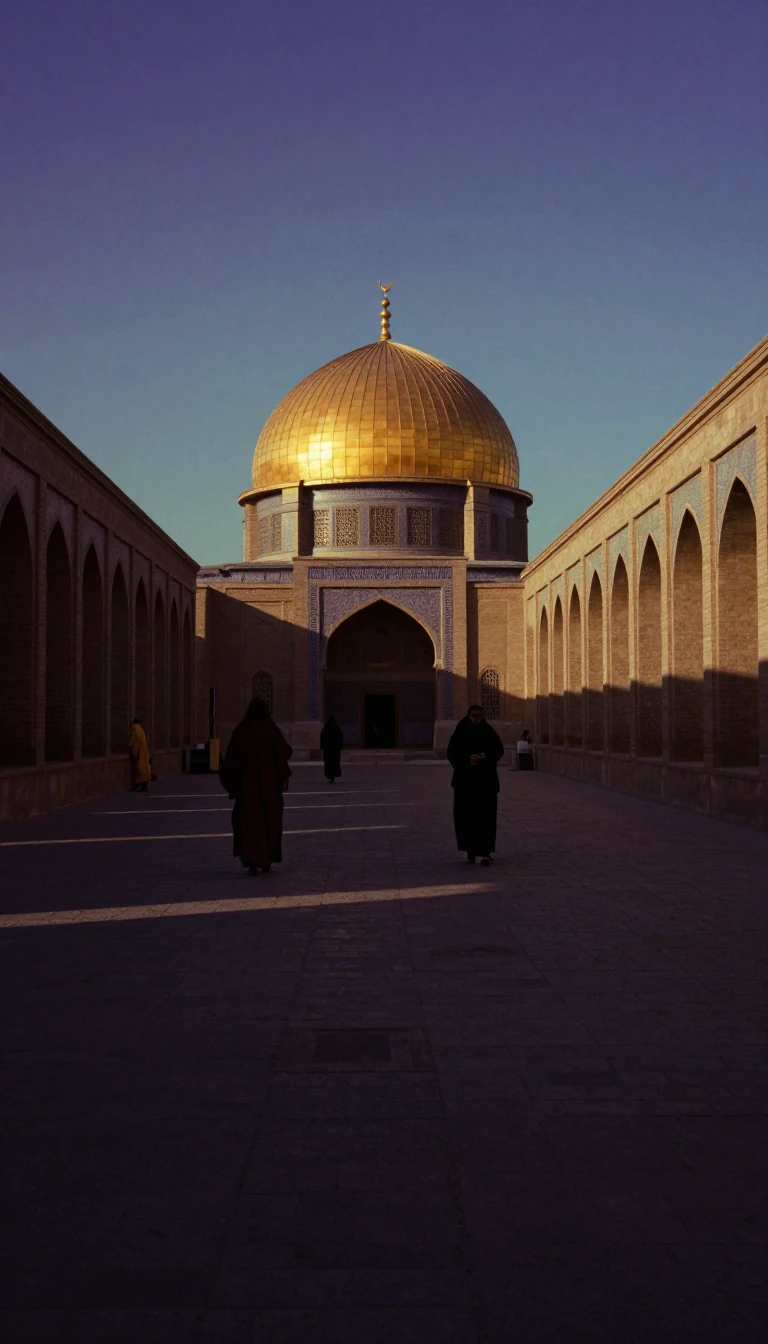 The teenage Sultan who tried to dismantle the Janissaries and paid with his lifeOsman II ascended the Ottoman throne at fourteen, only to be murdered four years later in a historic coup. His radical plan to replace the powerful Janissary corps with a loyal, m…
 How a Vietnamese-backed regime rebuilt a nation from the ashes of Khmer Rouge ruleAfter the Khmer Rouge destroyed Cambodia’s institutions and intelligentsia, the People’s Republic of Kampuchea emerged in 1979. Supported by Vietnam and the Soviet Union, this sat…
- Neutral Persia became a devastating battlefield for global empires during the First World War.Though Persia declared neutrality in 1914, its strategic oil reserves and location between British India and Russia made it a primary theater of war. Over two million civilians pe…
 The wooden-legged governor who built the foundations of modern New York CityBefore New York was a global metropolis, it was a struggling Dutch outpost led by a man with a silver-studded wooden leg. Petrus Stuyvesant arrived in 1647 to transform a neglecte…
 How a small New Hampshire city became the unlikely stage for global peace treatiesPortsmouth, New Hampshire, is far more than a scenic coastal destination. Beyond its historic architecture and vibrant dining scene, this harbor city has served as a critical nexu…
 The post–Cold War era marked a shift from bipolar tension to uncertain global landscapes.When the Soviet Union dissolved by 1991, the world entered a period defined by the end of binary ideological conflict. While this transition promised stabilization and democratic …
 How a 34-year-old bakery worker became the world's youngest female head of government.When Sanna Marin assumed the Finnish premiership in 2019, she shattered global age records. Her tenure was defined by a rapid-fire succession of crises: a global pandemic, a major…
- How a medieval principality became the engine of a modern autonomous Spanish regionOnce a powerful principality anchoring the Crown of Aragon, Catalonia’s history is defined by its long struggle for autonomy. From its origins as a Frankish buffer zone to its rol…
 How a tiny minority used law to dominate Ireland for over two centuriesBetween the 17th and early 20th centuries, a small Anglo-Irish elite held near-total control over Ireland. By enforcing the Penal Laws, this ruling class systematically excluded t…
 How a failed royal land grant became a sprawling, utopian English colonial experimentIn 1663, King Charles II granted eight noblemen a massive territory stretching from the Atlantic to the Pacific. Named Carolina to honor his father, this province was designed as …
 How a self-described contrarian became a leading voice in American conservative thoughtBorn into a liberal family, Ross Douthat defined his identity through a mild rebellion against his surroundings. From his early days editing a conservative campus newspaper to his…
 Why the 1919 Rowlatt Act triggered the end of British rule in IndiaKnown as the Black Act, this colonial law allowed the British to imprison Indians without trial for up to two years. It was designed to crush nationalist dissent, but instead, it …
 A Caribbean island's violent past and its transformation into a protected national parkSaint John, the smallest of the three main U.S. Virgin Islands, holds a complex history of colonial sugar plantations, a brutal 1733 slave insurrection, and a strategic purchase b…
- In 1792, Paris descended into a five-day frenzy of state-sanctioned prison executions.As Prussian armies marched on Paris, fear of a prison-based counter-revolutionary conspiracy ignited a wave of violence. Between September 2 and 6, 1792, thousands of prisoners we…
 The Siege of Chittorgarh: How Akbar’s Brutal Victory Reshaped the Mughal EmpireIn 1567, Emperor Akbar launched a massive campaign against the Sisodia capital of Chittor. What began as a strategic move to secure trade routes to Gujarat and the Deccan devolved…
- Why do six 18-pounder cannons stand watch on a quiet English seaside green?On the grassy slopes of Southwold, six heavy cannons overlook the North Sea. These relics are not local defenses but captured trophies from the 1745 Jacobite rising. They serve as…
 How a 20th-century colonial force became the elite backbone of the modern Spanish militaryRaised in 1920 to replace ineffective conscripts in North Africa, the Spanish Legion was modeled on the French Foreign Legion. Though it began as a colonial fighting force, it evo…
 The desert territory that became a global flashpoint for sovereignty and phosphate wealthWestern Sahara, a vast desert region on Africa's Atlantic coast, remains a geopolitical puzzle. Once a Spanish province, its transition to independence triggered decades of guerri…
 The Streltsy were Russia's first standing army, until they became a political liability.Established by Ivan the Terrible in the 16th century, the Streltsy were elite firearm infantry who guarded the Kremlin and fought in major wars. Yet, by the late 1600s, this once-…
 How a Swedish Baltic dominion survived two centuries of European power strugglesFrom 1630 to 1815, Sweden held a strategic foothold on the southern Baltic coast. This dominion, Swedish Pomerania, remained a complex political anomaly—a territory governed by Sw…
 How a ten-year-old boy survived a civil war to rule Safavid Iran for decadesAscending the throne at age ten, Tahmasp I spent his early years as a pawn in a brutal power struggle between rival tribal leaders. He eventually broke free, transforming the Safa…
- How the Spanish Tercio dominated European battlefields for over a century and a halfThe tercio was the elite military unit of the Spanish Empire, pioneering a lethal combination of pike and shot. By blending professional infantry with innovative, flexible formati…
- How did Russia expand from a centralized state to a vast, hybrid empire?Beginning in the 16th century, Russia transformed through military conquest and political union. From its consolidation under Ivan III to the sprawling reach of the Russian Empire…
 Was the British Commander-in-Chief's Wife the Secret Source of the American Revolution's First Shots?General Thomas Gage, the British administrator tasked with crushing colonial dissent, faced a catastrophic intelligence leak before the Battles of Lexington and Concord. While he …
 How a single Belgian city became the only one ever ruled by EnglandTournai, a historic hub in modern Belgium, holds a unique place in history: it is the only Belgian city to have been governed by England. Captured by Henry VIII in 1513, the city …