 Intellect Plus
Wars & Conflicts
5,856 cards. Each one is a 40-second story with a five-minute read behind it. Page 46 of 98.
Subtopics: 19th-century wars · American Civil War · Ancient & biblical wars · Castles & fortifications · Civil wars · Codebreaking & espionage · Cold War · D-Day & Normandy · Early modern wars · Knights & chivalry · Korean & Vietnam wars · Medieval wars · Military aviation · Military strategy & leaders · Military technology · Naval warfare · Other wars & battles · Ottoman wars · Pacific War · Peace treaties & aftermath · Roman wars · Submarines · Tanks & armoured vehicles · The Crusades · UK & Ireland: wars · Uniforms & medals · Viking raids & wars · War and military · War memorials & museums · Wars since 1945 · Western Front (WWI) · World War I · World War II · World wars era
 Beachy Head is a dramatic chalk landmark with a history of war and tragedyRising 162 meters above the English Channel, this East Sussex headland is Britain's highest chalk sea cliff. Beyond its geological origins in the Late Cretaceous epoch, the site h…
 How Belgium’s military evolved from a neutral buffer state to a global peacekeeping force.Belgium once relied on the hope that international neutrality would protect it from war. After two devastating occupations in the 20th century, the nation abandoned this defensive…
 The Huey: How a Utility Helicopter Became the Iconic Symbol of the Vietnam WarThe Bell UH-1 Iroquois, universally known as the Huey, transformed military aviation as the first turbine-powered helicopter in U.S. service. From its 1950s origins as a medical e…
 The English queen who never visited England and ruled a French city insteadBerengaria of Navarre married Richard the Lionheart in 1191, yet she never set foot in her own kingdom. Instead of a traditional royal life, she spent decades fighting for her fin…
 How a failed visa application launched a career of thirty million historical novelsBernard Cornwell, rejected by the British military due to poor eyesight, moved to the United States in 1979. Unable to secure a work permit, he turned to writing to support himsel…
 Before it was Northumbria, a mysterious kingdom called Bernicia dominated the northern landscape.Bernicia was a 6th-century Anglo-Saxon kingdom that stretched from the Forth to the Tees. Its origins are deeply intertwined with the British past, leaving behind a legacy of hill…
 Why Italy's elite Bersaglieri marksmen run everywhere, even when they are not in battle.Created in 1836 to overcome the Kingdom of Sardinia's limited cavalry, the Bersaglieri became a legendary high-mobility infantry force. Known for their wide-brimmed hats adorned w…
 The Physician Who Built Modern West Bengal From the Ashes of PartitionBidhan Chandra Roy was more than a doctor; he was the architect of modern West Bengal. After partition left the state reeling from violence and displacement, Roy transformed the l…
 From Imperial ambition to modern drone warfare: the turbulent history of the Black Sea FleetFounded by Prince Potemkin in 1783, the Black Sea Fleet has served as a cornerstone of Russian power for centuries. Yet, its journey from imperial expansion to the current Russo-U…
 A foreign queen who ruled France with an iron fist and a white palfreyBlanche of Castile was a formidable regent who navigated the treacherous politics of medieval Europe. From invading England to suppressing noble rebellions and managing the French…
 How a landless Norman mercenary became the most cunning prince of the First Crusade.Bohemond I was a master of war and diplomacy who rose from being a disinherited son to the ruler of Antioch. A central figure in the First Crusade, he spent decades locked in a bi…
 Was the defenseless Polish town of Wieluń the true opening act of World War II?On September 1, 1939, German Luftwaffe bombers struck the undefended Polish town of Wieluń, hours before the traditional start of the war. With no military garrison or anti-air de…
 Why the American Civil War was won and lost in the border statesThe American Civil War was not just a conflict between North and South. Four slave states—Delaware, Maryland, Kentucky, and Missouri—remained in the Union, creating a volatile, di…
 How a secret diplomatic gamble in 1908 ignited the fuse for World War IWhen Austria-Hungary unilaterally seized Bosnia and Herzegovina in 1908, it triggered a massive international backlash. The move was meant to be a swift diplomatic victory, but in…
 The 1901 Boxer Protocol forced China to pay a massive indemnity for decades.Signed after the Boxer Rebellion, the Boxer Protocol was a humiliating diplomatic agreement between the Qing Empire and an Eight-Nation Alliance. It imposed crushing financial pen…
 From factory floor to national treasure: the improbable career of Bradley WalshBefore he became a fixture of British television, Bradley Walsh was an apprentice at an aircraft engine plant and a professional footballer. His journey from the factory floor to …
 How the Brazilian Army transitioned from colonial defense to a powerful political forceThe Brazilian Army began as a collection of colonial forces but evolved into the most politically influential branch of the nation's military. By filling institutional gaps and ac…
 How a peat boat and a Polish division shaped a strategic Dutch fortress cityBreda was once a coveted military prize, changing hands through sieges, ruses, and royal marriages. From the daring 1590 Peat Ship infiltration to its 1944 liberation by Polish fo…
 How a policy of limited liability left Britain unprepared for the Second World WarWhen war began in 1939, the British Army was ill-equipped for a major European conflict. Decades of budget cuts and a strategic doctrine of limited liability meant the British Exp…
 The British Iron Age was defined not by war, but by deep continental integration.Far from an isolated backwater, Iron Age Britain was a sophisticated network of trade, agriculture, and religious practice. While hillforts and chariot warfare capture the imagina…
 How the British Empire’s collapse forced a total rewrite of national identityFor centuries, being British meant owing allegiance to a monarch. As the Empire dissolved into independent republics, this feudal loyalty became obsolete. The British Nationality …
 Why the British once dismissed their own African protectorate as a butcher's shop.British Somaliland was never a jewel in the imperial crown. Viewed primarily as a source of meat for the garrison at Aden, the region was often neglected and resource-barren. Yet,…
 The Bronze Age did not just bring better tools; it invented the professional warrior.While earlier eras saw violence, the Bronze Age fundamentally changed human conflict by creating the sword. For the first time, humanity possessed an object designed exclusively f…
 Why were African American cavalry regiments nicknamed Buffalo Soldiers by the Plains Indians?Formed in 1866, the Buffalo Soldiers were segregated U.S. Army units that patrolled the American frontier. While their courage and discipline earned them the lowest desertion rate…
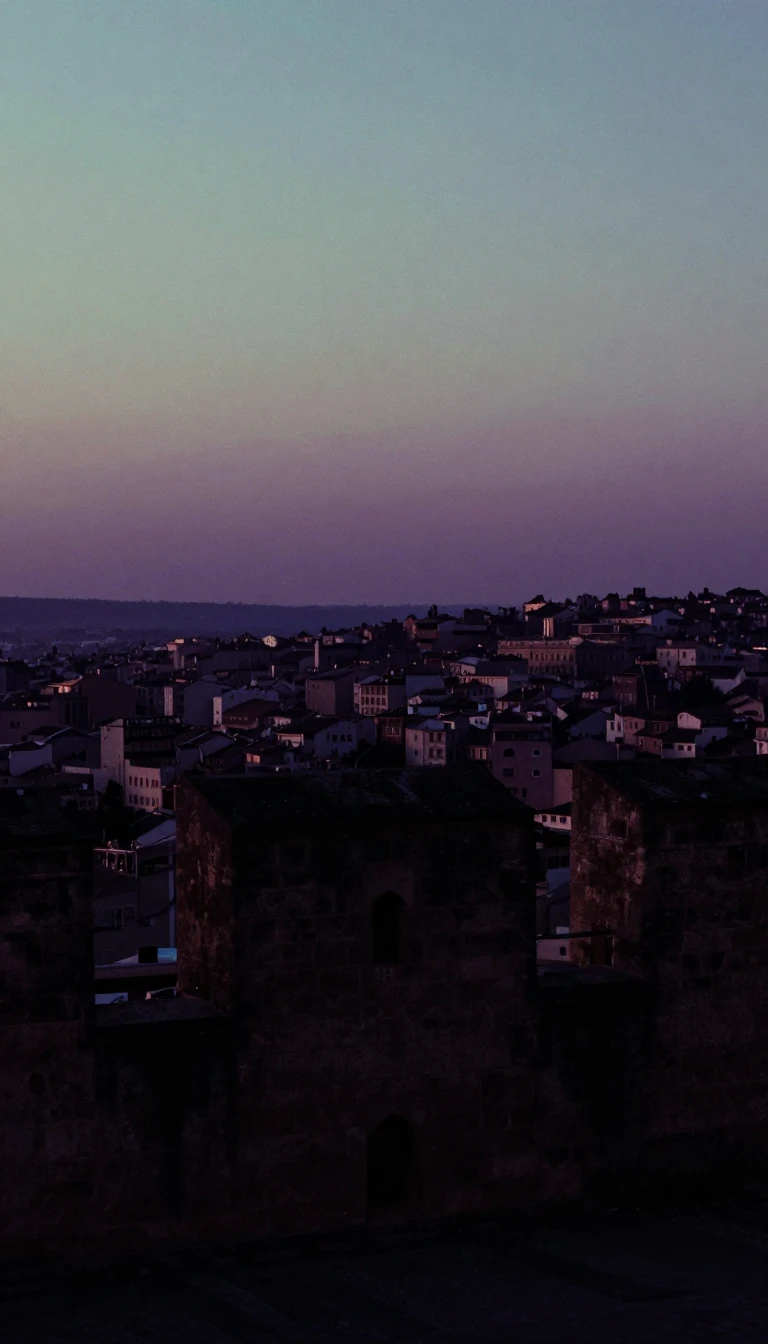 How a rugged central Indian landscape became a crucible for centuries of shifting powerBundelkhand, a region defined by steep hills and deep ravines, served as a natural fortress for generations of warriors. From the rise of the Chandela dynasty to the eventual arri…
 From coal storage to nuclear survival: the surprising evolution of the modern bunkerOriginally a Scots term for a simple bench or coal bin, the bunker transformed into a critical military fortification during the World Wars. Today, these reinforced structures ser…
 Was the Burgundian State a real country or just a collection of princely estates?The Burgundian State was a 15th-century powerhouse that nearly became a kingdom, yet historians still debate if it was a true state at all. Ruled by the House of Valois-Burgundy, …
 How to legally conduct a burial at sea while ensuring remains sink permanentlyBurial at sea is a regulated practice governed by federal law. To ensure compliance with environmental standards, specific procedures must be followed to guarantee that remains re…
 How the Byzantine army evolved from Roman legions to a sophisticated, mercenary-heavy forceFor centuries, the Byzantine army stood as the most effective military force in western Eurasia. By blending Roman discipline with innovative cavalry tactics and foreign expertise…
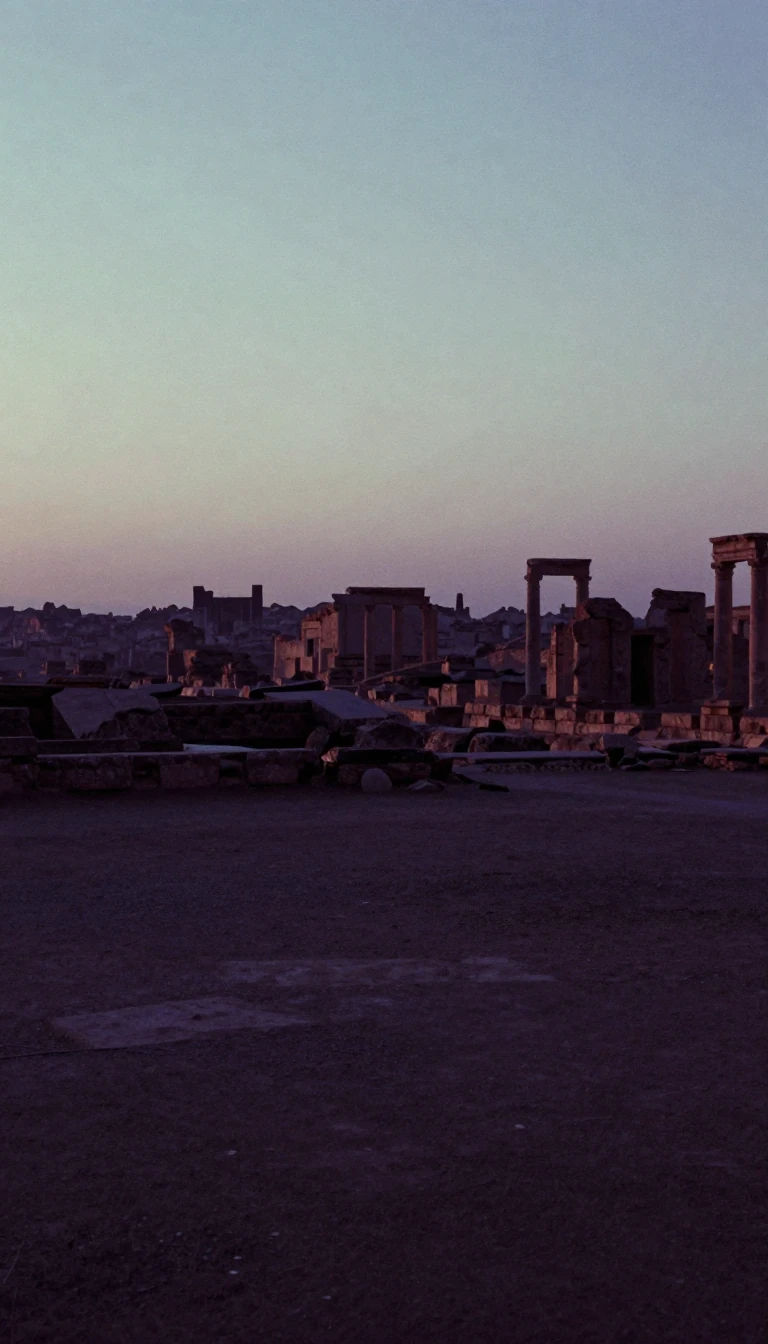 The woman who tried to save Caesar from his fate on the Ides of MarchCalpurnia, the final wife of Julius Caesar, remains a figure of quiet devotion amidst the chaos of Roman politics. Despite her husband's notorious infidelities, she stood by him u…
- Canada entered World War II as a limited partner and emerged as a global power.Canada began the war intending to provide only supplies and training, hoping to avoid the divisive conscription of the past. Yet, the fall of France forced a total mobilization. B…
 When a Senator’s brutal beating in the chamber signaled the end of reasoned political discourse.On May 22, 1856, Representative Preston Brooks walked into the U.S. Senate and beat Senator Charles Sumner with a gold-headed cane until it shattered. The assault, fueled by deep-…
 The engineering secret behind soaring stadiums and faster aircraft is the humble cantilever.A cantilever is a structural element fixed at one end and unsupported at the other. By mastering torque and rotational equilibrium, engineers use this design to create everything …
 Captain Hook: From J. M. Barrie’s Literary Villain to a Global Pop Culture IconCaptain Hook began as a minor addition to J. M. Barrie’s 1904 play, Peter Pan. Originally a placeholder for scene changes, the pirate captain evolved into a complex, upper-class a…
- Was Captain Nemo originally a Polish rebel fighting against the Russian Empire?Jules Verne’s iconic submarine commander was not always the Indian prince we know today. His creator originally envisioned him as a Polish nobleman seeking vengeance for his famil…
 Why a fictional pirate captain once successfully sued two major British newspapers for libelCaptain Horatio Pugwash is a beloved, cowardly pirate who sails the Black Pig. Despite his fame, he became the center of a bizarre legal battle in 1991. Newspapers claimed his sho…
- Why the world's most iconic rifles are actually just shortened, lighter carbinesOriginally designed for cavalrymen struggling to reload on horseback, the carbine has evolved from a niche tool into the standard-issue weapon for modern infantry. By trading long…
 From fence-cutting activist to the first Green Member of Parliament in British historyCaroline Lucas spent her youth cutting fences at nuclear bases and protesting for peace. She eventually traded direct action for the halls of Westminster, becoming the Green Party…
 Why the U.S. Navy rebranded its most powerful naval force from battle to strike.A carrier strike group is a mobile, flexible powerhouse of roughly 7,500 personnel. While these formations trace their origins to World War II, the shift from battle to strike in …
 How a simple spelling error named a city after a fallen soldierCasper, Wyoming, is a hub of oil and energy history, but its name is a mistake. Originally established near a military outpost named for Lieutenant Caspar Collins, the city was of…
 From Imperial Tomb to Papal Fortress: The Violent Evolution of Rome's Castel Sant'AngeloOriginally commissioned as a grand mausoleum for Emperor Hadrian, this iconic Roman rotunda transformed into a fortified papal refuge and prison. Its history is marked by the dese…
 How a small mountain district became the heart of a global empireCastile, meaning land of castles, began as a minor frontier territory in the 9th century. Through centuries of military expansion and strategic dynastic unions, this central regio…
 The 2026 Iran war has claimed thousands of lives across the Middle EastThe 2026 conflict has triggered a widespread humanitarian toll, with thousands of fatalities and tens of thousands of injuries reported across Iran, Lebanon, Israel, and several G…
 How Catherine Tate transformed from a struggling actress into a British comedy iconBorn Catherine Ford, this English performer rose to fame through her sharp character work and iconic catchphrases. From the halls of drama school to the TARDIS, she has navigated …
 How Cem Özdemir Became Germany's First Minister-President of Turkish HeritageBorn to guest workers in the Black Forest, Cem Özdemir rose from early childhood educator to a central figure in German politics. As a leader of the Green Party and a former feder…
 How India’s industrial guard force evolved into a global security and disaster management powerhouseBorn in 1969 to protect state-owned factories, the Central Industrial Security Force has transformed into a massive paramilitary organization. Today, it secures everything from nu…
 India's national gendarmerie: How a colonial-era force became a modern multi-dimensional security giantBorn in 1939 to preserve order in princely states, the Central Reserve Police Force has evolved into India's largest central armed police organization. With over 300,000 personnel…
 How a Greek peninsula became a pivotal theater for ancient and modern warfareChalkidiki is more than a scenic Aegean destination. Its three-fingered geography has served as a strategic prize for millennia, from the Peloponnesian War to the Greek War of Ind…
 How a frozen sea allowed a Swedish king to march his army into DenmarkIn 1658, Charles X Gustav of Sweden achieved the impossible. Facing a stalemate in his war against Denmark, he gambled on a brutal winter. He marched his entire army across the fr…
 Was the Swedish King Charles XIII a mere puppet of his own advisors?Charles XIII spent his life as a pawn in the games of others, from his brother Gustav III to his own regents. Often described as easily influenced and lacking energy, he reigned d…
 Why modern chemical warfare relies on nerve agents that paralyze the human nervous systemChemical weapons are designed to kill, injure, or incapacitate through toxic chemical compounds. While riot-control agents like tear gas serve domestic purposes, the most lethal m…
 The medieval chevauchée was a systematic campaign of terror designed to ruin enemy economies.Before modern scorched earth, there was the chevauchée. This brutal medieval raiding tactic aimed to destroy crops, burn villages, and discredit governments by proving they could …
- The Chief of the Army Staff is India's highest-ranking active-duty military officer.Since 1955, the Chief of the Army Staff has led the Indian Army, serving as a vital advisor to the nation's leadership. While the role is typically held by a four-star general, it…
- The Chilean peso’s journey from hyperinflationary collapse to modern, resilient currencyBorn from the ashes of 1970s hyperinflation, the Chilean peso has survived political upheaval, economic crises, and the digital age. From its origins as a replacement for the fail…
 How a royal hunting lodge became the unlikely pivot point of English history.Chippenham began as a strategic Anglo-Saxon royal estate, but its location on the River Avon made it a frequent target for conflict. From Viking sieges to Civil War trade blockade…
 Chlothar I spent his life reuniting a kingdom by outliving his own brothersAs the youngest son of Clovis I, Chlothar I inherited a fractured Frankish realm in 511. Through decades of relentless territorial expansion, strategic marriages, and the simple e…
 The Christmas Truce: When Soldiers Defied Their Commanders for a Moment of PeaceIn December 1914, roughly 100,000 soldiers along the Western Front spontaneously laid down their arms. Amidst the brutal stalemate of the First World War, enemies crossed into no …
- The clandestine global network of CIA black sites operated beyond all legal frameworksFollowing the September 11 attacks, the CIA established a secret network of extrajudicial detention centers known as black sites. These facilities, spanning dozens of countries, w…
 How a medieval English town spent centuries fighting its own powerful abbey for independenceCirencester was once a major Roman hub, but its medieval history was defined by a bitter, centuries-long struggle between townspeople and the local abbey. Despite securing royal c…
 Cisalpine Gaul: The Celtic Heartland That Became the Engine of the Roman EmpireBefore it was the bedrock of Roman Italy, the Po Valley was a vibrant Celtic frontier. Known as Gallia Cisalpina, this region saw waves of migration, the rise of unique cultures, …