 Intellect Plus
Business and economics
547 cards. Each one is a 40-second story with a five-minute read behind it. Page 2 of 10.
 Is all interest forbidden in Islam, or just the exploitative kind?The term riba, often translated as usury, is the cornerstone of a $2 trillion Islamic banking industry. While widely condemned, scholars have debated its precise definition for ce…
 Can a nation balance ruthless market competition with a robust, compassionate welfare state?The social market economy, or Rhine capitalism, emerged in post-war Germany as a deliberate middle path. It rejects the extremes of laissez-faire capitalism and state-planned soci…
 Is China's economy socialist, capitalist, or something else entirely?China defines its economic model as a socialist market economy, where the state maintains control while markets drive growth. Yet, scholars debate whether this is a genuine evolut…
 Can small, tax-free zones transform a nation's entire economic trajectory?Special economic zones are geographically defined areas where standard national laws are suspended to lure foreign capital. By offering tax breaks and streamlined regulations, the…
 Are speculators the villains of the economy or its essential, stabilizing heroes?Speculation is often blamed for financial crises, yet these traders provide vital liquidity and price discovery. By betting on future movements, they help farmers hedge risks and …
 Supply chain management is the invisible architecture that keeps the modern world moving forward.Supply chain management is more than just logistics; it is the strategic coordination of every movement from raw material to final consumer. By integrating complex networks of par…
 Is the fear of machines replacing human labor a permanent feature of history?Technological unemployment, the displacement of workers by innovation, has haunted societies since antiquity. From ancient loom protests to modern artificial intelligence, the deb…
 What was the actual value of the thirty pieces of silver paid to Judas?The thirty pieces of silver paid to Judas Iscariot for betraying Jesus have become a universal symbol for selling out. But beyond the metaphor, what were these coins? Scholars sug…
 Why American antitrust law aims to protect the competitive process rather than specific competitorsSince 1890, the United States has relied on a trio of federal statutes to prevent monopolies and ensure markets remain open. By focusing on consumer benefits and economic efficien…
- The United States Mint has been crafting the nation's physical currency since 1792.Beyond the coins in your pocket, the United States Mint operates a massive, self-sustaining numismatic engine. From the historic Philadelphia facility to modern bullion production…
- Venmo turns private financial transactions into a public social feed by default.Born from a failed attempt to buy an MP3 at a jazz show, Venmo transformed peer-to-peer payments into a social network. While it simplifies splitting dinner bills, its default pub…
 Why you do not need your own server to run a website todayBefore the mid-1990s, hosting a website required owning and maintaining your own physical hardware. Today, web hosting services provide the infrastructure, allowing anyone to publ…
 A colonial-era currency remains the primary financial anchor for eight West African nations today.Born in 1945, the West African CFA franc links eight nations to a shared monetary system. While it provides stability, it remains a lightning rod for debate regarding economic sov…
- Is your economy working for you or just wasting its potential?Allocative efficiency is the economic gold standard where production perfectly matches what people actually want. When the cost of making one more unit equals the value consumers …
 Why the balance of payments is the ultimate scorecard for a nation's global health.A country's balance of payments tracks every economic transaction between its residents and the rest of the world. Far from just a dry accounting exercise, this ledger reveals how…
 Why smaller production runs can be a smarter strategy than massive, continuous manufacturing linesBatch production prioritizes precision over sheer volume. By manufacturing goods in specific, controlled groups rather than continuous streams, companies gain the flexibility to m…
 Are economic booms and busts truly cyclic, or just complex, unpredictable fluctuations?We often speak of the business cycle as a predictable, wavelike rhythm of prosperity and crisis. Yet, historical data suggests these movements are rarely regular. From short-term …
 Why the Chicago School believes free markets are the ultimate arbiter of human behaviorFounded in the 1930s, the Chicago school of economics transformed how we view everything from antitrust law to marriage. By assuming humans are rational, self-interested actors, t…
 How eighteenth-century thinkers transformed the pursuit of private profit into a national engineClassical economics emerged in late 18th-century Britain, challenging the prevailing mercantilist belief that national wealth was merely a stockpile of gold. Instead, thinkers lik…
 Why the market treats a bar of gold and a bushel of wheat as identical.In economics, a commodity is a good defined by its fungibility: the market views every unit as equivalent, regardless of who produced it. From crude oil to computer memory, these …
- Why every single person is a vital engine in the global capitalist machineWe are all consumers, yet our role in the economy is far more than just buying goods. From the fundamental demand that drives production to the modern shift toward becoming prosum…
 Why do we buy what we buy? The science of the consumer black box.Consumer behaviour is more than just shopping. It is a complex social science blending psychology, economics, and data analytics to decode why we choose, use, and dispose of goods…
 Why your spending habits might not be as rational as economists once assumedMainstream economics treats consumption as the ultimate goal of economic activity, assuming we make choices based on informed, rational assessments of our futures. Yet, this model…
 Is your next big business move actually worth the effort and resources required?Cost-benefit analysis is the data-driven process of weighing projected gains against total costs to determine if a project makes sense. By converting intangible factors into a com…
- Why the classic U-shaped cost curve might be a myth in the real worldEconomic textbooks teach that production costs follow a neat U-shaped curve, with efficiency peaking at a specific output level. Yet, empirical evidence suggests this model rarely…
- Why your salary increase might not actually keep up with the cost of livingThe cost of living is more than just a grocery bill; it is a complex measure of maintaining a specific lifestyle. While salary adjustments aim to protect your purchasing power, th…
- Why taxes and monopolies often destroy value that no one ever gets to keep.Deadweight loss is the economic value that simply vanishes when a market fails to reach its optimal equilibrium. Whether caused by government taxes or monopoly pricing, this lost …
 How do societies decide who gets what share of the national economic pie?Economic distribution is the study of how total output, income, and wealth are divided among individuals and the factors of production. From the 19th-century insights of Adam Smit…
 Why breaking work into tiny, repetitive tasks changed the course of human historyThe division of labour is often seen as a modern industrial invention, but its roots run deep into ancient history. By splitting complex processes into simple, specialized steps, …
 Why do markets periodically detach from reality, inflating assets until they inevitably collapse?Economic bubbles occur when asset prices soar far beyond their intrinsic value, driven by optimism, easy credit, or herd behavior. While often identified only after they burst, th…
 Economic surplus reveals the hidden gains captured by buyers and sellers in every transaction.Every time you buy a coffee or sell a service, you likely participate in an economic surplus. This concept measures the difference between the price you pay and the maximum you wo…
- How did Argentina fall from being a global economic titan to a volatile market?Once rivaling the prosperity of Canada and France, Argentina’s economic journey is a century-long saga of boom and bust. From a world-leading agricultural powerhouse to a nation g…
 From ancient muslin trade to modern garment powerhouse, Bangladesh is redefining its economic identity.Once a global hub for silk and muslin, Bangladesh has navigated a complex path from socialist nationalization to a market-oriented economy. Today, it stands as a leading garment e…
 Brazil's economic journey: From colonial commodity cycles to a modern industrial giantBrazil has evolved from a colonial exporter of sugar and gold into a global powerhouse of mining, manufacturing, and services. Yet, this transformation remains marked by a history…
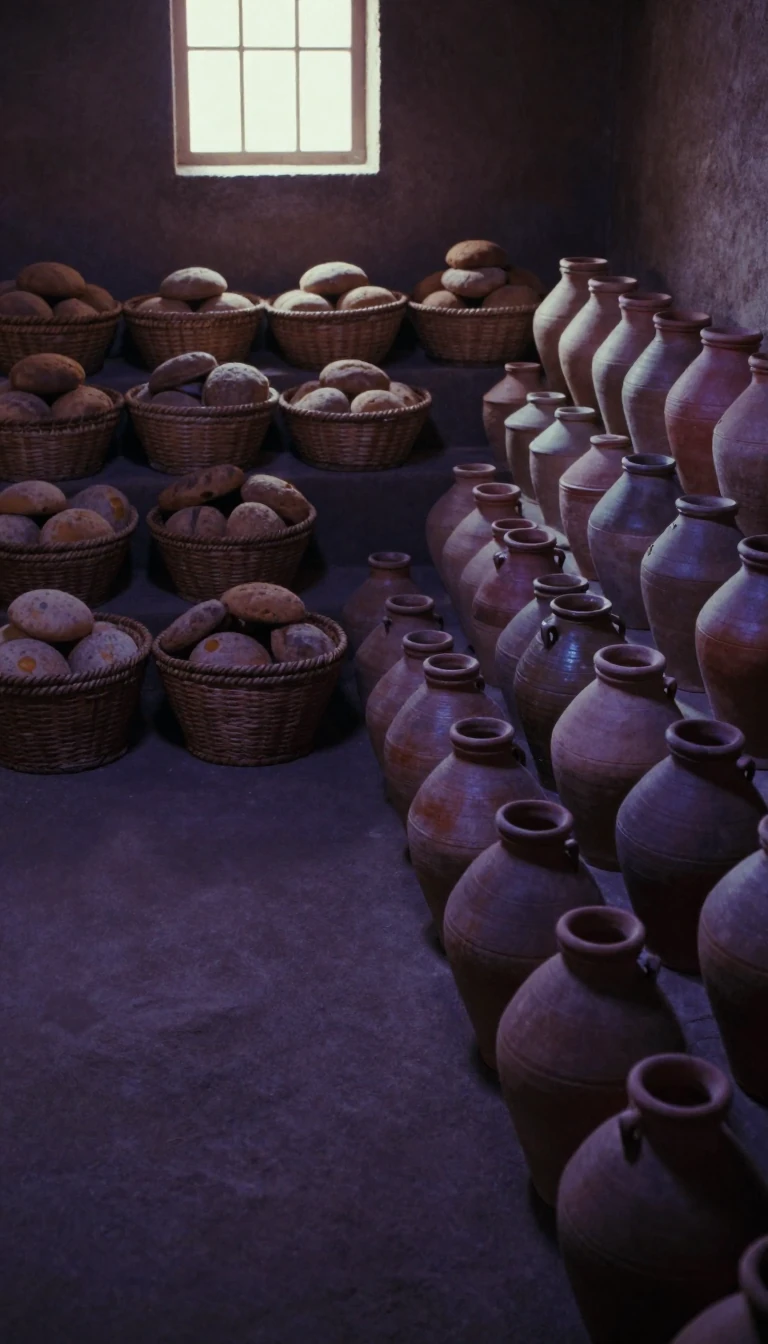 From Pharaonic Grain Rations to Global Trade Hub: The Evolution of Egypt's EconomyEgypt’s economic history spans millennia, shifting from ancient state-managed grain redistribution to a modern, market-oriented powerhouse. Today, the nation leverages its strateg…
- Nigeria is shifting its economic engine from volatile oil dependence toward broader structural growth.For decades, Nigeria’s economy was defined by the boom-and-bust cycles of the petroleum industry. Today, the nation is pursuing a different path, implementing bold macroeconomic r…
 How Saudi Arabia transformed from a nomadic subsistence economy into a global energy titanBefore the mid-20th century, Saudi Arabia relied on traditional nomadic herding and subsistence farming. The discovery of vast petroleum reserves fundamentally altered its traject…
 How South Korea transformed from a war-torn agrarian society into a global industrial powerhouse.In the 1950s, South Korea relied heavily on foreign aid to survive. Within decades, it achieved the Miracle on the Han River, growing at nearly 9 percent annually. Today, it stand…
- Spain's economic journey: from a massive real estate bubble to a resilient modern marketSpain has evolved from an agrarian society into a sophisticated social market economy. Despite enduring a brutal property crash and a deep recession that once saw unemployment soa…
- Why Switzerland remains a global economic powerhouse despite its small size and landlocked geographySwitzerland thrives as a top-tier economy by leveraging a highly skilled workforce, prudent macroeconomic policies, and deep global integration. While it faces modern challenges l…
- How Thailand transformed from a struggling agrarian society into a global industrial powerhouseThailand is a development success story that navigated colonial pressures, military coups, and a devastating 1997 financial collapse. By shifting from import-substitution to expor…
- Why the Middle East's economic growth is a fragile balancing act of shifting fortunesThe Middle East, North Africa, Afghanistan, and Pakistan region faces a volatile economic future. While some nations leverage energy wealth, others struggle with debt, conflict, a…
 Why your business expenses are rarely as fixed as they seem on paperFixed costs are the recurring bills that ignore your sales volume, from rent to machinery. While they act as a formidable barrier to entry for new entrepreneurs, they are not trul…
- The free market is a perfect economic benchmark that does not actually existWe often discuss the free market as if it were a tangible reality, but it is actually a theoretical ideal. No modern society operates without some level of intervention. Instead, …
- Why companies swallow their rivals to dominate the same level of the marketHorizontal integration is the strategic process of expanding a business by absorbing competitors or increasing production within the same industry. Whether through internal growth…
 Why nations cannot simultaneously control their money, their borders, and their currency value.In international economics, the impossible trinity dictates that a country can only achieve two of three goals: free capital movement, a fixed exchange rate, or independent moneta…
- Why do economists insist that international trade is beneficial despite persistent public skepticism?While governments frequently impose tariffs and quotas to protect domestic industries, the prevailing consensus among economists is that international trade generates substantial …
- Does the true worth of a product come from the sweat of its maker?For centuries, economists argued that the value of any item is rooted in the effort required to create it. From Adam Smith to Karl Marx, this labor theory of value sought to expla…
- Latin America holds the keys to a green future, but faces a productivity trap.The region possesses vast renewable energy potential and critical minerals like lithium and copper, yet it struggles with low innovation and high informality. To escape a cycle of…
- Why do prices rise and fall? The fundamental law of demand explained.The law of demand states that as prices rise, quantity demanded falls, and vice versa. While this inverse relationship seems intuitive, it relies on the ceteris paribus condition—…
- Why luxury goods are defined by your income rather than their price tagLuxury is not just a high price or a fancy logo. In economics, a product is only a luxury if demand for it surges faster than your income rises. As you get wealthier, you spend a …
- Why the textbook theory of rising marginal costs might be fundamentally wrongStandard economic models teach that as production scales, marginal costs inevitably rise due to resource constraints. Yet, real-world data from hundreds of corporate executives te…
 Is the invisible hand of the market losing its grip on physical cash?Market economies rely on price signals to allocate resources, but the modern transition toward digital-only transactions is fundamentally altering this landscape. As societies mov…
- Why market structure dictates whether you pay a fair price or a monopoly premiumMarket structure determines how firms compete, set prices, and innovate. From the theoretical ideal of perfect competition to the concentrated power of monopolies, understanding t…
- Why did central banks abandon the once-dominant theory that money supply controls everything?Monetarism promised a simple, rule-based path to economic stability by targeting the money supply. Championed by Milton Friedman, it briefly reshaped global policy in the 1970s an…
 Most of the money in your pocket does not actually exist as physical cash.In modern economies, physical banknotes and coins are a tiny fraction of the total money supply. The vast majority of money is actually digital, created by commercial banks whenev…
- Why governments seize private assets and whether it actually pays off in the endNationalization transforms private enterprises into public property, a move often framed as a path to socialism or a tool for economic stability. Yet, the reality is far more comp…
- Why does neoclassical economics remain the dominant framework for understanding how markets set prices?Neoclassical economics shapes how we think about value, competition, and choice. Emerging from the late 19th-century marginal revolution, it replaced older theories with a focus o…
 Every choice you make carries a hidden price tag you never actually pay.In economics, every decision is a trade-off. When you select one path, you automatically forfeit the potential gains of the alternatives you left behind. This concept, known as op…
- Why national output, not piles of cash, is the true measure of wealthWealth is not defined by the volume of currency circulating in an economy, but by the tangible goods and services created within it. Understanding output—the result of transformin…