 Intellect Plus
Business and economics
547 cards. Each one is a 40-second story with a five-minute read behind it. Page 4 of 10.
 Why the invisible workforce keeping our offices running is a masterclass in outsourcingCleaning is one of the world's most frequently outsourced services. By shifting janitorial duties to contractors, organizations avoid the complexities of managing low-wage labor, …
 Why a single number determines the value of your rare coin collectionCoin grading is the art of turning subjective appearance into a precise 1-70 numerical value. As the collector market expanded, simple terms like good or fine proved insufficient.…
 Is collective bargaining a fundamental human right or just a tool for higher wages?Collective bargaining is more than a strategy for pay raises; it is a mechanism for workplace democracy. By allowing employees to negotiate terms as a unified front, it transforms…
 From Roman propaganda to modern profit, coins have always told a political story.Commemorative coins are more than just currency; they are historical artifacts designed to shape public perception. Whether used to celebrate military victories, solidify national…
 Banks do not just store your money; they actually create it from thin air.When a commercial bank approves your loan, it does not hand over physical cash. Instead, it opens a deposit account for you, effectively creating new money in the process. This cr…
 Commercial real estate is more than just office space; it is a complex financial engine.Beyond the downtown skyscraper, commercial property encompasses everything from warehouses and medical centers to multifamily apartment complexes. It is a massive, high-stakes ass…
 Why commission structures are designed to solve the age-old principal-agent conflictCommissions are more than just sales incentives; they are strategic tools designed to align the interests of employees with their firms. By shifting pay from fixed hourly wages to…
 From clay tokens to high-frequency algorithms, how we trade the world's raw materials.Commodity markets are the bedrock of the global economy, evolving from ancient Sumerian clay tablets to today's complex digital derivatives. While we often think of these as physi…
 The Spanish union that once managed entire cities through anarchist principles and direct democracyFounded in 1910, the Confederación Nacional del Trabajo (CNT) remains a unique experiment in anarcho-syndicalism. By rejecting state intermediaries and professional politicians, t…
- Why taxing what you spend might be fairer than taxing what you earnIncome taxes are often seen as the gold standard for fairness, but they can discourage saving and distort economic behavior. Consumption taxes offer a different path, focusing on …
- Is the modern gig economy actually a return to pre-industrial working conditions?Contingent work—defined by limited security and project-based contracts—is often viewed as a modern innovation. Yet, the shift away from long-term employment mirrors older, pre-in…
 Why convenience stores charge more for the exact same items you buy elsewhereConvenience stores offer unmatched accessibility, often staying open 24 hours a day to serve commuters and urban dwellers. Yet, this speed comes at a premium. Because these retail…
- Convertible bonds offer investors a unique hybrid of debt security and equity upside potential.Imagine holding a bond that pays interest but can transform into company stock if the business thrives. This hybrid instrument, known as a convertible bond, allows investors to ca…
 From ancient ritual to modern labor: the complex history of the professional cookCooking is an ancient, global craft that has evolved from a stigmatized, elite-serving occupation in Ming China to a modern, high-pressure profession. While today's cooks navigate…
- Why corporations borrow money through bonds instead of just taking out bank loans.Corporate bonds are debt instruments used by companies to fund operations, acquisitions, or expansion. Unlike stocks, they represent a promise to repay borrowed capital under spec…
 Corporate governance is the invisible architecture that dictates how global power is actually exercised.Corporate governance is not just boardroom procedure; it is the essential system of checks and balances that defines how companies are directed and held accountable. From the tens…
 Why your company pays tax on profit while you pay tax on your wagesCorporation Tax is a direct levy on a company's net profit, distinct from the personal Income Tax paid on individual earnings. Unlike personal taxes, the government does not send …
- Corvée: The ancient tax system that demanded your labor instead of your moneyFor centuries, states worldwide bypassed cash to collect taxes in the form of raw human effort. From building the pyramids to maintaining colonial roads, this forced labor system,…
- Why the price you pay for a product is never its true costWhen you buy a car, the sticker price covers labor, materials, and profit. Yet, it ignores the invisible bill for the pollution emitted during manufacturing and driving. Economics…
- Why the future of high-value work might look like the medieval guild systemCraft is not just a relic of the past; it is a sophisticated mode of production that persists alongside mass industry. By balancing specialized technique with modern division of l…
- Credit is not just a loan; it is the engine that creates modern money.We often view banks as simple middlemen moving money from savers to borrowers. In reality, they are creators. When a bank issues a loan, it generates new money out of thin air, ba…
 Why credit ratings are more than just a grade for your financial healthCredit ratings act as a global compass for risk, forecasting the likelihood that a borrower will default. While these letter grades—like AAA or B—are not hard probabilities, they …
- Why the world's most innovative companies are outsourcing their biggest problems to the publicCrowdsourcing turns the traditional business model on its head by inviting the public to solve complex challenges. From naming products to designing engineering solutions, organiz…
 Why do currency symbols look the way they do and where do they go?Currency symbols are more than mere shorthand for money. They are cultural artifacts that evolve from ancient weights, linguistic roots, and national identity. While some symbols …
- Your curriculum vitae is not a biography, but a strategic sales document for employers.The Latin phrase curriculum vitae means course of life, but treating your CV like a life story is a mistake. To secure an interview, you must transform this document into a concis…
- Why the term internal customer might be a dangerous management mythWe often hear that employees are internal customers, but some legendary management thinkers argue this is a fundamental error. By treating colleagues as customers, organizations m…
- Why modern business success relies on the art of remembering every customer interactionCustomer Relationship Management is more than software; it is a strategic philosophy. By integrating sales, marketing, and service data into a single view, companies transform raw…
 Why the future of customer service is moving away from human interactionCustomer service is no longer just about fixing problems; it is a strategic asset that defines brand loyalty. As generative AI and automation reshape the industry, routine tasks a…
- Why the definition of a debenture changes depending on which country you are inA debenture is a debt instrument used by large firms to raise capital, yet its meaning is notoriously slippery. While it functions as a loan certificate, the legal protections it …
 Can we power the green transition by mining the deepest parts of our ocean?Deep-sea mining promises a bounty of cobalt, nickel, and manganese essential for electric vehicle batteries and renewable energy. Yet, these minerals lie thousands of meters down …
 Why your business assets lose value on paper even when they are still workingDepreciation is not just about wear and tear; it is a strategic accounting tool used to spread the cost of long-term assets over their useful lives. By turning large capital outla…
- Is direct selling a legitimate business model or a complex web of recruitment?Direct selling bypasses traditional retail stores, relying instead on personal connections to move goods. While some participants earn income solely through product sales, others …
- Why being fired is more than just losing a paycheck and a titleDismissal is the involuntary termination of employment, but it carries a weight far beyond simple job loss. It often implies personal accountability, creating a stigma that can co…
- Disruptive innovation is not just a buzzword for any industry-shaking business event.Coined by Clayton Christensen, disruptive innovation is a specific, nuanced process where smaller, resource-constrained companies challenge established giants. It is not merely a …
- Distribution is more than logistics; it is the strategic architecture of your customer's experience.Distribution is the vital link between production and consumption, yet it is often misunderstood as mere shipping. Whether you use mass, selective, or exclusive channels, your cho…
- Why a company paying you cash can actually make your shares worth lessDividends are a distribution of corporate profits, but they are not free money. When a company pays a dividend, it is essentially carving value out of its own balance sheet. Conse…
 Before the euro, the Dutch guilder anchored European trade for over five centuries.From 1434 until 2002, the Dutch guilder served as the Netherlands' primary currency. Once a dominant reserve currency during the 17th and 18th centuries, its history reflects the …
- Why market equilibrium is a mathematical state, not necessarily a moral or fair outcome.Economic equilibrium is the point where supply meets demand, ensuring no agent has an incentive to change their behavior. While this balance often clears markets, it is a neutral …
 Economic models are not perfect mirrors of reality, but tools for navigating complex systems.Economic models are theoretical constructs that simplify the world to make it understandable. By stripping away extraneous details, they allow economists to isolate key relationsh…
- Why national security now depends on semiconductors, raw materials, and resilient global supply chainsEconomic security has evolved from a domestic financial concept into a pillar of national defense. As geopolitical tensions rise and global supply chains grow increasingly complex…
 Beyond the light switch: The rigorous path to becoming a master electricianElectricians do far more than fix flickering bulbs. From high-voltage utility lines to complex data infrastructure, these tradespeople master a dangerous, highly regulated craft. …
- Why the world's most exclusive jobs are almost never advertised to the publicWhile most job seekers scan public listings, the highest-paid roles often exist in a hidden market. For positions paying over 150,000 pounds, only 5 percent of vacancies are adver…
 Enterprise resource planning systems are evolving from monolithic suites into flexible, AI-driven digital ecosystems.Enterprise resource planning (ERP) software acts as the central nervous system for modern organizations, integrating everything from finance to manufacturing. Once rigid, monolith…
- Why equal pay for equal work remains a complex legal and economic challengeThe principle of equal pay for equal work seems straightforward, yet it has sparked decades of legislative battles, landmark court cases, and economic studies. From the industrial…
- Equity is more than just ownership; it is a calculated claim on residual value.In finance, equity represents the portion of an asset or business that truly belongs to its owners after all debts are settled. While often misunderstood as simple possession, equ…
 From medieval bridge meetings to electronic trading: the long evolution of the exchangeModern financial markets trace their roots to 12th-century bridge gatherings and 13th-century Belgian inns. What began as informal meetings between foreign merchants has evolved i…
- Why exporting is the ultimate test of a company's global ambition and resilienceExporting is the primary engine for business growth, allowing firms to reach foreign markets without the heavy cost of building overseas factories. Yet, this strategy is a double-…
 How the fast fashion machine turned a biannual cycle into a weekly raceModern fashion has shifted from a predictable four-season cycle to a relentless, high-speed engine. By prioritizing rapid design and low-cost production, brands now deliver new st…
 Financial accounting is the universal language used to translate business activity into public truth.Financial accounting is more than just bookkeeping; it is the systematic process of summarizing and reporting a company's financial health to the outside world. By standardizing h…
- Why financial crises are an inherent, unavoidable feature of modern capitalist economiesFinancial crises are not mere accidents; they are recurring, systemic events that defy easy prediction. From banking panics to speculative bubbles, these crises often stem from hu…
- Financial markets are not just for traders; they are the plumbing of the global economy.We often picture financial markets as chaotic trading floors, but they are actually essential infrastructure for moving money from those who have it to those who need it. From gov…
 Why financial statements are more than just a dry record of the pastFinancial statements are often viewed as historical ledgers, yet they serve as the primary lens through which investors and creditors project a company's future. By distilling com…
- Why the myth of ancient barter economies is failing to hold up to scrutinyWe are taught that ancient societies traded goods through barter, but historians now believe they relied on gift economies and debt. From Babylonian interest rates to the rise of …
- From Zeppelin stewards to safety professionals: the evolution of the modern flight attendantThe flight attendant role began in 1912 aboard a German Zeppelin, long before it became a standard fixture of commercial aviation. While early decades focused on rigid physical st…
 Was the 20th century's greatest economic engine just a temporary historical parenthesis?Fordism defined the 20th century, linking mass production to mass consumption in a virtuous cycle. By standardizing goods and paying workers enough to buy them, it fueled the post…
 The world's largest market has no central office, no closing bell, and no boss.The foreign exchange market is a decentralized, 24-hour global engine that powers international trade. With daily turnover reaching $9.6 trillion, it dwarfs every other financial …
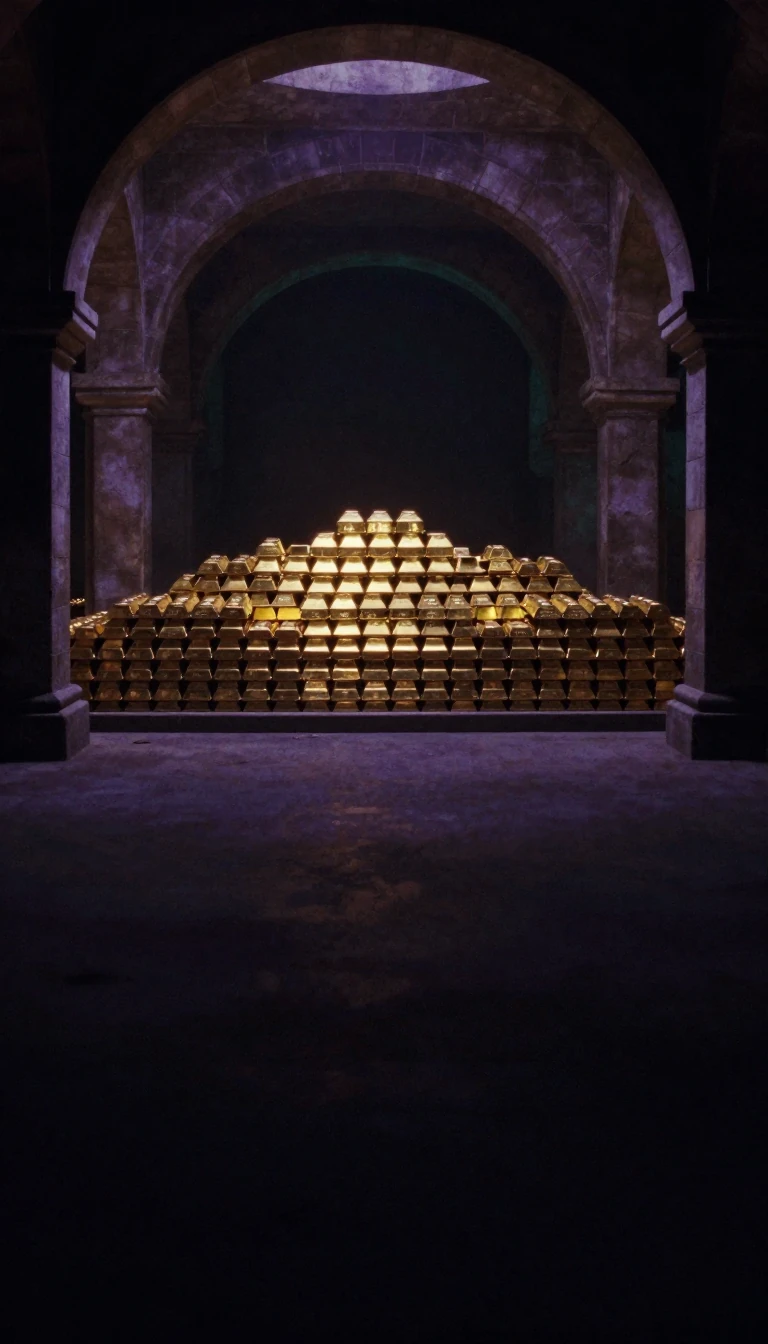 Why central banks hoard mountains of foreign cash despite the risks of losing moneyForeign exchange reserves are more than just a rainy-day fund. While they help stabilize currencies and buffer against financial shocks, they also function as a complex tool for n…
 Why millions of foreign workers fuel global economies while facing systemic legal precarityTens of millions of people work outside their home countries, powering industries from Gulf construction to Western agriculture. While these workers provide essential labor and vi…
- A forward contract is a bespoke bet on the future price of an asset.A forward contract allows two parties to lock in a price today for an asset to be exchanged at a specific future date. Unlike standardized futures, these over-the-counter agreemen…
- Is a franchise a path to business ownership or just a temporary, high-risk lease?Franchising is often marketed as a golden ticket to entrepreneurship, but it is technically a wasting asset. You are not buying a business; you are renting a brand and a system. W…