 Intellect Plus
Wealth & Business
5,018 cards. Each one is a 40-second story with a five-minute read behind it. Page 28 of 84.
Subtopics: Accounting · Advertising & marketing · Banking · Banks & banking · Brands & companies · Business · Business and economics · Business stories · Businesspeople · Central banking · Companies · Cryptocurrency · Currencies · Currency · Demand · Economic history · Economic theory · Entrepreneurs · Finance · Financial crises · Fraud · Game theory · Hedge funds · Incentives · Inflation · International trade · Investing · Logistics · Luxury · Markets · Money · Organizations · Personal finance · Policy · Poverty · Property · Real estate · Renaissance · Stock markets
 Financial markets are not just for traders; they are the plumbing of the global economy.We often picture financial markets as chaotic trading floors, but they are actually essential infrastructure for moving money from those who have it to those who need it. From gov…
 Why financial statements are more than just a dry record of the pastFinancial statements are often viewed as historical ledgers, yet they serve as the primary lens through which investors and creditors project a company's future. By distilling com…
 Why the myth of ancient barter economies is failing to hold up to scrutinyWe are taught that ancient societies traded goods through barter, but historians now believe they relied on gift economies and debt. From Babylonian interest rates to the rise of …
 From Zeppelin stewards to safety professionals: the evolution of the modern flight attendantThe flight attendant role began in 1912 aboard a German Zeppelin, long before it became a standard fixture of commercial aviation. While early decades focused on rigid physical st…
 How a German startup turned the fragmented bus industry into a global travel giantFlixBus does not own most of its fleet. Instead, it operates as a high-tech orchestrator, managing network planning, pricing, and marketing while partnering with local bus operato…
 Was the 20th century's greatest economic engine just a temporary historical parenthesis?Fordism defined the 20th century, linking mass production to mass consumption in a virtuous cycle. By standardizing goods and paying workers enough to buy them, it fueled the post…
 The world's largest market has no central office, no closing bell, and no boss.The foreign exchange market is a decentralized, 24-hour global engine that powers international trade. With daily turnover reaching $9.6 trillion, it dwarfs every other financial …
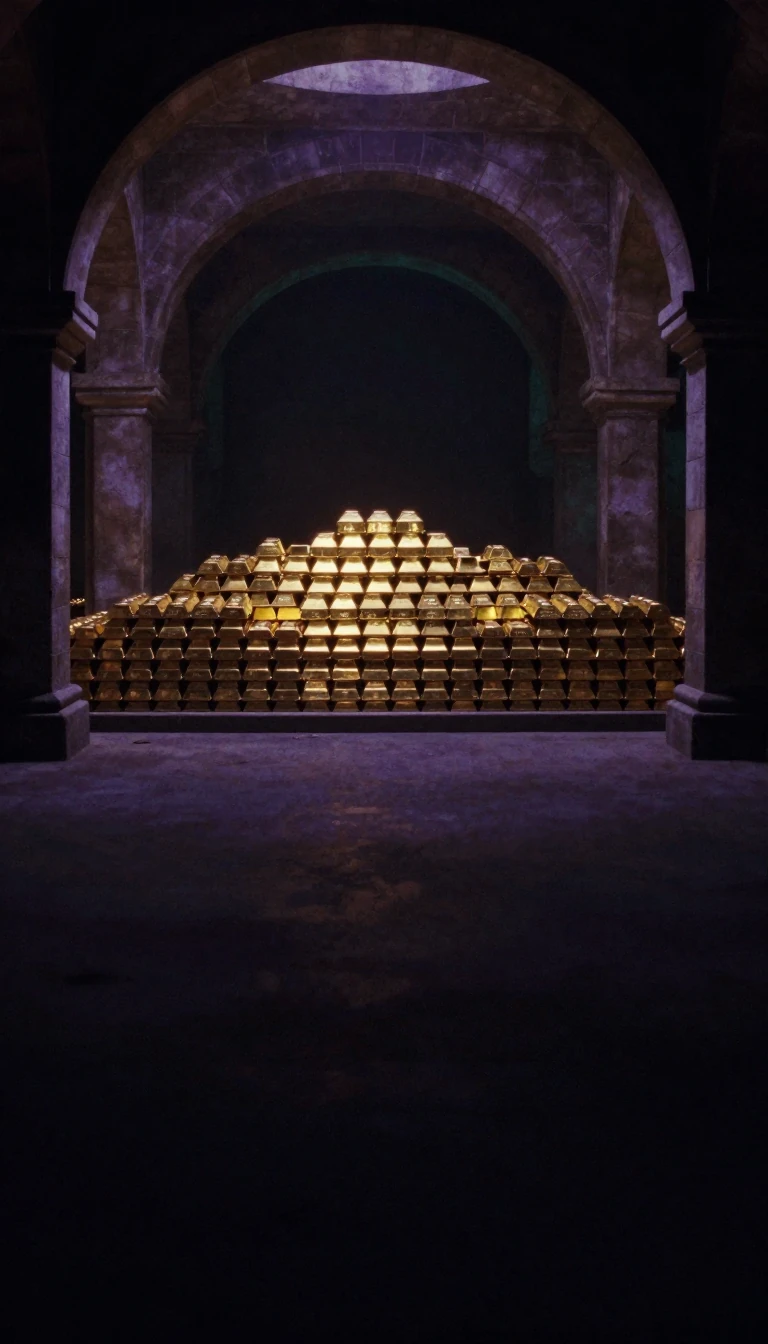 Why central banks hoard mountains of foreign cash despite the risks of losing moneyForeign exchange reserves are more than just a rainy-day fund. While they help stabilize currencies and buffer against financial shocks, they also function as a complex tool for n…
 Why millions of foreign workers fuel global economies while facing systemic legal precarityTens of millions of people work outside their home countries, powering industries from Gulf construction to Western agriculture. While these workers provide essential labor and vi…
 A forward contract is a bespoke bet on the future price of an asset.A forward contract allows two parties to lock in a price today for an asset to be exchanged at a specific future date. Unlike standardized futures, these over-the-counter agreemen…
- Is a franchise a path to business ownership or just a temporary, high-risk lease?Franchising is often marketed as a golden ticket to entrepreneurship, but it is technically a wasting asset. You are not buying a business; you are renting a brand and a system. W…
 Why economists almost universally support free trade despite its visible political and social costs.Free trade is a rare point of consensus among economists, who argue it boosts growth and living standards. Yet, it remains a lightning rod for political conflict. While theory pro…
- The French Connection: How a Corsican Smuggling Ring Supplied America’s Heroin HabitFrom the 1930s to the 1970s, a sophisticated network known as the French Connection dominated the American heroin market. By refining morphine paste in Marseille laboratories, Cor…
 Why full employment does not actually mean that every single person has a job.Governments often target full employment, yet this economic ideal rarely means zero unemployment. Instead, it describes a state where everyone seeking work can find it, accounting…
 Futures contracts: How betting on the future stabilizes the present global economyA futures contract is a standardized agreement to trade an asset at a set price on a future date. While often viewed as speculative, these derivatives serve a vital purpose: they …
- Born from a Ford partnership, this Russian industrial giant redefined Soviet automotive history.Established in 1932 with American technical assistance, GAZ evolved from a Ford-inspired factory into a cornerstone of Soviet transport. From wartime armored vehicles to the iconi…
 The general contractor is the architect of reality, not just the builder of walls.A general contractor is the central nervous system of a construction site. From managing billion-dollar infrastructure to small residential remodels, they navigate complex legal r…
- Can a single day of silence from the workforce topple a national government?A general strike is more than a walkout; it is a massive, coordinated stoppage across multiple industries designed to force economic or political change. From the 1905 Russian Rev…
 Does the gig economy create new jobs or just shift them to the shadows?The gig economy is often praised for its flexibility and autonomy, but empirical analysis suggests a more complex reality. While it offers unique opportunities for some, it may pr…
 Is the world running out of gold, or are we just getting better at digging?For millennia, gold has defined wealth and power, from ancient pharaohs to modern central banks. While experts have repeatedly predicted that global production would peak, industr…
- Why the simplest tool in mining history still holds its ground todayGold panning is an ancient technique that relies on the physics of density to separate precious metals from sediment. While it has been largely superseded by industrial machinery …
 Why governments borrow from their citizens and how these loans shape global financeGovernment bonds are essentially loans from the public to the state, promising periodic interest and eventual repayment. From their origins in 12th-century Venice to the massive, …
- Is national debt a burden for future generations or a tool for modern prosperity?Government debt is often misunderstood as a household budget problem, but it functions differently. While excessive borrowing can trigger crises or inflation, debt has historicall…
 France's Fifth Republic: A Hybrid System Designed to End Decades of Political InstabilityBorn from the turmoil of the 1958 Algerian crisis, France's Fifth Republic replaced a fragile parliamentary tradition with a unique semi-presidential structure. By balancing a pow…
- Japan’s government separates ceremonial tradition from the raw mechanics of executive powerJapan operates as a unitary state where the Emperor serves as a purely symbolic figurehead. Real authority rests with the Cabinet and the Prime Minister, who are held accountable …
 How the Russian government functions under its current constitutional frameworkThe Russian government operates as a federal executive body distinct from the presidency, yet it remains deeply tethered to presidential authority. While it manages the nation's b…
- Can a bank built on trust and no collateral actually end rural poverty?Muhammad Yunus transformed microfinance by betting that the impoverished, specifically women, could manage their own financial futures. By replacing traditional collateral with gr…
 Why your new camera or phone might be a global traveler in disguiseGrey markets thrive when manufacturers try to maintain different prices in different countries. By buying goods where they are cheap and reselling them where they are expensive, g…
- The GRU is Russia's most secretive and risk-prone foreign military intelligence agency.Unlike Russia's other security services, the GRU reports directly to the military command rather than the president. Known for its willingness to execute high-stakes, clandestine …
 Can a regional bloc survive when its signature trade agreement remains unratified for decades?The GUAM Organization for Democracy and Economic Development, comprising Georgia, Ukraine, Azerbaijan, and Moldova, was designed to foster regional integration and security. Despi…
- Why do some currencies hold their value while others rot like discarded potatoes?Hard currency is the bedrock of global stability, serving as a reliable store of value when local economies falter. From ancient gold to modern fiat, the status of a currency depe…
 How a nineteenth-century newspaper empire evolved into a modern global data and media powerhouseFounded in 1887 by William Randolph Hearst, the Hearst Corporation began as a newspaper chain defined by yellow journalism. Today, it has transformed into a massive conglomerate, …
 How a Texas hotelier built a global hospitality empire from a single 40-room property.From a modest 1919 purchase in Cisco, Texas, Conrad Hilton transformed the hospitality industry through relentless innovation. By pioneering airport hotels, central reservation sy…
- Hizb ut-Tahrir seeks to unify all Muslim-majority lands under a single global caliphate.Founded in 1953, this international political organization aims to replace existing nation-states with a unitary Islamic government. Operating in over 50 countries, the group util…
- Home insurance is not a guarantee of wealth, but a contract of indemnityHome insurance is a complex financial instrument designed to restore your property to its pre-loss state, not to profit from disaster. While often mandated by mortgage lenders, th…
- From Industrial Efficiency to Strategic Asset: The Evolution of Human Resource ManagementHuman resource management is more than just payroll and compliance. It is a strategic discipline that evolved from 19th-century industrial experiments into a modern powerhouse for…
- Hybrid securities bridge the gap between debt and equity, offering investors unique financial flexibility.Hybrid securities blend the predictable returns of debt with the growth potential of equity. By combining these two worlds, they offer investors a unique middle ground. Whether th…
- Why nations import goods they already produce and how trade deficits are misunderstoodInternational trade is more than just shipping crates across borders. It is a complex web of ownership changes, digital service flows, and strategic supply chain management. While…
 Can developing nations manufacture their way to prosperity by replacing foreign imports with domestic goods?Import substitution industrialization sought to break the cycle of poverty by replacing foreign-made goods with local production. Popularized in the mid-20th century, this strateg…
- Why your bank balance is a poor measure of your actual life wealthWe treat money as the ultimate scorecard for success, but it is a flawed proxy for true prosperity. While economists use income to track welfare, it ignores the non-monetary joy o…
 The income statement: how a company turns top-line revenue into bottom-line profitAn income statement is the financial pulse of a business, tracking revenues and expenses over a specific period. While it reveals whether a company is profitable, it is not a perf…
- Why governments increasingly prefer taxing your consumption over taxing your incomeIndirect taxes, like VAT and sales tax, are quietly becoming the world's primary revenue engine. Unlike direct income taxes, these levies are embedded in the price of goods, often…
 Are workers mere commodities or partners in a complex, often conflicting, employment relationship?For centuries, economists viewed workers as passive tools of production. Today, the field of industrial relations challenges this, arguing that employment is defined by inherent p…
 Did industrialization actually help end slavery by making forced labor economically inefficient?Industrial society replaced agrarian traditions with mass production, fossil fuels, and urbanization. While it reshaped global economies, some historians argue that the shift towa…
- The Wobblies: How a Radical Union Tried to Overthrow Capitalism Through One Big UnionFounded in 1905, the Industrial Workers of the World sought to unite all workers into a single class to abolish the wage system. Known as Wobblies, they rejected traditional craft…
- Why do economists group businesses into industries, and why does the system often fail?An industry is more than just a collection of similar companies; it is a vital tool for economic analysis. By grouping businesses based on their primary revenue sources, experts c…
 The infomercial industry is a massive, $200 billion global business hiding in plain sight.Once relegated to the graveyard of overnight television, the infomercial has evolved into a sophisticated, multi-billion dollar engine of commerce. From humble beginnings as simpl…
- Is the informal economy a relic of the past or a permanent economic feature?We often imagine the informal economy as a temporary stage of development destined to vanish. Yet, from street hawkers in neocolonial cities to digital peer-to-peer payments in mo…
- Why inheritance taxes vary wildly across the globe and what they actually taxInheritance tax is often misunderstood as a single global concept, but it functions differently depending on where you live. While some nations treat it as a levy on the deceased'…
- Why interest rates are the most powerful lever in the global economyInterest rates are more than just a cost of borrowing; they are the fundamental price of time. By balancing the human desire for immediate consumption against the risks of the fut…
 Who decides what a planet is? Meet the global authority on the cosmos.The International Astronomical Union is the ultimate arbiter of the night sky. Founded in 1919, this organization does more than just name stars and planets; it sets the global st…
 How the International Chamber of Commerce shapes the rules of global businessFounded in 1919 to champion free capital flow and open markets, the International Chamber of Commerce acts as a global architect for trade. From setting voluntary commercial stand…
 How a century of global scientific cooperation evolved into today's International Science CouncilFor over a century, the International Council for Science served as a vital bridge for global research. By uniting national academies and disciplinary unions, it fostered collabor…
- How a global network of experts guards the world's most precious cultural heritage sitesThe International Council on Monuments and Sites (ICOMOS) acts as the primary scientific advisor to UNESCO, evaluating which global landmarks earn World Heritage status. With over…
- How the world’s poorest nations secure funding when traditional bank loans are out of reach.The International Development Association acts as the World Bank’s specialized arm for the world’s 75 poorest nations. By providing interest-free loans and grants, it bridges the …
 The World Bank’s private-sector sibling that operates without government guarantees for its loansEstablished in 1956, the International Finance Corporation is a unique global institution that channels capital into private enterprises across developing nations. Unlike its pare…
- How the International Mathematical Union shapes the global landscape of modern mathematical researchThe International Mathematical Union acts as the central nervous system for global mathematics. Beyond awarding the prestigious Fields Medals, this organization coordinates intern…
 How a Post-War Logistics Agency Became the Global Authority on Human MigrationBorn in 1951 to manage the displacement of millions after the Second World War, the International Organization for Migration has evolved from a simple transport coordinator into a…
 How the world agrees on the name of every single chemical element and compound.Without a universal language, chemistry would be a chaotic tower of Babel. The International Union of Pure and Applied Chemistry serves as the global arbiter of nomenclature, ensu…
- Beyond the Coffee Run: How Internships Actually Shape Your Professional FutureForget the tired trope of interns fetching coffee. Modern internships are strategic entry points into competitive industries, offering hands-on experience and professional network…