Space · Black Hole Formation
How do black holes exist?
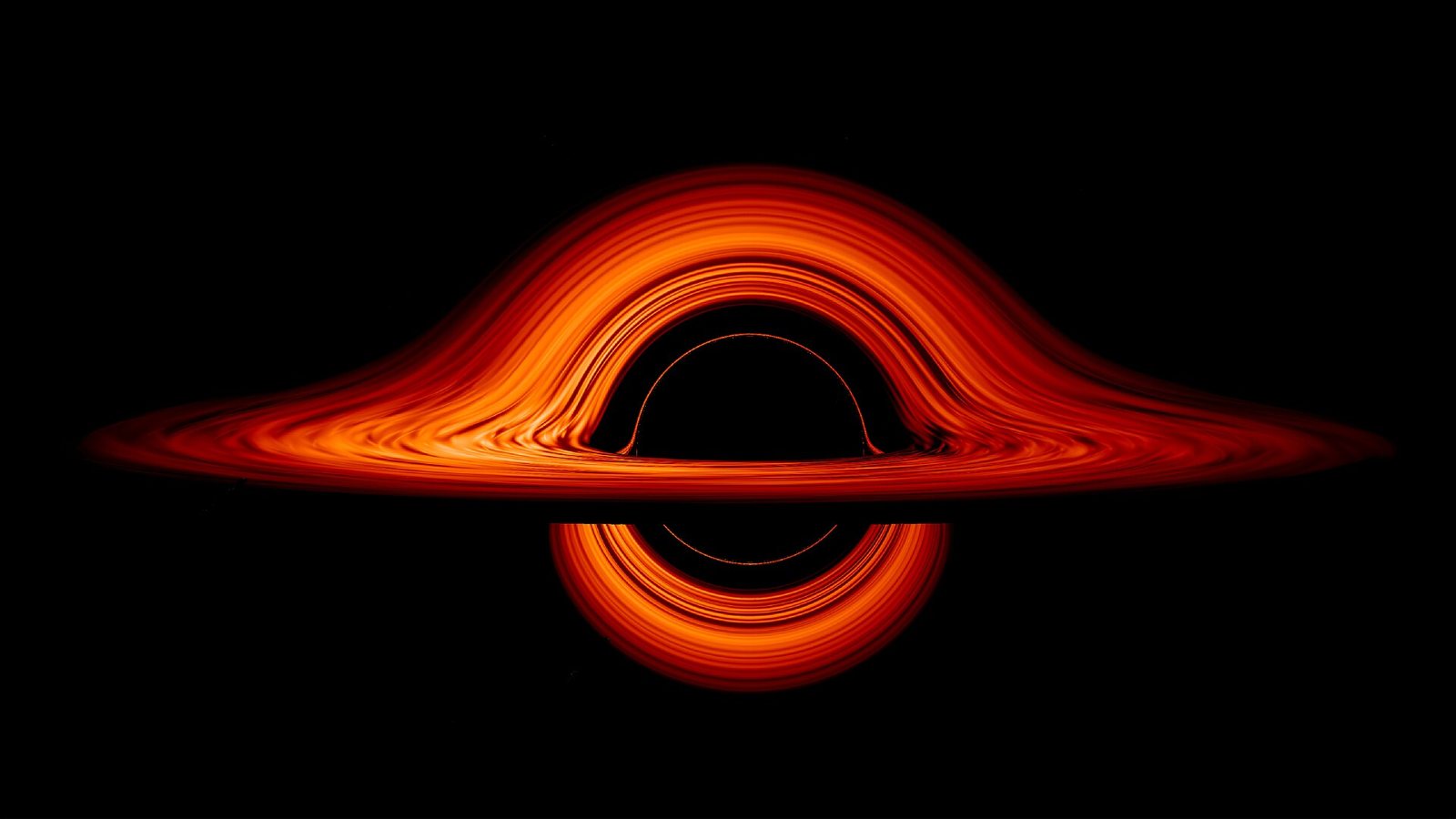
The short answer
Black holes exist through various processes depending on their mass and origin14. Stellar black holes form when massive stars undergo gravitational collapse45. These objects can also grow by merging with other black holes or by accreting matter1. Some theories suggest primordial black holes formed from early universe events like domain wall collapses or density fluctuations2. Additionally, virtual black holes may exist temporarily as a result of quantum fluctuations of spacetime5.
What the evidence shows
Stellar Collapse
Stars that exceed a specific critical mass are dynamically unstable and would collapse into a black hole1. These stellar black holes can be the remnants of supernova explosions4.
A non-rotating supermassive star cannot escape collapse by burning its hydrogen through the CNO cycle1. The gravitational collapse of a massive star is a primary way these objects form5.
Growth and Mergers
Astrophysicists agree that black holes can grow by accreting matter1. They can also increase in size by merging with other black holes1.
A black hole seed could become an intermediate-mass black hole or a supermassive black hole if it accretes at a persistent rate1.
Primordial and Exotic Origins
Primordial black holes could have formed from the collapse of domain walls in the early universe2. Some postulate that early supermassive black holes might come from the direct collapse of self-interacting dark matter1.
Virtual black holes exist temporarily as a result of a quantum fluctuation of spacetime5. Models involving multiple scalar fields can also produce sharp spikes in density fluctuations2.
Our take
This part is our own interpretation, not a sourced finding.
It is surprising that sufficiently large black holes could theoretically contain intact stars and planets within their event horizons3. This changes the perspective on these objects from simple points of gravity to massive structures with complex internal possibilities.
What we can't say for sure
The origin of supermassive black holes remains an active field of research with several hypotheses for their initial masses1. The source does not state the exact mechanism for how all black holes exist2.
Sources
- Supermassive black hole - Wikipedia. en.wikipedia.org. other website, accessed 1 November 2026.
- Primordial black hole - Wikipedia. en.wikipedia.org. other website, accessed 1 November 2026.
- Black holes in fiction - Wikipedia. en.wikipedia.org. other website, accessed 1 November 2026.
- Stellar black hole - Wikipedia. en.wikipedia.org. other website, accessed 1 November 2026.
- Outline of black holes - Wikipedia. en.wikipedia.org. other website, accessed 1 November 2026.
Published 1 November 2026. Sources last checked 1 November 2026. Prepared with automated tools and checked against the sources named here: how we work. Spotted a mistake? Tell us.
Keep exploring in Intellect Plus
 CardWhy black holes are the universe's ultimate minimalists, shedding all their complex history
 VideoBlack holes are not cosmic vacuum cleaners
 VideoBlack holes are not cosmic vacuum cleaners
 VideoWhat actually happens to a black hole from its birth to its final death?
 CardA white hole is the theoretical opposite of a black hole, but does it exist?
 VideoAre black holes actually simple objects defined by only three physical properties?
 VideoBlack holes are not cosmic vacuum cleaners or portals to other dimensions
 VideoWhy black holes might eventually evaporate into nothingness
 VideoWhy even light cannot escape the pull of a black hole
 VideoAre black holes just science fiction or the universe's most mysterious reality?
 CardBlack holes are not quite black. Given time, they should evaporate.
 VideoWhy are black holes described by only three simple physical properties?
More questions
 SpaceWhat causes Jupiter's Great Red Spot?
 SpaceWhy is Pluto not a planet?
 SpaceWhy can you see the Moon during the day?
 EarthWhy does the sky turn green before a storm?
 EarthWhy do deserts exist?
 Everyday ScienceHow does rust form?
 NatureWhat happens when bamboo flowers?
 HistoryWhy do samurai carry two swords?
