Earth · Weather
Why does the sky turn green before a storm?
The short answer
Some thunderstorms really do look green, and researchers have confirmed it with instruments.1 The exact cause is still argued over. The two leading explanations both start with reddened sunlight meeting a deep, dark storm cloud.2 The measurements rule out light reflected from green ground, and they cast doubt on explanations that need hail.1 A green sky is not a reliable sign of a tornado.3
What the evidence shows
It was measured, not just reported
Some sceptics suggested green storms were invented by excited observers. In 1995 Frank Gallagher, William Beasley and Craig Bohren took a spectrophotometer to numerous storms and recorded hundreds of spectra, including green and non-green storms.1
They found a gradual change from dark blue to bluish green when watching from one spot, and the light got dimmer as it turned greener. People judged the colour slightly differently, but usually only in the shade of green.1
Two explanations, both unproven
Alistair Fraser proposed that the green is airlight: reddened sunlight lighting up things in the air that scatter some colours more than others, seen against the storm as a dark backdrop.2
Craig Bohren proposed that it comes from the cloud itself. Pure water absorbs selectively, which gives clouds an intrinsic blueness, so a thick cloud lit by reddened light can look green.2 Both ideas predict that the sky gets darker as it turns green, which is what the measurements showed.2
What it isn't
The popular idea that the green is reflected from fields was refuted by the 1995 observations, and they raise questions about explanations that require hail.1 Gallagher measured green light over a green wheat field and over freshly ploughed red-brown soil. Some hailstorms were green and others the usual grey-blue, and tornado-producing storms showed no particular sky colour other than dark.3
Bohren does say that green skies are associated with severe weather, but a green sky doesn't tell you which kind is coming.3
Our take
This part is our own interpretation, not a sourced finding.
We find this a good example of how science treats folklore: part of it held up. The colour is real and can be measured, while the popular explanations for it didn't survive. Treat a green sky as a reason to check the official forecast, not as a forecast in itself.
What we can't say for sure
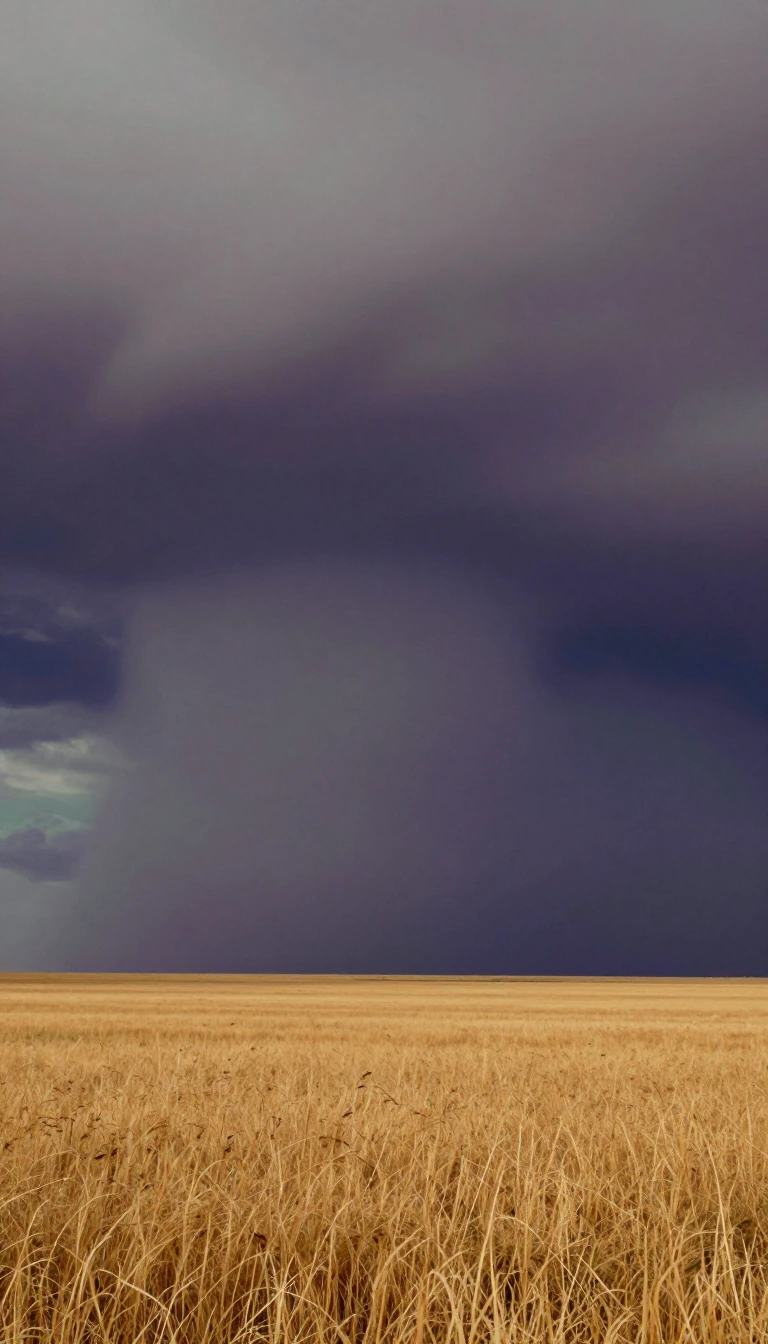
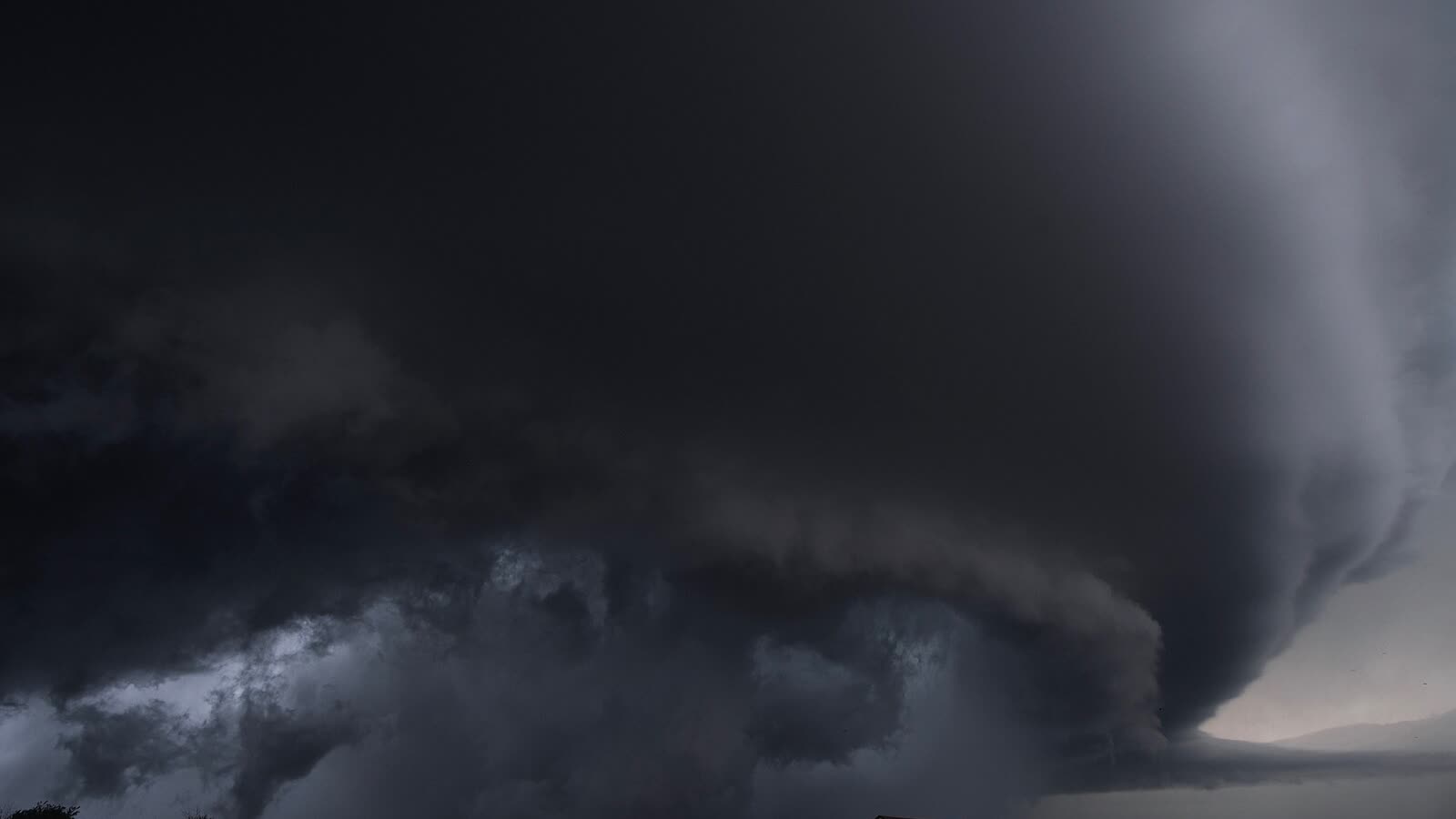
Green thunderstorms have had little scientific study,2 and the main measurements come from a single field season in 1995. The photograph above shows a supercell storm of the kind discussed here. It is not a picture of a green sky. For safety decisions, follow your national weather service's warnings.
Sources
- Gallagher, F. W., Beasley, W. H. and Bohren, C. F.. Green Thunderstorms Observed. Bulletin of the American Meteorological Society, 77(12), 2889-2897, 1996-12. Peer-reviewed research, accessed 1 November 2026.
- Craig Bohren, Pennsylvania State University. Green Thunderstorms (colloquium abstract). NASA Goddard Space Flight Center Scientific Colloquium, 2000-03-03. Scientific talk, accessed 1 November 2026.
- Meredith Knight. Fact or Fiction?: If the Sky Is Green, Run for Cover: A Tornado Is Coming. Scientific American, 2007-06-14. Science journalism, accessed 1 November 2026.
Published 1 November 2026. Sources last checked 1 November 2026. Prepared with automated tools and checked against the sources named here: how we work. Spotted a mistake? Tell us.